
FTTM est une abréviation sectorielle ambiguë. Différentes publications l’utilisent pour Fibre jusqu'à la machine ou Fibre jusqu’au mobile; un projet multimédia peut utiliser sa propre signification descriptive. Avant de sélectionner les équipements ou les composants de la chaîne, précisez clairement l’objectif final et les services attendus. L’acronyme seul ne définit ni la topologie, ni la technologie d’accès, ni les exigences d’acceptation.
FTTM a des significations contextuelles, notamment fibre jusqu’à la machine et fibre jusqu’au mobile. Cet article traite également de la distribution multimédia en tant que périmètre de projet explicitement défini ; elle ne doit pas être considérée comme l’extension universelle de FTTM. L’ITU-T G.984 couvre les recommandations GPON, tandis que l’ITU-T G.9807.1 couvre XGS-PON ; par conséquent, il est recommandé de préciser le type de PON ou d’Ethernet, le point de raccordement du service, le type de fibre, le parcours et les tests de réception avant d’acheter les composants. Considérez FTTM comme un objectif de service, et non comme un substitut à une topologie et à une nomenclature.
Que signifie FTTM, et pourquoi ce terme est-il ambigu ?
Si un projet définit explicitement le FTTM comme « fibre jusqu’aux multimédias », cela signifie l’intention d’utiliser un réseau d’accès en fibre optique pour acheminer plusieurs services, tels que les données, la distribution de la télévision et la voix. Ce terme peut être utile dans une note de cadrage de projet, mais il ne précise pas à lui seul où la fibre se termine, quel protocole d’accès est utilisé, comment les services sont séparés ni quel équipement client est requis.
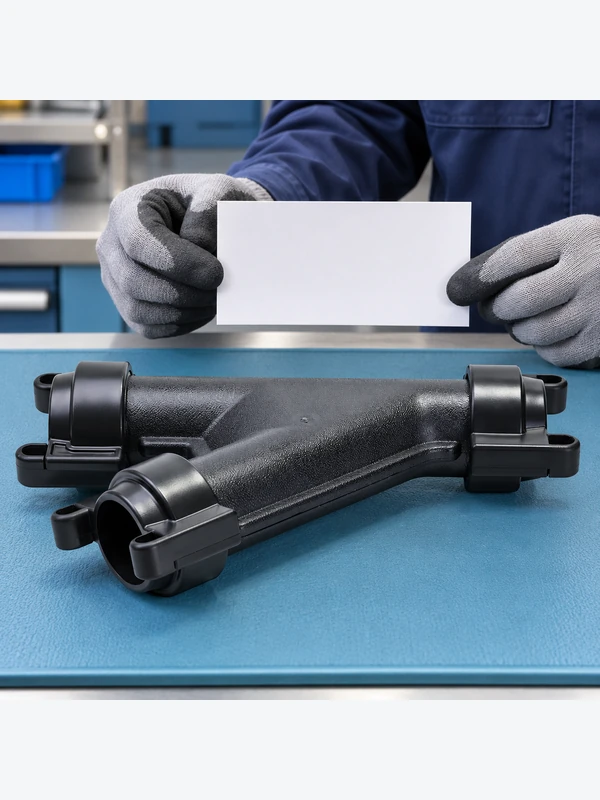
Cette distinction est importante car FTTx constitue une famille d’expressions géographiques : la dernière lettre désigne le point d’extrémité, comme dans fibre jusqu’au domicile (FTTH), jusqu’au bâtiment, jusqu’au boîtier ou jusqu’à un autre point défini. FTTM doit être interprété dans le contexte industriel et projeté qui lui est propre, plutôt que d’être supposé désigner un point d’extrémité ou une architecture de service universels. Un document d’approvisionnement devrait donc remplacer l’acronyme par un schéma de réseau, un tableau des interfaces et une carte des services.
Pour une vue pratique du chemin physique, consultez connecteurs de microgaine dans les réseaux FTTH. Le raccord soutient le parcours du conduit ; il ne définit pas le protocole d’accès optique ni ne garantit aucun service multimédia.
Précisez si FTTM désigne une machine, un service mobile ou un terme relatif aux services locaux.
Un 2025 de mai Article hébergé par Huawei, rédigé par Stephen Wilson d’Omdia utilise la fibre jusqu’à la machine pour assurer la connectivité de fabrication. A Article de ZTE provenant de 2014 utilise explicitement la technologie Fiber-to-the-Mobile dans le cadre du déploiement de la 4G LTE. Ces exemples montrent que l’acronyme a plus d’une utilisation documentée ; ils ne prouvent toutefois pas qu’une de ces architectures convient à tous les projets.
L’exemple mobile concerne une technologie LTE historique, et ne constitue pas une preuve des volumes de déploiement actuels ni d’une conception universelle 5G. L’article sur la fabrication est hébergé par le fournisseur ; par conséquent, ses affirmations relatives aux performances et aux économies propres à sa plateforme ne doivent pas être appliquées à des produits non liés. La conclusion utile est plus restreinte : précisez l’objectif final et indiquez les équipements réels ainsi que les exigences réseau avant de comparer les solutions.
Pour un projet résidentiel ou en bâtiment, le Comparaison entre le FTTR et le FTTH propose une terminologie plus claire pour les points d’extrémité. Pour une usine ou un site mobile, documentez plutôt le raccordement entre la machine, l’armoire ou le site radio. Une fois cette limite définie, le trajet, la fibre optique, la réception du service et le plan de maintenance peuvent être spécifiés sans recourir à une appellation ambiguë.
Comment un réseau d’accès fibre transporte-t-il plusieurs services ?
Un réseau d’accès fibre transporte des signaux optiques codés entre un nœud d’accès et l’équipement côté client. La gestion de l’offre de services est ensuite assurée par le terminal d’accès optique de l’opérateur, l’unité ou le terminal de réseau optique, les équipements Ethernet, les passerelles de service ainsi que les plateformes vidéo ou vocales concernées. La fibre constitue le support de transmission ; elle ne garantit pas pour autant la disponibilité de tous les services sur chaque installation.
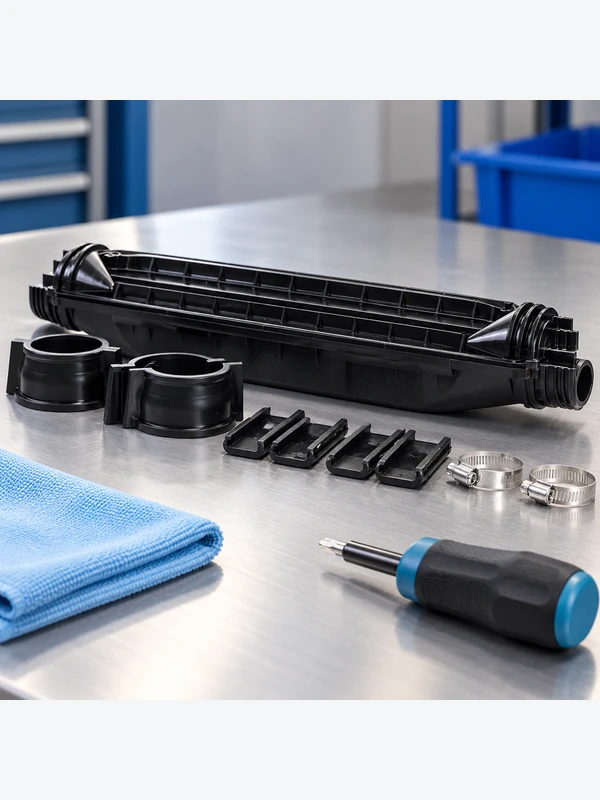
GPON et XGS-PON illustrent pourquoi la technologie sous-jacente doit être nommée. L’ITU-T G.984 est une famille de recommandations pour les réseaux optiques passifs à capacité gigabit, tandis que l’ITU-T G.9807.1 spécifie un système de réseau optique passif symétrique 10-Gigabit-capable. Ces références décrivent différentes capacités et interfaces des systèmes d’accès ; elles ne transforment pas l’appellation informelle FTTM en une architecture standard. L’équipement de réseau optique sélectionné et le profil de service de l’opérateur demeurent les éléments déterminants.
La convergence des services exige également une séparation et un provisionnement corrects. Internet, la voix et la vidéo peuvent utiliser des services logiques distincts, des VLAN, des règles de qualité de service, une gestion du multicast ou des équipements situés chez le client. Ces détails relèvent de la conception et des critères d’acceptation de l’opérateur. Ne les déduisez pas de l’expression “ fibre jusqu’au multimédia ”, d’une photographie d’un connecteur ou d’un titre consacré aux réseaux d’accès futurs.
Le plus large FTTx discussion can help compare endpoint concepts, but it should not be used as proof that one FTTM architecture is commercially universal.
Which physical interfaces matter before an FTTM quote?
Once the service and access technology are defined, the physical route becomes a sequence of interfaces: feeder or distribution fiber, closures and cabinets, microduct or conduit, connectors, bend locations, and the customer-side termination. The route drawing should show where each interface starts and ends, how it is protected, and how it will be opened for maintenance.
For a microduct route, verify the actual duct material, inside and outside dimensions, cable or fiber-unit dimensions, bend plan, joint arrangement, and environmental exposure. A connector that fits one duct outside diameter may not fit another, and a physically compatible fitting does not prove air tightness, water blocking, or suitability for a particular installation method. Request the supplier’s dimensional drawing and installation instructions, then match them to the route records.
Fiber carries the service signal, while the microduct connector retains the pathway joint. Keep those responsibilities separate in the specification. A route designed for air-blown fiber should also state the duct continuity, allowable bends, end preparation, sealing approach, and the checks required before blowing. For background on the transmission medium itself, read how optical fiber communication works.
How should buyers compare FTTM, FTTH, and other FTTx choices?
The useful comparison is not “which acronym is best?” It is whether the proposed endpoint, access technology, service handoff, route, and maintenance plan fit the actual project. The table below uses an explicitly defined multimedia scope for its FTTM row; machine and mobile uses need their own endpoint definitions.
| Label or design choice | What it communicates | What it leaves open | Éléments de preuve à demander |
|---|---|---|---|
| FTTM (fiber to the multimedia) | A stated intention to deliver multiple services over a fiber-based access network. | Endpoint, protocol, service separation, equipment, and acceptance limits. | Network diagram, service map, access-system name, endpoint equipment, and test plan. |
| FTTH | Fiber reaches the home or dwelling endpoint in the defined project scope. | Whether the access system is GPON, XGS-PON, Ethernet, or another design. | Termination location, optical budget, customer equipment, and operator interface requirements. |
| Other FTTx endpoint | Fiber endpoint is identified by the final letter and project definition. | How the remaining segment is built and which services are activated. | Endpoint drawing, copper or radio segment where applicable, and service handoff requirements. |
| Access technology | Defines the optical or Ethernet system used to transport the services. | Physical route quality and compatibility of ducts, fittings, and terminations. | Applicable ITU-T or equipment specification, wavelengths, optics, and loss limits. |
| Pathway and fittings | Provides the protected physical route for the cable or fiber unit. | Service availability, bandwidth, and protocol behavior. | Dimensional drawings, material and environment requirements, installation method, and records. |
| Scope item | Confirm before quoting | Evidence or condition |
|---|---|---|
| Access endpoint | Home, building, cabinet, or another project-defined termination point. | Approved topology drawing and service handoff; the FTTM label alone is insufficient. |
| Pathway | Duct or conduit dimensions, route geometry, access points, joints, and environment. | As-built or survey records, dimensional drawings, and the selected installation method. |
| Passive components | Splitters, closures, connectors, couplers, and terminations where the design uses them. | Manufacturer data sheets, compatibility checks, and a route-specific optical budget. |
| Active electronics | OLT, ONU/ONT, Ethernet equipment, gateways, and service interfaces in the operator design. | Equipment documentation and the applicable access-system reference, such as ITU-T G.984 or G.9807.1. |
| Preuve d'acceptation | Physical inspection, optical loss measurement, event location, and required service tests. | Contract method, wavelengths, limits, fiber identifiers, test records, and as-built route. |
What should the design and acceptance plan measure?
Start with the access equipment’s published optical parameters and the route length. Build a project-specific loss budget that accounts for fiber attenuation, splices, connector pairs, splitters where used, and an agreed engineering reserve. The component values must come from the selected equipment and route; there is no universal FTTM loss limit.
At acceptance, use the method named in the contract. An optical loss test set can measure end-to-end insertion loss at specified wavelengths; an optical time-domain reflectometer can help locate events and characterize the route. These methods answer different questions, so an OTDR trace should not silently replace an agreed end-to-end measurement. Record fiber identifiers, reference method, wavelengths, limits, results, and the as-built route.
Service acceptance may need additional checks for the operator’s provisioning, voice registration, video or multicast behavior, latency, and failover design. Those are service and system tests, not properties that can be inferred from the fiber or a microduct connector alone. Document who supplies each test, which equipment is in scope, and what happens when a result falls outside the agreed limit.
Keep pathway, optical and service handovers separate
A useful acceptance file has three distinct layers. Pathway evidence identifies the duct route, dimensions, joints, access points and installation checks. Optical evidence identifies the fiber, terminations, loss budget and measured results. Service evidence records the required connectivity and application behavior at the operator-defined handoff. A pass in one layer does not automatically establish the other two.
For optical acceptance, Fluke Networks distinguishes OTDR characterization from end-to-end loss measurement. Specify which methods are required, the test boundary, wavelengths and limits. For service acceptance, name the actual equipment ports and required functions; voice, video, industrial traffic or mobile transport can require different checks. Avoid importing a generic service checklist into an unrelated application.
Where the pathway uses microconduits en HDPE, keep duct identifiers and actual dimensions with the selected cable or fiber-unit record. If installation uses blowing equipment, verify the route and component limits before scheduling the crew. Neither an optical bandwidth claim nor a multimedia service description establishes that a duct joint will suit the planned installation.
Le air-blown and conventional cabling comparison can support the pathway decision. Retain the as-built route and separate test records after handover. If an upgrade changes optics, service equipment or cable construction, review the affected layer and its interfaces rather than assuming that the original FTTM label preserves compatibility.
Which standards and claims should appear in the procurement file?
ITU-T G.984 and ITU-T G.9807.1 are named access-system recommendations with different scopes. They are not product certificates for a duct fitting, nor do they certify a completed route or a service provider. The procurement file should identify the exact recommendation or equipment specification that applies, its edition where relevant, and the interface requirements that must be demonstrated.
FTTH Council Europe provides public resources about fiber deployment and market context, but a market resource does not establish a technical requirement for an individual project. Likewise, a supplier’s “FTTM-ready” phrase should be treated as a claim to verify, not as a recognized compliance category. Unsupported claims can lead to rejected submittals, incompatible optics, or rework at the access cabinet.
How can a buyer turn an FTTM brief into a buildable specification?
- Define each service, customer endpoint, handoff, availability expectation, and ownership boundary; replace FTTM with the actual topology in the drawing.
- Name the access technology and equipment family, including optics, wavelengths, splitters or Ethernet devices, and the published loss budget.
- Survey the pathway: duct dimensions, route geometry, access points, environmental exposure, joints, and the cable or fiber-unit installation method.
- Request dimensional drawings, material data, installation instructions, and test evidence for every connector and closure in the route.
- Write the acceptance plan before purchase, separating optical loss, physical inspection, and service-level tests with named records and limits.
Microduct Connector can help review the pathway and fitting portion of that package against the documented duct dimensions and application. Browse the microduct connectors range and send the route drawing, duct data, and installation method for a specification discussion; the access protocol and service platform should still be confirmed by the network operator.
Foire aux questions
Is FTTM an official fiber access standard?
The acronym alone is not a technical standard. Machine and mobile are documented industry uses, while a multimedia project needs its own explicit definition. Formal access recommendations such as ITU-T G.984 and G.9807.1 define specific PON systems. Ask the project owner to state the topology and access technology rather than accepting the acronym alone.
How is FTTM related to FTTH?
FTTH describes the fiber endpoint at the home or dwelling. FTTM must first be expanded in context; when a project explicitly uses it for multimedia delivery, it describes that service intent. An FTTH network may carry multimedia services, but the terms answer different questions. Confirm both the endpoint and the service architecture.
Does FTTM mean internet, television, and telephone always share one fiber?
They may be transported over one fiber access network, but the exact logical services, equipment, and provisioning depend on the operator design. Voice, video, and data can have separate service profiles even when they share a physical route. Require the service map and customer equipment specification.
Does a microduct connector determine FTTM performance?
No. A connector supports the physical duct pathway and its joint; it does not set the PON protocol, optical budget, or service quality. Verify dimensions, sealing, environmental requirements, and installation records separately from the optical and service tests.
Which PON technology should an FTTM project use?
There is no universal answer. GPON under ITU-T G.984, XGS-PON under ITU-T G.9807.1, Ethernet, and other designs may fit different equipment, capacity, migration, and service requirements. Select from the operator’s endpoint, optics, capacity plan, and acceptance criteria.
What should be tested before a multimedia fiber service goes live?
Test the physical route and optical loss using the agreed method and wavelengths, then perform the operator’s service tests for provisioning and the required voice, video, or data behavior. Keep results tied to fiber IDs and the as-built route. A connector inspection alone cannot prove end-to-end service readiness.
Does FTTM always mean fiber to the multimedia?
Non. Les publications sectorielles utilisent également FTTM pour désigner la fibre jusqu’à la machine et la fibre jusqu’au mobile. Développez l’acronyme dans le cahier des charges du projet et précisez le point d’extrémité, la topologie et l’équipement d’accès. Une interprétation multimédia doit être présentée comme une définition de projet explicite, et non comme une signification universelle reconnue dans l’industrie.
Un article FTTM sur la LTE établit-il des exigences pour un nouveau réseau mobile ?
Non. Un article historique sur un déploiement peut indiquer la manière dont l’auteur a utilisé le terme, mais il ne saurait se substituer aux spécifications actuelles de transport, d’équipement et d’acceptation de l’opérateur. Vérifiez la date de publication et le domaine d’application avant de réutiliser des énoncés techniques ou des données de performance.
Références
- ITU-T G.984, Gigabit-capable passive optical networks (GPON).
- ITU-T G.9807.1, 10-Gigabit-capable symmetric passive optical network (XGS-PON).
- FTTH Council Europe, public fiber deployment resources.
- Huawei / Omdia: Fibre to the Machine for Innovative Manufacturing Companies (2025)
- ZTE: FTTM Enables Rapid and Flexible LTE Deployment (2014; historical context)
- Fluke Networks: OTDR and Optical Link Testing
Résumé
Define FTTM before designing the network: machine, mobile and a locally defined multimedia scope imply different endpoints and requirements. Name the actual topology, access equipment and service handoff, then specify the pathway and optical budget against that design. Keep pathway checks, optical measurements and service acceptance as distinct records. This makes the project buildable and maintainable without treating an ambiguous acronym or a vendor’s application example as a universal architecture.



