APERÇUS DE L'INDUSTRIE

Actualités et blog

Actualités de l'industrie, guides techniques et conseils pratiques pour les professionnels des microconduits, de l'installation de fibres optiques et des raccordements pneumatiques.

Derniers articles

Articles

Metric Push-to-Connect Fittings: Choosing 4, 5, 6 and 8 mm Sizes

Metric Push-to-Connect Fittings: Choosing 4, 5, 6 and 8 mm Sizes

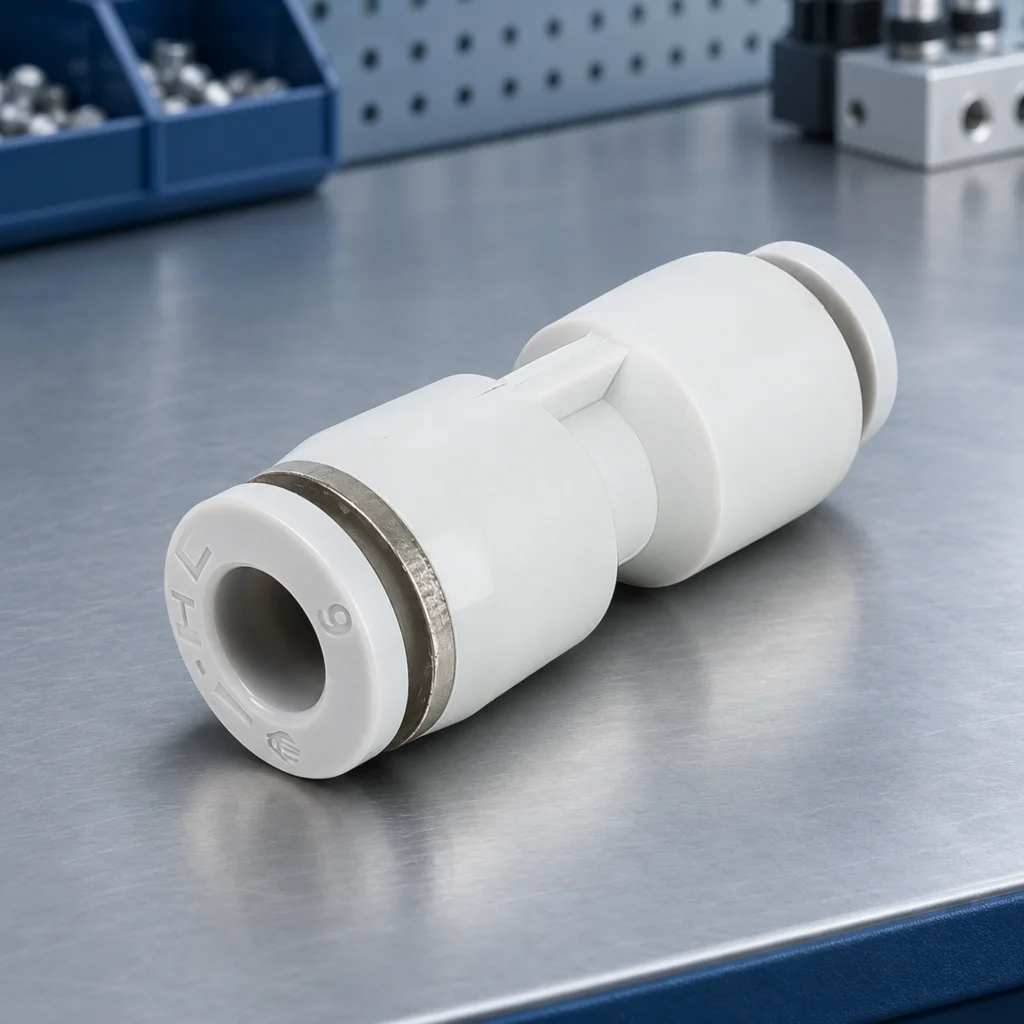
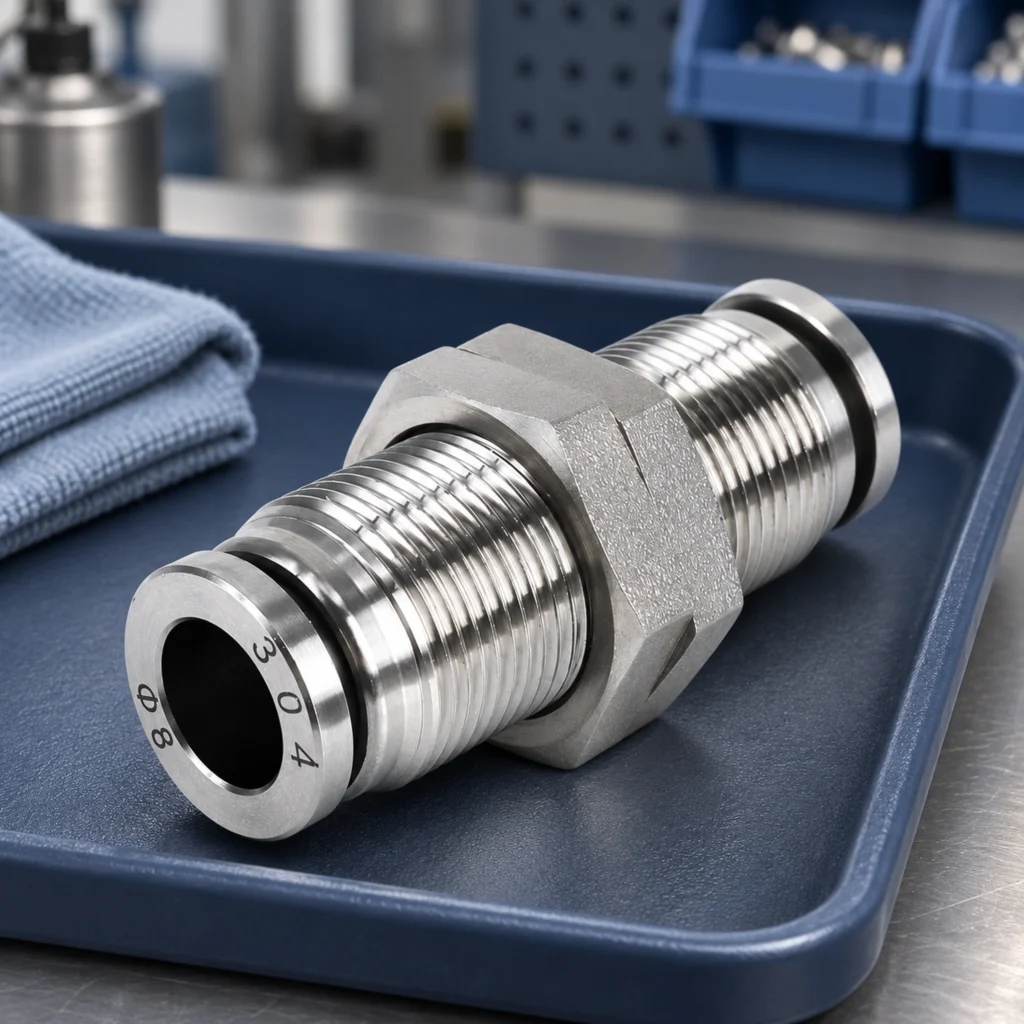
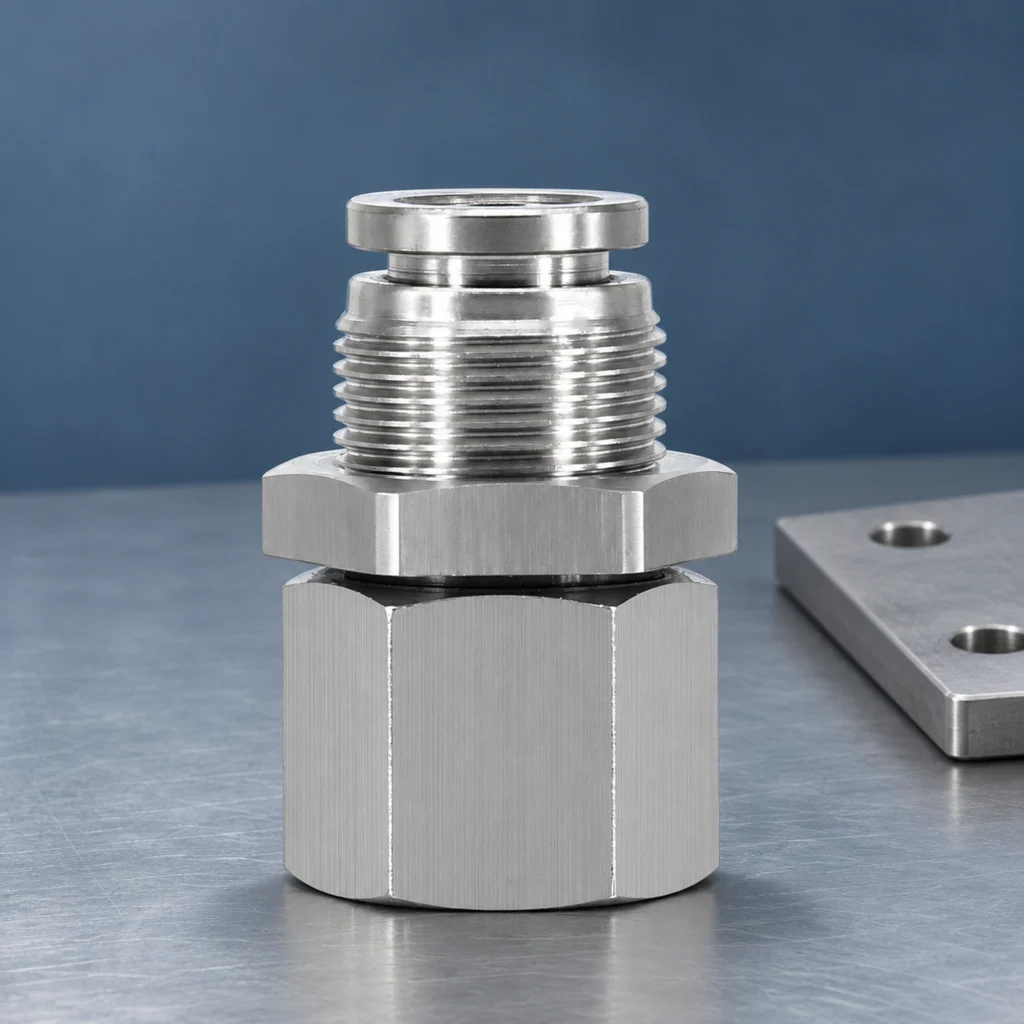
A metric push-to-connect fitting is selected by the actual outside diameter of its approved tube. A 6 mm socket is not a general-purpose connector for anything close to 6 mm, and a larger outside diameter does not by itself establish a particular flow capacity. Correct sizing combines tube OD, wall or bore, material, route and operating conditions. This guide covers metric push-to-connect fittings for…
Voir les détails
1/4-Inch Push-to-Connect Fittings: Tube and Thread Buying Guide

1/4-Inch Push-to-Connect Fittings: Tube and Thread Buying Guide

“1/4-inch fitting” can mean a fitting for 1/4-inch outside-diameter tubing, a fitting with a nominal 1/4-inch pipe thread, or a component that has both. These are different specifications. Before ordering, identify which end the size describes and whether the application uses air, water or another fluid. A familiar-looking connector is not enough to establish compatibility. This buying guide explains 1/4-inch push-to-connect fittings for pneumatic…

Voir les détails
Push-In Tube Fittings: Tube OD, Pipe Threads and Compatibility

Push-In Tube Fittings: Tube OD, Pipe Threads and Compatibility

A push-in fitting is compatible with a tube only when the connection size, material, dimensional tolerance and operating conditions agree. A tube that enters the socket is not necessarily approved for it. Likewise, a threaded end that starts into a port is not proof of the correct thread. These are separate interfaces and should be specified separately. Buyers searching for push-to-connect tube fittings often…

Voir les détails
Push-to-Connect Air Fittings: Choosing the Right Shape

Push-to-Connect Air Fittings: Choosing the Right Shape

Choose an air fitting by the connection it must make and the direction the tube needs to leave. A straight union joins tube to tube; a male straight fitting connects tube to a threaded port. Elbows change direction, tees and Y fittings create branches, reducers change tube size, and bulkhead fittings provide a defined connection through a panel. Similar-looking parts can perform different jobs.…

Voir les détails
How Do Pneumatic Push-to-Connect Fittings Work?

How Do Pneumatic Push-to-Connect Fittings Work?

A pneumatic push-to-connect fitting performs two separate jobs: it retains the tube and seals around its outside surface. The gripping parts resist withdrawal, while the sealing element limits leakage. The tube must be the correct size and material, with an undamaged surface and full insertion. Feeling a tube catch in the socket is not enough to establish that it is correctly installed. Understanding how…

Voir les détails
Underground Fiber Optic Cable Installation: A Planning Checklist

Underground Fiber Optic Cable Installation: A Planning Checklist

Underground fiber installation involves two different decisions: how to construct the route and how to place the cable in it. Trenching, plowing, microtrenching and horizontal directional drilling address civil construction. Pulling or blowing cable into an accepted duct is a later operation. Mixing these decisions too early can produce a route that is easy to build but difficult to cable, maintain or expand. This…

Voir les détails
FTTH vs FTTx: Planning Duct Routes for Fiber Access Networks

FTTH vs FTTx: Planning Duct Routes for Fiber Access Networks

FTTH describes a fiber connection that reaches an individual home. FTTx is the broader family of access networks in which fiber ends at different locations, such as a building, street cabinet or premises. For a contractor or procurement team, that endpoint changes the civil route, distribution equipment, property access and final connection work. Buying the same duct package for every architecture can leave the…

Voir les détails
Câble à fibres optiques : son fonctionnement et les protections qui l’assurent

Câble à fibres optiques : son fonctionnement et les protections qui l’assurent

Dans le cadre d’une mise à niveau hypothétique du réseau d’une usine à Birmingham, une liaison fibre optique récemment installée fonctionne lors du premier test, mais devient peu fiable après la fermeture d’un armoire. Les émetteurs-récepteurs sont compatibles et le nombre de fibres est correct. Toutefois, le câble a été contraint de former une boucle serrée derrière le panneau. Comprendre comment la fibre optique transporte la lumière est utile, mais comprendre ce qui protège le câble l’est encore plus…

Voir les détails
Dimensionnement des gaines optiques intérieures : gaine 1-Inch contre gaine 1-1/4-Inch

Dimensionnement des gaines optiques intérieures : gaine 1-Inch contre gaine 1-1/4-Inch

Imaginez un entrepreneur en réseaux comparant les conduits internes de 1-inch et 1 d’un quart de pouce pour un campus d’entrepôt à Leeds. L’option la plus petite semble moins chère et le câble y passe dans un échantillon. Pourtant, le devis omet le système dimensionnel, l’épaisseur de paroi et l’espace libre au niveau du raccord proposé. Choisir uniquement sur la base de la désignation nominale pourrait laisser trop peu d’espace utile là où cela compte vraiment. Le dimensionnement des conduits internes pour fibres optiques commence…

Voir les détails