Perspetivas da Indústria

Notícias e Blog

Notícias da indústria, guias técnicos e conhecimentos práticos de projetos para profissionais de microdutos, instalação de fibra e ligação pneumática.

Últimos Artigos

Artigos

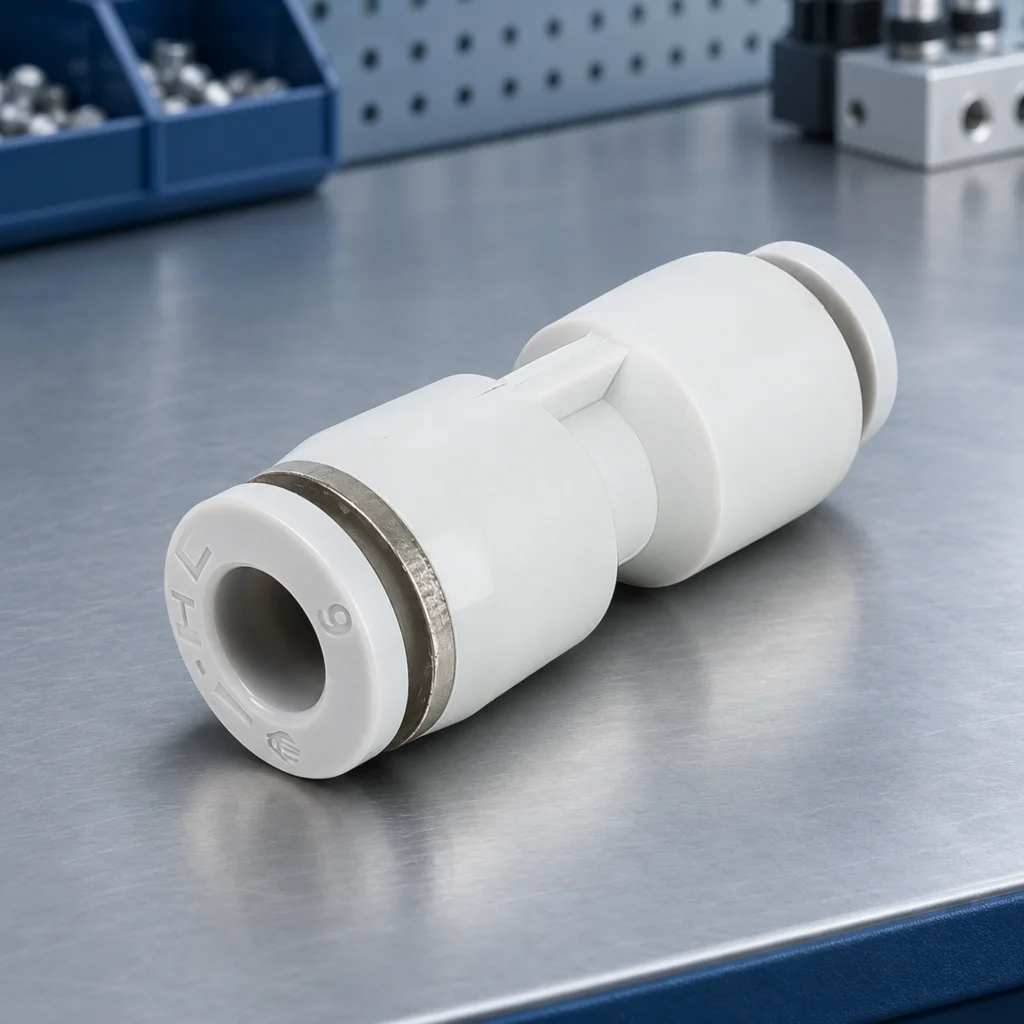
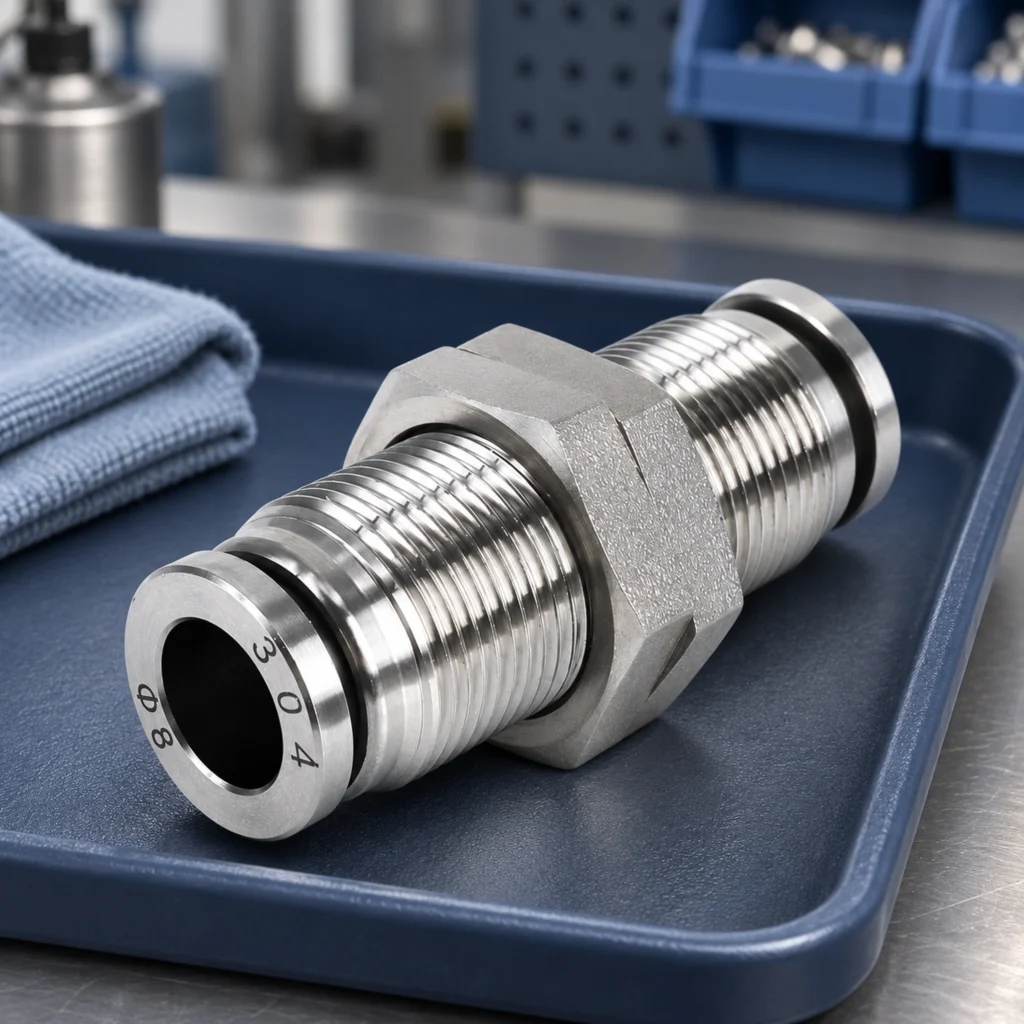
Metric Push-to-Connect Fittings: Choosing 4, 5, 6 and 8 mm Sizes

Metric Push-to-Connect Fittings: Choosing 4, 5, 6 and 8 mm Sizes

A metric push-to-connect fitting is selected by the actual outside diameter of its approved tube. A 6 mm socket is not a general-purpose connector for anything close to 6 mm, and a larger outside diameter does not by itself establish a particular flow capacity. Correct sizing combines tube OD, wall or bore, material, route and operating conditions. This guide covers metric push-to-connect fittings for…
Ver Detalhe
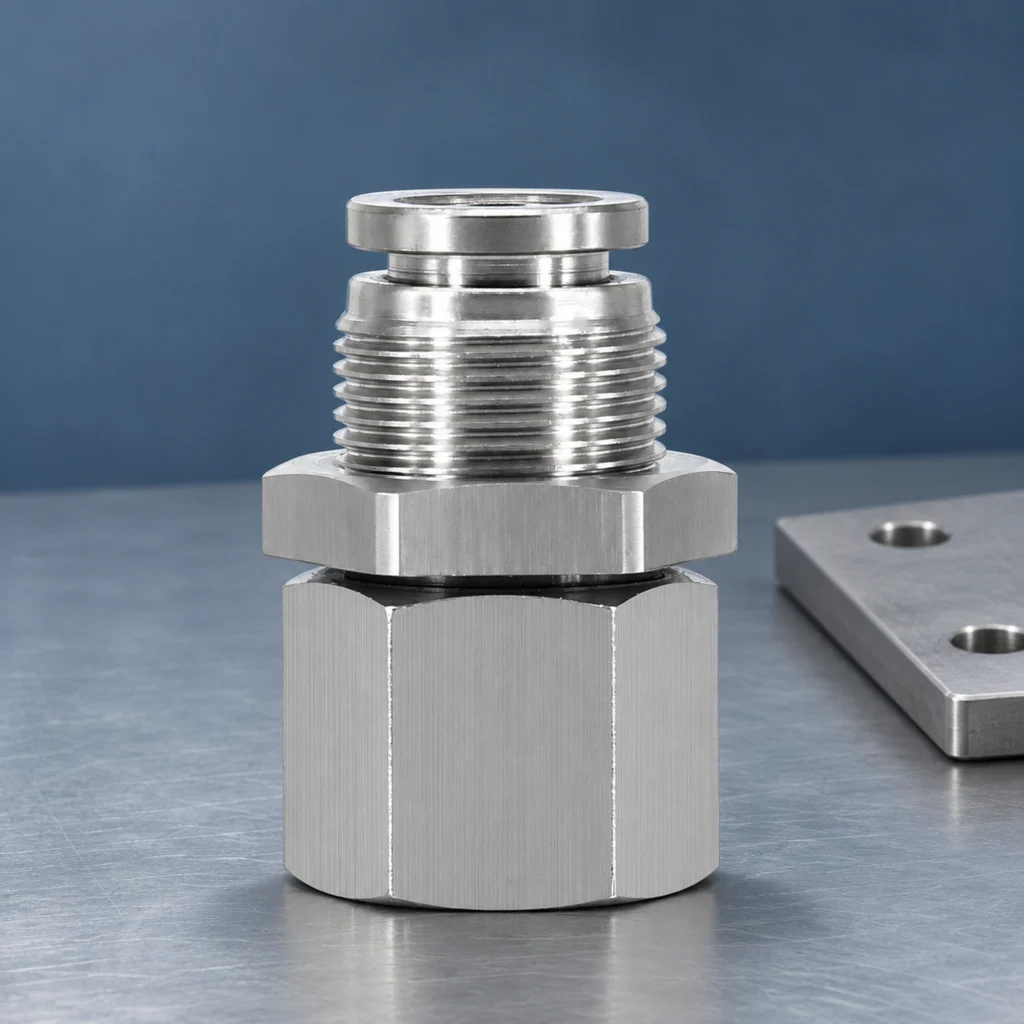
1/4-Inch Push-to-Connect Fittings: Tube and Thread Buying Guide

1/4-Inch Push-to-Connect Fittings: Tube and Thread Buying Guide

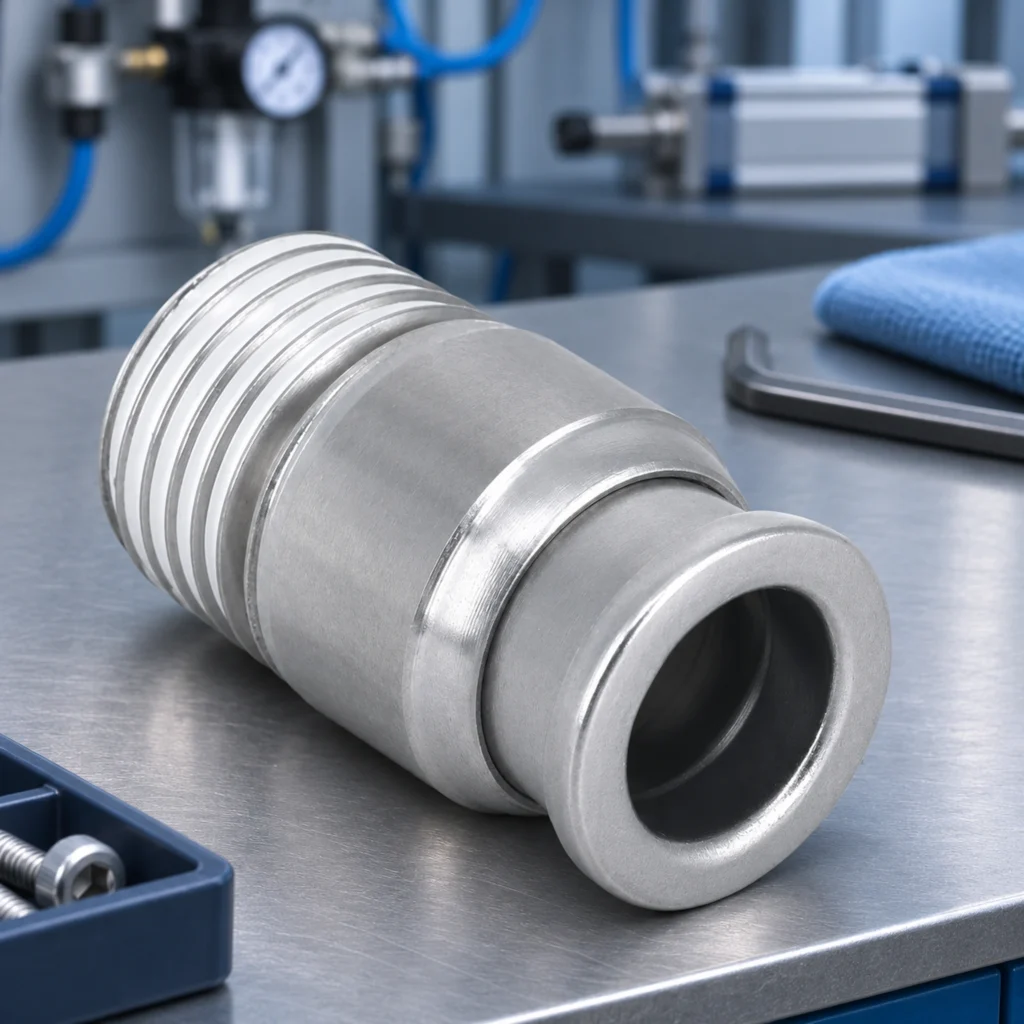
“1/4-inch fitting” can mean a fitting for 1/4-inch outside-diameter tubing, a fitting with a nominal 1/4-inch pipe thread, or a component that has both. These are different specifications. Before ordering, identify which end the size describes and whether the application uses air, water or another fluid. A familiar-looking connector is not enough to establish compatibility. This buying guide explains 1/4-inch push-to-connect fittings for pneumatic…

Ver Detalhe
Push-In Tube Fittings: Tube OD, Pipe Threads and Compatibility

Push-In Tube Fittings: Tube OD, Pipe Threads and Compatibility

A push-in fitting is compatible with a tube only when the connection size, material, dimensional tolerance and operating conditions agree. A tube that enters the socket is not necessarily approved for it. Likewise, a threaded end that starts into a port is not proof of the correct thread. These are separate interfaces and should be specified separately. Buyers searching for push-to-connect tube fittings often…

Ver Detalhe
Push-to-Connect Air Fittings: Choosing the Right Shape

Push-to-Connect Air Fittings: Choosing the Right Shape

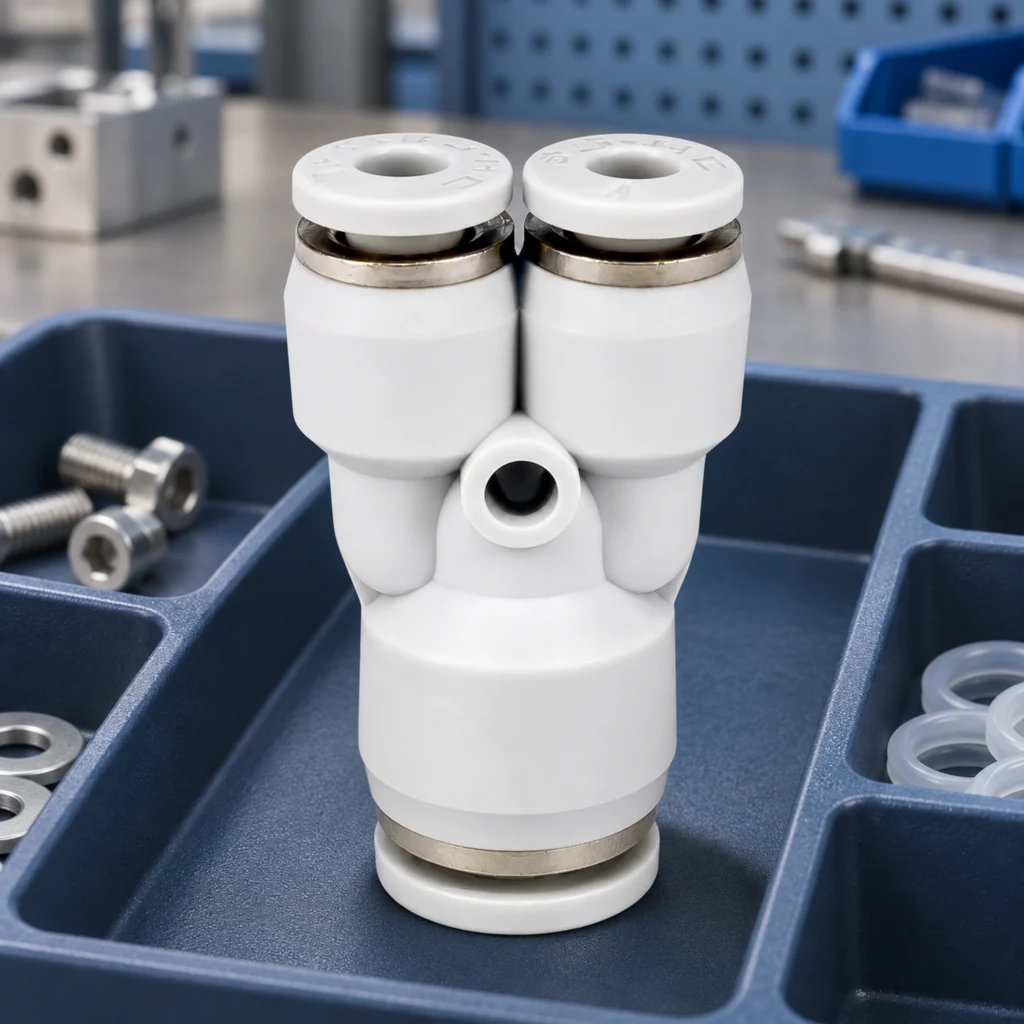
Choose an air fitting by the connection it must make and the direction the tube needs to leave. A straight union joins tube to tube; a male straight fitting connects tube to a threaded port. Elbows change direction, tees and Y fittings create branches, reducers change tube size, and bulkhead fittings provide a defined connection through a panel. Similar-looking parts can perform different jobs.…

Ver Detalhe
How Do Pneumatic Push-to-Connect Fittings Work?

How Do Pneumatic Push-to-Connect Fittings Work?

A pneumatic push-to-connect fitting performs two separate jobs: it retains the tube and seals around its outside surface. The gripping parts resist withdrawal, while the sealing element limits leakage. The tube must be the correct size and material, with an undamaged surface and full insertion. Feeling a tube catch in the socket is not enough to establish that it is correctly installed. Understanding how…

Ver Detalhe
Underground Fiber Optic Cable Installation: A Planning Checklist

Underground Fiber Optic Cable Installation: A Planning Checklist

Underground fiber installation involves two different decisions: how to construct the route and how to place the cable in it. Trenching, plowing, microtrenching and horizontal directional drilling address civil construction. Pulling or blowing cable into an accepted duct is a later operation. Mixing these decisions too early can produce a route that is easy to build but difficult to cable, maintain or expand. This…

Ver Detalhe
FTTH vs FTTx: Planning Duct Routes for Fiber Access Networks

FTTH vs FTTx: Planning Duct Routes for Fiber Access Networks

FTTH describes a fiber connection that reaches an individual home. FTTx is the broader family of access networks in which fiber ends at different locations, such as a building, street cabinet or premises. For a contractor or procurement team, that endpoint changes the civil route, distribution equipment, property access and final connection work. Buying the same duct package for every architecture can leave the…

Ver Detalhe
Cabo de Fibra Óptica: Como Funciona e O Que o Protege

Cabo de Fibra Óptica: Como Funciona e O Que o Protege

Em uma atualização hipotética da rede de uma fábrica em Birmingham, um link de fibra recém-instalado funciona durante o primeiro teste, mas torna-se instável após o fechamento de um painel. Os transceptores são compatíveis e a contagem de fibras está correta. No entanto, o cabo foi forçado a formar um laço apertado atrás do painel. Compreender como a fibra óptica conduz a luz é útil, mas compreender o que protege o cabo é…

Ver Detalhe
Dimensionamento do Duto Interno de Fibra Óptica: 1-Inch vs. 1-1/4-Inch Duto

Dimensionamento do Duto Interno de Fibra Óptica: 1-Inch vs. 1-1/4-Inch Duto

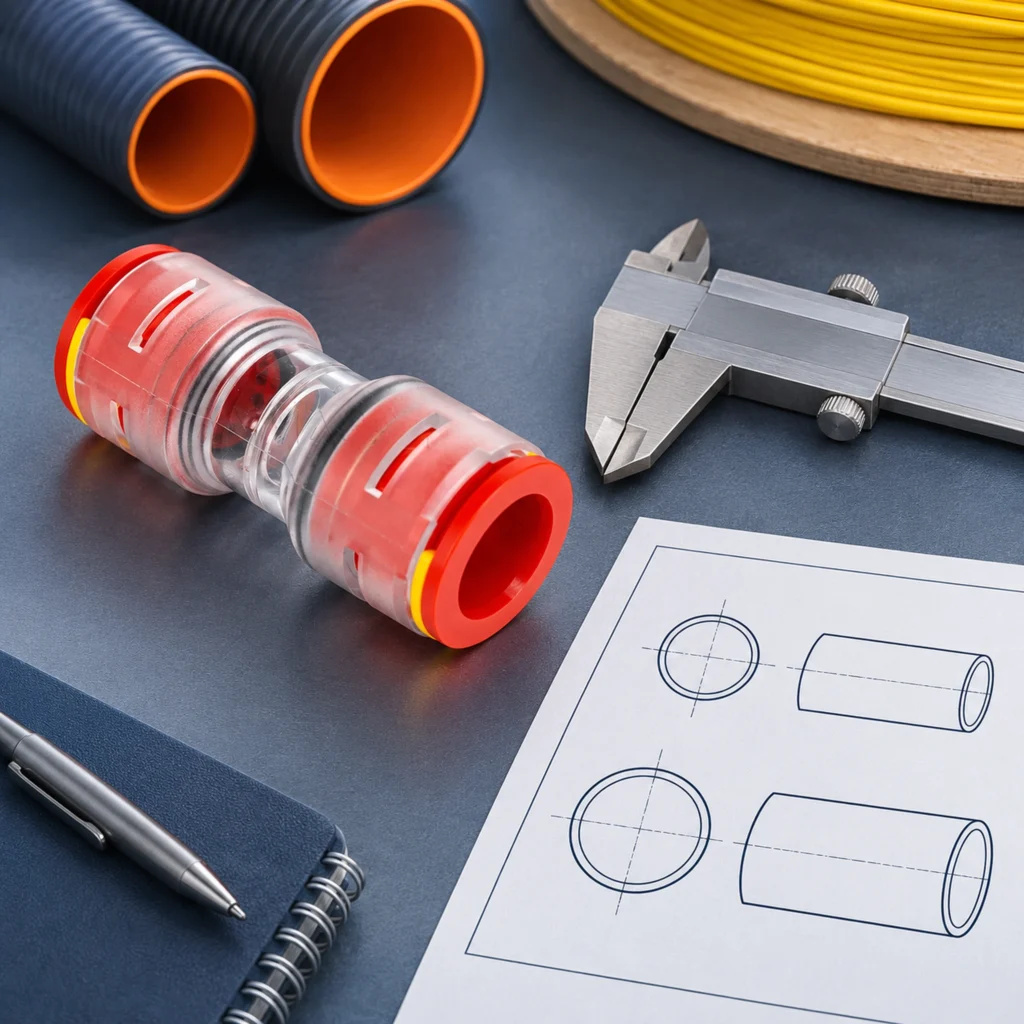
Imagine um empreiteiro de redes comparando o innerduct de 1-inch e o de 1 com diâmetro interno de ¼ de polegada para um campus de armazém em Leeds. A opção menor parece mais barata e o cabo cabe em uma amostra. No entanto, a cotação omite o sistema dimensional, a espessura da parede e a folga ao passar pelo acoplamento proposto. Escolher apenas pelo nome nominal pode deixar muito pouco espaço útil no ponto que realmente importa. O dimensionamento do innerduct para fibra óptica começa…

Ver Detalhe