Perspetivas da Indústria

Notícias e Blog

Notícias da indústria, guias técnicos e conhecimentos práticos de projetos para profissionais de microdutos, instalação de fibra e ligação pneumática.

Últimos Artigos

Artigos

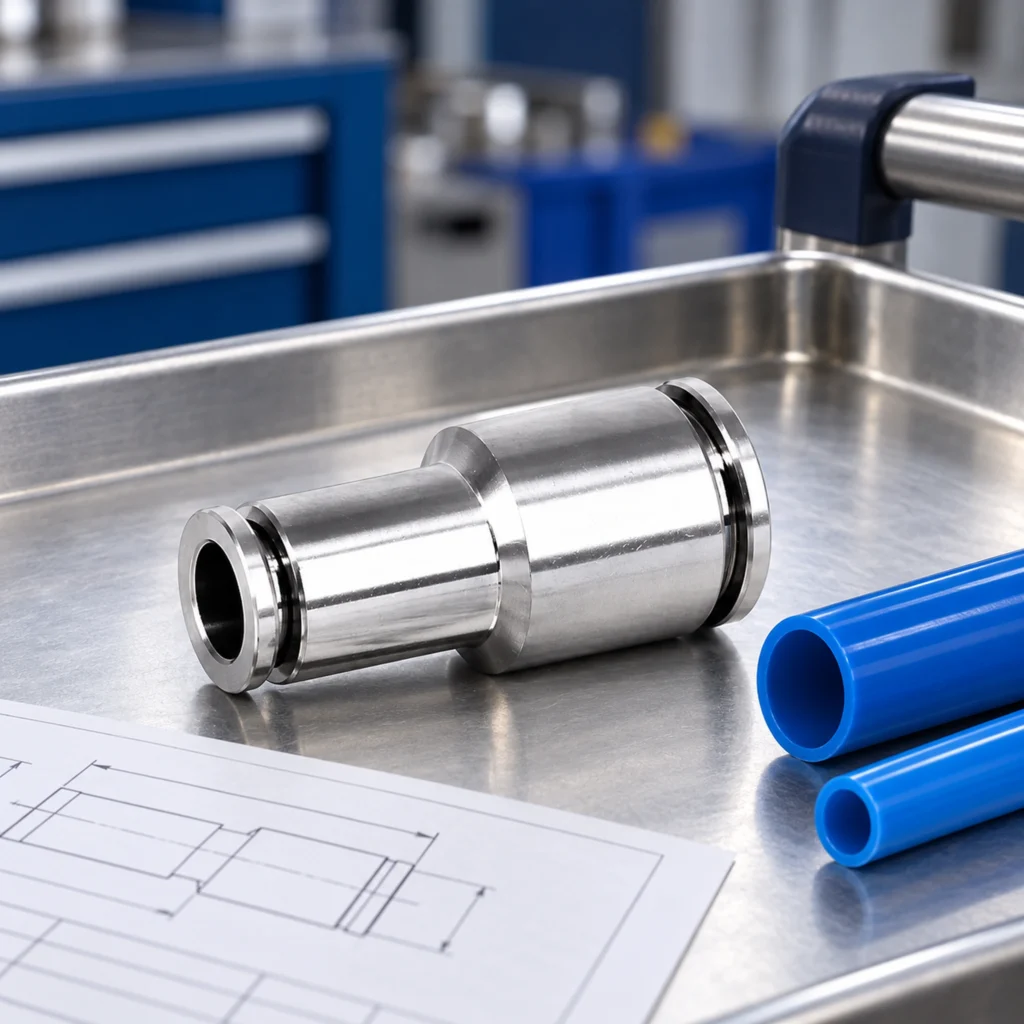
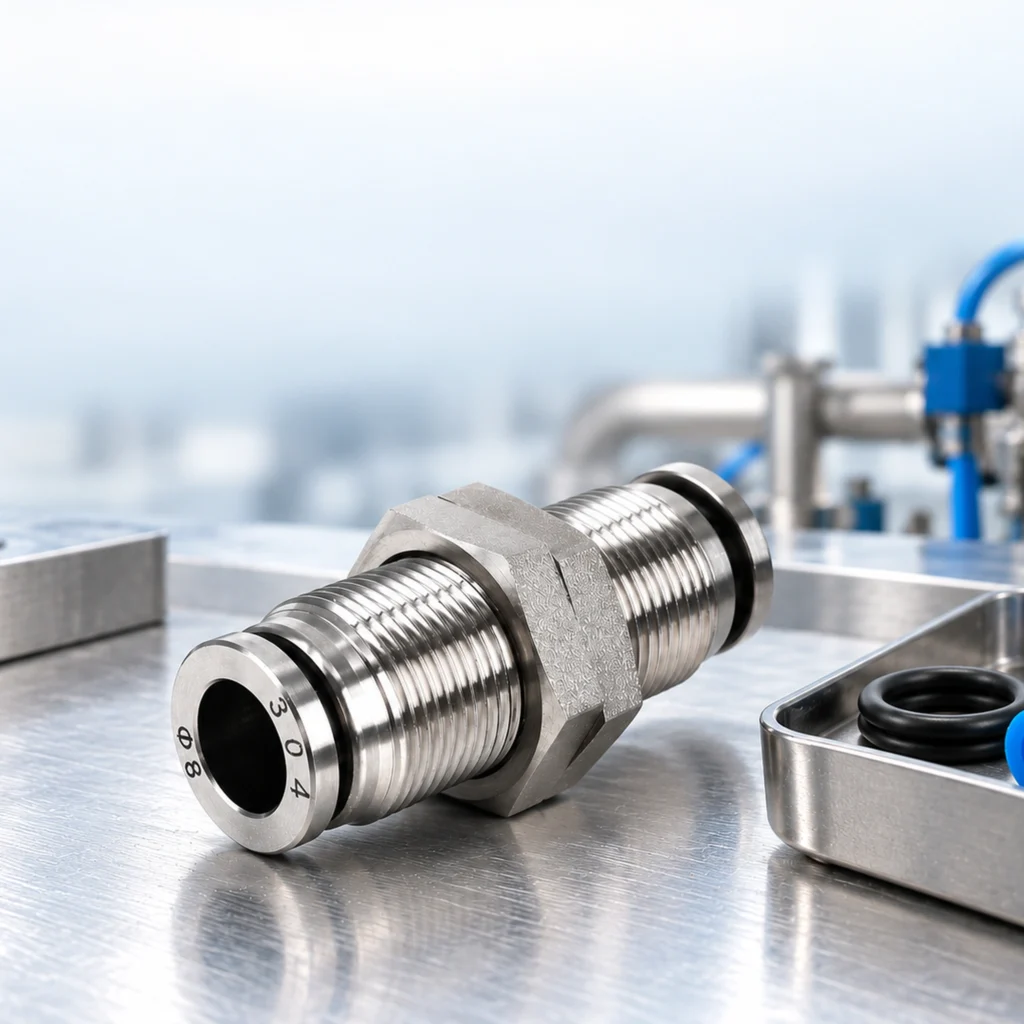
Stainless Steel Reducer: How to Choose Grade, Thread and Pressure Rating

Stainless Steel Reducer: How to Choose Grade, Thread and Pressure Rating

Consider a hypothetical maintenance job: a technician in Birmingham replaces a corroded adapter with a stainless steel reducer, reconnects the air line and restarts the machine. The connection stays dry, but the actuator now moves too slowly. The new part matches the visible tube sizes; its smaller passage and the downstream tubing were never checked against demand. Changing the material has solved one concern…
Ver Detalhe
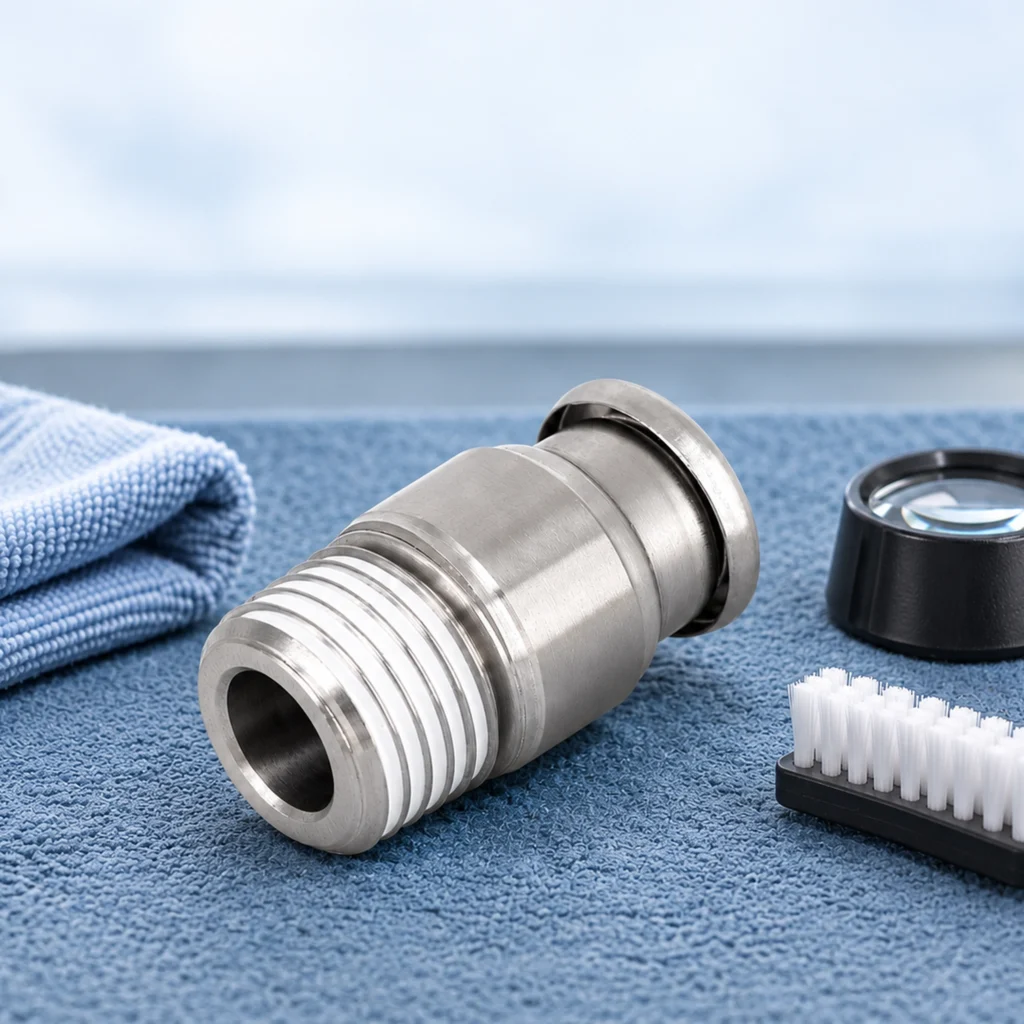
How to Clean and Maintain Stainless Steel Air Fittings

How to Clean and Maintain Stainless Steel Air Fittings

A clean-looking pneumatic connection can still leak, and a discolored connection does not reveal the cause of the problem by itself. Maintenance needs to distinguish removable contamination from damaged tubing, worn connection surfaces, unsuitable cleaning exposure and faults elsewhere in the circuit. Otherwise a fitting may be polished and reinstalled while the condition that caused the failure remains unchanged. Maintain stainless steel air fittings…

Ver Detalhe
How to Select Stainless Steel Push-In Fittings for Air, Water and Chemicals

How to Select Stainless Steel Push-In Fittings for Air, Water and Chemicals

A stainless fitting that works on a compressed-air line is not automatically suitable for water or a cleaning chemical. The metal body is only one part of the connection. The fluid also meets sealing materials and tubing, and the working conditions may differ substantially from those of the original pneumatic application. A reliable selection starts with the actual fluid and operating cycle, then checks…

Ver Detalhe
Push-In or Threaded Stainless Steel Pipe Fitting: Which Connection Is Better?

Push-In or Threaded Stainless Steel Pipe Fitting: Which Connection Is Better?

A buyer may be asked to choose a push-in fitting or a threaded fitting even though the proposed part contains both. One end accepts a tube and the other connects to an equipment port. Comparing those descriptions as complete alternatives can lead to ordering the wrong interface, overlooking a sealing element or assuming that a quick tube connection removes the need for controlled thread…

Ver Detalhe
How Long Should a Stainless Steel Tube Fitting Last in an Automated System?

How Long Should a Stainless Steel Tube Fitting Last in an Automated System?

A fitting that has worked for years in a fixed panel may leak quickly when the same connection is placed beside a moving actuator. The difference may be tube loading, contamination, cleaning exposure or an incorrect replacement tube, rather than the age of the stainless body. Buyers asking how long a fitting lasts need to define what is wearing and under which conditions. A…

Ver Detalhe
How to Choose a Stainless Steel Push-In Fitting for Washdown Areas

How to Choose a Stainless Steel Push-In Fitting for Washdown Areas

A stainless fitting can look clean after washing while cleaner remains around its release collar or tube entry. The metal body may tolerate the exposure better than the seal or tubing, and a connection that holds compressed air during production may behave differently immediately after a hot cleaning cycle. Selecting the body grade alone leaves those questions unanswered. The purchasing specification needs to describe…

Ver Detalhe
How to Install Stainless Steel Pneumatic Fittings Without Galling or Leaks

How to Install Stainless Steel Pneumatic Fittings Without Galling or Leaks

A stainless fitting that becomes difficult to turn during installation may be cross-threaded, contaminated or beginning to gall. Applying a longer wrench can turn a recoverable assembly problem into damaged threads and a connection that cannot be serviced. Another leak may come from the tube socket rather than the threaded joint, so extra tightening can miss the actual fault entirely. Reliable installation needs separate…

Ver Detalhe
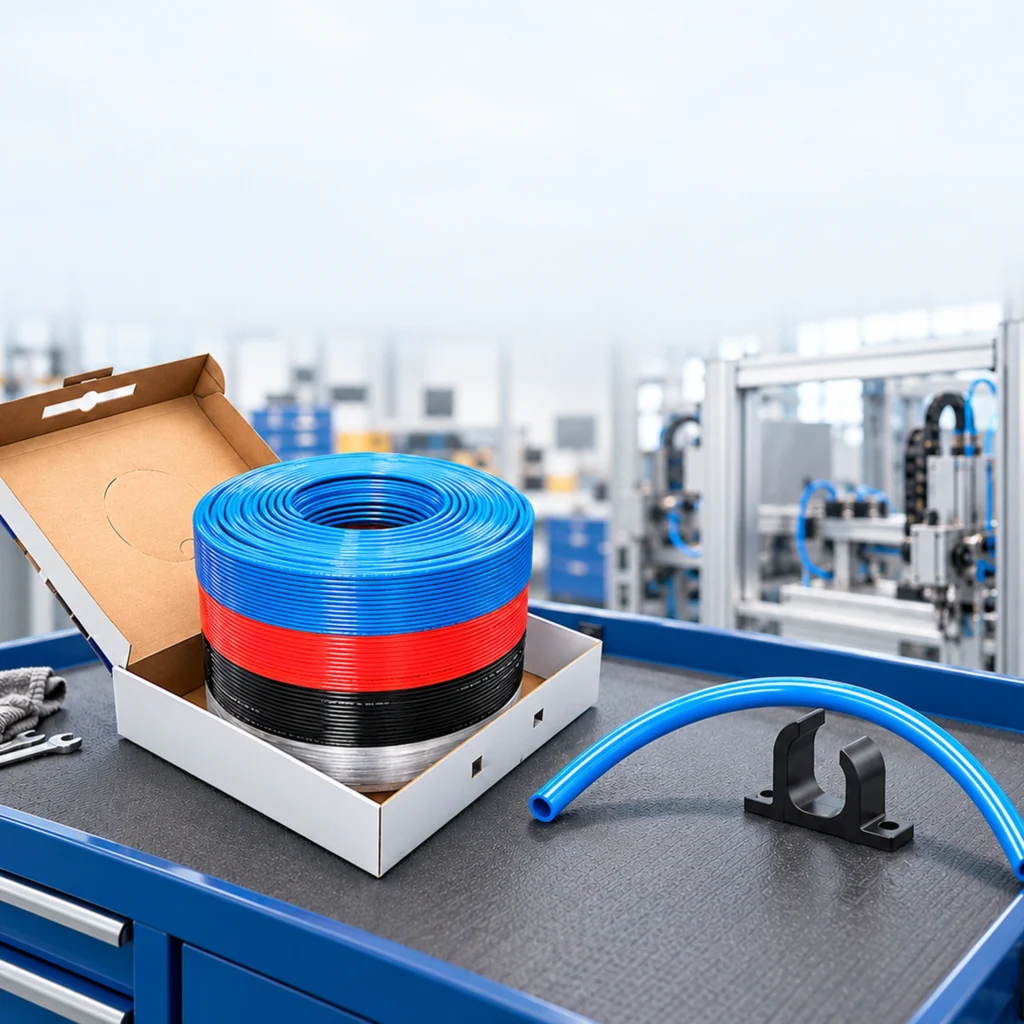
Why Does a PU Pneumatic Hose Leak or Kink? Practical Routing Fixes

Why Does a PU Pneumatic Hose Leak or Kink? Practical Routing Fixes

A pneumatic tube that leaks only when an actuator moves is giving a different clue from a line that leaks continuously at a threaded port. Replacing both with the same spare hose can hide the cause for a short period while leaving the routing, temperature or connector mismatch unchanged. Flexible polyurethane tubing is convenient around machinery, but flexibility does not remove its minimum bend…

Ver Detalhe
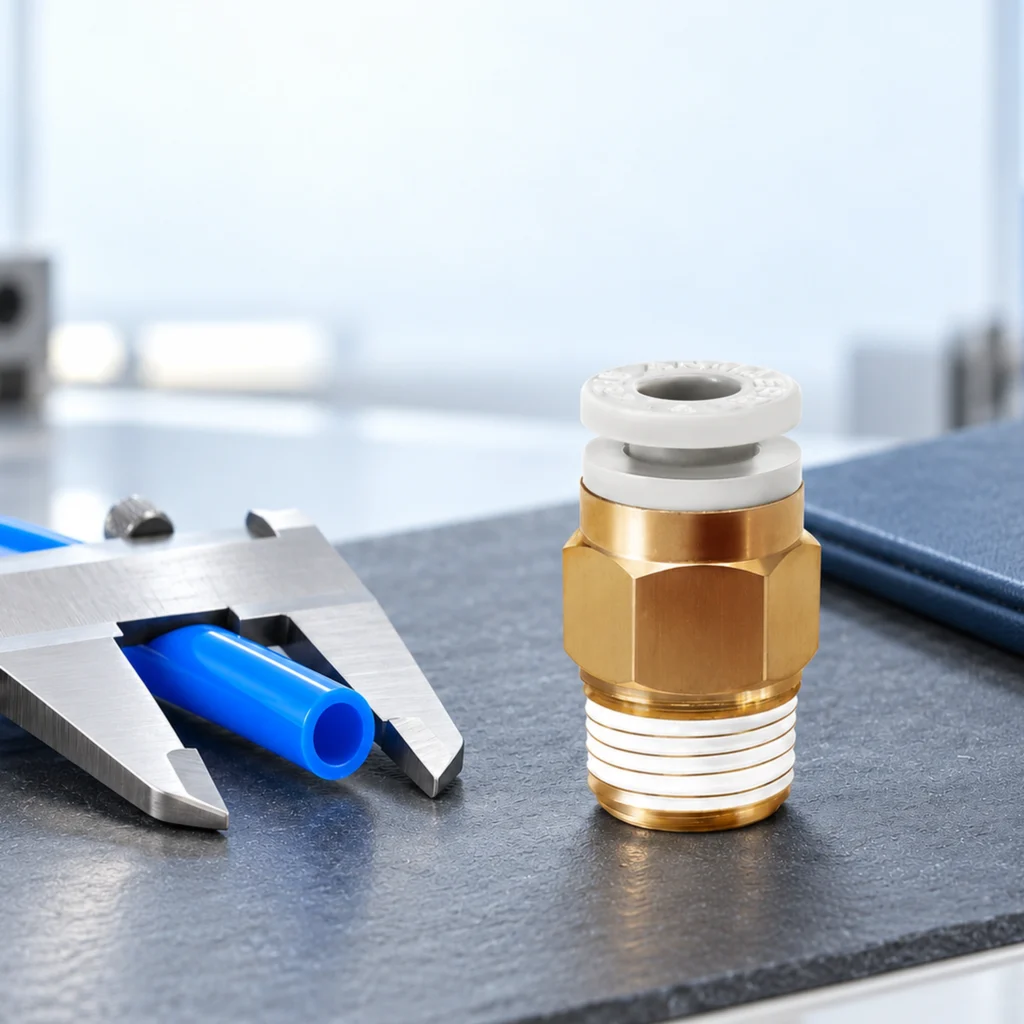
Brass Pneumatic Fittings: How to Match Tube Size, Thread and Working Pressure

Brass Pneumatic Fittings: How to Match Tube Size, Thread and Working Pressure

A brass connector can screw into a port and grip a tube while still being the wrong component for the machine. The tube may be an inch size that looks like a metric equivalent, the port may require a face seal rather than thread sealant, or the hose may lose its pressure margin beside a warm motor. These mismatches are difficult to identify from…

Ver Detalhe