APERÇUS DE L'INDUSTRIE

Actualités et blog

Actualités de l'industrie, guides techniques et conseils pratiques pour les professionnels des microconduits, de l'installation de fibres optiques et des raccordements pneumatiques.

Derniers articles

Articles

Air Blown Fiber Microduct Connector Installation: 7 Steps for a Reliable, Airtight Seal

Air Blown Fiber Microduct Connector Installation: 7 Steps for a Reliable, Airtight Seal

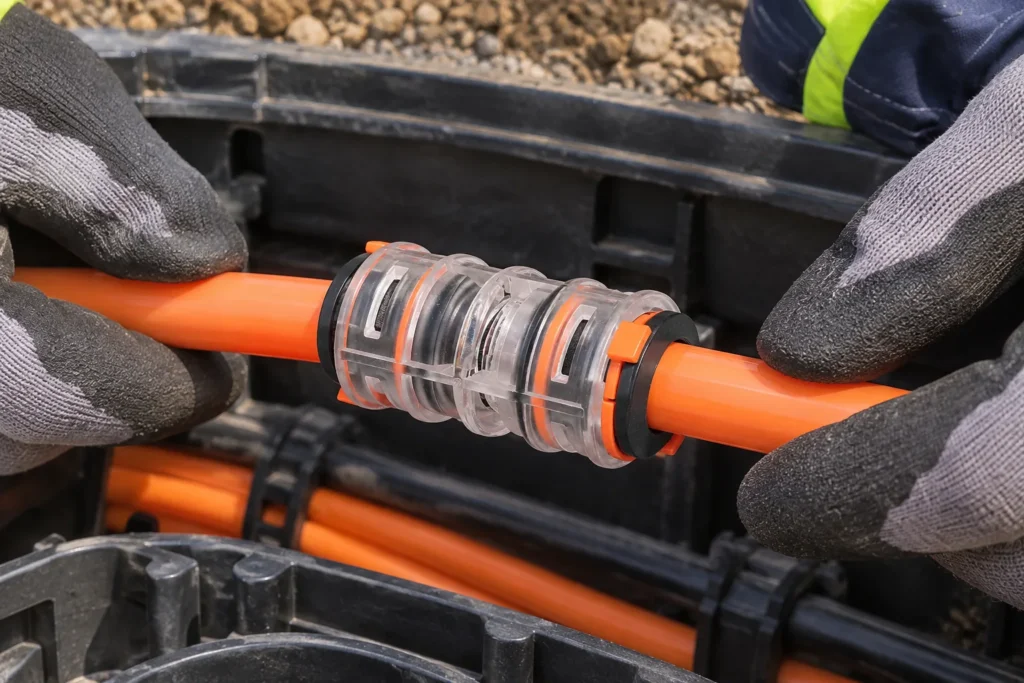
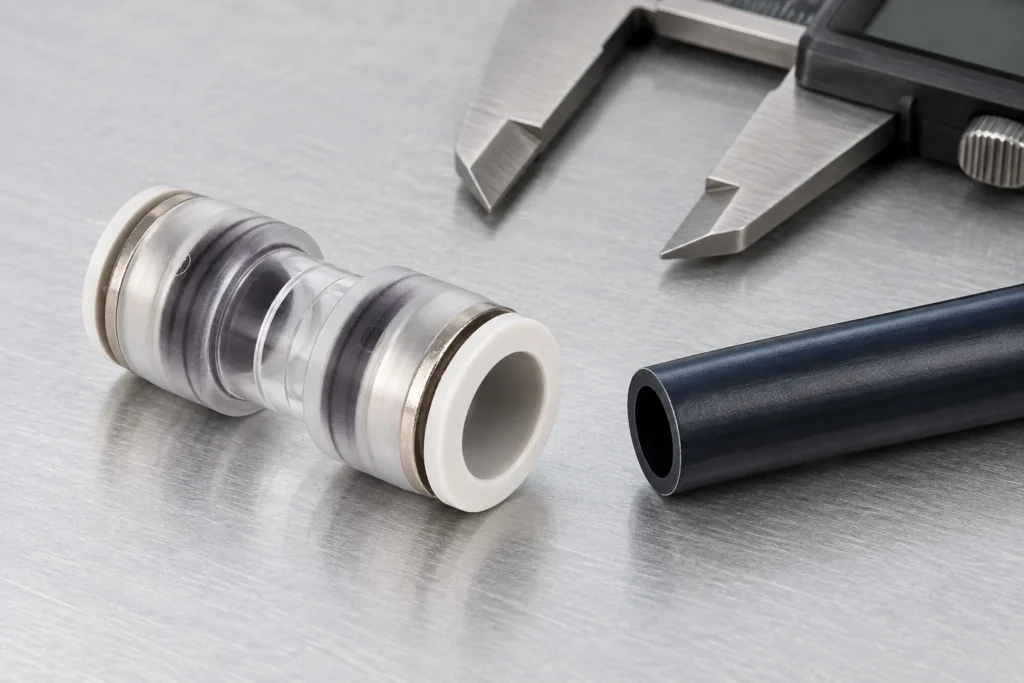
Pressure loss during fibre blowing is often blamed on the connector before anyone checks the cut, insertion depth, alignment, or part rating. That assumption creates repeated setup, wasted crew time, contamination, and an inconclusive leak search. The real question is whether the part matches both duct outside diameters and the environment, then was installed as documented. This guide gives buyers and installers a seven-step…
Voir les détails
Microduct Connector For Fibre Optic Cable Explained: A Practical Guide for Fiber Installers

Microduct Connector For Fibre Optic Cable Explained: A Practical Guide for Fiber Installers

When field supervisor Daniel in Manchester joined two microduct sections in this illustrative scenario, the team pushed both ends into the coupling and pressurized the route. Within minutes, the gauge fell and leak-detection fluid bubbled at the joint. Replacing the connector did not solve it: the cut was angled and the duct outside diameter did not match the ordered part. The apparent product failure…

Voir les détails
Dura-Line Microduct 12.7mm Connector: How to Choose the Right Size and Stop Air Leaks

Dura-Line Microduct 12.7mm Connector: How to Choose the Right Size and Stop Air Leaks

When Maya, a fiber-installation supervisor in an illustrative Rotterdam scenario, encountered a leaking joint, she re-cut the HDPE duct and pushed it into a connector marked for the job. The pressure gauge still dropped within a minute. A caliper check reversed the diagnosis: the connector was not automatically “bad”; the purchasing file had mixed nominal duct language, measured outside diameter, and the wrong connection…

Voir les détails
How to Specify Microduct Connector 12mm for HDPE and FTTx Duct Networks

How to Specify Microduct Connector 12mm for HDPE and FTTx Duct Networks

When a field supervisor in Rotterdam encountered rapid pressure loss during an HDPE repair, the crew had already pushed a nominal 12 mm connector onto a duct with a different measured bore. The coupling looked seated, yet the first air check failed. This illustrative scenario reverses a common first diagnosis: the issue is not necessarily a bad product, but can be an incorrect size,…

Voir les détails
Need a Microduct Connector 7mm? Compare Sizes, Pressure Ratings and Applications

Need a Microduct Connector 7mm? Compare Sizes, Pressure Ratings and Applications

When a network contractor in Leeds searched for a “Microduct Connector 7mm” during a street-cabinet repair, the first candidate fit the keyword but not the tube drawing. The installer checked the actual outside diameter, insertion stop and seal arrangement, then chose the connector family that matched the duct. The visible lesson was quick: 7 mm, 10 mm and 7/5.5 mm are useful buying terms,…

Voir les détails
Microduct Cover Shell Troubleshooting: Why the Cap Comes Loose and How to Fix It

Microduct Cover Shell Troubleshooting: Why the Cap Comes Loose and How to Fix It

A displaced microduct cover shell creates two different questions: has the external protection lost its grip, and is the fitting underneath still correctly installed? Treating these as one fault can lead to unnecessary duct disconnection or leave a genuine leak unresolved. A shell that opens during handling does not automatically mean the duct seal has failed; a shell that looks secure does not prove…

Voir les détails
Microduct Locking Clip vs. Gas-Block Connectors: Which Closure Should You Use?

Microduct Locking Clip vs. Gas-Block Connectors: Which Closure Should You Use?

A connector that stays attached can still leak, and a sealed connector can still need protection against accidental release. That distinction matters when a crew replaces a loose end stop, prepares a spare duct for cable blowing, or specifies a gas block at a building entry. Adding a stronger-looking clip may address the release mechanism without changing the actual leakage path. Conversely, replacing a…

Voir les détails
HDPE block microduct connector Pressure Testing: A Simple Checklist for Installers

HDPE block microduct connector Pressure Testing: A Simple Checklist for Installers

A pressure-test schedule can look complete while leaving the most important question unanswered: which interface is being tested? An empty microduct prepared for cable blowing, a connector gripping the duct, and an activated seal around an installed cable are different configurations. Applying a pressure copied from a product headline to all three can produce an unsafe test or an acceptance record that proves the…

Voir les détails
14mm Gas Block Microduct Connector Installation Guide: Keep Moisture Out of Fiber Ducts

14mm Gas Block Microduct Connector Installation Guide: Keep Moisture Out of Fiber Ducts

A 14 mm duct connection can appear correct while the cable seal remains unsuitable. The duct dimension identifies only one interface; a cable passing through the fitting introduces a second interface with its own diameter range and assembly condition. Procurement teams therefore need more than a matching size label before approving a building-entry connection. Confusing the two can lead to unsuitable stock, repeated assembly…

Voir les détails