Buyers often compare FTTR and FTTH as if they were competing access technologies. They are not. FTTH normally brings the optical access connection to a premises, while FTTR extends a fiber-based distribution path farther inside that premises. The practical choice depends on room coverage, pathway access, endpoint power, management and installation cost—not on the acronym alone. This guide gives a definition-first comparison, identifies when FTTR is unnecessary, and shows which microduct and commissioning checks should be completed before a quote is approved.
The short answer: FTTH terminates the access fiber at the home or building gateway; FTTR carries optical distribution to rooms or zones. A staged design can use FTTH today and reserve accessible pathways for later FTTR expansion. Before selecting either approach, confirm the access service, building layout, route length, endpoint power, optical budget and maintenance access. For European context, the European Commission’s State of the Digital Decade report is a better public reference for connectivity progress than an undated vendor forecast.
What does FTTH provide at the premises?
Fiber to the Home (FTTH) is an access architecture in which the optical network reaches the customer premises. The optical network terminal or equivalent gateway then connects local devices through Ethernet, Wi-Fi or another in-building distribution method. FTTH answers the access question: how does the operator deliver fiber capacity to the building or home?
FTTH does not prescribe how every room is connected. A well-designed FTTH installation may use a central gateway, structured cabling, wireless access points or a combination. The available riser, wall and ceiling routes therefore matter as much as the outside plant.
What does FTTR add inside a building?
Fiber to the Room (FTTR) extends optical distribution toward individual rooms, apartments, offices or service zones. Optical endpoints are placed closer to users, usually with local power and a management plan. FTTR answers a different question: how should capacity and backhaul be distributed after the access fiber reaches the premises?
FTTR design can be useful where wireless coverage is constrained by concrete walls, long corridors, room density or a changing layout. It is not automatically the right answer for a small, open-plan home with a short structured-cabling route. Additional endpoints, pathways and service work must be included in the total installed cost.
Which network layer does each architecture solve?
| Decision point | FTTH emphasis | FTTR emphasis |
|---|---|---|
| Fiber endpoint | Premises gateway or ONT/ONU | Room-level optical endpoint or distribution unit |
| Primary problem | Access capacity to the premises | Coverage and backhaul inside the premises |
| Pathway planning | Drop, entry and equipment location | Microduct routes, room outlets and service access |
| Power and management | Central equipment focus | Multiple endpoint power and management locations |
The distinction prevents a common procurement mistake: specifying room-level hardware before confirming whether the building has a viable route and power plan. The product catalogue and HDPE microduct range should be matched to the actual route, not selected from a nominal room count.
When is FTTR worth the additional installation work?
Use a simple decision boundary. FTTR deserves detailed design when room-level coverage is a stated requirement, wireless backhaul is difficult to validate, or the building will be renovated and pathways are accessible. FTTH with structured cabling or Wi-Fi may be more practical when the space is small, equipment access is limited or the owner cannot maintain multiple optical endpoints.
| Observed condition | Likely starting point | Evidence to collect |
|---|---|---|
| Small open-plan space | FTTH plus a central gateway and structured cabling | Room layout, cable route and coverage survey |
| Thick walls or many rooms | Compare FTTR with wired access points | Attenuation/coverage measurements and pathway drawings |
| Hotel, office or multi-unit retrofit | Stage FTTH access and reserve FTTR pathways | Riser access, endpoint power and service plan |
| Uncertain future layout | Install accessible spare microduct capacity | Labeling, bend limits and future cable strategy |
What should installers verify before quoting FTTR?
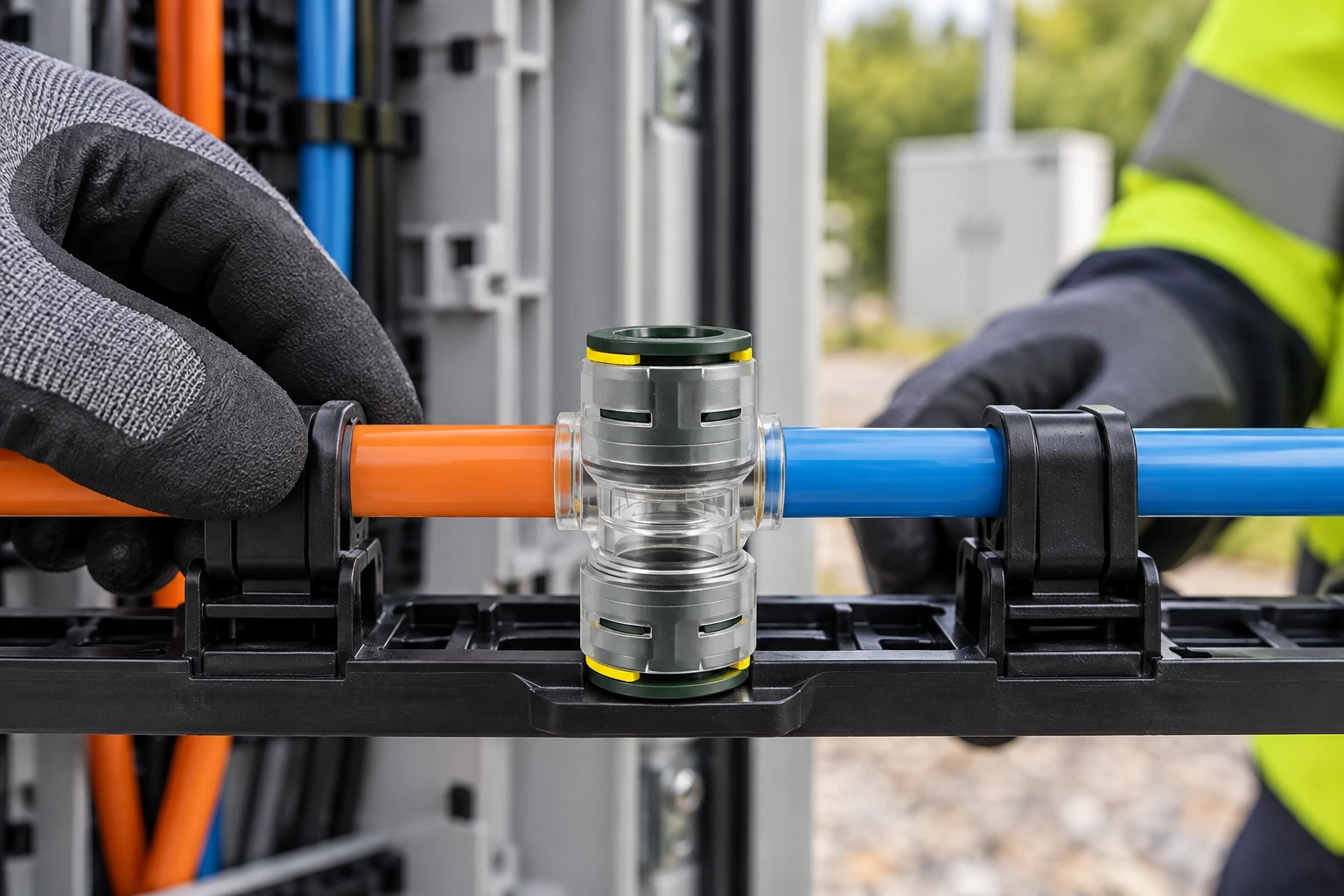
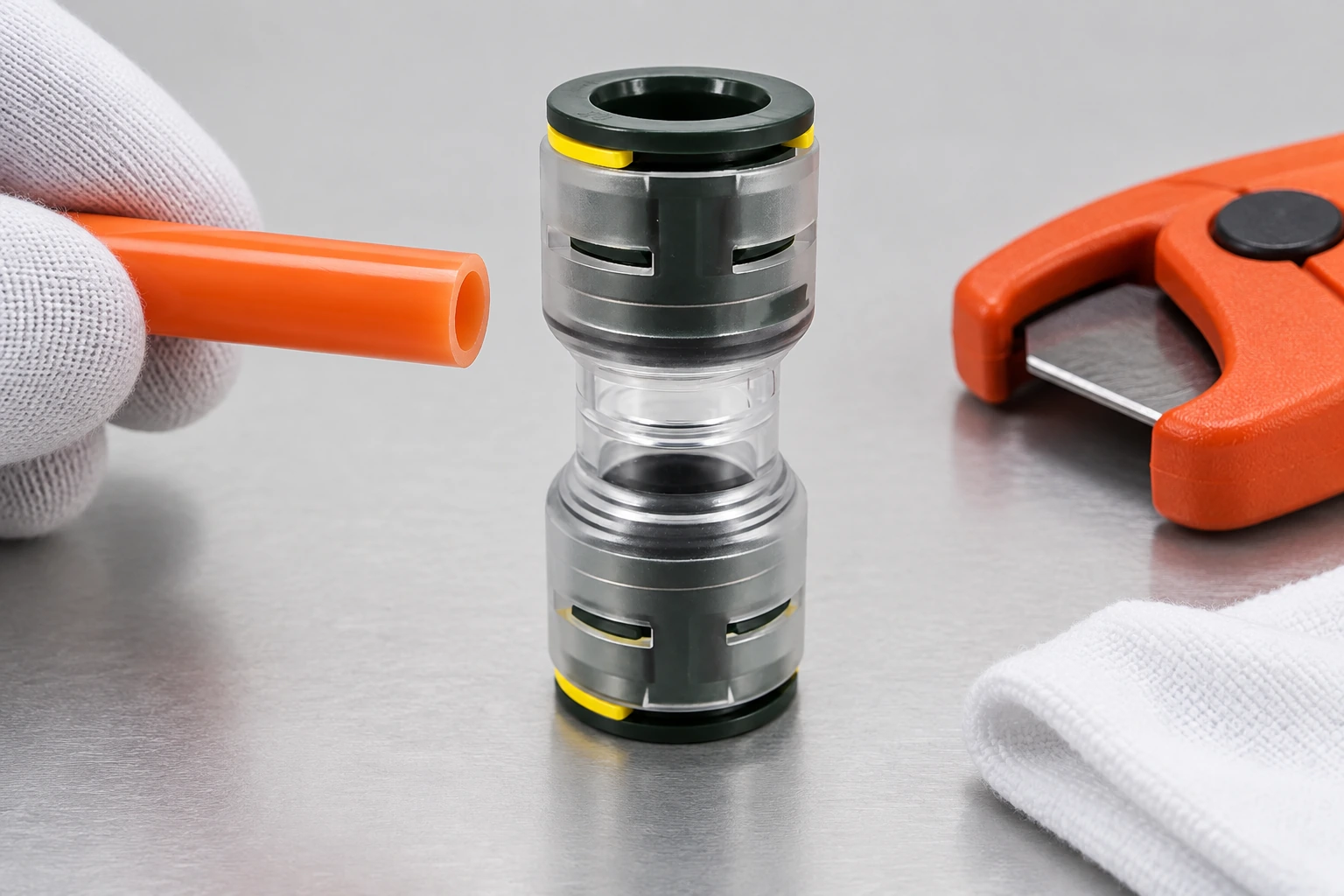
Confirm room count and endpoint locations, route length and bend constraints, microduct outside diameter, optical budget, endpoint power, commissioning records and future service access. A connector joint should be clean, square-cut and fully seated; a representative assembled section should be tested using the project or supplier method before cable blowing. The cable blowing machine range is relevant only after the duct route and cable combination have been qualified.
What do current standards and public sources actually prove?
ITU-T L.1700 provides a reference for outside-plant optical-fiber network requirements. IEC 60794-5-20 addresses microduct cabling intended for installation by blowing. These references help define scope and test language; neither one proves that every connector, duct and endpoint combination is suitable for a particular building. The project owner still needs acceptance criteria, test conditions and traceable records.
How can you tell whether a room needs better Wi-Fi or a new backhaul?
Separate the incoming service from the indoor connection before buying new equipment. As a recommended survey method, measure a wired connection near the gateway and then assess the rooms where users report problems, keeping the service plan and test device consistent. A slow connection at the gateway calls for an access-service investigation; a problem confined to distant rooms calls for a closer look at radio coverage, backhaul and endpoint placement. Neither result alone proves that FTTR is necessary.
Compare optical distribution with Ethernet-fed access points and the existing wireless arrangement using the same rooms and agreed workload. Include permission for visible cable routes, access to endpoint power, finishing work and responsibility for replacement equipment. The ITU publication Use cases and requirements of fibre-to-the-room (FTTR) is a technical reference published in 2021, not a current price comparison or a performance guarantee for a particular home.
What should an FTTR handover prove beyond an internet speed test?
Use separate acceptance records for the indoor optical link and the room-level user service. The optical record should identify the installed endpoints and the test method and loss limits agreed for that system. The service record should identify the gateway, endpoint, client device, test location and workload. A room-speed result cannot locate every splice or connector problem, and a good optical link does not certify wireless coverage.
Fluke Networks’ OTDR guide distinguishes total insertion-loss measurement with an optical loss test set from OTDR characterization of individual events. Apply that distinction without importing enterprise-cabling test tiers or one universal wavelength prescription into every FTTR installation. Have the system supplier state the method for the actual topology, including any splitters and short links, and retain the room-level acceptance record alongside the route drawing.
Which questions should a buyer ask about FTTR and FTTH?
Does FTTR replace FTTH?
No. FTTR normally builds on an FTTH access connection and extends distribution within the premises.
Is FTTR always faster than mesh Wi-Fi?
No. FTTR changes the backhaul architecture. The result still depends on the access plan, endpoints, radio design, client devices and installation quality.
Why is Wi-Fi 7 discussed with FTTR?
A newer wireless standard can increase the value of a strong wired or optical backhaul, but it does not remove the need for a building-specific coverage and power design.
Can FTTH be installed first and FTTR later?
Yes, when the first build reserves accessible, labeled pathways and the duct dimensions support the later cable plan.
What building types are candidates for FTTR?
Multi-room homes, hotels, offices and other spaces with difficult wireless coverage are common candidates, subject to route, power and maintenance checks.
What should an installer document?
Record the route, duct and connector part numbers, insertion checks, test conditions, endpoint locations, power points and commissioning result.
Can FTTR increase the speed of the subscribed internet connection?
Not by itself. FTTR changes distribution inside the premises; it does not change the contracted access rate. Verify the gateway service first, then compare room-level performance and backhaul under the same test conditions.
Does a successful duct pressure test prove that the FTTR optical link works?
No. A duct test assesses the pathway under its specified procedure. Optical testing assesses the installed fibre, and room-service testing assesses the endpoint and client experience. Agree and record each acceptance boundary separately.
References and a practical conclusion
- European Commission, State of the Digital Decade 2025
- ITU-T L.1700, outside-plant optical-fiber network requirements
- IEC standards portal (verify the applicable 60794-5 edition)
Conclusion: FTTH and FTTR should be separated by network layer before they are compared by speed. First confirm where the access fiber terminates; then decide whether room-level backhaul solves a measured coverage or pathway problem. Next verify route dimensions, endpoint power, optical budget, connector compatibility and the acceptance test. Do not promise FTTR performance from a headline access speed or a market forecast, and do not leave spare pathways unlabeled. Oulu / ANMASPC can support the duct, connector and blowing-equipment portion of a documented design through the product range and project-specific specification review.