
ФТТМ является неоднозначной отраслевой аббревиатурой. В разных публикациях она используется для оптоволокно до машины или оптоволокно до мобильного узла; мультимедийный проект может использовать собственное описательное значение. Прежде чем выбирать оборудование или компоненты канала, чётко определите конечную точку и предоставляемые услуги. Одно лишь сокращение не определяет топологию, технологию доступа или требования к приёму.
FTTM имеет значения, зависящие от контекста, включая «оптика до машины» и «оптика до мобильного устройства». В данной статье также рассматривается доставка мультимедиа как чётко определённая область проекта; её не следует воспринимать как универсальное расширение FTTM. ITU-T G.984 охватывает рекомендации по GPON, а ITU-T G.9807.1 — по XGS-PON, поэтому рекомендуется перед покупкой компонентов указывать конкретную архитектуру PON или Ethernet, место передачи услуг, тип волокна, трассу и процедуры приёмки. Относитесь к FTTM как к целевому сервису, а не как к замене топологии и спецификации материалов.
Что означает FTTM и почему этот термин неоднозначен?
Если в проекте термин FTTM явно определяется как «оптика до мультимедиа», это означает намерение использовать оптическую сеть доступа для предоставления нескольких услуг, таких как передача данных, телевизионное вещание и голосовая связь. Этот термин может быть полезен в описании проекта, но сам по себе не указывает, где заканчивается оптическая линия, какой протокол доступа используется, как осуществляется разделение услуг или какое клиентское оборудование требуется.
Это различие важно, поскольку FTTx представляет собой семейство терминов, обозначающих местоположение: последняя буква указывает на конечную точку — например, волокно до дома (FTTH), здания, распределительной шкафной установки или другой определённой точки. Аббревиатуру FTTM следует интерпретировать в контексте конкретной отрасли и проекта, а не предполагать, что она обозначает одну универсальную конечную точку или архитектуру сервиса. Поэтому в документе о закупках следует заменить эту аббревиатуру схемой сети, таблицей интерфейсов и картой услуг.
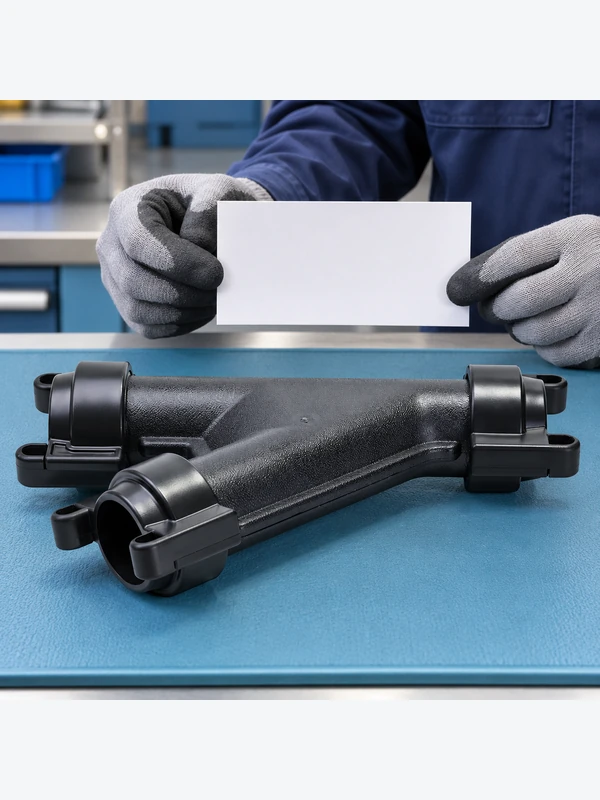
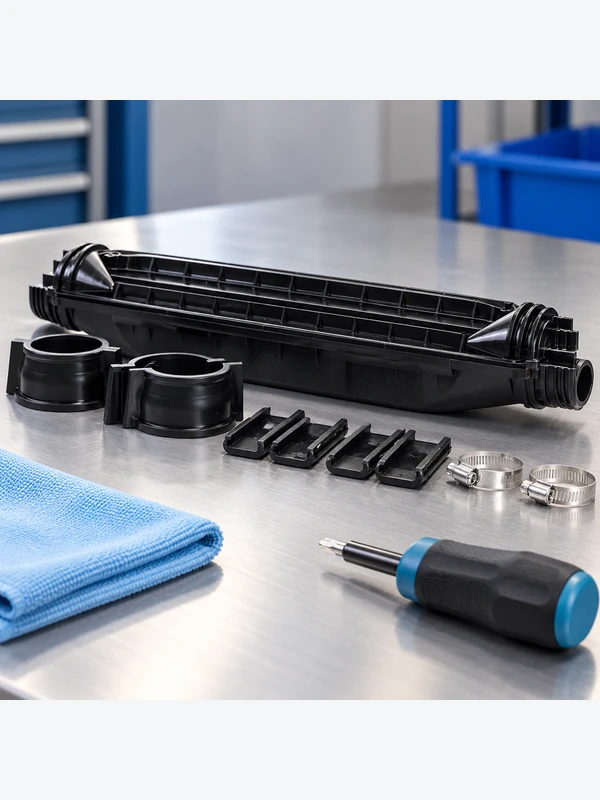
Для практического рассмотрения физического пути см. соединители микротрубок в сетях FTTH. Фитинг поддерживает трассу воздуховода; он не определяет протокол оптического доступа и не гарантирует предоставление каких-либо мультимедийных услуг.
Укажите, относится ли термин FTTM к оборудованию, мобильной связи или является местным служебным термином.
A май 2025 Статья, опубликованная компанией Huawei, автор — Стивен Уилсон из Omdia использует технологию волоконной связи до машины для обеспечения производственной связи. A Статья ZTE из 2014 В контексте развертывания LTE термин «fiber-to-the-mobile» используется в явном виде. Эти примеры подтверждают, что данная аббревиатура имеет более одного задокументированного применения; при этом они не доказывают, что какая‑либо из архитектур подходит для каждого проекта.
Мобильный пример относится к историческим материалам LTE, а не является доказательством текущих объёмов развертывания или универсального дизайна 5G. Статья о производстве размещена на сайте поставщика, поэтому её утверждения о производительности и экономии, относящиеся к конкретной платформе, не следует переносить на несвязанные продукты. Полезный вывод более узкий: перед сравнением решений необходимо чётко сформулировать предполагаемый конечный пункт и указать фактические требования к оборудованию и сети.
Для жилого или внутридомового проекта, Сравнение FTTR и FTTH обеспечивает более чёткую терминологию для оконечных точек. Для заводской или мобильной станции следует документировать передачу на уровне оборудования, шкафа или радиостанции. После согласования этого границы маршрут, оптическая сеть, процедуры приёмки услуги и план технического обслуживания могут быть определены без привязки к неопределённому обозначению.
Как волоконно-оптическая сеть обеспечивает передачу нескольких сервисов?
Оптоволоконная сеть передачи данных обеспечивает перенос закодированных оптических сигналов между узлом доступа и оборудованием на стороне клиента. Обработка различных сервисов осуществляется оптическим линейным терминалом оператора, оптической сетевой единицей или терминалом, оборудованием Ethernet, сервисными шлюзами, а также соответствующими платформами для видео- и голосовых услуг. Оптоволокно является средой передачи; само по себе оно не гарантирует, что все услуги будут доступны при любой установке.
GPON и XGS-PON демонстрируют, почему необходимо называть базовую технологию. ITU-T G.984 — это семейство рекомендаций по пассивным оптическим сетям с гигабитной пропускной способностью, тогда как ITU-T G.9807.1 определяет симметричную систему пассивной оптической сети 10-Gigabit-capable. Эти ссылки описывают различные возможности и интерфейсы доступа; они не превращают неформальный термин FTTM в стандартную архитектуру. Основными подтверждающими факторами остаются выбранное оптическое сетевое оборудование и профиль услуг оператора.
Конвергенция услуг также требует корректного разделения и предоставления ресурсов. Интернет, голосовая связь и видеосвязь могут использовать различные логические сервисы, VLAN, правила обеспечения качества обслуживания, обработку мультивещания или оборудование на стороне абонента. Эти детали должны быть отражены в проектной документации оператора и критериях приёмки. Не следует делать выводы об этих аспектах на основе фразы “оптика до мультимедиа”, фотографии разъёма или заголовка о будущих сетях доступа.
Более широкий Обсуждение FTTx Может помочь в сравнении концепций оконечных устройств, но не следует использовать его как доказательство того, что одна архитектура FTTM является универсальной с коммерческой точки зрения.
Какие физические интерфейсы имеют значение перед составлением коммерческого предложения по FTTM?
После определения услуги и технологии доступа физический маршрут представляется как последовательность интерфейсов: фидерное или распределительное волокно, соединительные муфты и шкафы, микроканалы или кабель-каналы, соединители, места поворотов и окончание на стороне клиента. На схеме маршрута должно быть указано, где начинается и заканчивается каждый интерфейс, как он защищён и как будет вскрываться для проведения технического обслуживания.
Для трассы микроканалов проверьте фактический материал канала, внутренние и наружные размеры, габариты кабеля или волоконных модулей, план поворотов, схему соединений и условия эксплуатации. Соединитель, подходящий для одного наружного диаметра канала, может не подойти для другого, а физическая совместимость фитинга не гарантирует герметичность, водонепроницаемость или пригодность для конкретного метода монтажа. Запросите у поставщика чертеж с размерами и инструкции по монтажу, затем сверьте их с документацией по трассе.
Оптоволокно передаёт сервисный сигнал, тогда как соединитель микроканала обеспечивает герметичность стыка. В спецификации следует чётко разграничивать эти функции. При проектировании трассы для волокна, прокладываемого методом пневмопрокидки, необходимо также указать непрерывность канала, допустимые радиусы изгиба, требования к подготовке концов, способ герметизации и перечень проверок, которые следует выполнить перед началом прокидки. Для получения дополнительной информации о самом среде передачи прочитайте как работает оптоволоконная связь.
Как покупателям сравнивать варианты FTTM, FTTH и другие решения FTTx?
Полезное сравнение заключается не в том, “какой акроним лучше”, а в том, соответствуют ли предлагаемый конечный узел, технология доступа, схема передачи обслуживания, маршрут и план технического обслуживания реальным требованиям проекта. В приведённой ниже таблице для строки FTTM задан чётко определённый мультимедийный охват; для машинных и мобильных применений требуются собственные определения конечных узлов.
| Выбор этикетки или дизайна | Что оно сообщает | What it leaves open | Доказательства для запроса |
|---|---|---|---|
| FTTM (fiber to the multimedia) | A stated intention to deliver multiple services over a fiber-based access network. | Endpoint, protocol, service separation, equipment, and acceptance limits. | Network diagram, service map, access-system name, endpoint equipment, and test plan. |
| FTTH | Fiber reaches the home or dwelling endpoint in the defined project scope. | Whether the access system is GPON, XGS-PON, Ethernet, or another design. | Termination location, optical budget, customer equipment, and operator interface requirements. |
| Other FTTx endpoint | Fiber endpoint is identified by the final letter and project definition. | How the remaining segment is built and which services are activated. | Endpoint drawing, copper or radio segment where applicable, and service handoff requirements. |
| Access technology | Defines the optical or Ethernet system used to transport the services. | Physical route quality and compatibility of ducts, fittings, and terminations. | Applicable ITU-T or equipment specification, wavelengths, optics, and loss limits. |
| Pathway and fittings | Provides the protected physical route for the cable or fiber unit. | Service availability, bandwidth, and protocol behavior. | Dimensional drawings, material and environment requirements, installation method, and records. |
| Scope item | Confirm before quoting | Evidence or condition |
|---|---|---|
| Access endpoint | Home, building, cabinet, or another project-defined termination point. | Approved topology drawing and service handoff; the FTTM label alone is insufficient. |
| Pathway | Duct or conduit dimensions, route geometry, access points, joints, and environment. | As-built or survey records, dimensional drawings, and the selected installation method. |
| Passive components | Splitters, closures, connectors, couplers, and terminations where the design uses them. | Manufacturer data sheets, compatibility checks, and a route-specific optical budget. |
| Active electronics | OLT, ONU/ONT, Ethernet equipment, gateways, and service interfaces in the operator design. | Equipment documentation and the applicable access-system reference, such as ITU-T G.984 or G.9807.1. |
| Доказательство принятия | Physical inspection, optical loss measurement, event location, and required service tests. | Contract method, wavelengths, limits, fiber identifiers, test records, and as-built route. |
What should the design and acceptance plan measure?
Start with the access equipment’s published optical parameters and the route length. Build a project-specific loss budget that accounts for fiber attenuation, splices, connector pairs, splitters where used, and an agreed engineering reserve. The component values must come from the selected equipment and route; there is no universal FTTM loss limit.
At acceptance, use the method named in the contract. An optical loss test set can measure end-to-end insertion loss at specified wavelengths; an optical time-domain reflectometer can help locate events and characterize the route. These methods answer different questions, so an OTDR trace should not silently replace an agreed end-to-end measurement. Record fiber identifiers, reference method, wavelengths, limits, results, and the as-built route.
Service acceptance may need additional checks for the operator’s provisioning, voice registration, video or multicast behavior, latency, and failover design. Those are service and system tests, not properties that can be inferred from the fiber or a microduct connector alone. Document who supplies each test, which equipment is in scope, and what happens when a result falls outside the agreed limit.
Keep pathway, optical and service handovers separate
A useful acceptance file has three distinct layers. Pathway evidence identifies the duct route, dimensions, joints, access points and installation checks. Optical evidence identifies the fiber, terminations, loss budget and measured results. Service evidence records the required connectivity and application behavior at the operator-defined handoff. A pass in one layer does not automatically establish the other two.
For optical acceptance, Fluke Networks distinguishes OTDR characterization from end-to-end loss measurement. Specify which methods are required, the test boundary, wavelengths and limits. For service acceptance, name the actual equipment ports and required functions; voice, video, industrial traffic or mobile transport can require different checks. Avoid importing a generic service checklist into an unrelated application.
Where the pathway uses Микротрубки из ПНД, keep duct identifiers and actual dimensions with the selected cable or fiber-unit record. If installation uses blowing equipment, verify the route and component limits before scheduling the crew. Neither an optical bandwidth claim nor a multimedia service description establishes that a duct joint will suit the planned installation.
The air-blown and conventional cabling comparison can support the pathway decision. Retain the as-built route and separate test records after handover. If an upgrade changes optics, service equipment or cable construction, review the affected layer and its interfaces rather than assuming that the original FTTM label preserves compatibility.
Which standards and claims should appear in the procurement file?
ITU-T G.984 and ITU-T G.9807.1 are named access-system recommendations with different scopes. They are not product certificates for a duct fitting, nor do they certify a completed route or a service provider. The procurement file should identify the exact recommendation or equipment specification that applies, its edition where relevant, and the interface requirements that must be demonstrated.
FTTH Council Europe provides public resources about fiber deployment and market context, but a market resource does not establish a technical requirement for an individual project. Likewise, a supplier’s “FTTM-ready” phrase should be treated as a claim to verify, not as a recognized compliance category. Unsupported claims can lead to rejected submittals, incompatible optics, or rework at the access cabinet.
How can a buyer turn an FTTM brief into a buildable specification?
- Define each service, customer endpoint, handoff, availability expectation, and ownership boundary; replace FTTM with the actual topology in the drawing.
- Name the access technology and equipment family, including optics, wavelengths, splitters or Ethernet devices, and the published loss budget.
- Survey the pathway: duct dimensions, route geometry, access points, environmental exposure, joints, and the cable or fiber-unit installation method.
- Request dimensional drawings, material data, installation instructions, and test evidence for every connector and closure in the route.
- Write the acceptance plan before purchase, separating optical loss, physical inspection, and service-level tests with named records and limits.
Microduct Connector can help review the pathway and fitting portion of that package against the documented duct dimensions and application. Browse the microduct connectors range and send the route drawing, duct data, and installation method for a specification discussion; the access protocol and service platform should still be confirmed by the network operator.
Часто задаваемые вопросы
Is FTTM an official fiber access standard?
The acronym alone is not a technical standard. Machine and mobile are documented industry uses, while a multimedia project needs its own explicit definition. Formal access recommendations such as ITU-T G.984 and G.9807.1 define specific PON systems. Ask the project owner to state the topology and access technology rather than accepting the acronym alone.
How is FTTM related to FTTH?
FTTH describes the fiber endpoint at the home or dwelling. FTTM must first be expanded in context; when a project explicitly uses it for multimedia delivery, it describes that service intent. An FTTH network may carry multimedia services, but the terms answer different questions. Confirm both the endpoint and the service architecture.
Does FTTM mean internet, television, and telephone always share one fiber?
They may be transported over one fiber access network, but the exact logical services, equipment, and provisioning depend on the operator design. Voice, video, and data can have separate service profiles even when they share a physical route. Require the service map and customer equipment specification.
Does a microduct connector determine FTTM performance?
No. A connector supports the physical duct pathway and its joint; it does not set the PON protocol, оптический бюджет, or service quality. Verify dimensions, sealing, environmental requirements, and installation records separately from the optical and service tests.
Which PON technology should an FTTM project use?
There is no universal answer. GPON under ITU-T G.984, XGS-PON under ITU-T G.9807.1, Ethernet, and other designs may fit different equipment, capacity, migration, and service requirements. Select from the operator’s endpoint, optics, capacity plan, and acceptance criteria.
What should be tested before a multimedia fiber service goes live?
Test the physical route and optical loss using the agreed method and wavelengths, then perform the operator’s service tests for provisioning and the required voice, video, or data behavior. Keep results tied to fiber IDs and the as-built route. A connector inspection alone cannot prove end-to-end service readiness.
Does FTTM always mean fiber to the multimedia?
No. Industry publications also use FTTM for fiber to the machine and fiber to the mobile. Expand the acronym in the project brief and specify the endpoint, topology and access equipment. A multimedia interpretation should be presented as an explicit project definition rather than a universal industry meaning.
Does an FTTM article about LTE establish requirements for a new mobile network?
No. A historical deployment article can establish how the author used the term, but it cannot replace the current operator’s transport, equipment and acceptance specification. Check the publication date and application before reusing technical or performance statements.
Ссылки
- ITU-T G.984, Gigabit-capable passive optical networks (GPON).
- ITU-T G.9807.1, 10-Gigabit-capable symmetric passive optical network (XGS-PON).
- FTTH Council Europe, public fiber deployment resources.
- Huawei / Omdia: Fibre to the Machine for Innovative Manufacturing Companies (2025)
- ZTE: FTTM Enables Rapid and Flexible LTE Deployment (2014; historical context)
- Fluke Networks: OTDR and Optical Link Testing
Краткое содержание
Define FTTM before designing the network: machine, mobile and a locally defined multimedia scope imply different endpoints and requirements. Name the actual topology, access equipment and service handoff, then specify the pathway and optical budget against that design. Keep pathway checks, optical measurements and service acceptance as distinct records. This makes the project buildable and maintainable without treating an ambiguous acronym or a vendor’s application example as a universal architecture.



