
FTTM は曖昧な業界用略語です。さまざまな出版物で、次のような意味で使用されています。 ファイバ・トゥ・ザ・マシン または ファイバー・トゥ・ザ・モバイル; マルチメディアプロジェクトは、独自の説明的意味を持つ場合があります。機器や経路構成要素を選定する前に、想定されるエンドポイントと提供するサービスを明確に記述してください。略語だけでは、トポロジーやアクセス技術、受け入れ要件を定義することはできません。.
FTTMには、ファイバー・トゥ・ザ・マシンやファイバー・トゥ・ザ・モバイルなど、文脈に依存する複数の意味があります。本稿では、マルチメディア配信についても明示的に定義されたプロジェクト範囲として取り上げていますが、これをFTTMの普遍的な拡張と捉えるべきではありません。ITU-T G.984はGPONに関する勧告を網羅し、ITU-T G.9807.1はXGS-PONに関する勧告を網羅しているため、推奨される対応としては、部品を購入する前に、実際のPONまたはイーサネットの設計、サービスの引渡し方法、光ファイバーの種類、経路、および受け入れ試験を明確に指定することです。FTTMはサービス目標と捉え、トポロジーや材料一覧の代わりとはしないでください。.
FTTMとは何を意味し、なぜこの用語は曖昧なのでしょうか?
プロジェクトで「FTTM」を「ファイバー・トゥ・マルチメディア」と明示的に定義する場合、データ、テレビ配信、音声など複数のサービスを伝送するために光ファイバーを用いたアクセスネットワークを構築する意図を示しています。この用語はプロジェクト概要文などで有用ですが、それだけでは、光ファイバーの終端位置、使用するアクセスプロトコル、サービスの分離方法、必要な顧客設備機器などを明示しているわけではありません。.
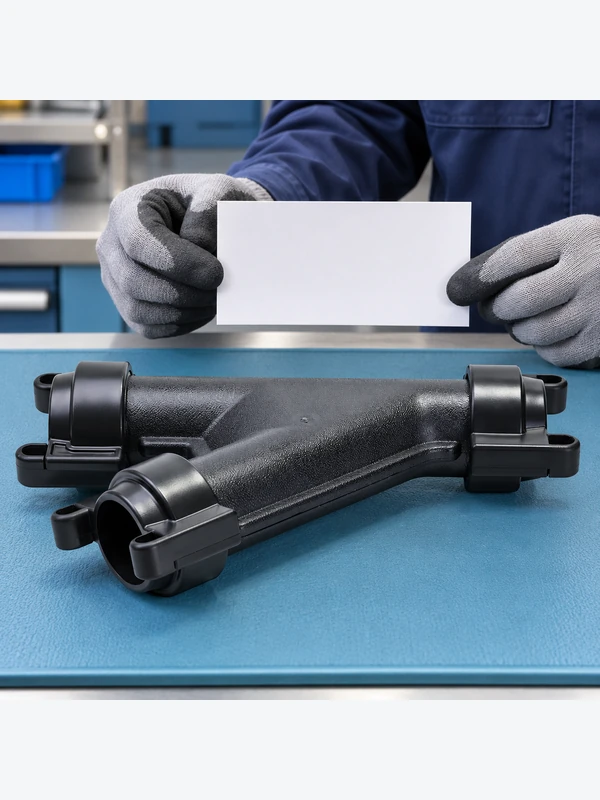
その違いが重要なのは、FTTxが場所に基づく一連の用語であり、末尾の文字がエンドポイントを示すためです。たとえば、ファイバー・トゥ・ザ・ホーム(FTTH)、ビル、キャビネット、または他の定義された地点を指します。FTTMは、業界やプロジェクトにおける文脈に即して解釈する必要があり、一つの普遍的なエンドポイントやサービスアーキテクチャを指すものと安易に想定してはなりません。したがって、調達文書では、この略語をネットワーク図、インターフェース一覧表、およびサービスマップで置き換えるべきです。.
物理的な経路を実践的に見るには、次を参照してください FTTHネットワークにおけるマイクロダクトコネクタ. この継手はダクト経路を支持しますが、光アクセスプロトコルを定義したり、いかなるマルチメディアサービスも保証するものではありません。.
FTTMが機器、モバイル、またはローカルサービスの用語を指すかどうかを明示してください。
A 5月2025 Omdiaのスティーブン・ウィルソン氏による、ファーウェイが掲載した記事 製造用の接続には、FTTM(ファイバー・トゥ・ザ・マシン)を採用しています。A 2014からのZTEの記事 明示的に、LTEの展開において「fiber-to-the-mobile」という用語が使用されています。これらの例から、この略語には複数の文書化された用途があることがわかりますが、いずれのアーキテクチャもすべてのプロジェクトに適していることを証明するものではありません。.
モバイルの例は歴史的なLTEに関する資料であり、現在の展開規模や普遍的な5G設計を示す証拠ではありません。製造に関する記事はベンダーがホストしているため、そのプラットフォーム固有の性能やコスト削減に関する記述を無関係な製品に転用すべきではありません。有益な結論はより限定的です:ソリューションを比較する前に、意図するエンドポイントを明確に記述し、実際の機器およびネットワーク要件を特定してください。.
住宅または建物内プロジェクトの場合、 FTTRとFTTHの比較 より明確なエンドポイント用語を提供します。工場やモバイルサイトの場合、代わりに機器、キャビネット、または無線基地局のハンドオフについて文書化してください。その境界が合意されれば、曖昧なラベルに依存することなく、経路、光ファイバー、サービスの受け入れ基準、および保守計画を定義できます。.
How does a fiber access network carry multiple services?
A fiber access network carries encoded optical signals between an access node and customer-side equipment. The service mix is then handled by the operator’s optical line terminal, optical network unit or terminal, Ethernet equipment, service gateways, and the relevant video or voice platforms. Fiber is the transmission medium; it is not itself a promise that every service will be available on every installation.
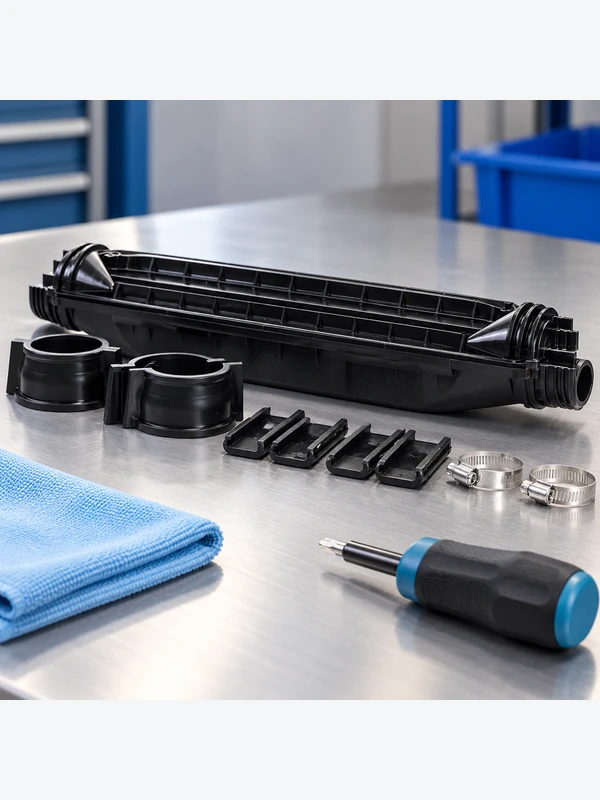
GPON and XGS-PON illustrate why the underlying technology must be named. ITU-T G.984 is a family of recommendations for gigabit-capable passive optical networks, while ITU-T G.9807.1 specifies a 10-Gigabit-capable symmetric passive optical network system. These references describe different access-system capabilities and interfaces; they do not turn the informal FTTM label into a standard architecture. The selected optical network equipment and operator service profile remain controlling evidence.
Service convergence also requires correct separation and provisioning. Internet, voice, and video may use distinct logical services, VLANs, quality-of-service rules, multicast handling, or customer premises equipment. Those details belong in the operator’s design and acceptance criteria. Do not infer them from the phrase “fiber to the multimedia,” from a connector photograph, or from a headline about future access networks.
The wider FTTx discussion can help compare endpoint concepts, but it should not be used as proof that one FTTM architecture is commercially universal.
Which physical interfaces matter before an FTTM quote?
Once the service and access technology are defined, the physical route becomes a sequence of interfaces: feeder or distribution fiber, closures and cabinets, microduct or conduit, connectors, bend locations, and the customer-side termination. The route drawing should show where each interface starts and ends, how it is protected, and how it will be opened for maintenance.
For a microduct route, verify the actual duct material, inside and outside dimensions, cable or fiber-unit dimensions, bend plan, joint arrangement, and environmental exposure. A connector that fits one duct outside diameter may not fit another, and a physically compatible fitting does not prove air tightness, water blocking, or suitability for a particular installation method. Request the supplier’s dimensional drawing and installation instructions, then match them to the route records.
Fiber carries the service signal, while the microduct connector retains the pathway joint. Keep those responsibilities separate in the specification. A route designed for air-blown fiber should also state the duct continuity, allowable bends, end preparation, sealing approach, and the checks required before blowing. For background on the transmission medium itself, read how optical fiber communication works.
How should buyers compare FTTM, FTTH, and other FTTx choices?
The useful comparison is not “which acronym is best?” It is whether the proposed endpoint, access technology, service handoff, route, and maintenance plan fit the actual project. The table below uses an explicitly defined multimedia scope for its FTTM row; machine and mobile uses need their own endpoint definitions.
| Label or design choice | What it communicates | What it leaves open | 要求する証拠 |
|---|---|---|---|
| FTTM (fiber to the multimedia) | A stated intention to deliver multiple services over a fiber-based access network. | Endpoint, protocol, service separation, equipment, and acceptance limits. | Network diagram, service map, access-system name, endpoint equipment, and test plan. |
| FTTH | Fiber reaches the home or dwelling endpoint in the defined project scope. | Whether the access system is GPON, XGS-PON, Ethernet, or another design. | Termination location, optical budget, customer equipment, and operator interface requirements. |
| Other FTTx endpoint | Fiber endpoint is identified by the final letter and project definition. | How the remaining segment is built and which services are activated. | Endpoint drawing, copper or radio segment where applicable, and service handoff requirements. |
| Access technology | Defines the optical or Ethernet system used to transport the services. | Physical route quality and compatibility of ducts, fittings, and terminations. | Applicable ITU-T or equipment specification, wavelengths, optics, and loss limits. |
| Pathway and fittings | Provides the protected physical route for the cable or fiber unit. | Service availability, bandwidth, and protocol behavior. | Dimensional drawings, material and environment requirements, installation method, and records. |
| Scope item | Confirm before quoting | Evidence or condition |
|---|---|---|
| Access endpoint | Home, building, cabinet, or another project-defined termination point. | Approved topology drawing and service handoff; the FTTM label alone is insufficient. |
| Pathway | Duct or conduit dimensions, route geometry, access points, joints, and environment. | As-built or survey records, dimensional drawings, and the selected installation method. |
| Passive components | Splitters, closures, connectors, couplers, and terminations where the design uses them. | Manufacturer data sheets, compatibility checks, and a route-specific optical budget. |
| Active electronics | OLT, ONU/ONT, Ethernet equipment, gateways, and service interfaces in the operator design. | Equipment documentation and the applicable access-system reference, such as ITU-T G.984 or G.9807.1. |
| 受領証拠 | Physical inspection, optical loss measurement, event location, and required service tests. | Contract method, wavelengths, limits, fiber identifiers, test records, and as-built route. |
What should the design and acceptance plan measure?
Start with the access equipment’s published optical parameters and the route length. Build a project-specific loss budget that accounts for fiber attenuation, splices, connector pairs, splitters where used, and an agreed engineering reserve. The component values must come from the selected equipment and route; there is no universal FTTM loss limit.
At acceptance, use the method named in the contract. An optical loss test set can measure end-to-end insertion loss at specified wavelengths; an optical time-domain reflectometer can help locate events and characterize the route. These methods answer different questions, so an OTDR trace should not silently replace an agreed end-to-end measurement. Record fiber identifiers, reference method, wavelengths, limits, results, and the as-built route.
Service acceptance may need additional checks for the operator’s provisioning, voice registration, video or multicast behavior, latency, and failover design. Those are service and system tests, not properties that can be inferred from the fiber or a microduct connector alone. Document who supplies each test, which equipment is in scope, and what happens when a result falls outside the agreed limit.
Keep pathway, optical and service handovers separate
A useful acceptance file has three distinct layers. Pathway evidence identifies the duct route, dimensions, joints, access points and installation checks. Optical evidence identifies the fiber, terminations, loss budget and measured results. Service evidence records the required connectivity and application behavior at the operator-defined handoff. A pass in one layer does not automatically establish the other two.
For optical acceptance, Fluke Networks distinguishes OTDR characterization from end-to-end loss measurement. Specify which methods are required, the test boundary, wavelengths and limits. For service acceptance, name the actual equipment ports and required functions; voice, video, industrial traffic or mobile transport can require different checks. Avoid importing a generic service checklist into an unrelated application.
Where the pathway uses HDPEマイクロダクト, keep duct identifiers and actual dimensions with the selected cable or fiber-unit record. If installation uses blowing equipment, verify the route and component limits before scheduling the crew. Neither an optical bandwidth claim nor a multimedia service description establishes that a duct joint will suit the planned installation.
ザ air-blown and conventional cabling comparison can support the pathway decision. Retain the as-built route and separate test records after handover. If an upgrade changes optics, service equipment or cable construction, review the affected layer and its interfaces rather than assuming that the original FTTM label preserves compatibility.
Which standards and claims should appear in the procurement file?
ITU-T G.984 and ITU-T G.9807.1 are named access-system recommendations with different scopes. They are not product certificates for a duct fitting, nor do they certify a completed route or a service provider. The procurement file should identify the exact recommendation or equipment specification that applies, its edition where relevant, and the interface requirements that must be demonstrated.
FTTH Council Europe provides public resources about fiber deployment and market context, but a market resource does not establish a technical requirement for an individual project. Likewise, a supplier’s “FTTM-ready” phrase should be treated as a claim to verify, not as a recognized compliance category. Unsupported claims can lead to rejected submittals, incompatible optics, or rework at the access cabinet.
How can a buyer turn an FTTM brief into a buildable specification?
- Define each service, customer endpoint, handoff, availability expectation, and ownership boundary; replace FTTM with the actual topology in the drawing.
- Name the access technology and equipment family, including optics, wavelengths, splitters or Ethernet devices, and the published loss budget.
- Survey the pathway: duct dimensions, route geometry, access points, environmental exposure, joints, and the cable or fiber-unit installation method.
- Request dimensional drawings, material data, installation instructions, and test evidence for every connector and closure in the route.
- Write the acceptance plan before purchase, separating optical loss, physical inspection, and service-level tests with named records and limits.
Microduct Connector can help review the pathway and fitting portion of that package against the documented duct dimensions and application. Browse the microduct connectors range and send the route drawing, duct data, and installation method for a specification discussion; the access protocol and service platform should still be confirmed by the network operator.
よくある質問
Is FTTM an official fiber access standard?
The acronym alone is not a technical standard. Machine and mobile are documented industry uses, while a multimedia project needs its own explicit definition. Formal access recommendations such as ITU-T G.984 and G.9807.1 define specific PON systems. Ask the project owner to state the topology and access technology rather than accepting the acronym alone.
How is FTTM related to FTTH?
FTTH describes the fiber endpoint at the home or dwelling. FTTM must first be expanded in context; when a project explicitly uses it for multimedia delivery, it describes that service intent. An FTTH network may carry multimedia services, but the terms answer different questions. Confirm both the endpoint and the service architecture.
Does FTTM mean internet, television, and telephone always share one fiber?
They may be transported over one fiber access network, but the exact logical services, equipment, and provisioning depend on the operator design. Voice, video, and data can have separate service profiles even when they share a physical route. Require the service map and customer equipment specification.
Does a microduct connector determine FTTM performance?
No. A connector supports the physical duct pathway and its joint; it does not set the PON protocol, 光バジェット, or service quality. Verify dimensions, sealing, environmental requirements, and installation records separately from the optical and service tests.
Which PON technology should an FTTM project use?
There is no universal answer. GPON under ITU-T G.984, XGS-PON under ITU-T G.9807.1, Ethernet, and other designs may fit different equipment, capacity, migration, and service requirements. Select from the operator’s endpoint, optics, capacity plan, and acceptance criteria.
What should be tested before a multimedia fiber service goes live?
Test the physical route and optical loss using the agreed method and wavelengths, then perform the operator’s service tests for provisioning and the required voice, video, or data behavior. Keep results tied to fiber IDs and the as-built route. A connector inspection alone cannot prove end-to-end service readiness.
Does FTTM always mean fiber to the multimedia?
No. Industry publications also use FTTM for fiber to the machine and fiber to the mobile. Expand the acronym in the project brief and specify the endpoint, topology and access equipment. A multimedia interpretation should be presented as an explicit project definition rather than a universal industry meaning.
Does an FTTM article about LTE establish requirements for a new mobile network?
No. A historical deployment article can establish how the author used the term, but it cannot replace the current operator’s transport, equipment and acceptance specification. Check the publication date and application before reusing technical or performance statements.
参考文献
- ITU-T G.984, Gigabit-capable passive optical networks (GPON).
- ITU-T G.9807.1, 10-Gigabit-capable symmetric passive optical network (XGS-PON).
- FTTH Council Europe, public fiber deployment resources.
- Huawei / Omdia: Fibre to the Machine for Innovative Manufacturing Companies (2025)
- ZTE: FTTM Enables Rapid and Flexible LTE Deployment (2014; historical context)
- Fluke Networks: OTDR and Optical Link Testing
要約
Define FTTM before designing the network: machine, mobile and a locally defined multimedia scope imply different endpoints and requirements. Name the actual topology, access equipment and service handoff, then specify the pathway and optical budget against that design. Keep pathway checks, optical measurements and service acceptance as distinct records. This makes the project buildable and maintainable without treating an ambiguous acronym or a vendor’s application example as a universal architecture.



