
플라스틱 공압 피팅 튜브, 본체, 씰 및 작동 환경이 하나의 조합으로 승인된 경우 산업용 공기 라인에 적합할 수 있습니다. 사용하려는 튜브와 서비스 조건에 맞는 본체 및 씰의 등급을 확인하십시오. 플라스틱과 금속 소재 간의 대안을 비교하거나 여러 기계 구역에 걸쳐 교체 부품을 표준화하기 전에 실제 압력, 온도, 동작, 사용되는 화학물질 및 유지보수 접근성을 명확히 정의하십시오.
실제 튜브 외경, 작동 압력 및 온도, 공기 품질, 화학 물질 노출 및 요구되는 안전 제어 장치에 따라 피팅을 선택하십시오. 도면에서 나사 규격을 확인하십시오. ISO 4414는 공압 시스템의 안전을 다루며, ISO 8573-1는 공기 중 오염물질을 분류합니다. 먼저 튜브와 작업 주기를 확인하고, 제조사의 압력-온도 등급을 확인한 다음, 정비 전에 시스템 압력을 해제하십시오.
이 플라스틱 공압 피팅은 튜빙, 밸브, 레귤레이터, 실린더 및 분배 지점을 연결합니다. 이들은 다양한 청정하고 중간 수준의 작업 환경에 적합하지만, 폴리머는 열, 세척제, 진동 및 오일에 따라 각각 다르게 반응합니다. 배관 라우팅, 격리 절차 및 유지보수 접근성을 함께 고려하여 공기 시스템 사양에 포함하십시오.
공기 라인의 운전 조건부터 시작하십시오.
정상 압력과 최대 압력을 기록하고, 연결부의 온도, 매체, 작동 주기 및 인근 작업자를 파악하십시오. ISO 4414:2010는 에너지 격리 및 잔류압력 위험을 포함한 공압 시스템 설계와 운영을 다루며, 개별 피팅을 인증하지 않습니다. 정적 벤치 등급은 열, 반복적인 움직임 또는 해제 후 휘감길 수 있는 배관에는 적합하지 않을 수 있습니다.
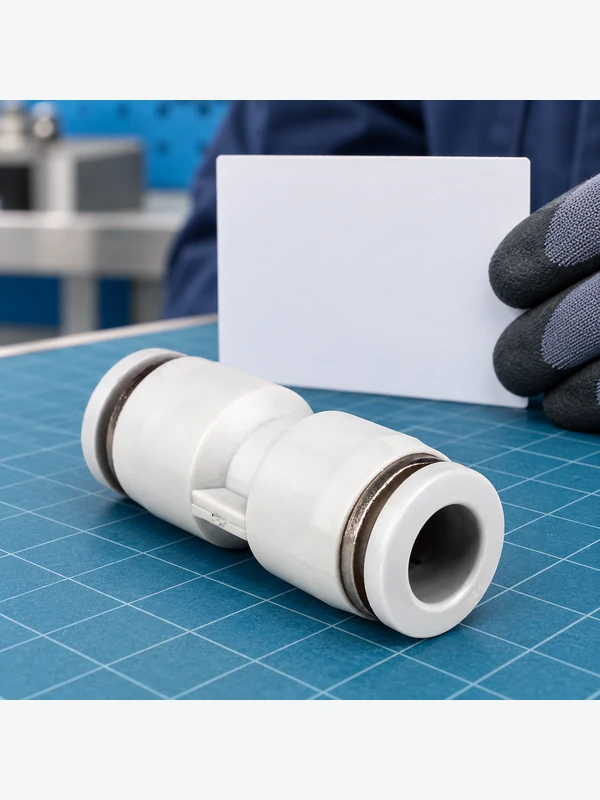
ISO 8573-1:2010는 공기 중 오염물질을 입자, 수분 및 오일로 분류하며, 이는 제품 승인이 아닙니다. 하류 공정의 공기 품질 등급을 명시하고, 윤활유, 응축수 또는 세척제가 피팅에 도달할 수 있는지 확인하십시오. 식품 포장과 일반 기계 구동은 동일한 공칭 압력에서도 서로 다른 위험 평가를 필요로 할 수 있습니다.
튜빙과 피팅은 하나의 인터페이스로 지정되어야 합니다. 콜레트와 씰은 정의된 튜브 외경과 공차를 기반으로 설계됩니다. 일반적인 외경으로는 4, 6, 8, 10 및 12 mm가 있으며, 미터법과 인치법 튜브는 서로 호환되지 않습니다. 공표된 튜브 범위를 사용하고, 직각으로 절단한 후 스크래치 여부를 검사하며, 사용 전에 제어된 감압과 당김 테스트를 수행하십시오.
환경에 사용할 재료를 선택하세요.
폴리아미드(나일론), PBT, 아세탈, 폴리프로필렌은 강성, 습기 반응, 내화학성 및 온도 내성에서 각각 다른 절충점을 제공합니다. 실제 사용 매체와 온도를 충족하는 화합물과 씰 조합을 선택하십시오. ASTM D543는 플라스틱의 화학 시약에 대한 저항성을 평가하며, 재료 비교에는 유용하지만 모든 공장용 유체에 대해 완제품 피팅을 인증하지는 않습니다.
또한 씰을 평가하십시오. NBR, FKM, EPDM 및 기타 엘라스토머는 오일, 열, 세척 화학물질과의 호환성이 서로 다릅니다. 공급업체는 본체와 씰 재질, 왜냐하면 겉보기에는 호환되는 플라스틱 부품이라도, 비호환 O-링으로 인해 조기에 고장이 발생할 수 있기 때문입니다. 노출되거나 움직이는 부위 또는 고온 환경에서는 문서화된 대체 부품과 전체 어셈블리의 한계를 비교해야 하며, 금속 구조만으로는 적합성이 보장되지 않습니다.
| 팩터 | 엔지니어드 플라스틱 피팅 | 금속 피팅 | 조달 시사점 |
|---|---|---|---|
| 무게 및 취급 | 보통 낮은 질량 | 합금 및 설계에 따라 다름 | 플라스틱은 밀집된 지지 라우팅을 단순화할 수 있습니다. |
| 열 및 기계적 손상 | 폴리머와 실링에 따라 크게 달라집니다. | 정확한 본체, 씰 및 튜브 등급을 비교하세요. | 단일 압력 값을 비교하지 말고, 게시된 압력-온도 곡선을 비교하십시오. |
| 부식 노출 | 일부 폴리머는 다양한 수성 환경에 저항합니다. | 합금 및 도금 관련 사항 | 실제 세척 환경 또는 주변 화학 조건을 검토하십시오. |
| 설치 속도 | 종종 도구가 거의 필요 없는 튜브 연결을 지원합니다. | 나사 조립 또는 페룰이 필요할 수 있습니다. | Measure installation and rework time in the TCO case. |
| Maintenance risk | Sensitive to tube condition and correct release procedure | Suitability still depends on the complete combination | Set inspection criteria for either option. |
When a metal fitting is a suitable replacement
Replacing a plastic body with a metal one is reasonable when the documented plastic assembly cannot accommodate the actual environment and a specified metal alternative can. First establish why the existing connection leaks. Identify whether the failed element is the tube surface, collet, thread, body or seal. A metal adapter with the same incompatible tube or unsupported bend can reproduce the original fault, while moving the damage into a more expensive port.
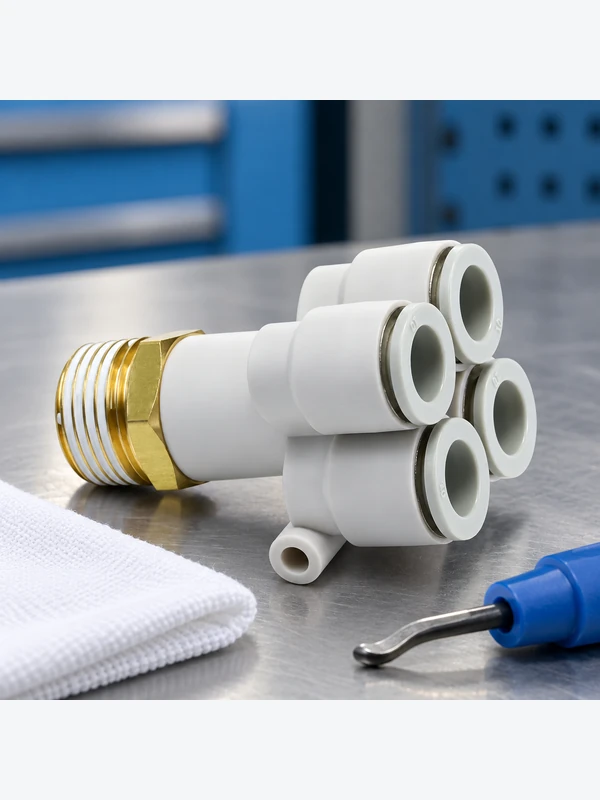
Separate a mechanical-location problem from a material problem. Impact exposure may require guarding; movement may require rerouting, support or a connection explicitly designed for that duty. Heat and cleaning chemicals require documented compatibility for the tube and elastomer as well as the body. A stainless outer shell does not automatically give the internal seal a higher temperature or chemical limit. Compare the complete rated configuration at the conditions measured at the connection.
Manufacturer catalogues illustrate why this must be model-specific. SMC’s KQ/KQ2 catalogue separately identifies permitted tubing, tube dimensions, operating fluids and component materials. Those are data for the named series, not ratings that can be transferred to an Oulu fitting or to a visually similar product. Use the same evidence categories in an enquiry for the proposed replacement and leave any undocumented field open for supplier confirmation.
For a production change, record the reason for substitution and the acceptance conditions before ordering. Keep the installed tube, mating port, operating cycle and maintenance access in the comparison. The straight-fitting fault guide can help identify the original interface problem. Approve the metal alternative only after it meets the actual requirement; do not use a successful static seal as proof that the entire moving assembly is qualified.
Include assembly, leak testing and repairs in the cost comparison
push-to-connect fittings can reduce assembly time and make panel maintenance more repeatable when technicians use compatible, undamaged tube. Unit price is only part of the cost: a leak can raise compressor run time, and an inaccessible connector extends interruption. The U.S. Department of Energy emphasizes leak management as a system-efficiency measure.
For example, 24 connections saving 6 installation minutes each reduce initial labor by 144 minutes. That benefit can disappear through repeat troubleshooting. Treat this as an example, not a performance claim; validate a representative assembly with an appropriate pressure-hold check and documented acceptance criteria.
| 지원 조건 | 확인해야 할 사항 | Typical selection direction | 인수 증빙 |
|---|---|---|---|
| Clean, fixed automation line | Tube OD, pressure, temperature, air class | Plastic may be suitable | Supplier data and installed pull/pressure check |
| Frequent machine changeover | Release access, tube wear, training | Quick-connect design with controlled procedure | Repeatability trial over the changeover cycle |
| Washdown or chemical exposure | Body and seal compatibility | Material-specific evaluation required | Compatibility evidence, such as ASTM D543 data where relevant |
| Hot, vibrating, or exposed zone | Temperature, impact, restraint, fatigue | Consider metal and additional guarding | Assembly rating and machinery risk assessment |
Approve fittings separately for each machine environment
Standardisation can simplify stores and training, but one plant can contain several different fitting environments. Divide the application into identifiable zones: a fixed control cabinet, a moving actuator area, a warmer process section and a location exposed to washdown are different approval cases. Use measured or documented operating conditions for each. Do not inherit a cabinet approval for another zone simply because both lines use the same nominal supply pressure.
만들기 qualification matrix around the interfaces that matter: tube manufacturer and material, OD and tolerance, body and seal identification, port thread, installation method, temperature, maximum pressure and media exposure. Add support and release clearance. A purchase order that says only “8 mm plastic fitting” cannot communicate that complete requirement. The 공압 부품 범위 can help locate candidates, but the final approval should identify the exact code and documentation revision.
Use a representative assembly and the intended 튜브 준비 procedure. Agree what will be inspected before the test, which authorised operating conditions will be reproduced and how leakage or retention will be assessed. Do not invent a common endurance cycle count or proof pressure for unlike models. Where movement is involved, perform the approved cycle with the normal safeguards, and never apply a manual side load to a pressurised fitting to see whether it leaks.
Retain the result with the zone approval and define what triggers review. A different cleaner, hotter process, replacement tube family, changed routing or new port design can invalidate the original comparison. Track repeat repairs and the actual time needed for access and retesting. These observations support a local total-cost comparison without claiming a universal percentage saving or service life. Review 원터치 장착 작업 when training technicians, while keeping installation limits tied to the supplied product.
Check safety rules alongside the supplier’s fitting ratings
For U.S. workplaces, OSHA 29 CFR 1910.147 governs hazardous-energy control and 29 CFR 1910.169 addresses air receivers; neither certifies every fitting. ISO 4414 defines pneumatic-system safety expectations, and ISO 8573-1 air-purity classes. These sources guide specification scope; the maker’s pressure-temperature limits, material declarations, and instructions establish item suitability.
Unsupported claims create practical commercial risk: an overstated pressure, food-contact, chemical-resistance, or “ISO certified” statement can lead to rejected submittals, unsafe substitution, warranty disputes, or rework. Apply the destination market’s rules and the equipment’s intended use before making claims in procurement documents. A standard test method demonstrates how a property was evaluated; it does not automatically approve a product or system.
What to confirm before ordering plastic fittings
- Map every connection: tube OD, thread standard, orientation, minimum bend clearance, and service access.
- Define normal and maximum pressure and temperature at the point of use, including compressor start-stop and ambient conditions.
- Specify air cleanliness using the process need, then review body and seal compatibility with oil, water, cleaners, and nearby chemicals.
- Request current drawings, pressure-temperature ratings, material information, and installation instructions; validate a representative assembly before rollout.
- Document lockout, depressurization, inspection, and replacement criteria in the maintenance plan.
ANMASPC / Microduct Connector can support buyers who need to align connector configuration with tubing, routing, and documentation requirements. Review the available 제품 라인업 alongside the machine specification, rather than approving substitutions from photographs alone.
자주 묻는 질문
What are plastic pneumatic fittings used for?
They connect tubes and pneumatic components in equipment such as control panels, automation cells, and air-preparation assemblies. Their suitability depends on the pressure-temperature rating, media, tube compatibility, and physical exposure at that location.
원터치 피팅은 신뢰할 수 있습니까?
They can be reliable when the fitting, tube, and installation method are matched. Use the correct OD and tube material, make a square cut, fully insert the tube, and confirm the connection with the supplier’s recommended check before commissioning.
What is the best plastic for pneumatic fittings?
There is no universal best material. Choose the body and seal combination that the manufacturer rates for the temperature, pressure, lubricant, moisture, and chemicals in the real application; comparison data should identify the tested material and conditions.
How do you choose pneumatic tubing size?
Select pneumatic tubing OD to match the fitting and select bore based on required flow, allowable pressure drop, route length, and actuator demand. Confirm both metric versus inch sizing and the supplier’s tube-tolerance limits; do not force a near-match into a collet.
Can plastic fittings handle compressed air?
Yes, many are designed for it, but only within their published operating envelope. Check the compressed air quality, maximum pressure, temperature, and potential mechanical loading, then follow the system’s energy-isolation procedure during service.
When should metal fittings be used instead?
Consider metal where the assembly sees higher heat, mechanical impact, vibration, difficult chemical conditions, or a duty outside the plastic fitting’s documented limits. The decision should be based on complete-system risk and the manufacturer’s assembly data, not a general assumption that one material always outperforms another.
Is a plastic pneumatic fitting automatically unsuitable for a production machine?
No. Suitability depends on the exact body and seal, tube, pressure, temperature, medium, vibration and installation environment. Approve the complete combination from the supplier’s documented limits and a representative test.
How should a buyer compare two plastic fitting materials?
Compare the approved temperature and pressure range, chemical and media compatibility, UV or environmental exposure, tube retention, thread design, replacement policy and evidence supplied for the exact model. Do not choose from colour or body shape alone.
Will a stainless body fix a leak caused by the wrong tube OD?
No. The tube must match the fitting’s approved OD, tolerance, material and surface condition. Changing the body material does not correct an incompatible tube or damaged sealing zone. Identify the failed interface before selecting a replacement.
What changes should trigger a review of an approved plastic fitting?
Review the approval when the tube, seal, cleaner, medium, pressure, temperature, movement, routing or mating port changes. Check the exact assembly against the revised conditions and use the required qualification procedure. A prior approval for another machine zone is not automatic evidence of suitability.
참고문헌
- SMC — KQ/KQ2 one-touch fittings catalogue (series-specific tube and assembly data)
- U.S. Department of Energy — Improving Compressed Air System Performance: Minimize Compressed Air Leaks
- ASME B1.20.1 — Pipe Threads, General Purpose (Inch), official scope
요약
Identify the failure and operating conditions before choosing a plastic or metal replacement. Verify tube compatibility, thread and seal arrangement first, then compare the exact body-and-seal combinations for heat, chemicals, movement and exposure. Use metal where its documented assembly addresses the requirement, while correcting routing, support or preparation problems independently. For standardisation, qualify identifiable machine zones and retain the tube, part code, conditions and acceptance results. Review that approval after a material or process change. Keep the approval with the exact tube and fitting combination. A material change will not fix a damaged tube, incompatible thread or unsupported connection.



