
When a maintenance engineer in Birmingham replaced a leaking manifold connection during a short production break, the new fitting released its tube as pressure returned; the visible failure arrived in seconds, but the team traced it to an unmatched tube outside diameter, not a defective component. Selection, sizing, and installation discipline determine whether a connection stays dependable.
The short answer is: Choose fittings by actual tube OD, working pressure and temperature, air quality, chemical exposure, and safety controls—not thread or appearance. ISO 4414 addresses pneumatic-system safety, while ISO 8573-1 classifies air contaminants. Start with the tube and duty cycle, confirm the maker’s pressure-temperature rating, and release system pressure before service.
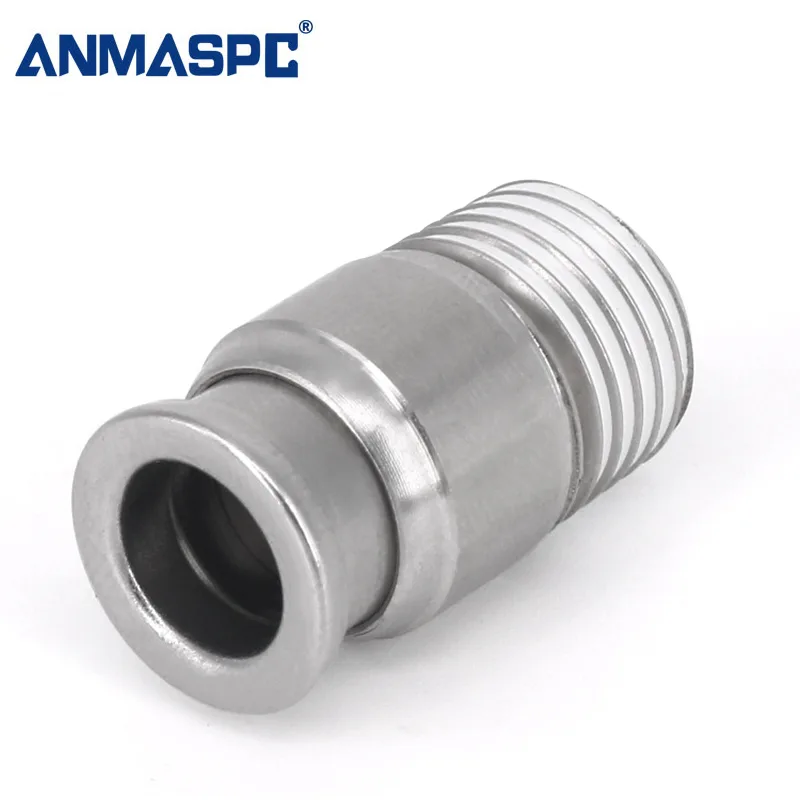
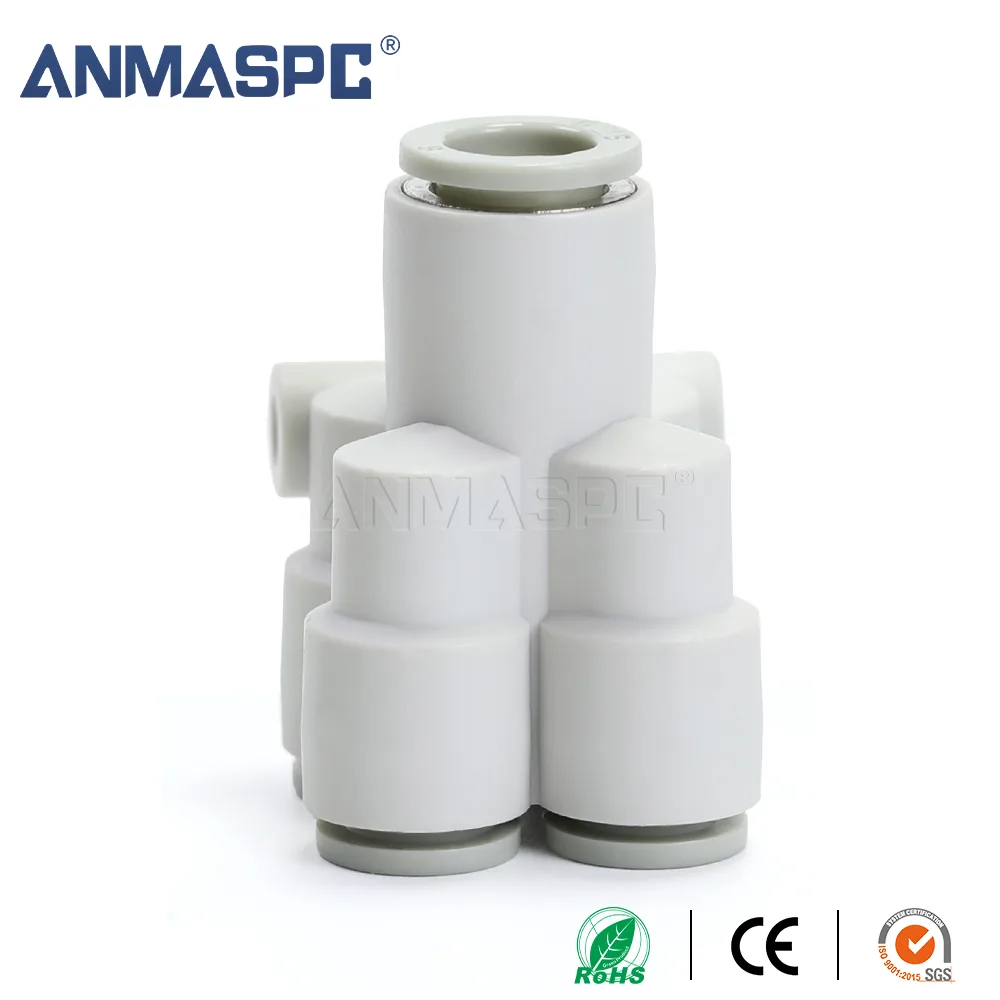
These plastic pneumatic fittings join tubing, valves, regulators, cylinders, and distribution points. They suit many clean, moderate-duty circuits, but polymers respond differently to heat, cleaners, vibration, and oils. Include them in the air-system specification alongside routing, lockout practices, and maintenance access.
Start with the air line operating conditions
Record normal and maximum pressure, temperature at the connection, media, duty cycle, and nearby personnel. ISO 4414:2010 covers pneumatic-system design and operation, including energy isolation and residual-pressure hazards; it does not certify an individual fitting. A static bench rating may not suit heat, repeated movement, or a line that can whip after release.
ISO 8573-1:2010 classifies air contaminants by particles, water, and oil; it is not a product approval. Specify the downstream process’s air-quality class and check whether lubricant, condensate, or cleaners can reach the fitting. Food packaging and general machine actuation can require different risk assessments at the same nominal pressure.
Tubing and fitting must be specified as one interface. The collet and seal are engineered around a defined tube OD and tolerance. Common ODs include 4, 6, 8, 10, and 12 mm, but metric and inch tube are not interchangeable. Use the published tube range, make a square cut, inspect for scoring, and use controlled depressurization and a pull check before service.
Choose the material for the environment
Polyamide (nylon), PBT, acetal, and polypropylene make different trade-offs in stiffness, moisture response, chemical resistance, and temperature capability. Choose the compound and seal combination whose rating covers actual media and temperature. ASTM D543 evaluates plastics’ resistance to chemical reagents; it supports material comparison, but does not certify a finished fitting for every plant fluid.
Also evaluate the seal. NBR, FKM, EPDM, and other elastomers have different compatibility with oils, heat, and cleaning chemistry. A supplier should be able to identify both body and seal material, because an apparently compatible plastic body can still fail early through an incompatible O-ring. For exposed, moving, or high-temperature points, metal may offer a larger safety margin—subject to the complete assembly rating.
| Factor | Engineered plastic fitting | Metal fitting | ផលប៉ះពាល់នៃការផ្គត់ផ្គង់ |
|---|---|---|---|
| Weight and handling | Usually low mass | Usually higher mass | Plastic can simplify dense, supported routing. |
| Heat and mechanical abuse | Depends strongly on polymer and seal | Often preferred where heat or impact is elevated | Compare published pressure-temperature curves, not a single pressure value. |
| Corrosion exposure | Some polymers resist many aqueous environments | Alloy and plating matter | Review the actual washdown or ambient chemistry. |
| ល្បឿនដំឡើង | Often supports tool-light tube connection | May require threaded assembly or ferrules | Measure installation and rework time in the TCO case. |
| Maintenance risk | Sensitive to tube condition and correct release procedure | May better tolerate some harsh locations | Set inspection criteria for either option. |
Balance quick assembly against service life
push-to-connect fittings can reduce assembly time and make panel maintenance more repeatable when technicians use compatible, undamaged tube. Unit price is only part of the cost: a leak can raise compressor run time, and an inaccessible connector extends interruption. The U.S. Department of Energy emphasizes leak management as a system-efficiency measure.
An illustrative calculation makes the trade-off visible: 24 connections saving 6 installation minutes each reduce initial labor by 144 minutes. That benefit can disappear through repeat troubleshooting. Treat this as an example, not a performance claim; validate a representative assembly with an appropriate pressure-hold check and documented acceptance criteria.
| លក្ខខណ្ឌនៃការដាក់ពាក្យ | អ្វីដែលត្រូវផ្ទៀងផ្ទាត់ | Typical selection direction | ភស្តុតាងនៃការទទួលយក |
|---|---|---|---|
| Clean, fixed automation line | Tube OD, pressure, temperature, air class | Plastic may be suitable | Supplier data and installed pull/pressure check |
| Frequent machine changeover | Release access, tube wear, training | Quick-connect design with controlled procedure | Repeatability trial over the changeover cycle |
| Washdown or chemical exposure | Body and seal compatibility | Material-specific evaluation required | Compatibility evidence, such as ASTM D543 data where relevant |
| Hot, vibrating, or exposed zone | Temperature, impact, restraint, fatigue | Consider metal and additional guarding | Assembly rating and machinery risk assessment |
Use standards with the supplier data
For U.S. workplaces, OSHA 29 CFR 1910.147 governs hazardous-energy control and 29 CFR 1910.169 addresses air receivers; neither certifies every fitting. ISO 4414 defines pneumatic-system safety expectations, and ISO 8573-1 air-purity classes. These sources guide specification scope; the maker’s pressure-temperature limits, material declarations, and instructions establish item suitability.
Unsupported claims create practical commercial risk: an overstated pressure, food-contact, chemical-resistance, or “ISO certified” statement can lead to rejected submittals, unsafe substitution, warranty disputes, or rework. Apply the destination market’s rules and the equipment’s intended use before making claims in procurement documents. A standard test method demonstrates how a property was evaluated; it does not automatically approve a product or system.
What to confirm before ordering plastic fittings
- Map every connection: tube OD, thread standard, orientation, minimum bend clearance, and service access.
- Define normal and maximum pressure and temperature at the point of use, including compressor start-stop and ambient conditions.
- Specify air cleanliness using the process need, then review body and seal compatibility with oil, water, cleaners, and nearby chemicals.
- Request current drawings, pressure-temperature ratings, material information, and installation instructions; validate a representative assembly before rollout.
- Document lockout, depressurization, inspection, and replacement criteria in the maintenance plan.
ANMASPC / Microduct Connector can support buyers who need to align connector configuration with tubing, routing, and documentation requirements. Review the available product range alongside the machine specification, rather than approving substitutions from photographs alone.
Check the interface before comparing plastic materials
Plastic fitting selection often starts with the material name, but a material cannot compensate for a wrong tube OD, thread or seal. Record the actual tube outside diameter, pressure and temperature range, air quality, cleaning chemicals, movement and release access first. Then ask the supplier whether the body, collet, O-ring and tube are approved as an assembly for that duty.
| Question | What to record | What can go wrong if it is skipped |
|---|---|---|
| Will the tube stay in the fitting? | OD, hardness, ovality and insertion depth | Pull-out or intermittent leakage |
| Will the thread seal? | BSP, NPT or metric form and seal method | Cross-threading or a persistent port leak |
| Will the plastic survive the area? | Temperature, oil, chemicals and UV exposure | Embrittlement, swelling or early replacement |
| Can maintenance reach it? | Release clearance and approved spare | Longer downtime during a simple repair |
For push-in operation, see one-touch fitting selection; for straight and threaded alternatives, review straight fitting choices.
How to qualify plastic fittings for a real air line
People also ask whether a push-to-connect fitting is reliable and which plastic is best. The useful answer is conditional: qualify the body, tube, seal, thread, medium, temperature, pressure, vibration and maintenance access as one interface. ISO 4414 supplies system-level safety principles, while ISO 8573-1 helps describe compressed-air quality; neither removes the need to check the exact product data.
During approval, test a representative assembly using the intended tube and service conditions, then record insertion, retention and leak results. Cross-check the one-touch fitting selection guide with the ប្រភេទផ្នែក pneumatic before standardizing a plastic body across different machine zones.
សំណួរដែលសួរញឹកញាប់
What are plastic pneumatic fittings used for?
They connect tubes and pneumatic components in equipment such as control panels, automation cells, and air-preparation assemblies. Their suitability depends on the pressure-temperature rating, media, tube compatibility, and physical exposure at that location.
Are push-to-connect fittings reliable?
They can be reliable when the fitting, tube, and installation method are matched. Use the correct OD and tube material, make a square cut, fully insert the tube, and confirm the connection with the supplier’s recommended check before commissioning.
What is the best plastic for pneumatic fittings?
There is no universal best material. Choose the body and seal combination that the manufacturer rates for the temperature, pressure, lubricant, moisture, and chemicals in the real application; comparison data should identify the tested material and conditions.
How do you choose pneumatic tubing size?
Select pneumatic tubing OD to match the fitting and select bore based on required flow, allowable pressure drop, route length, and actuator demand. Confirm both metric versus inch sizing and the supplier’s tube-tolerance limits; do not force a near-match into a collet.
Can plastic fittings handle compressed air?
Yes, many are designed for it, but only within their published operating envelope. Check the compressed air quality, maximum pressure, temperature, and potential mechanical loading, then follow the system’s energy-isolation procedure during service.
When should metal fittings be used instead?
Consider metal where the assembly sees higher heat, mechanical impact, vibration, difficult chemical conditions, or a duty outside the plastic fitting’s documented limits. The decision should be based on complete-system risk and the manufacturer’s assembly data, not a general assumption that one material always outperforms another.
Is a plastic pneumatic fitting automatically unsuitable for a production machine?
No. Suitability depends on the exact body and seal, tube, pressure, temperature, medium, vibration and installation environment. Approve the complete combination from the supplier’s documented limits and a representative test.
How should a buyer compare two plastic fitting materials?
Compare the approved temperature and pressure range, chemical and media compatibility, UV or environmental exposure, tube retention, thread design, replacement policy and evidence supplied for the exact model. Do not choose from colour or body shape alone.
ឯកសារយោង
- ISO 4414:2010: Pneumatic fluid power – general rules and safety requirementsOfficial ISO standard page; system-safety scope.
- ISO 8573-1:2010: Compressed air – contaminants and purity classesOfficial ISO standard page; air-quality scope.
- U.S. Department of Energy: Operating and maintaining compressed-air systemsPublic government guidance; maintenance and efficiency context.
Specify the interface before ordering the connector: in pneumatics, a small mismatch is rarely a small operational risk. For configuration support on industrial air-line components, explore ANMASPC pneumatic parts and contact the team with your tube, pressure, media, and installation details.
Practical conclusion: Plastic is only one part of a pneumatic fitting decision. Match the body, tube, seal, thread and operating environment, then inspect the complete joint under the conditions the machine will actually see.


