
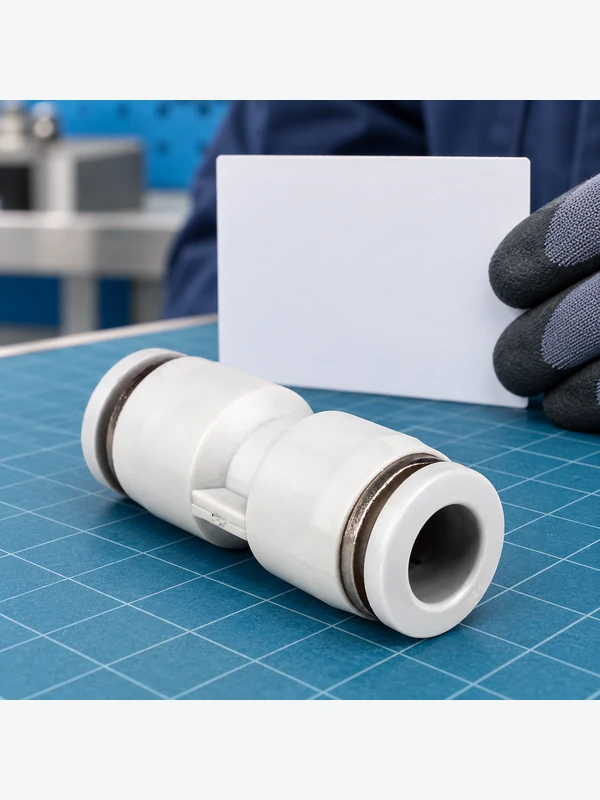
Пластиковые пневматические фитинги Может быть применён в промышленной пневмосети при условии, что трубка, корпус, уплотнение и рабочая среда одобрены как единый комплект. Проверьте номинальные характеристики корпуса и уплотнения для выбранной трубки и условий эксплуатации. Уточните фактические значения давления, температуры, скорости движения, воздействия химических веществ и возможности технического обслуживания перед сравнением пластиковых и металлических вариантов или стандартизацией замены на нескольких участках оборудования.
Выбирайте фитинги в зависимости от фактического наружного диаметра трубы, рабочего давления и температуры, качества воздуха, воздействия химических веществ и требуемых мер безопасности. Подтвердите обозначение резьбы по чертежу. ISO 4414 касается безопасности пневматических систем, тогда как ISO 8573-1 классифицирует загрязнители воздуха. Начните с трубы и режима работы, уточните данные производителя о предельных значениях давления и температуры и перед обслуживанием сбросьте давление в системе.
Эти пластиковые пневматические фитинги соединяют трубки, клапаны, регуляторы, цилиндры и точки распределения. Они подходят для многих чистых систем средней нагрузки, однако полимеры по‑разному реагируют на нагрев, чистящие средства, вибрацию и масла. Включите их в спецификацию пневмосистемы вместе с маршрутами прокладки, процедурами блокировки и обеспечением доступа для технического обслуживания.
Начните с рабочих условий воздушной линии.
Запишите нормальное и максимальное давление, температуру на соединении, рабочую среду, режим работы и информацию о находящихся поблизости сотрудниках. ISO 4414:2010 охватывает проектирование и эксплуатацию пневматических систем, включая изоляцию источников энергии и риски, связанные с остаточным давлением; она не сертифицирует отдельные фитинги. Статическая испытательная нагрузка на стенде может не соответствовать условиям нагрева, многократного движения или ситуации, когда линия может хлестать после освобождения.
ISO 8573-1:2010 классифицирует загрязнители воздуха по частицам, воде и маслу; это не является одобрением продукта. Укажите класс качества воздуха для последующего процесса и проверьте, могут ли смазка, конденсат или очистители попадать в фитинг. Упаковка пищевых продуктов и общее приведение механизмов в действие могут требовать различных оценок рисков при одинаковом номинальном давлении.
Трубки и фитинги должны быть указаны как единый узел. Зажимное кольцо и уплотнение рассчитаны на определённый наружный диаметр трубы и допуск. К распространённым значениям наружного диаметра относятся 4, 6, 8, 10 и 12 мм, однако метрические и дюймовые трубки не взаимозаменяемы. Используйте указанный диапазон труб, выполняйте прямой срез, проверяйте на наличие царапин и перед эксплуатацией проводите контролируемое сброс давления и проверку на вытягивание.
Выберите материал для среды
Полиамид (нейлон), ПБТ, ацеталь и полипропилен предлагают различные компромиссы по жёсткости, чувствительности к влаге, химической стойкости и температурной выносливости. Выберите материал и уплотнительную комбинацию, чьи характеристики соответствуют реальным средам и температурам. ASTM D543 оценивает стойкость пластиков к химическим реагентам; этот стандарт позволяет сравнивать материалы, но не сертифицирует готовый фитинг для всех рабочих жидкостей установки.
Также оцените уплотнение. Эластомеры NBR, FKM, EPDM и другие обладают различной совместимостью с маслами, теплом и моющими химическими составами. Поставщик должен уметь определить как материал корпуса, так и материал уплотнения, поскольку даже внешне совместимый пластиковый корпус всё равно может преждевременно выйти из строя из‑за несовместимого уплотнительного кольца. Для открытых, подвижных или работающих при высоких температурах узлов следует сравнивать документированные альтернативы и полные эксплуатационные пределы; только металлическая конструкция сама по себе не гарантирует пригодность.
| Фактор | Фитинг из технической пластмассы | Металлический фитинг | Последствия для закупок |
|---|---|---|---|
| Вес и удобство использования | Обычно низкая масса | Зависит от сплава и конструкции | Пластик может упростить плотную маршрутизацию с опорами. |
| Тепловое и механическое воздействие | Depends strongly on polymer and seal | Compare the exact body, seal and tube ratings | Compare published pressure-temperature curves, not a single pressure value. |
| Corrosion exposure | Some polymers resist many aqueous environments | Alloy and plating matter | Review the actual washdown or ambient chemistry. |
| Скорость установки | Often supports tool-light tube connection | May require threaded assembly or ferrules | Measure installation and rework time in the TCO case. |
| Maintenance risk | Sensitive to tube condition and correct release procedure | Suitability still depends on the complete combination | Set inspection criteria for either option. |
When a metal fitting is a suitable replacement
Replacing a plastic body with a metal one is reasonable when the documented plastic assembly cannot accommodate the actual environment and a specified metal alternative can. First establish why the existing connection leaks. Identify whether the failed element is the tube surface, collet, thread, body or seal. A metal adapter with the same incompatible tube or unsupported bend can reproduce the original fault, while moving the damage into a more expensive port.
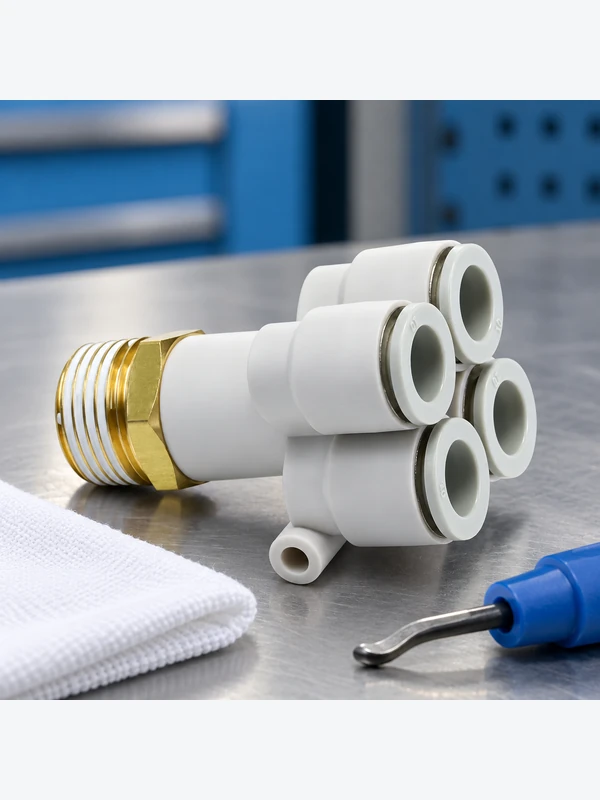
Separate a mechanical-location problem from a material problem. Impact exposure may require guarding; movement may require rerouting, support or a connection explicitly designed for that duty. Heat and cleaning chemicals require documented compatibility for the tube and elastomer as well as the body. A stainless outer shell does not automatically give the internal seal a higher temperature or chemical limit. Compare the complete rated configuration at the conditions measured at the connection.
Manufacturer catalogues illustrate why this must be model-specific. SMC’s KQ/KQ2 catalogue separately identifies permitted tubing, tube dimensions, operating fluids and component materials. Those are data for the named series, not ratings that can be transferred to an Oulu fitting or to a visually similar product. Use the same evidence categories in an enquiry for the proposed replacement and leave any undocumented field open for supplier confirmation.
For a production change, record the reason for substitution and the acceptance conditions before ordering. Keep the installed tube, mating port, operating cycle and maintenance access in the comparison. The straight-fitting fault guide can help identify the original interface problem. Approve the metal alternative only after it meets the actual requirement; do not use a successful static seal as proof that the entire moving assembly is qualified.
Include assembly, leak testing and repairs in the cost comparison
push-to-connect fittings can reduce assembly time and make panel maintenance more repeatable when technicians use compatible, undamaged tube. Unit price is only part of the cost: a leak can raise compressor run time, and an inaccessible connector extends interruption. The U.S. Department of Energy emphasizes leak management as a system-efficiency measure.
For example, 24 connections saving 6 installation minutes each reduce initial labor by 144 minutes. That benefit can disappear through repeat troubleshooting. Treat this as an example, not a performance claim; validate a representative assembly with an appropriate pressure-hold check and documented acceptance criteria.
| Условие применения | Что проверять | Typical selection direction | Доказательство принятия |
|---|---|---|---|
| Clean, fixed automation line | Tube OD, pressure, temperature, air class | Plastic may be suitable | Supplier data and installed pull/pressure check |
| Frequent machine changeover | Release access, tube wear, training | Quick-connect design with controlled procedure | Repeatability trial over the changeover cycle |
| Washdown or chemical exposure | Body and seal compatibility | Material-specific evaluation required | Compatibility evidence, such as ASTM D543 data where relevant |
| Hot, vibrating, or exposed zone | Temperature, impact, restraint, fatigue | Consider metal and additional guarding | Assembly rating and machinery risk assessment |
Approve fittings separately for each machine environment
Standardisation can simplify stores and training, but one plant can contain several different fitting environments. Divide the application into identifiable zones: a fixed control cabinet, a moving actuator area, a warmer process section and a location exposed to washdown are different approval cases. Use measured or documented operating conditions for each. Do not inherit a cabinet approval for another zone simply because both lines use the same nominal supply pressure.
Построить qualification matrix around the interfaces that matter: tube manufacturer and material, OD and tolerance, body and seal identification, port thread, installation method, temperature, maximum pressure and media exposure. Add support and release clearance. A purchase order that says only “8 mm plastic fitting” cannot communicate that complete requirement. The Спектр пневматических деталей can help locate candidates, but the final approval should identify the exact code and documentation revision.
Use a representative assembly and the intended подготовка трубки procedure. Agree what will be inspected before the test, which authorised operating conditions will be reproduced and how leakage or retention will be assessed. Do not invent a common endurance cycle count or proof pressure for unlike models. Where movement is involved, perform the approved cycle with the normal safeguards, and never apply a manual side load to a pressurised fitting to see whether it leaks.
Retain the result with the zone approval and define what triggers review. A different cleaner, hotter process, replacement tube family, changed routing or new port design can invalidate the original comparison. Track repeat repairs and the actual time needed for access and retesting. These observations support a local total-cost comparison without claiming a universal percentage saving or service life. Review one-touch fitting operation when training technicians, while keeping installation limits tied to the supplied product.
Check safety rules alongside the supplier’s fitting ratings
For U.S. workplaces, OSHA 29 CFR 1910.147 governs hazardous-energy control and 29 CFR 1910.169 addresses air receivers; neither certifies every fitting. ISO 4414 defines pneumatic-system safety expectations, and ISO 8573-1 air-purity classes. These sources guide specification scope; the maker’s pressure-temperature limits, material declarations, and instructions establish item suitability.
Unsupported claims create practical commercial risk: an overstated pressure, food-contact, chemical-resistance, or “ISO certified” statement can lead to rejected submittals, unsafe substitution, warranty disputes, or rework. Apply the destination market’s rules and the equipment’s intended use before making claims in procurement documents. A standard test method demonstrates how a property was evaluated; it does not automatically approve a product or system.
What to confirm before ordering plastic fittings
- Map every connection: tube OD, thread standard, orientation, minimum bend clearance, and service access.
- Define normal and maximum pressure and temperature at the point of use, including compressor start-stop and ambient conditions.
- Specify air cleanliness using the process need, then review body and seal compatibility with oil, water, cleaners, and nearby chemicals.
- Request current drawings, pressure-temperature ratings, material information, and installation instructions; validate a representative assembly before rollout.
- Document lockout, depressurization, inspection, and replacement criteria in the maintenance plan.
ANMASPC / Microduct Connector can support buyers who need to align connector configuration with tubing, routing, and documentation requirements. Review the available ассортимент продукции alongside the machine specification, rather than approving substitutions from photographs alone.
Часто задаваемые вопросы
What are plastic pneumatic fittings used for?
They connect tubes and pneumatic components in equipment such as control panels, automation cells, and air-preparation assemblies. Their suitability depends on the pressure-temperature rating, media, tube compatibility, and physical exposure at that location.
Надёжны ли фитинги с прямым подключением?
They can be reliable when the fitting, tube, and installation method are matched. Use the correct OD and tube material, make a square cut, fully insert the tube, and confirm the connection with the supplier’s recommended check before commissioning.
What is the best plastic for pneumatic fittings?
There is no universal best material. Choose the body and seal combination that the manufacturer rates for the temperature, pressure, lubricant, moisture, and chemicals in the real application; comparison data should identify the tested material and conditions.
How do you choose pneumatic tubing size?
Select pneumatic tubing OD to match the fitting and select bore based on required flow, allowable pressure drop, route length, and actuator demand. Confirm both metric versus inch sizing and the supplier’s tube-tolerance limits; do not force a near-match into a collet.
Can plastic fittings handle compressed air?
Yes, many are designed for it, but only within their published operating envelope. Check the compressed air quality, maximum pressure, temperature, and potential mechanical loading, then follow the system’s energy-isolation procedure during service.
When should metal fittings be used instead?
Consider metal where the assembly sees higher heat, mechanical impact, vibration, difficult chemical conditions, or a duty outside the plastic fitting’s documented limits. The decision should be based on complete-system risk and the manufacturer’s assembly data, not a general assumption that one material always outperforms another.
Is a plastic pneumatic fitting automatically unsuitable for a production machine?
No. Suitability depends on the exact body and seal, tube, pressure, temperature, medium, vibration and installation environment. Approve the complete combination from the supplier’s documented limits and a representative test.
How should a buyer compare two plastic fitting materials?
Compare the approved temperature and pressure range, chemical and media compatibility, UV or environmental exposure, tube retention, thread design, replacement policy and evidence supplied for the exact model. Do not choose from colour or body shape alone.
Will a stainless body fix a leak caused by the wrong tube OD?
No. The tube must match the fitting’s approved OD, tolerance, material and surface condition. Changing the body material does not correct an incompatible tube or damaged sealing zone. Identify the failed interface before selecting a replacement.
What changes should trigger a review of an approved plastic fitting?
Review the approval when the tube, seal, cleaner, medium, pressure, temperature, movement, routing or mating port changes. Check the exact assembly against the revised conditions and use the required qualification procedure. A prior approval for another machine zone is not automatic evidence of suitability.
Ссылки
- SMC — KQ/KQ2 one-touch fittings catalogue (series-specific tube and assembly data)
- U.S. Department of Energy — Improving Compressed Air System Performance: Minimize Compressed Air Leaks
- ASME B1.20.1 — Pipe Threads, General Purpose (Inch), official scope
Краткое содержание
Identify the failure and operating conditions before choosing a plastic or metal replacement. Verify tube compatibility, thread and seal arrangement first, then compare the exact body-and-seal combinations for heat, chemicals, movement and exposure. Use metal where its documented assembly addresses the requirement, while correcting routing, support or preparation problems independently. For standardisation, qualify identifiable machine zones and retain the tube, part code, conditions and acceptance results. Review that approval after a material or process change. Keep the approval with the exact tube and fitting combination. A material change will not fix a damaged tube, incompatible thread or unsupported connection.



