
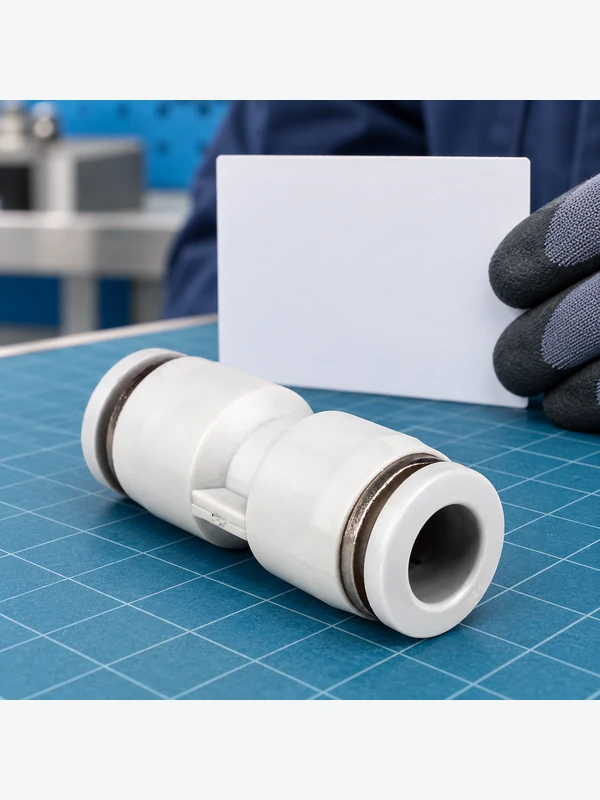
Plastične pneumatske spojnice Može se prilagoditi industrijskom zračnom sistemu kada su cijev, kućište, brtva i radna okolina odobreni kao jedinstvena kombinacija. Provjerite nazivne vrijednosti kućišta i brtve za predviđenu cijev i uslove upotrebe. Definisite stvarni pritisak, temperaturu, pokret, hemikalije i pristup za održavanje prije nego što uporedite plastične i metalne alternative ili standardizujete zamjenu u nekoliko zona mašine.
Odaberite armature prema stvarnom vanjskom promjeru cijevi, radnom pritisku i temperaturi, kvaliteti zraka, hemijskoj izloženosti i potrebnim sigurnosnim kontrolama. Potvrdite oznaku navoja sa crteža. ISO 4414 se bavi sigurnošću pneumatskih sistema, dok ISO 8573-1 klasificira zagađivače zraka. Počnite s cijevi i radnim ciklusom, potvrdite proizvođačevu ocjenu pritiska i temperature i oslobodite sistem od pritiska prije servisiranja.
Ovi plastični pneumatski spojevi povezuju crijeva, ventile, regulatora, cilindre i distribucijske tačke. Pogodni su za mnoge čiste krugove srednjeg opterećenja, ali polimeri se različito ponašaju na toplotu, sredstva za čišćenje, vibracije i ulja. Uvrstite ih u specifikaciju zračnog sistema zajedno s trasom, procedurama zaključavanja i pristupom za održavanje.
Počnite s radnim uvjetima zračne linije
Zabilježite normalni i maksimalni pritisak, temperaturu na spoju, medij, radni ciklus i obližnje osoblje. ISO 4414:2010 obuhvata dizajn i rad pneumatskih sistema, uključujući izolaciju energije i opasnosti od preostalog pritiska; ona ne sertifikuje pojedinačni priključak. Statička klasifikacija na klupi možda nije prikladna za toplotu, ponovljeno kretanje ili liniju koja može da se trza nakon otpuštanja.
ISO 8573-1:2010 klasificira zagađivače zraka prema česticama, vodi i ulju; to nije odobrenje proizvoda. Navedite klasu kvalitete zraka procesa nizvodno i provjerite može li mazivo, kondenzat ili sredstva za čišćenje doći do spojnice. Pakiranje hrane i opće upravljanje mašinama mogu zahtijevati različite procjene rizika pri istom nominalnom pritisku.
Cijevi i spojnice moraju biti navedeni kao jedan interfejs. Stezna matica i brtva su dizajnirani za određeni vanjski promjer cijevi i njegovu toleranciju. Uobičajeni vanjski promjeri uključuju 4, 6, 8, 10 i 12 mm, ali metričke i inčne cijevi nisu međusobno kompatibilne. Koristite objavljeni raspon cijevi, napravite pravokutan rez, provjerite da nema ureza i prije upotrebe primijenite kontrolisano smanjenje pritiska te provjeru povlačenjem.
Odaberite materijal za okolinu
Poliamid (najlon), PBT, acetal i polipropilen prave različite kompromise u pogledu krutosti, reakcije na vlagu, hemijske otpornosti i sposobnosti izdržavanja temperatura. Odaberite spoj materijala i kombinaciju brtve čija klasa pokriva stvarne medije i temperaturu. ASTM D543 procjenjuje otpornost plastike na hemijske reagens. Ona podržava upoređivanje materijala, ali ne certificira gotov priključak za svaku tekućinu u postrojenju.
Također procijenite brtveni materijal. NBR, FKM, EPDM i drugi elastomeri imaju različitu kompatibilnost s uljima, toplotom i kemijskim sredstvima za čišćenje. Dobavljač bi trebao biti u mogućnosti da identifikuje i tijelo i materijal za brtvljenje, jer se naizgled kompatibilno plastično kućište ipak može prerano oštetiti zbog nekompatibilnog O-prstena. Za izložene, pokretne ili visokotemperaturne točke uporedite dokumentovane alternative i ukupne granice montaže; samo metalna konstrukcija ne garantuje prikladnost.
| Faktor | Inženjerski plastični spoj | Metalna armatura | Uključenost u nabavku |
|---|---|---|---|
| Težina i rukovanje | Obično mala masa | Zavisi od legure i dizajna | Plastika može pojednostaviti guste, podržane putanje. |
| Toplina i mehaničko oštećenje | Jako zavisi od polimera i brtve | Uporedite tačne ocjene kućišta, brtve i cijevi. | Uporedite objavljene krive pritiska i temperature, a ne samo jednu vrijednost pritiska. |
| Izloženost koroziji | Neki polimeri su otporni na mnoga vodena okruženja. | Materijal legure i prevlaka | Pregledajte stvarnu hemiju prilikom ispiranja ili okolne hemije. |
| Brzina instalacije | Često podržava spajanje cijevi uz minimalnu upotrebu alata. | Možda zahtijeva navojnu montažu ili prstenaste spojnice. | Izmjerite vrijeme instalacije i prerade u slučaju TCO. |
| Rizik održavanja | Osjetljiv na stanje cijevi i pravilan postupak otpuštanja | Pogodnost i dalje zavisi od cjelokupne kombinacije. | Set inspection criteria for either option. |
When a metal fitting is a suitable replacement
Replacing a plastic body with a metal one is reasonable when the documented plastic assembly cannot accommodate the actual environment and a specified metal alternative can. First establish why the existing connection leaks. Identify whether the failed element is the tube surface, collet, thread, body or seal. A metal adapter with the same incompatible tube or unsupported bend can reproduce the original fault, while moving the damage into a more expensive port.
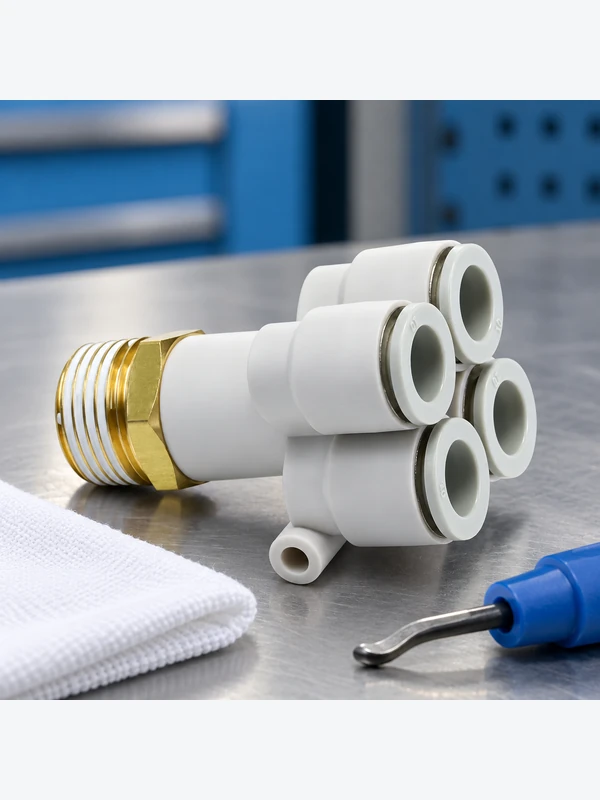
Separate a mechanical-location problem from a material problem. Impact exposure may require guarding; movement may require rerouting, support or a connection explicitly designed for that duty. Heat and cleaning chemicals require documented compatibility for the tube and elastomer as well as the body. A stainless outer shell does not automatically give the internal seal a higher temperature or chemical limit. Compare the complete rated configuration at the conditions measured at the connection.
Manufacturer catalogues illustrate why this must be model-specific. SMC’s KQ/KQ2 catalogue separately identifies permitted tubing, tube dimensions, operating fluids and component materials. Those are data for the named series, not ratings that can be transferred to an Oulu fitting or to a visually similar product. Use the same evidence categories in an enquiry for the proposed replacement and leave any undocumented field open for supplier confirmation.
For a production change, record the reason for substitution and the acceptance conditions before ordering. Keep the installed tube, mating port, operating cycle and maintenance access in the comparison. The straight-fitting fault guide can help identify the original interface problem. Approve the metal alternative only after it meets the actual requirement; do not use a successful static seal as proof that the entire moving assembly is qualified.
Include assembly, leak testing and repairs in the cost comparison
push-to-connect fittings can reduce assembly time and make panel maintenance more repeatable when technicians use compatible, undamaged tube. Unit price is only part of the cost: a leak can raise compressor run time, and an inaccessible connector extends interruption. The U.S. Department of Energy emphasizes leak management as a system-efficiency measure.
For example, 24 connections saving 6 installation minutes each reduce initial labor by 144 minutes. That benefit can disappear through repeat troubleshooting. Treat this as an example, not a performance claim; validate a representative assembly with an appropriate pressure-hold check and documented acceptance criteria.
| Uslov prijave | Šta provjeriti | Typical selection direction | Prihvaćanje dokaza |
|---|---|---|---|
| Clean, fixed automation line | Tube OD, pressure, temperature, air class | Plastic may be suitable | Supplier data and installed pull/pressure check |
| Frequent machine changeover | Release access, tube wear, training | Quick-connect design with controlled procedure | Repeatability trial over the changeover cycle |
| Washdown or chemical exposure | Body and seal compatibility | Material-specific evaluation required | Compatibility evidence, such as ASTM D543 data where relevant |
| Hot, vibrating, or exposed zone | Temperature, impact, restraint, fatigue | Consider metal and additional guarding | Assembly rating and machinery risk assessment |
Approve fittings separately for each machine environment
Standardisation can simplify stores and training, but one plant can contain several different fitting environments. Divide the application into identifiable zones: a fixed control cabinet, a moving actuator area, a warmer process section and a location exposed to washdown are different approval cases. Use measured or documented operating conditions for each. Do not inherit a cabinet approval for another zone simply because both lines use the same nominal supply pressure.
Izgradi qualification matrix around the interfaces that matter: tube manufacturer and material, OD and tolerance, body and seal identification, port thread, installation method, temperature, maximum pressure and media exposure. Add support and release clearance. A purchase order that says only “8 mm plastic fitting” cannot communicate that complete requirement. The asortiman pneumatskih dijelova can help locate candidates, but the final approval should identify the exact code and documentation revision.
Use a representative assembly and the intended priprema cijevi procedure. Agree what will be inspected before the test, which authorised operating conditions will be reproduced and how leakage or retention will be assessed. Do not invent a common endurance cycle count or proof pressure for unlike models. Where movement is involved, perform the approved cycle with the normal safeguards, and never apply a manual side load to a pressurised fitting to see whether it leaks.
Retain the result with the zone approval and define what triggers review. A different cleaner, hotter process, replacement tube family, changed routing or new port design can invalidate the original comparison. Track repeat repairs and the actual time needed for access and retesting. These observations support a local total-cost comparison without claiming a universal percentage saving or service life. Review one-touch fitting operation when training technicians, while keeping installation limits tied to the supplied product.
Check safety rules alongside the supplier’s fitting ratings
For U.S. workplaces, OSHA 29 CFR 1910.147 governs hazardous-energy control and 29 CFR 1910.169 addresses air receivers; neither certifies every fitting. ISO 4414 defines pneumatic-system safety expectations, and ISO 8573-1 air-purity classes. These sources guide specification scope; the maker’s pressure-temperature limits, material declarations, and instructions establish item suitability.
Unsupported claims create practical commercial risk: an overstated pressure, food-contact, chemical-resistance, or “ISO certified” statement can lead to rejected submittals, unsafe substitution, warranty disputes, or rework. Apply the destination market’s rules and the equipment’s intended use before making claims in procurement documents. A standard test method demonstrates how a property was evaluated; it does not automatically approve a product or system.
What to confirm before ordering plastic fittings
- Map every connection: tube OD, thread standard, orientation, minimum bend clearance, and service access.
- Define normal and maximum pressure and temperature at the point of use, including compressor start-stop and ambient conditions.
- Specify air cleanliness using the process need, then review body and seal compatibility with oil, water, cleaners, and nearby chemicals.
- Request current drawings, pressure-temperature ratings, material information, and installation instructions; validate a representative assembly before rollout.
- Document lockout, depressurization, inspection, and replacement criteria in the maintenance plan.
ANMASPC / Microduct Connector can support buyers who need to align connector configuration with tubing, routing, and documentation requirements. Review the available asortiman proizvoda alongside the machine specification, rather than approving substitutions from photographs alone.
Često postavljana pitanja
What are plastic pneumatic fittings used for?
They connect tubes and pneumatic components in equipment such as control panels, automation cells, and air-preparation assemblies. Their suitability depends on the pressure-temperature rating, media, tube compatibility, and physical exposure at that location.
Da li su spojnice na pritisak pouzdane?
They can be reliable when the fitting, tube, and installation method are matched. Use the correct OD and tube material, make a square cut, fully insert the tube, and confirm the connection with the supplier’s recommended check before commissioning.
What is the best plastic for pneumatic fittings?
There is no universal best material. Choose the body and seal combination that the manufacturer rates for the temperature, pressure, lubricant, moisture, and chemicals in the real application; comparison data should identify the tested material and conditions.
How do you choose pneumatic tubing size?
Select pneumatic tubing OD to match the fitting and select bore based on required flow, allowable pressure drop, route length, and actuator demand. Confirm both metric versus inch sizing and the supplier’s tube-tolerance limits; do not force a near-match into a collet.
Can plastic fittings handle compressed air?
Yes, many are designed for it, but only within their published operating envelope. Check the compressed air quality, maximum pressure, temperature, and potential mechanical loading, then follow the system’s energy-isolation procedure during service.
When should metal fittings be used instead?
Consider metal where the assembly sees higher heat, mechanical impact, vibration, difficult chemical conditions, or a duty outside the plastic fitting’s documented limits. The decision should be based on complete-system risk and the manufacturer’s assembly data, not a general assumption that one material always outperforms another.
Is a plastic pneumatic fitting automatically unsuitable for a production machine?
No. Suitability depends on the exact body and seal, tube, pressure, temperature, medium, vibration and installation environment. Approve the complete combination from the supplier’s documented limits and a representative test.
How should a buyer compare two plastic fitting materials?
Compare the approved temperature and pressure range, chemical and media compatibility, UV or environmental exposure, tube retention, thread design, replacement policy and evidence supplied for the exact model. Do not choose from colour or body shape alone.
Will a stainless body fix a leak caused by the wrong tube OD?
No. The tube must match the fitting’s approved OD, tolerance, material and surface condition. Changing the body material does not correct an incompatible tube or damaged sealing zone. Identify the failed interface before selecting a replacement.
What changes should trigger a review of an approved plastic fitting?
Review the approval when the tube, seal, cleaner, medium, pressure, temperature, movement, routing or mating port changes. Check the exact assembly against the revised conditions and use the required qualification procedure. A prior approval for another machine zone is not automatic evidence of suitability.
Reference
- SMC — KQ/KQ2 one-touch fittings catalogue (series-specific tube and assembly data)
- U.S. Department of Energy — Improving Compressed Air System Performance: Minimize Compressed Air Leaks
- ASME B1.20.1 — Pipe Threads, General Purpose (Inch), official scope
Sažetak
Identify the failure and operating conditions before choosing a plastic or metal replacement. Verify tube compatibility, thread and seal arrangement first, then compare the exact body-and-seal combinations for heat, chemicals, movement and exposure. Use metal where its documented assembly addresses the requirement, while correcting routing, support or preparation problems independently. For standardisation, qualify identifiable machine zones and retain the tube, part code, conditions and acceptance results. Review that approval after a material or process change. Keep the approval with the exact tube and fitting combination. A material change will not fix a damaged tube, incompatible thread or unsupported connection.



