
브리스톨의 한 네트워크 시공 관리자가 사전 송풍 점검 중 공기 누출 경고를 발견했을 때, 작업팀은 눈에 띄는 커플러를 교체했지만 테스트는 다시 실패했습니다. 이 사례에서 제품 결함은 확인되지 않았습니다. BOM(부품표)에서는 사용되지 않는 분기와 크기 변환 부위를 포함한 인라인 조인트를 서로 대체 가능한 “커플러’로 처리해 왔던 것입니다. 팀은 각 위치에 기능과 정확한 덕트 인터페이스를 지정하여 사양을 수정했습니다.
요약: 그 구문 FTTH 도관 부속품 이는 광범위한 범주를 설명하며, 스트레이트 커플러는 동일 규격의 두 덕트를 일직선으로 연결하는 데 사용되는 한 가지 유형입니다. 모델을 선택하기 전에 외경, 벽체 구조, 삽입 방식, 사용 환경 및 인증 시험을 확인하십시오. ITU-T L.79와 IEC 60794 시리즈는 시스템 및 시험 관련 내용을 제공할 뿐, 해당 커넥터가 귀하의 프로젝트에 적합하다는 것을 입증하지는 않습니다.
카탈로그 이름이 아닌 기능에 따라 적합한 것을 선택하세요.
FTTH 경로는 덕트를 사용하여 광케이블 또는 블로우형 광섬유 유닛을 안내하고 보호합니다. 참조 FTTH 네트워크에서 마이크로덕트 커넥터의 역할 시스템 컨텍스트의 경우, 단말 처리, 분기, 전환 및 수리는 각각 서로 다른 연결 작업을 의미합니다.
“덕트 피팅”은 직선 연결부, 감속기, 단부 마감재, 분기 구조물 및 기타 인터페이스를 포괄하는 범주적 용어입니다. “커플러”는 직선형 양단 조인트를 의미할 때 더 좁은 개념이지만, 용어 사용은 공급업체에 따라 다릅니다. 다음과 같은 검색어 예: 마이크로덕트 커넥터 통신 부품 이는 형상, 덕트 크기, 노출 조건 또는 수락 기준을 명시하지 않으며, 이러한 사항은 반드시 관리된 도면과 정확한 제품 데이터에 의해 규정되어야 합니다.
이 문서는 특정 모델이 아닌 일반적인 카테고리를 비교합니다. 연결된 제품 페이지는 구성 요소의 형태를 보여줄 뿐, 특정 덕트, 압력, 경로, 기후 또는 고객 사양과의 호환성을 입증하는 것은 아닙니다.
직선 커플러 대신 완전한 덕트 피팅이 필요할 때
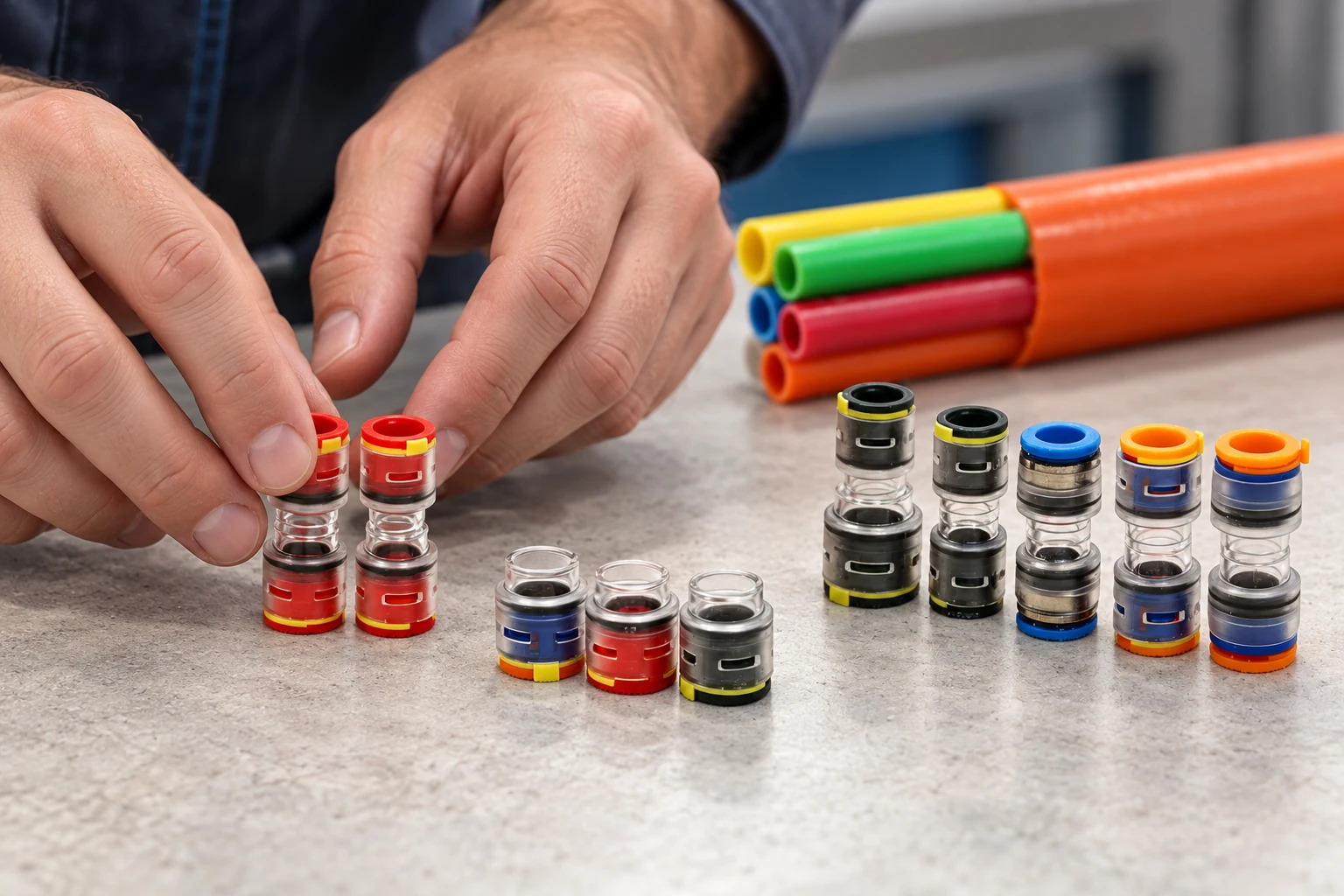
스트레이트 커플러는 동일한 규격의 두 덕트 단부를 한 축 상에서 연결합니다. 정확한 설계도면에 해당 사용이 허용되는 경우, 라인을 연장하거나 수리할 수 있습니다. 삽입 가능 여부만으로는 밀봉성, 고정력, 내경 연속성 또는 환경 적합성을 보장하지 않습니다.
다른 카테고리는 서로 다른 질문에 답합니다: 리듀서는 정해진 크기의 변화를 처리하고, 엔드 스톱은 사용하지 않는 덕트를 막습니다. 일반 커플러에서 가스 차단 또는 물 차단 기능이 있다고 추정해서는 안 됩니다. 이 종단 제품 예시 “피팅”, “캡”, “조인트”, 그리고 “커플러”가 신뢰할 수 있는 동의어가 아닌 이유를 보여줍니다.
그 구문 커넥터 마이크로덕트 광섬유 이는 또한 검색 약어일 뿐, 규격이 아닙니다. 구매 설명에는 기능, 양쪽의 덕트 데이터, 경로 위치, 설치 방법 및 승인 문서를 명시해야 합니다. 이렇게 하면 필수적인 차단부나 전환부를 단순한 직통 이음으로 대체하는 것을 방지할 수 있습니다.
스트레이트 커플러는 일치하는 덕트 인터페이스가 필요합니다.
덕트 제조사의 외경과 공차를 먼저 확인한 다음, 내경 또는 벽체 구조를 기록하십시오. 동일한 공칭 규격을 사용하는 덕트라도 공차, 강성, 표면 상태 또는 승인된 연결부 범위가 다를 수 있습니다. 정확한 접합부 사양에 대해서는 서면으로 확인을 받으십시오.
다음으로 접합부 형상을 점검하십시오. 설치자는 직각을 이루고 손상되지 않은 단부, 규정된 삽입 깊이, 그리고 정착 여부를 확인할 수 있는 방법이 필요합니다. 투명한 본체나 시인성 표시부는 검사를 지원할 수 있지만 압력 밀봉성을 입증할 수는 없으므로, 지침과 프로젝트의 시험 절차가 최종 기준으로 적용됩니다.
마지막으로, 설치 환경을 정의하십시오: 매설, 수동구, 건물 인입부 및 노출형 캐비닛 조건은 서로 다를 수 있습니다. 적합 여부는 해당 제품의 정확한 사양서에서 확인하십시오. 이 HDPE 마이크로덕트 제품 예시 시스템 토론을 시작할 수는 있지만, 선택된 피팅과 덕트가 승인된 조합임을 확인해 주지는 않습니다.
Compare Fittings by Function, Fit, and Evidence
| 결정 요인 | Generic FTTH duct-fitting category | Straight coupler category |
|---|---|---|
| 주요 목적 | Covers joining, reducing, closing, branching, isolating, or transitioning functions | Joins two compatible ducts in line |
| Selection starting point | Required network function at the location | Interface data for both duct ends |
| Compatibility question | Does the exact fitting perform the required function under the specified conditions? | Does the exact model accept both ducts and preserve the required pathway? |
| 설치 확인 | Depends on the fitting type and manufacturer instruction | Cut quality, cleanliness, insertion, retention, and specified leak or pressure check |
| 단위당 원가 성향 | Varies with function and documentation; no category-wide assumption is reliable | Often simple in function, but purchase price alone excludes rework risk |
| Maintenance and TCO | Driven by access, inspection, replacement process, and failure consequence | Driven by joint count, accessibility, installation control, and verified fit |
The total-cost issue is practical: an inexpensive but incorrectly specified connection can consume crew time during fault isolation and delay the next installation stage. That statement is procurement logic, not a field-performance claim about a particular model. Compare the evidence package and the cost of access or rework, not merely two unit prices.
Use Route Conditions to Build the Selection Matrix
| 프로젝트 상태 | Likely fitting category to investigate | Evidence to obtain before approval |
|---|---|---|
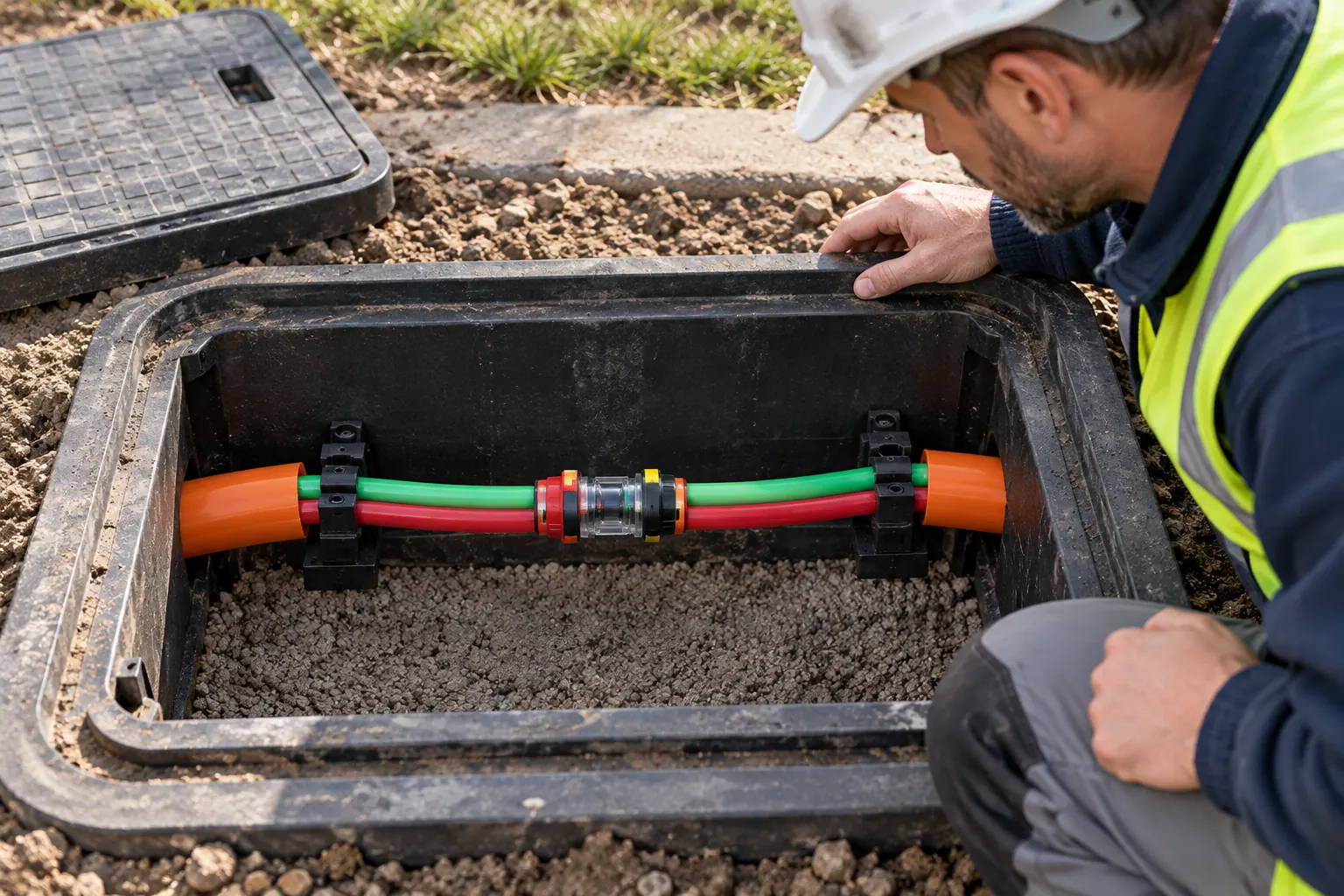
| Two like-for-like duct ends in one run | 스트레이트 커플러 | Accepted duct dimensions, insertion instruction, environmental limits, and test conditions |
| Ducts with different outside diameters | Purpose-designed reducer or transition fitting | Approved size mapping for both sides and pathway geometry |
| Same outside diameter but different wall construction | Model confirmed by both duct and fitting documentation | Written compatibility confirmation; do not infer it from outside diameter alone |
| Unused duct awaiting future service | End closure specified for that duty | Closure instructions, environment limits, and reopening or replacement guidance |
| Building entry or another defined boundary | Boundary-control fitting identified by the network design | Project requirements and exact, substantiated product function |
안 HDPE telecom coupler should therefore be treated as procurement shorthand until the supplier identifies the exact model and its documented application. If a row in the matrix cannot be completed from controlled documents, pause the substitution rather than filling the gap with a generic claim.
What the Standards Cover—and What They Do Not Approve
ITU-T L.79 describes optical fiber cable elements for microduct blowing-installation applications. IEC 60794-5-20 addresses outdoor microduct fiber units, microducts, and protected microducts for blown installation. These publications define system context; citing them does not certify a fitting or create a rating.
IEC 60794-1-21 covers mechanical test methods for optical fiber cables; IEC 60794-1-22 covers environmental methods. They are not blanket approvals for surrounding components. Ask which edition, method, specimen, conditioning, and acceptance criterion apply, then request evidence for the offered model. Market rules and network-owner specifications may add requirements.
Unsupported claims can cause submittal rejection, delay, or substitution disputes. Use “tested according to” only with a traceable report, and “compliant” only after reviewing the applicable scope and evidence.
Confirm the Model and Documents Before Substitution
- Mark every fitting location on the route and name its required function before requesting prices.
- Provide the controlled duct datasheet for each side of every joint, including tolerances rather than only nominal size.
- Request the proposed model’s current datasheet, installation instructions, environmental limits, and applicable test evidence.
- Define the site inspection and acceptance record before installation begins; do not invent a pressure or temperature limit when the project documents are silent.
- Control substitutions by exact model and revision, because a generic category name cannot demonstrate equivalence.
Microduct Connector can support this review by matching a request to available product categories and documentation, while the buyer and network owner retain responsibility for project approval. The company’s guide on how to choose the right connector provides additional questions to use during supplier discussions.
자주 묻는 질문
Why does the FTTH duct fittings leak during or after fiber blowing
Possible causes include an incompletely seated duct, a damaged or contaminated duct end, a seal problem, dimensional mismatch, or damage introduced during handling. Isolate the joint and follow the project’s safe test procedure, then compare the exact duct and fitting data instead of assuming higher blowing pressure will solve the fault.
Do you need tools or lubricant to fit the FTTH duct fittings correctly
Use only the preparation tools and installation method named by the fitting manufacturer. Do not apply lubricant unless both the fitting and duct instructions permit the specific product, because an unapproved substance can affect grip, sealing, cleanliness, or later fiber work.
How can the FTTH duct fittings join ducts with different wall thicknesses
Matching outside diameter does not establish compatibility when wall construction differs. Obtain written confirmation for the exact duct pair and fitting model; if outside diameters differ, investigate a purpose-designed reducer rather than forcing a straight coupler to serve as a transition.
What temperature range should the FTTH duct fittings withstand
The required range comes from the route’s storage, installation, and service conditions, plus the network-owner specification. Use the exact model’s documented limits and test conditions; this article does not assign a generic temperature range because products and projects differ.
How can installers visually check that the FTTH duct fittings is fully seated
Follow the stated insertion depth and use a witness mark, transparent body, or inspection feature only when the exact model provides one. A visual check should be backed by the specified retention and leak or pressure acceptance process, because appearance alone does not prove joint integrity.
When should the seals or body of the FTTH duct fittings be replaced?
Replace parts when the manufacturer’s inspection criteria require it, when damage or deformation is visible, or when the assembled joint cannot pass the specified acceptance check after correct preparation. Reuse only when the product documentation permits it; otherwise replace the fitting and investigate the duct condition that may have caused the problem.
How to Choose Between FTTH Fittings and Couplers
“Fitting” describes a broad group; a straight coupler is appropriate only for a defined, matching joint. Map every location to its actual function, confirm both duct interfaces and the route environment, then approve the exact model, revision, installation method and acceptance record together. The 12.7 mm sizing discussion illustrates why nominal labels need drawing-level checks, while the 12 mm guide shows how to document seating and leak-test decisions without assuming a generic rating.
참고문헌
- ITU-T L.79: Optical fibre cable elements for microduct blowing-installation application.
- IEC 60794-5-20: Outdoor microduct fibre units, microducts and protected microducts for installation by blowing.
- IEC 60794-1-21: Basic optical cable test procedures—Mechanical test methods.
- IEC 60794-1-22: Basic optical cable test procedures—Environmental test methods.
FTTH duct fittings are a category; a coupler is one defined solution within it. The right selection follows the job at each location: match both duct interfaces, choose the required function, check the route environment and approve the exact model with its installation and acceptance records. That process keeps a convenient catalogue label from deciding a connection that the duct system cannot support.



