
ブリストルのネットワーク建設管理者が、吹き込み前の点検中に空気漏れ警報に遭遇した際、作業員は目に見える継手を交換しましたが、試験は再び不合格となりました。この事例では、製品の欠陥は確認されませんでした。部品表では、インラインジョイント、未使用の分岐管、およびサイズ変更部が「継手」として互換的に扱われていたのです。チームは、各箇所に機能と正確なダクト接続部を明確に割り当てることで仕様書を修正しました。.
まとめ: そのフレーズ FTTH用ダクト継手 これは広範なカテゴリーを示しており、ストレートカプラーは、互換性のある2つのダクトを直線状に接続するために使用されるタイプの一つです。モデルを選定する前に、外径、壁構造、挿入方法、使用環境、および受け入れ試験について確認してください。ITU-T L.79およびIEC 60794シリーズは、システムおよび試験に関する文脈を提供するものであり、コネクタがお客様のプロジェクトに適していることを証明するものではありません。.
カタログ名ではなく、機能に基づいて適合品を選択してください。
FTTHの配線ルートでは、ダクトを用いて光ファイバーケーブルまたはブローアブル・ファイバー・ユニットを誘導し、保護します。参照 FTTHネットワークにおけるマイクロダクトコネクタの役割 システムコンテキストにおいて、終端、分岐、遷移、および修理はそれぞれ異なる接続タスクを示す。.
“「ダクト継手」とは、ストレートコネクタ、レデューサー、エンドキャップ、分岐部材などの接続部品を総称するファミリーデザインです。「カプラー」は、ストレートで両端を持つ継手を指す場合に用いられる用語であり、より狭義ですが、サプライヤーによって用語の使い方は異なります。例えば、次のような検索キーワードがあります。 マイクロダクトコネクタ 通信部品 幾何形状、ダクトサイズ、露出状況、または受入基準を特定するものではありません。それらは、管理された図面および正確な製品データによって明示される必要があります。.
本記事では、特定のモデル名ではなく、汎用的なカテゴリーを比較しています。リンク先の製品ページは、各部品の形状を示すものであり、特定のダクト、圧力条件、経路、気候条件、または顧客仕様との互換性を証明するものではありません。.
ストレートカップラーではなく、フルダクト継手が必要な場合
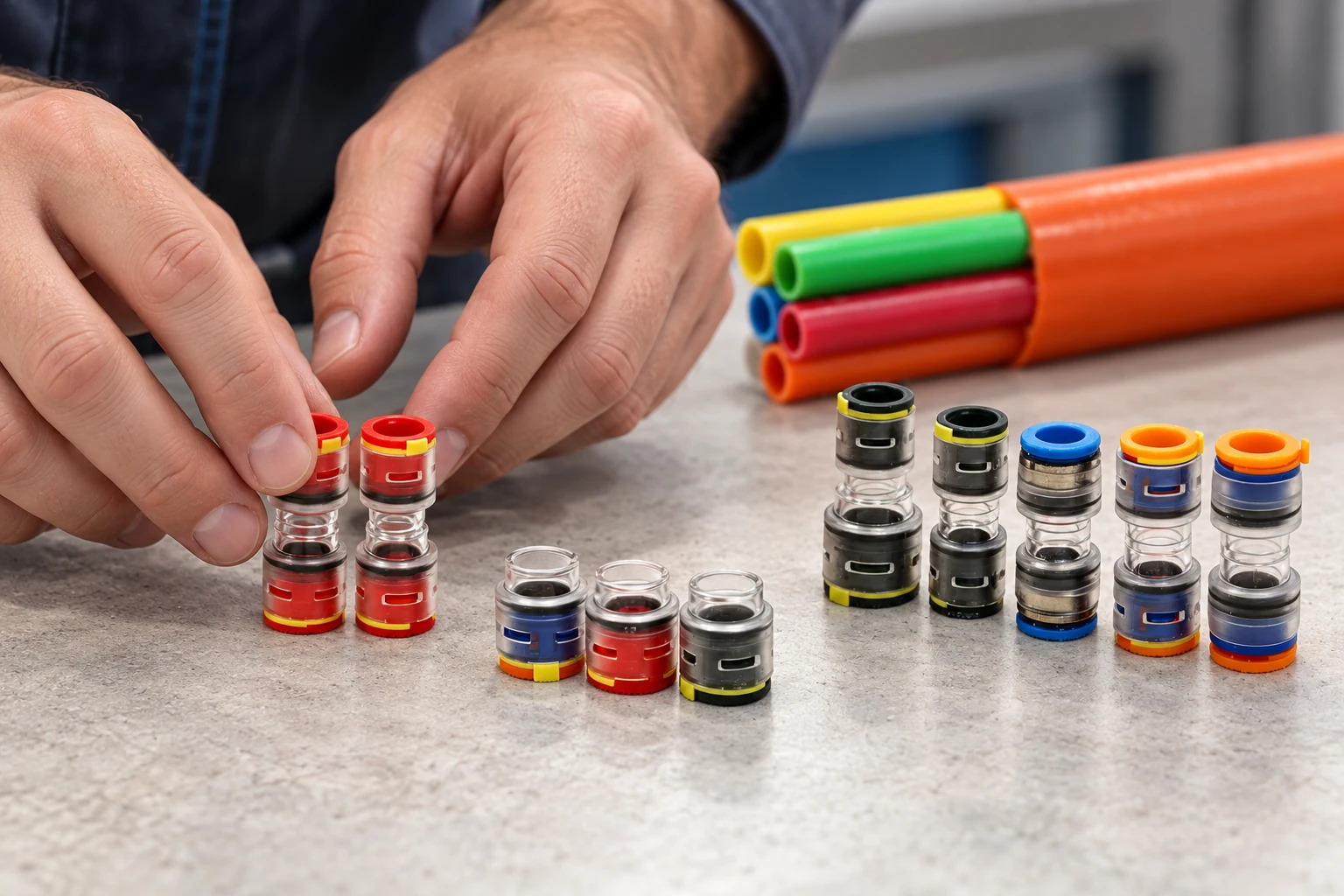
ストレートカプラーは、同一軸線上の互換性のあるダクト端部同士を接続するものです。ただし、正確な設計図書でその使用が許可されている場合に限り、配管の延長または補修を行うことができます。挿入性だけでは、気密性、保持力、内径の連続性、あるいは環境適合性は確保されません。.
他のカテゴリーはそれぞれ異なる役割を果たします。リデューサーは所定のサイズ変更に対応し、エンドストップは未使用のダクトを塞ぎます。ガス遮断機能や水遮断機能は、通常のカップラーから類推してはなりません。これ エンドストップ製品の例 「フィッティング」「キャップ」「ジョイント」「カプラー」が信頼できる同義語ではない理由を示しています。.
そのフレーズ コネクタ マイクロダクト 光ファイバー これは検索用の略記でもあり、仕様書ではありません。購入時の仕様記述には、機能、両側のダクトデータ、経路位置、設置方法、および認証書類を明記する必要があります。これにより、必要な閉鎖部や移行部を単純な直通継手で代用してしまうことを防げます。.
ストレートカップラーには、互換性のあるダクト接続部が必要です。
ダクトの製造元が提示する外径と公差から始め、次に内径または壁構造を記録してください。同一の公称サイズ表記であっても、公差、剛性、表面状態、または適合コネクタの範囲が異なる場合があります。正確な接続部については、書面による確認を得てください。.
次に、継手の幾何形状を確認してください。施工者は、直角で損傷のない端部、規定の挿入深さ、および確実な座付けの確認手段が必要です。透明な本体や目視確認用の特徴は検査を支援する場合がありますが、圧力に対する完全性を証明するものではありません。指示書およびプロジェクトの試験手順が依然として優先されます。.
最後に、設置環境を定義してください。埋設、ハンドホール、建物への引き込み口、露出型キャビネットといった条件はそれぞれ異なる場合があります。適合性については、製品の正確な仕様書でご確認ください。これ HDPEマイクロダクト製品の例 システムの検討を開始できますが、選択した継手とダクトが承認済みの組み合わせであることを保証するものではありません。.
機能、適合性、およびエビデンスに基づいて継手を比較する
| 決定要因 | 一般的なFTTH用ダクト継手のカテゴリ | ストレートカップラーカテゴリ |
|---|---|---|
| 主な目的 | 接続、縮径、閉止、分岐、遮断、または移行機能をカバーします。 | 互換性のある2つのダクトを直列に接続します |
| 選択の起点 | 所在地に必要なネットワーク機能 | 両端のダクト用インターフェースデータ |
| 互換性に関する質問 | 正確な適合が、指定された条件下で所定の機能を果たしますか? | その正確なモデルは、ダクトの両方に対応し、必要な経路を維持しますか? |
| インストールチェック | 適合タイプおよびメーカーの指示に依存します | 切断品質、清浄度、挿入性、保持力、および指定された漏れ検査または圧力検査 |
| 単位原価の傾向 | 機能やドキュメントによって異なるため、カテゴリ全体に当てはまる信頼できる仮定はない。 | 機能は単純なことが多いが、購入価格のみで手戻りのリスクを排除できる |
| メンテナンスとTCO | アクセス、点検、交換プロセス、および故障の影響によって駆動される | 関節数、アクセシビリティ、設置制御、および検証済みの適合性に基づいて動作します。 |
総コストの問題は実務的なものです:安価であっても仕様が誤っている接続部は、故障の原因特定に作業員の時間を費やさせ、次の施工段階を遅らせる可能性があります。この記述は調達上の論理であり、特定の機種に関する現場での性能に関する主張ではありません。単に二つの単価を比較するのではなく、証拠資料とアクセスまたは修正にかかる費用を比較してください。.
ルート条件を使用して選択マトリックスを構築する
| プロジェクトの状態 | 調査に適していると思われるカテゴリ | 承認前に取得すべき証拠 |
|---|---|---|
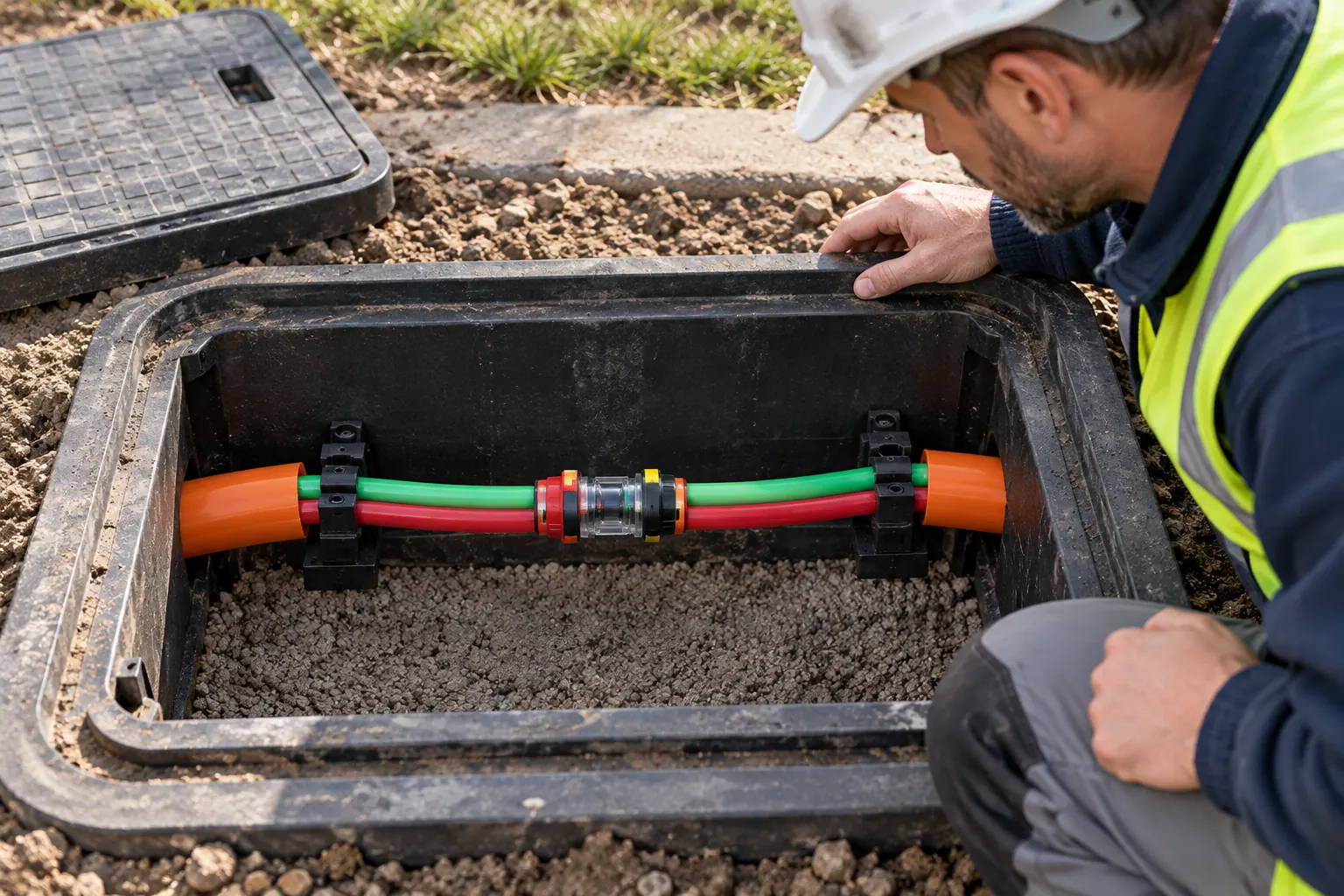
| 1本の配管に同一仕様のダクト端部を2つ配置 | ストレートカプラー | 許容されるダクト寸法、取り付け手順、環境条件の制限、試験条件 |
| 異なる外径を有するダクト | 専用のレデューサーまたは移行継手 | 両側および経路の形状に対する承認済みサイズマッピング |
| Same outside diameter but different wall construction | Model confirmed by both duct and fitting documentation | Written compatibility confirmation; do not infer it from outside diameter alone |
| Unused duct awaiting future service | End closure specified for that duty | Closure instructions, environment limits, and reopening or replacement guidance |
| Building entry or another defined boundary | Boundary-control fitting identified by the network design | Project requirements and exact, substantiated product function |
アン HDPE telecom coupler should therefore be treated as procurement shorthand until the supplier identifies the exact model and its documented application. If a row in the matrix cannot be completed from controlled documents, pause the substitution rather than filling the gap with a generic claim.
What the Standards Cover—and What They Do Not Approve
ITU-T L.79 describes optical fiber cable elements for microduct blowing-installation applications. IEC 60794-5-20 addresses outdoor microduct fiber units, microducts, and protected microducts for blown installation. These publications define system context; citing them does not certify a fitting or create a rating.
IEC 60794-1-21 covers mechanical test methods for optical fiber cables; IEC 60794-1-22 covers environmental methods. They are not blanket approvals for surrounding components. Ask which edition, method, specimen, conditioning, and acceptance criterion apply, then request evidence for the offered model. Market rules and network-owner specifications may add requirements.
Unsupported claims can cause submittal rejection, delay, or substitution disputes. Use “tested according to” only with a traceable report, and “compliant” only after reviewing the applicable scope and evidence.
Confirm the Model and Documents Before Substitution
- Mark every fitting location on the route and name its required function before requesting prices.
- Provide the controlled duct datasheet for each side of every joint, including tolerances rather than only nominal size.
- Request the proposed model’s current datasheet, installation instructions, environmental limits, and applicable test evidence.
- Define the site inspection and acceptance record before installation begins; do not invent a pressure or temperature limit when the project documents are silent.
- Control substitutions by exact model and revision, because a generic category name cannot demonstrate equivalence.
Microduct Connector can support this review by matching a request to available product categories and documentation, while the buyer and network owner retain responsibility for project approval. The company’s guide on how to choose the right connector provides additional questions to use during supplier discussions.
よくある質問
Why does the FTTH duct fittings leak during or after fiber blowing
Possible causes include an incompletely seated duct, a damaged or contaminated duct end, a seal problem, dimensional mismatch, or damage introduced during handling. Isolate the joint and follow the project’s safe test procedure, then compare the exact duct and fitting data instead of assuming higher blowing pressure will solve the fault.
Do you need tools or lubricant to fit the FTTH duct fittings correctly
Use only the preparation tools and installation method named by the fitting manufacturer. Do not apply lubricant unless both the fitting and duct instructions permit the specific product, because an unapproved substance can affect grip, sealing, cleanliness, or later fiber work.
How can the FTTH duct fittings join ducts with different wall thicknesses
Matching outside diameter does not establish compatibility when wall construction differs. Obtain written confirmation for the exact duct pair and fitting model; if outside diameters differ, investigate a purpose-designed reducer rather than forcing a straight coupler to serve as a transition.
What temperature range should the FTTH duct fittings withstand
The required range comes from the route’s storage, installation, and service conditions, plus the network-owner specification. Use the exact model’s documented limits and test conditions; this article does not assign a generic temperature range because products and projects differ.
How can installers visually check that the FTTH duct fittings is fully seated
Follow the stated insertion depth and use a witness mark, transparent body, or inspection feature only when the exact model provides one. A visual check should be backed by the specified retention and leak or pressure acceptance process, because appearance alone does not prove joint integrity.
When should the seals or body of the FTTH duct fittings be replaced?
Replace parts when the manufacturer’s inspection criteria require it, when damage or deformation is visible, or when the assembled joint cannot pass the specified acceptance check after correct preparation. Reuse only when the product documentation permits it; otherwise replace the fitting and investigate the duct condition that may have caused the problem.
How to Choose Between FTTH Fittings and Couplers
“Fitting” describes a broad group; a straight coupler is appropriate only for a defined, matching joint. Map every location to its actual function, confirm both duct interfaces and the route environment, then approve the exact model, revision, installation method and acceptance record together. The 12.7 mm sizing discussion illustrates why nominal labels need drawing-level checks, while the 12 mm guide shows how to document seating and leak-test decisions without assuming a generic rating.
参考文献
- ITU-T L.79: Optical fibre cable elements for microduct blowing-installation application.
- IEC 60794-5-20: Outdoor microduct fibre units, microducts and protected microducts for installation by blowing.
- IEC 60794-1-21: Basic optical cable test procedures—Mechanical test methods.
- IEC 60794-1-22: Basic optical cable test procedures—Environmental test methods.
FTTH duct fittings are a category; a coupler is one defined solution within it. The right selection follows the job at each location: match both duct interfaces, choose the required function, check the route environment and approve the exact model with its installation and acceptance records. That process keeps a convenient catalogue label from deciding a connection that the duct system cannot support.



