
Quando un responsabile dei lavori di costruzione della rete a Bristol ha riscontrato un avviso di perdita d’aria durante un controllo preliminare di soffiaggio, la squadra ha sostituito il raccordo visibile, ma il test è risultato nuovamente negativo. In questo caso esemplificativo, non è stato dimostrato alcun difetto del prodotto: l’elenco dei materiali aveva considerato un giunto in linea, un ramo inutilizzato e una riduzione di diametro come “raccordi” intercambiabili. Il team ha corretto la specifica assegnando a ciascuna posizione una funzione e un’interfaccia del condotto precisa.
Sintesi: La frase Raccordi per condotte FTTH descrive una categoria ampia; un giunto diritto è uno dei tipi utilizzati per unire due condotti compatibili in linea. Prima di scegliere un modello, verificare il diametro esterno, la struttura della parete, l'inserimento, l'ambiente e la prova di accettazione. Le serie ITU-T L.79 e IEC 60794 forniscono il contesto del sistema e delle prove, ma non costituiscono la prova che un connettore sia adatto al proprio progetto.
Scegli il raccordo in base alla sua funzione, non al suo nome di catalogo.
Le tratte FTTH utilizzano condotti per guidare e proteggere i cavi in fibra ottica o le unità di fibra soffiabile. Vedi il ruolo dei connettori per microcondotti nelle reti FTTH per il contesto di sistema. Una terminazione, una derivazione, una transizione e una riparazione rappresentano ciascuna un compito di connessione diverso.
“Il raccordo per condotti” è una denominazione generica che comprende connettori dritti, riduttori, chiusure terminali, derivazioni e altre interfacce. “Giunto” ha un significato più specifico quando indica un raccordo dritto a due estremità, anche se la terminologia varia a seconda del fornitore. Una frase di ricerca come Connettore per microcondotto, componente per telecomunicazioni Non identifica la geometria, le dimensioni dei condotti, l’esposizione né i requisiti di accettazione; a tali compiti devono provvedere i disegni controllati e i dati esatti del prodotto.
Questo articolo confronta categorie generiche, non modelli specifici. Le pagine dei prodotti collegate illustrano le forme dei componenti; esse non attestano la compatibilità con un condotto, una pressione, un percorso, un clima o una specifica del cliente particolari.
Quando è necessario un raccordo a condotto completo anziché un giunto diritto
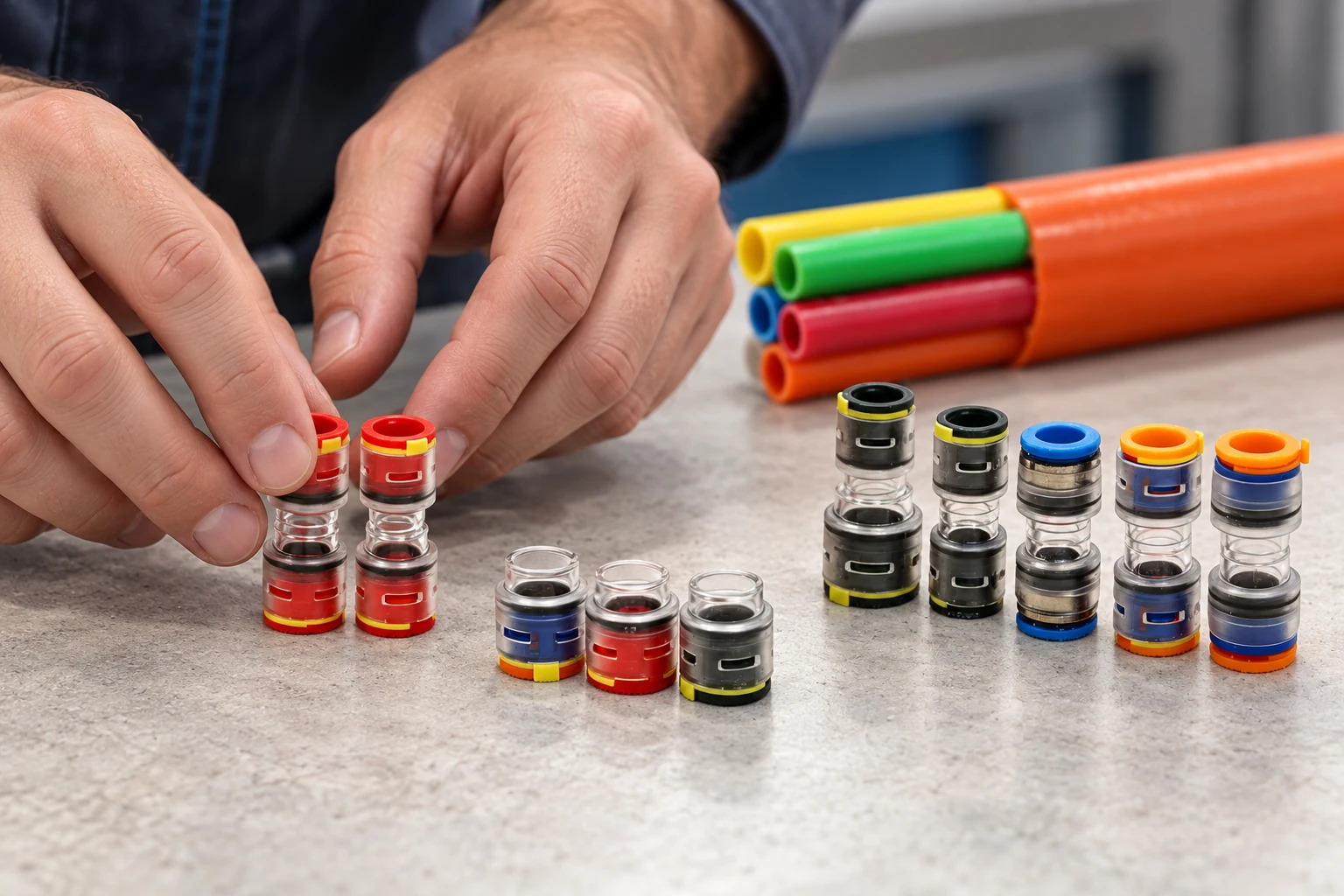
Un raccordo dritto collega due estremità di condotto compatibili lungo un unico asse. Può essere utilizzato per prolungare o riparare una tratta, purché la documentazione tecnica lo consenta. La sola possibilità di inserimento non garantisce tenuta, fissaggio, continuità del diametro interno né idoneità all’ambiente.
Altre categorie rispondono a domande diverse: un riduttore gestisce una variazione di dimensione definita, mentre un terminale chiude un condotto inutilizzato. Le funzioni di blocco del gas o dell’acqua non devono mai essere dedotte da un semplice raccordo. Questo esempio di prodotto con finecorsa mostra perché “adattatore”, “tappo”, “giunto” e “raccordo” non sono sinonimi affidabili.
La frase Connettore per microcondotto in fibra ottica È anche una sigla di ricerca, non una specifica. Una descrizione d’acquisto deve indicare la funzione, i dati dei condotti per entrambi i lati, la posizione del tracciato, il metodo di installazione e i documenti di approvazione. Ciò evita che un raccordo diritto venga utilizzato al posto di una chiusura o di una transizione obbligatoria.
Un raccordo dritto richiede interfacce del condotto corrispondenti.
Inizia con il diametro esterno e le tolleranze forniti dal produttore del condotto, quindi annota il diametro interno o la struttura della parete. Condotti contrassegnati con la stessa denominazione nominale possono differire per tolleranza, rigidità, stato della superficie o gamma di raccordi approvati. Richiedi una conferma scritta sull’esatta interfaccia.
Successivamente, esaminate la geometria del giunto. L’installatore deve verificare che l’estremità sia quadrata e priva di danni, che sia stata rispettata la profondità di inserimento specificata e che vi sia un metodo per confermare il corretto posizionamento. Un corpo trasparente o una funzione di verifica possono facilitare l’ispezione, ma non garantiscono l’integrità sotto pressione; le istruzioni e la procedura di collaudo del progetto restano determinanti.
Infine, definire l’ambiente di installazione: le condizioni per l’installazione interrata, in pozzetto, all’ingresso dell’edificio e in armadio esterno possono variare. Verificare la conformità consultando la documentazione tecnica ufficiale del prodotto. Questo Esempio di microcondotto in HDPE È possibile avviare una discussione di sistema, ma ciò non conferma che un raccordo e un condotto selezionati costituiscano una coppia approvata.
Compare Fittings by Function, Fit, and Evidence
| Fattore decisionale | Generic FTTH duct-fitting category | Straight coupler category |
|---|---|---|
| Primary purpose | Covers joining, reducing, closing, branching, isolating, or transitioning functions | Joins two compatible ducts in line |
| Selection starting point | Required network function at the location | Interface data for both duct ends |
| Compatibility question | Does the exact fitting perform the required function under the specified conditions? | Does the exact model accept both ducts and preserve the required pathway? |
| Controllo di installazione | Depends on the fitting type and manufacturer instruction | Cut quality, cleanliness, insertion, retention, and specified leak or pressure check |
| Tendenza del costo unitario | Varies with function and documentation; no category-wide assumption is reliable | Often simple in function, but purchase price alone excludes rework risk |
| Maintenance and TCO | Driven by access, inspection, replacement process, and failure consequence | Driven by joint count, accessibility, installation control, and verified fit |
The total-cost issue is practical: an inexpensive but incorrectly specified connection can consume crew time during fault isolation and delay the next installation stage. That statement is procurement logic, not a field-performance claim about a particular model. Compare the evidence package and the cost of access or rework, not merely two unit prices.
Use Route Conditions to Build the Selection Matrix
| Condizione del progetto | Likely fitting category to investigate | Evidence to obtain before approval |
|---|---|---|
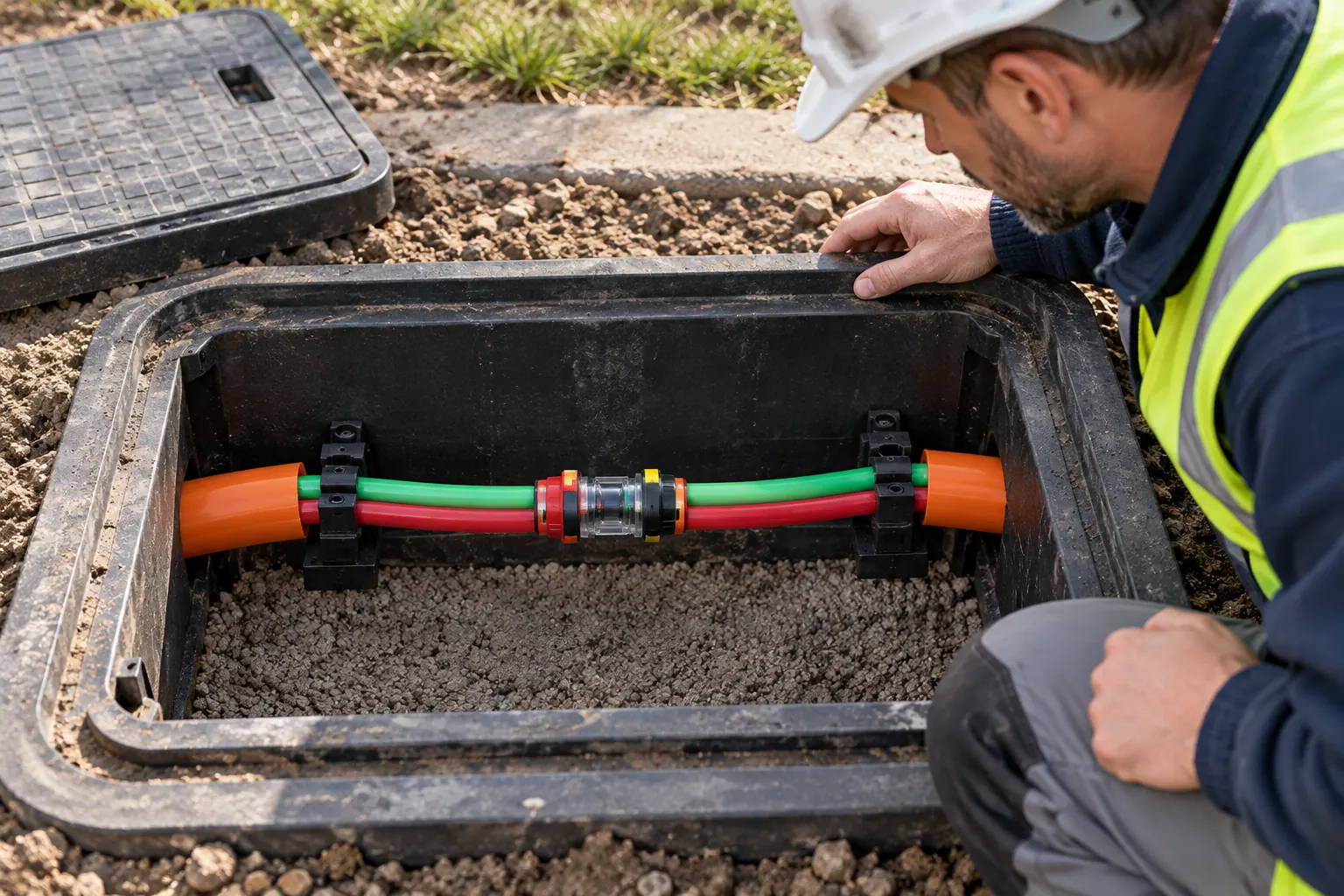
| Two like-for-like duct ends in one run | Raccordo dritto | Accepted duct dimensions, insertion instruction, environmental limits, and test conditions |
| Ducts with different outside diameters | Purpose-designed reducer or transition fitting | Approved size mapping for both sides and pathway geometry |
| Same outside diameter but different wall construction | Model confirmed by both duct and fitting documentation | Written compatibility confirmation; do not infer it from outside diameter alone |
| Unused duct awaiting future service | End closure specified for that duty | Closure instructions, environment limits, and reopening or replacement guidance |
| Building entry or another defined boundary | Boundary-control fitting identified by the network design | Project requirements and exact, substantiated product function |
Un HDPE telecom coupler should therefore be treated as procurement shorthand until the supplier identifies the exact model and its documented application. If a row in the matrix cannot be completed from controlled documents, pause the substitution rather than filling the gap with a generic claim.
What the Standards Cover—and What They Do Not Approve
ITU-T L.79 describes optical fiber cable elements for microduct blowing-installation applications. IEC 60794-5-20 addresses outdoor microduct fiber units, microducts, and protected microducts for blown installation. These publications define system context; citing them does not certify a fitting or create a rating.
IEC 60794-1-21 covers mechanical test methods for optical fiber cables; IEC 60794-1-22 covers environmental methods. They are not blanket approvals for surrounding components. Ask which edition, method, specimen, conditioning, and acceptance criterion apply, then request evidence for the offered model. Market rules and network-owner specifications may add requirements.
Unsupported claims can cause submittal rejection, delay, or substitution disputes. Use “tested according to” only with a traceable report, and “compliant” only after reviewing the applicable scope and evidence.
Confirm the Model and Documents Before Substitution
- Mark every fitting location on the route and name its required function before requesting prices.
- Provide the controlled duct datasheet for each side of every joint, including tolerances rather than only nominal size.
- Request the proposed model’s current datasheet, installation instructions, environmental limits, and applicable test evidence.
- Define the site inspection and acceptance record before installation begins; do not invent a pressure or temperature limit when the project documents are silent.
- Control substitutions by exact model and revision, because a generic category name cannot demonstrate equivalence.
Microduct Connector can support this review by matching a request to available product categories and documentation, while the buyer and network owner retain responsibility for project approval. The company’s guide on how to choose the right connector provides additional questions to use during supplier discussions.
Domande frequenti
Why does the FTTH duct fittings leak during or after fiber blowing
Possible causes include an incompletely seated duct, a damaged or contaminated duct end, a seal problem, dimensional mismatch, or damage introduced during handling. Isolate the joint and follow the project’s safe test procedure, then compare the exact duct and fitting data instead of assuming higher blowing pressure will solve the fault.
Do you need tools or lubricant to fit the FTTH duct fittings correctly
Use only the preparation tools and installation method named by the fitting manufacturer. Do not apply lubricant unless both the fitting and duct instructions permit the specific product, because an unapproved substance can affect grip, sealing, cleanliness, or later fiber work.
How can the FTTH duct fittings join ducts with different wall thicknesses
Matching outside diameter does not establish compatibility when wall construction differs. Obtain written confirmation for the exact duct pair and fitting model; if outside diameters differ, investigate a purpose-designed reducer rather than forcing a straight coupler to serve as a transition.
What temperature range should the FTTH duct fittings withstand
The required range comes from the route’s storage, installation, and service conditions, plus the network-owner specification. Use the exact model’s documented limits and test conditions; this article does not assign a generic temperature range because products and projects differ.
How can installers visually check that the FTTH duct fittings is fully seated
Follow the stated insertion depth and use a witness mark, transparent body, or inspection feature only when the exact model provides one. A visual check should be backed by the specified retention and leak or pressure acceptance process, because appearance alone does not prove joint integrity.
When should the seals or body of the FTTH duct fittings be replaced?
Replace parts when the manufacturer’s inspection criteria require it, when damage or deformation is visible, or when the assembled joint cannot pass the specified acceptance check after correct preparation. Reuse only when the product documentation permits it; otherwise replace the fitting and investigate the duct condition that may have caused the problem.
How to Choose Between FTTH Fittings and Couplers
“Fitting” describes a broad group; a straight coupler is appropriate only for a defined, matching joint. Map every location to its actual function, confirm both duct interfaces and the route environment, then approve the exact model, revision, installation method and acceptance record together. The 12.7 mm sizing discussion illustrates why nominal labels need drawing-level checks, while the 12 mm guide shows how to document seating and leak-test decisions without assuming a generic rating.
Riferimenti
- ITU-T L.79: Optical fibre cable elements for microduct blowing-installation application.
- IEC 60794-5-20: Outdoor microduct fibre units, microducts and protected microducts for installation by blowing.
- IEC 60794-1-21: Basic optical cable test procedures—Mechanical test methods.
- IEC 60794-1-22: Basic optical cable test procedures—Environmental test methods.
FTTH duct fittings are a category; a coupler is one defined solution within it. The right selection follows the job at each location: match both duct interfaces, choose the required function, check the route environment and approve the exact model with its installation and acceptance records. That process keeps a convenient catalogue label from deciding a connection that the duct system cannot support.



