
Birleşik Krallık’ın Bristol kentindeki bir şebeke yüklenicisi, kısa bir onarım bölümünü bağladığında, ilk kıvrımda hava sızdı. Bu örnek senaryo bir müşteri vakası değildir: temel neden, gizemli bir bağlantı elemanı kusuru değil, çapraz bir kesim ve eksik bir yerleştirme işaretiydi. Yedi tekrarlanabilir adım, onarımı belgelenmiş ve hava geçirmez bir bağlantıyla sonuçlandırdı.
Kısa cevap şudur: Güvenilir HDPE sıkıştırma bağlantı parçaları ölçülen dış çap, iç çap ve wall kalınlığına bağlı olarak, a kare kesim, temiz sızdırmazlık alanı ve doğrulanmış sokma derinliği. Test basıncı ve tutma süresi, şebeke sahibinden veya bağlantı elemanı tedarikçisinden alınmalıdır; evrensel bir değer yoktur. ISO 3126 boyutsal ölçümü destekler, ISO 4427-2 ise PE boru terminolojisini sağlar. Oturma durumunu incelemek için şeffaf gövdeler kullanın, ardından sonucu kaydedin.
Yedi adımlı kurulum sırası
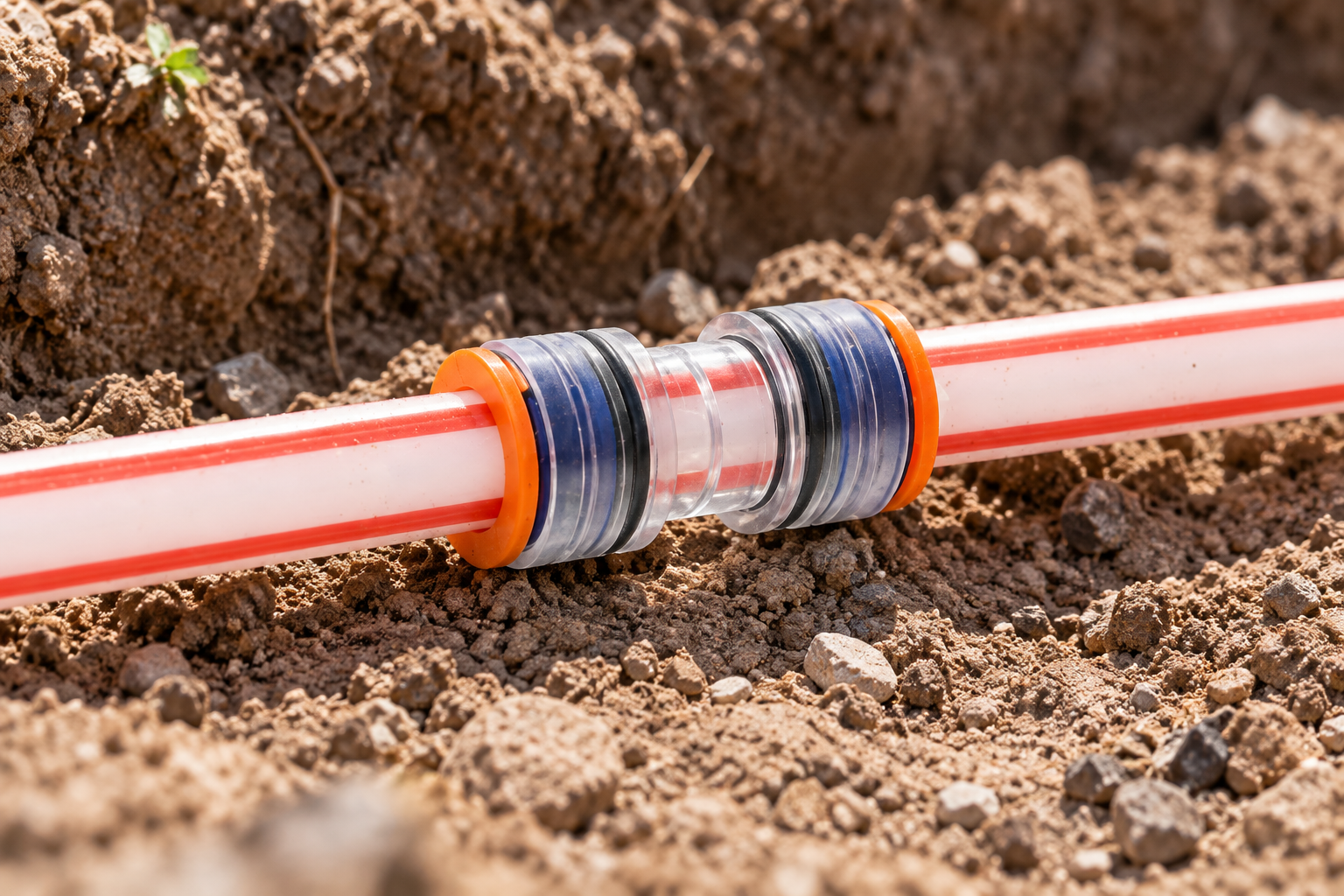
- Çizimi onaylayın. Ambalajı açmadan önce her bir kanal dış çap aralığını, duvar ailesini ve bağlantı portunu eşleştirin.
- Ayrıştırın ve basınçsız hale getirin. Hava kaynağını kilitleyin, çalışma alanındaki kirleri temizleyin ve açık kanalları kaplayın.
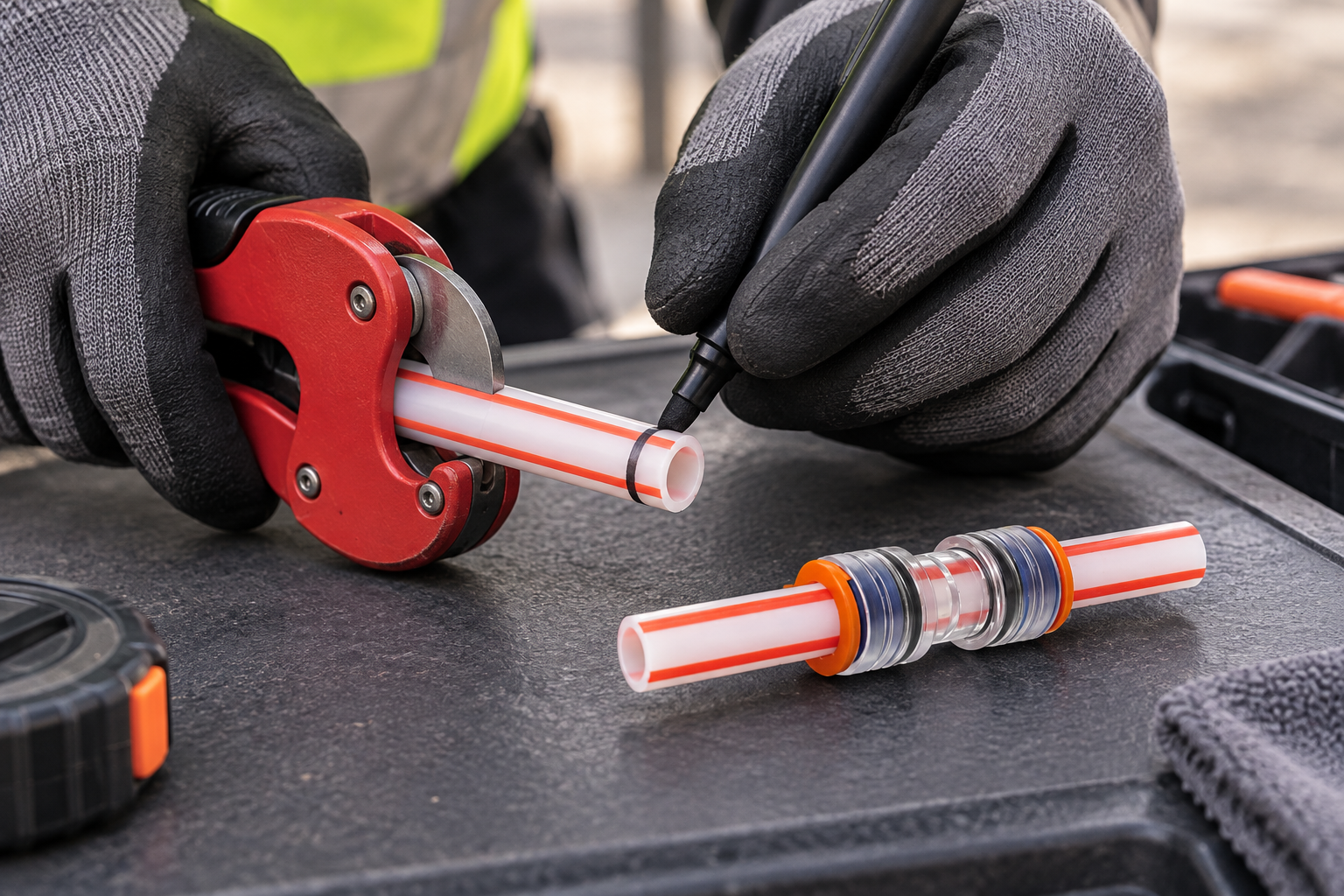
- Kare biçimde kesin. Keskin bir döner bıçak kullanın; testere dişlerinden, ezilmekten ve aşırı pahlamaktan kaçının.
- Temizleyin ve işaretleme yapın. Sızdırmazlık bölgesini silin, ardından borunun etrafına belirtilen takma derinliğini işaretleyin.
- Tamamen yerleştirin. İşareti gövde durdurucusuna ulaşana kadar penseli aynaya doğru itin. Asla yalnızca elle hisse güvenmeyin.
- Emniyetli bir şekilde hizalayın. Birlikte verilen klipsleri takın, konektörü düz tutun ve yakındaki kıvrımları destekleyin.
- Basınç/sızıntı testi. Proje tarafından onaylanmış değere doğru kademeli olarak yükseltilir, belirlenen süre boyunca sabit tutulur ve manometre değeri, sıcaklık ile sonuç kaydedilir.
Her adım bir arıza modunu ele alır: yanlış boyut, basınç şoku, ovalleşme, kirlenme, kısmi bağlantı, çekilme veya belgelenmemiş test. Bir test başarısız olursa, bir bağlantı noktasını ayırın, onaylanmış sızıntı tespit sıvısı uygulayın ve her iki tarafı da yeniden işlemeden önce kontrol edin.
OD, ID ve duvar kalınlığı ayrı kontrollerdir.
OD’yi iki farklı yön ve kesik boyunca birkaç noktada ölçün. Ovalite bir contanın bir tarafını yükleyebileceği için en büyük OD değerini kaydedin. Fiber üfleme boşluğu ve mandren geçişi için ID önemlidir; duvar kalınlığı, OD aynı olsa bile borunun standart mı yoksa ağır duvarlı mı olduğunu ortaya koyar. ISO 3126 tekrarlanabilir bir çerçeve sağlar, ancak kabulü kabul eden faktör boru üreticisinin toleransıdır.
| Boyut bulma | Eylem | Hata önlenmiştir |
|---|---|---|
| Port aralığı içinde OD; yuvarlak kesim | Devam edin ve derinliği işaretleyin | Eşit olmayan sızdırmazlık sıkıştırması |
| Ovalite nedeniyle OD yüksek | Ses borusunu yeniden yuvarlatın veya yeniden kesin | Çapak kayması ve sızıntılar |
| Aynı dış çap, farklı duvar kalınlığı | Mühür/ID uyumluluğunu onayla | Kısıtlanmış hava yolu |
| Yayımlanan aralık dışında | Başka bir boyut veya redüktör kullanın | Aşırı gerilme ve çekme kuvveti |
Düz, redüktör ve şeffaf tasarımları seçmek
Aynı boyuttaki kanallar için HDPE düz takviyeli bağlantı elemanları, nominal boyutlar değiştiğinde ise HDPE mikrokanal itme bağlantılı redüktör kullanın; görsel inceleme değerli olduğunda ise şeffaf mikrokanal redüktör bağlantısı tercih edin. düz hızlı bağlantı elemanı aynı OD’ye sahip bağlantılar için kullanışlı bir referanstır; bunu şununla karşılaştırın: mikrokanal azaltıcı. Hakkında bir sorun giderme kılavuzu hava sızıntılarını durdurma nominal boyutun tek başına yetersiz olduğunu açıklar.
| Uygulama | En iyi başlangıç seçeneği | Doğrula |
|---|---|---|
| Aynı kanal bir hazne üzerinden geçiyor | Düz bağlantı elemanı | Equal OD and depth marks |
| Feeder-to-branch transition | Push-fit reducer | Two independent port ranges |
| Visible test point | Transparent reducer or straight body | Window clarity and seal contrast |
| Gömülü hat | Belgelenmiş dış mekan malzemesi | UV, soil and temperature evidence |
Testing without inventing a universal pressure number
Write a test plan before installation. Define medium (clean dry air or nitrogen), ramp rate, target pressure, hold time, allowable decay and gauge accuracy. Base values on the connector datasheet, duct specification and network owner’s method. ISO 1167 is a pressure-test method for thermoplastics piping components, not a blanket rating for assembled microduct fittings. Keep people clear of pressurized ends and vent safely.
A transparent fitting can reveal a tube that stops short, but it cannot show microscopic seal damage. If decay occurs, test a capped section to separate duct porosity from joint leakage. Re-test after temperature stabilizes because air pressure changes with temperature.
Outdoor exposure, maintenance and total cost
Ask for seal polymer, body resin or alloy, operating-temperature limits and accelerated UV method such as ISO 4892-3 or ASTM G154. A “UV resistant” claim without duration, specimen geometry or acceptance criteria is incomplete. Burial may require chemical compatibility and load testing in addition to UV evidence.
Maintenance is inexpensive when planned: retain spare seals and clips, protect fittings from grit, and inspect transparent windows during chamber visits. Replacing one contaminated seal is usually lower risk than repeatedly tightening a fitting that has no torque adjustment. Track batch, installer, dimensions and test result to reduce troubleshooting time across a route.
For larger rollouts, standardize a field worksheet. Include duct reel number, measured OD at the cut, wall thickness, ambient temperature, installer initials and photographs of the insertion marks. A worksheet turns a recurring leak into a traceable process and supports warranty discussions without implying that every failure has the same cause.
Plan inventory by transition, not by nominal box count. Keep straight reinforced connectors for same-size repairs, reducers for feeder changes, spare clips and sealed O-ring kits. Store elastomers away from ozone, solvents and direct sunlight. If a transparent body is used, protect it from impact in the chamber; optical clarity is useful only while the inspection window remains intact.
When a route crosses climates, qualify the complete assembly: duct, fitting, seal, clip and any protective sleeve. A laboratory UV result on the body alone does not establish service life for the seal. Likewise, a pressure hold at room temperature does not represent thermal cycling. Ask the supplier to state test specimen, duration, acceptance criteria and whether results apply to production batches.
Standards and selection support
ISO 4427-2 addresses PE pipe dimensions and performance; ISO 3126 addresses measuring dimensions; ISO 1167 describes hydrostatic internal-pressure testing; ISO 4892-3 and ASTM G154 describe fluorescent-UV exposure. These references do not confer certification on a connector. Commercial documents should state the exact product, test method and scope. Zhejiang Oulu, also associated with Oulu sourcing discussions, can provide configurable microduct fittings and drawings; request evidence for the exact size and environment rather than relying on a generic catalogue statement.
How should a compression-fitting installation be handed over?
A repeatable handover shows that the fitting, duct and test were treated as one assembly. Include the measured OD, ID and wall thickness, the cut and deburring check, insertion mark, seal condition, connector code, route location and the pressure or leak result required by the project. Transparent bodies can support visual inspection, but they do not replace the written record.
Pair the mikrokanal konektörü serisi ile birlikte reducer product page ve reducer sizing guide when a repair includes a change in duct size.
Sıkça sorulan sorular
How can the HDPE compression fittings join ducts with different wall thicknesses?
They can join different wall thicknesses when each tube’s measured OD, ID and wall fall within the fitting’s port and seal design. Confirm insertion depth and elastomer compatibility in the supplier drawing; nominal OD alone is not enough.
What temperature range should the HDPE compression fittings withstand?
Use the published range for the body and seal combination, then check installation temperature and cyclic exposure in your project. HDPE resin data cannot be used to infer a universal fitting rating.
How can installers visually check that the HDPE compression fittings is fully seated?
Mark the specified depth before insertion and verify the mark reaches the body stop evenly. Through a transparent body, look for a continuous tube end and no visible gap; confirm marks stay fixed during the pressure hold.
When should the seals or body of the HDPE compression fittings be replaced?
Replace seals that are cut, flattened, swollen, dirty or removed contrary to reuse guidance. Replace bodies with cracked windows, damaged collets or retention loss found during inspection.
Where can installers use the HDPE compression fittings in fiber and telecom networks?
Typical uses include chamber repairs, feeder-to-branch transitions, building entries and air-blown fiber routes. Match the connector’s environment rating and network owner’s test method to each location.
How do you choose the correct duct diameter for the HDPE compression fittings?
Measure actual OD, ID and wall thickness at the prepared end, compare each value with the port drawing and account for ovality. If any value is outside range, select a different size or reducer and document approval.
Does a transparent compression fitting prove that the duct is fully seated?
It can make the seating zone easier to inspect, but the installer still has to verify the insertion mark, lock, seal and approved test result. Visibility is an aid to inspection, not a substitute for the installation instruction.
What is the most common reason a new compression fitting leaks at the first bend?
A diagonal or damaged cut, incomplete insertion, an incorrect OD range or bending load at the joint are common checks. Isolate those causes before changing pressure or blaming the blower.
Kaynakça
- ISO 3126: Plastics piping systems – determination of dimensionsOfficial ISO page; measurement reference.
- ISO 4427-2: Polyethylene pipes and fittingsOfficial ISO page; PE component terminology.
- ASTM G154: Çalışan floresan ultraviyole maruziyet cihazlarıOfficial ASTM page; UV exposure method context.
Square cuts, measured dimensions and documented tests make an airtight seal repeatable. Review the mikrokanal konektörü serisi and contact the supplier with your drawing and test plan.
Finally, brief crews on the same seven steps and require a photograph of each insertion mark. Consistent records make audits straightforward and reveal whether failures cluster by duct batch, weather or installation shift. That evidence supports targeted training and avoids unnecessary replacement of sound fittings.



