
Kada je jedan mrežni izvođač u Bristolu, Ujedinjeno Kraljevstvo, priključio kratki dio za popravku, vazduh je počeo da curi na prvom zglobu. Ova ilustrativna situacija nije slučaj s klijentom: osnovni uzrok bio je kos rez i nedostatak oznake za umetanje, a ne neka tajanstvena greška na spoju. Sedam ponovljivih koraka pretvorilo je popravku u dokumentovan, hermetički završen spoj.
Kratki odgovor je: Pouzdan HDPE kompresijski spojevi ovisno o izmjerenoj vanjskoj i unutarnjoj promjeru te debljini stijenke, a kvadratni rez, čisto zatvaranje zemljišta i verifikovano Dubina umetanja. Testni pritisak i vrijeme zadržavanja moraju biti dostavljeni od strane vlasnika mreže ili dobavljača spojnica; ne postoji univerzalni broj. ISO 3126 podržava mjerenje dimenzija, dok ISO 4427-2 pruža terminologiju za PE cijevi. Koristite prozirna tijela za provjeru sjedišta, a zatim zabilježite rezultat.
Sedmostepeni postupak instalacije
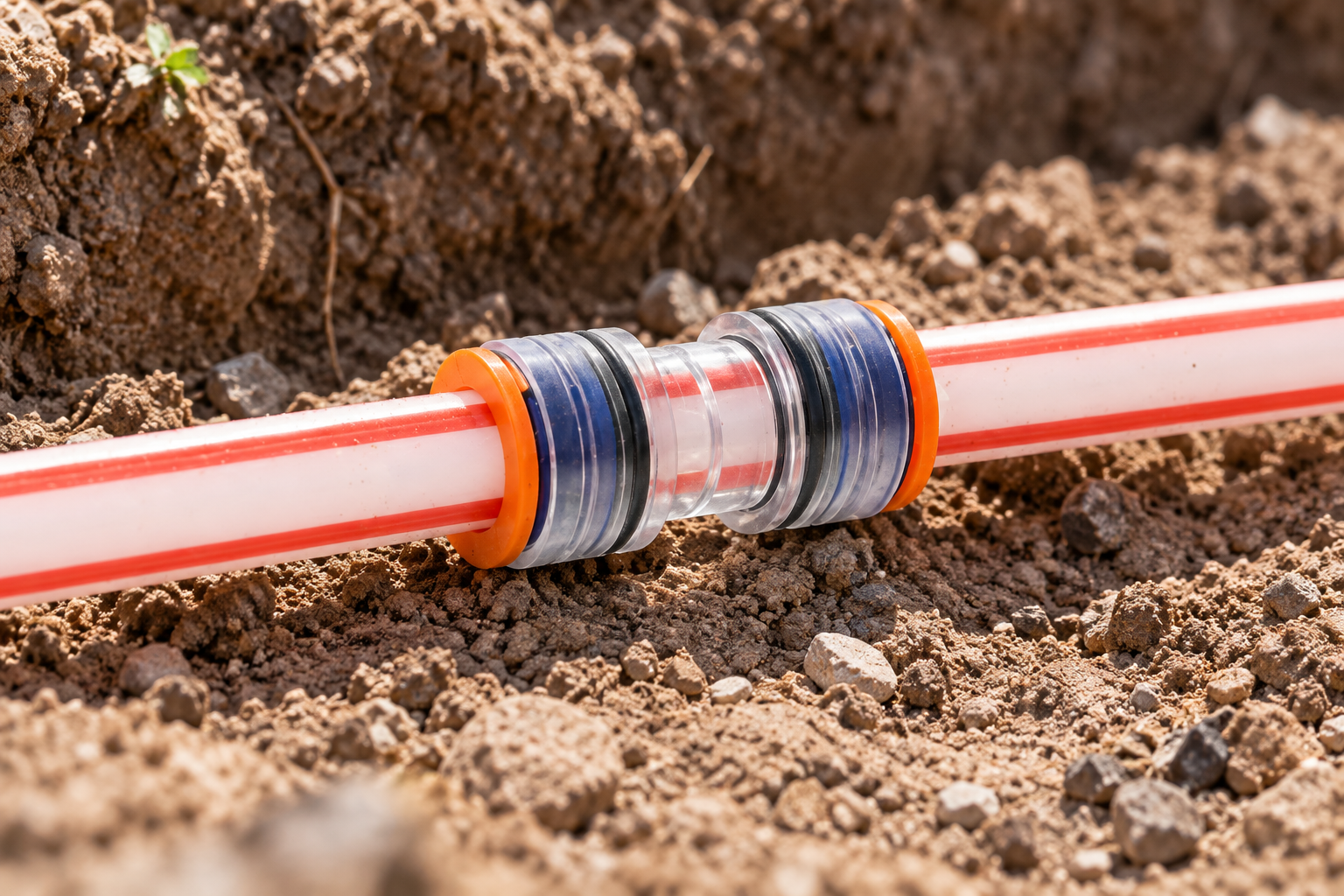
- Potvrdite crtež. Uskladite svaki raspon vanjskog promjera cijevi, obitelj zida i priključni port prije otvaranja pakovanja.
- Izolirajte i smanjite pritisak. Isključite zračni tok, uklonite prljavštinu s radnog područja i zatvorite otvorene kanale.
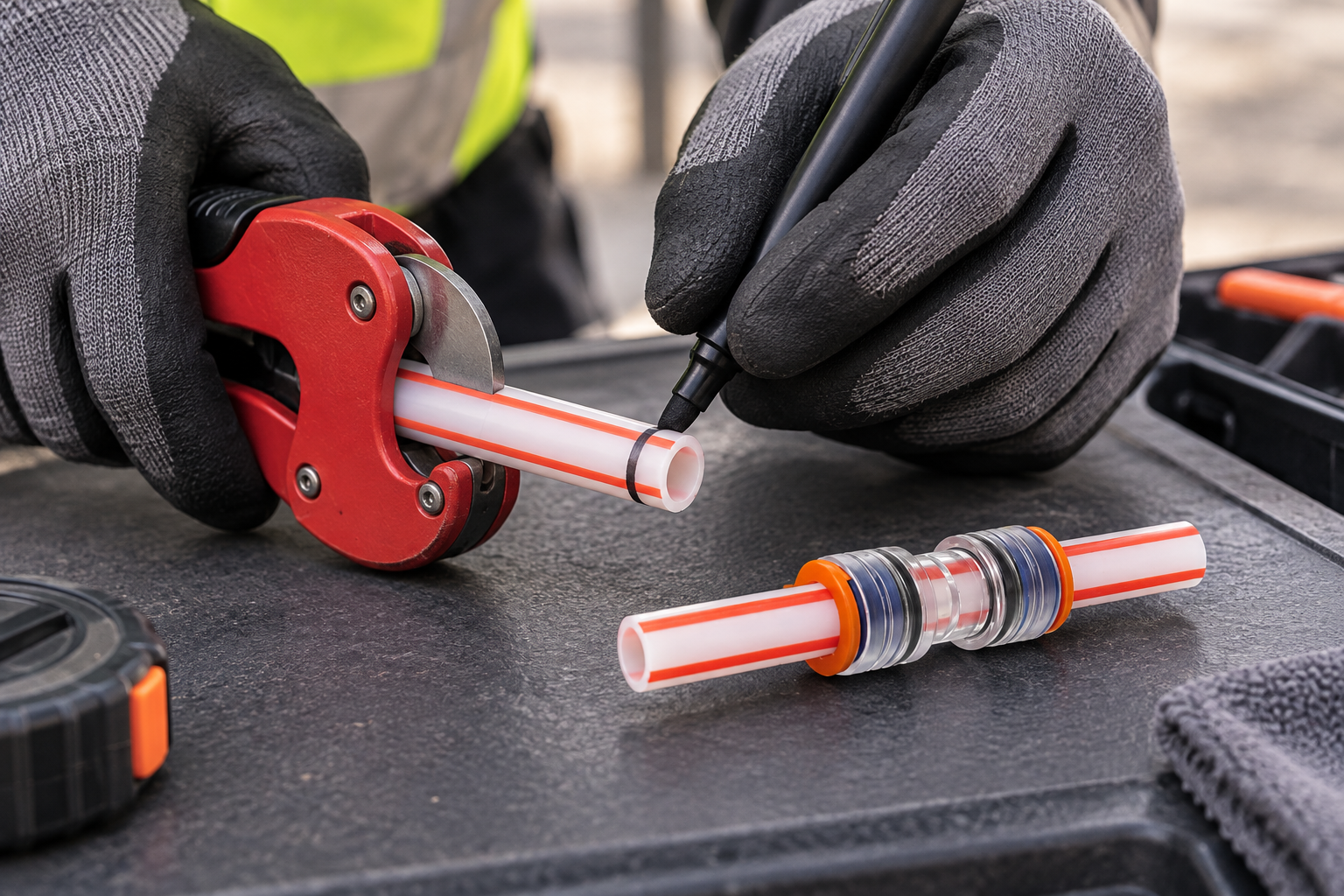
- Isecite kvadrat. Koristite oštar rotacioni nož; izbjegavajte nazubljene ivice, zgnječenje i prekomjerno skraćivanje ivica.
- Očistite i označite. Obrišite zonu brtvljenja, a zatim označite zadatu dubinu umetanja oko cijevi.
- Umetnite u potpunosti. Gurnite kroz steznu glavu dok oznaka ne dođe do zaustavljača na kućištu. Nikada se ne oslanjajte samo na osećaj u ruci.
- Osigurajte i poravnajte. Instalirajte priložene stezaljke, držite konektor ravno i podržite obližešnje savijanja.
- Isprobavanje pritiska/tesnosti. Postepeno povećajte pritisak do vrijednosti odobrene u projektu, zadržite ga na toj razini tokom propisanog vremena i evidentirajte podatke sa mjernih instrumenata, temperaturu i rezultate ispitivanja.
Svaki korak rješava određeni način kvara: pogrešna veličina, pritiskovni udar, ovalizacija, kontaminacija, djelimično uključivanje, izvlačenje ili nedokumentovano ispitivanje. Ako ispitivanje ne uspije, izolirajte jedan priključak, primijenite odobreni tekući sredstvo za detekciju curenja i pregledajte prije nego što ponovo obavite radove na obje strane.
OD, ID i debljina zida su odvojene provjere.
Izmjerite vanjski promjer u dva smjera i na nekoliko točaka duž rezanog dijela. Zabilježite najveći vanjski promjer jer ovalnost može opterećivati jednu stranu brtve. Unutarnji promjer je važan za zazor pri puhanju vlakana i prolaz kalupa; debljina stijenke pokazuje da li je cijev standardna ili sa debele stijenkama, čak i kada je vanjski promjer identičan. ISO 3126 pruža ponovljiv okvir, ali tolerancije proizvođača cijevi određuju prihvatljivost.
| Pronalaženje dimenzija | Akcija | Prevenirano je neuspjeh |
|---|---|---|
| OD unutar opsega porta; okrugli rez | Nastavite i označite dubinu | Neujednačeno pritiskanje brtve |
| OD visok zbog ovalnosti | Preoblikujte ili ponovo izrežite zvučnu cijev | Sklizanje i curenje stezne glave |
| Isti vanjski promjer, drugačija debljina zida | Potvrdite kompatibilnost pečata/ID-a | Ograničen protok zraka |
| Izvan objavljenog opsega | Upotrijebite drugu veličinu ili reduktor | Preopterećenje i izvlačenje |
Odabir ravne, redukcijske i prozirne izvedbe
Koristite ravne armirane spojnice od HDPE-a za cijevi iste veličine, redukciju za mikrocjevove od HDPE-a sa brzim pričvršćenjem kada se promjeni nominalna veličina i prozirnu spojnicu za redukciju mikrocjevova gdje je vizuelni pregled važan. The pravi brzi spojnik predstavlja korisnu referencu za spojeve iste OD; uporedite ga s smanjivač mikrocevi. Vodič za rješavanje problema na zaustavljanje curenja zraka objašnjava zašto je nominalna veličina sama po sebi nedovoljna.
| Prijava | Najbolji početni izbor | Potvrdi |
|---|---|---|
| Isti kanal kroz komoru | Izravni spojnik | Jednake oznake vanjskog promjera i dubine |
| Prijelaz sa napajanja na granski krak | Push-fit reduktor | Dva nezavisna raspona porta |
| Vidljiva tačka testiranja | Prozirni reduktor ili ravno tijelo | Window clarity and seal contrast |
| Zakopana trasa | Dokumentovani vanjski materijal | UV, soil and temperature evidence |
Testing without inventing a universal pressure number
Write a test plan before installation. Define medium (clean dry air or nitrogen), ramp rate, target pressure, hold time, allowable decay and gauge accuracy. Base values on the connector datasheet, duct specification and network owner’s method. ISO 1167 is a pressure-test method for thermoplastics piping components, not a blanket rating for assembled microduct fittings. Keep people clear of pressurized ends and vent safely.
A transparent fitting can reveal a tube that stops short, but it cannot show microscopic seal damage. If decay occurs, test a capped section to separate duct porosity from joint leakage. Re-test after temperature stabilizes because air pressure changes with temperature.
Outdoor exposure, maintenance and total cost
Ask for seal polymer, body resin or alloy, operating-temperature limits and accelerated UV method such as ISO 4892-3 or ASTM G154. A “UV resistant” claim without duration, specimen geometry or acceptance criteria is incomplete. Burial may require chemical compatibility and load testing in addition to UV evidence.
Maintenance is inexpensive when planned: retain spare seals and clips, protect fittings from grit, and inspect transparent windows during chamber visits. Replacing one contaminated seal is usually lower risk than repeatedly tightening a fitting that has no torque adjustment. Track batch, installer, dimensions and test result to reduce troubleshooting time across a route.
For larger rollouts, standardize a field worksheet. Include duct reel number, measured OD at the cut, wall thickness, ambient temperature, installer initials and photographs of the insertion marks. A worksheet turns a recurring leak into a traceable process and supports warranty discussions without implying that every failure has the same cause.
Plan inventory by transition, not by nominal box count. Keep straight reinforced connectors for same-size repairs, reducers for feeder changes, spare clips and sealed O-ring kits. Store elastomers away from ozone, solvents and direct sunlight. If a transparent body is used, protect it from impact in the chamber; optical clarity is useful only while the inspection window remains intact.
When a route crosses climates, qualify the complete assembly: duct, fitting, seal, clip and any protective sleeve. A laboratory UV result on the body alone does not establish service life for the seal. Likewise, a pressure hold at room temperature does not represent thermal cycling. Ask the supplier to state test specimen, duration, acceptance criteria and whether results apply to production batches.
Standards and selection support
ISO 4427-2 addresses PE pipe dimensions and performance; ISO 3126 addresses measuring dimensions; ISO 1167 describes hydrostatic internal-pressure testing; ISO 4892-3 and ASTM G154 describe fluorescent-UV exposure. These references do not confer certification on a connector. Commercial documents should state the exact product, test method and scope. Zhejiang Oulu, also associated with Oulu sourcing discussions, can provide configurable microduct fittings and drawings; request evidence for the exact size and environment rather than relying on a generic catalogue statement.
How should a compression-fitting installation be handed over?
A repeatable handover shows that the fitting, duct and test were treated as one assembly. Include the measured OD, ID and wall thickness, the cut and deburring check, insertion mark, seal condition, connector code, route location and the pressure or leak result required by the project. Transparent bodies can support visual inspection, but they do not replace the written record.
Pair the opseg konektora za mikrocevi sa reducer product page i reducer sizing guide when a repair includes a change in duct size.
Često postavljana pitanja
How can the HDPE compression fittings join ducts with different wall thicknesses?
They can join different wall thicknesses when each tube’s measured OD, ID and wall fall within the fitting’s port and seal design. Confirm insertion depth and elastomer compatibility in the supplier drawing; nominal OD alone is not enough.
What temperature range should the HDPE compression fittings withstand?
Use the published range for the body and seal combination, then check installation temperature and cyclic exposure in your project. HDPE resin data cannot be used to infer a universal fitting rating.
How can installers visually check that the HDPE compression fittings is fully seated?
Mark the specified depth before insertion and verify the mark reaches the body stop evenly. Through a transparent body, look for a continuous tube end and no visible gap; confirm marks stay fixed during the pressure hold.
When should the seals or body of the HDPE compression fittings be replaced?
Replace seals that are cut, flattened, swollen, dirty or removed contrary to reuse guidance. Replace bodies with cracked windows, damaged collets or retention loss found during inspection.
Where can installers use the HDPE compression fittings in fiber and telecom networks?
Typical uses include chamber repairs, feeder-to-branch transitions, building entries and air-blown fiber routes. Match the connector’s environment rating and network owner’s test method to each location.
How do you choose the correct duct diameter for the HDPE compression fittings?
Measure actual OD, ID and wall thickness at the prepared end, compare each value with the port drawing and account for ovality. If any value is outside range, select a different size or reducer and document approval.
Does a transparent compression fitting prove that the duct is fully seated?
It can make the seating zone easier to inspect, but the installer still has to verify the insertion mark, lock, seal and approved test result. Visibility is an aid to inspection, not a substitute for the installation instruction.
What is the most common reason a new compression fitting leaks at the first bend?
A diagonal or damaged cut, incomplete insertion, an incorrect OD range or bending load at the joint are common checks. Isolate those causes before changing pressure or blaming the blower.
Reference
- ISO 3126: Plastics piping systems – determination of dimensionsOfficial ISO page; measurement reference.
- ISO 4427-2: Polyethylene pipes and fittingsOfficial ISO page; PE component terminology.
- ASTM G154: Upravljanje fluorescentnim ultraljubičastim uređajem za izlaganjeOfficial ASTM page; UV exposure method context.
Square cuts, measured dimensions and documented tests make an airtight seal repeatable. Review the opseg konektora za mikrocevi and contact the supplier with your drawing and test plan.
Finally, brief crews on the same seven steps and require a photograph of each insertion mark. Consistent records make audits straightforward and reveal whether failures cluster by duct batch, weather or installation shift. That evidence supports targeted training and avoids unnecessary replacement of sound fittings.



