영국 브리스톨의 한 네트워크 시공업체가 짧은 수리 구간을 연결했을 때, 첫 번째 굴곡부에서 공기가 새어 나왔습니다. 이 예시 시나리오는 고객 사례가 아니며, 근본 원인은 수수께끼 같은 피팅 결함이 아니라 대각선 절단과 삽입 표시 누락이었습니다. 일곱 번의 반복 가능한 단계를 거쳐 이 수리 작업은 문서화된 기밀 조인트로 바뀌었습니다.
The short answer is: Reliable HDPE 압축 피팅 depend on measured OD, ID and wall thickness, a square cut, clean sealing land and verified insertion depth. Test pressure and hold time must come from the network owner or fitting supplier; there is no universal number. ISO 3126 supports dimensional measurement, while ISO 4427-2 provides PE pipe terminology. Use transparent bodies to inspect seating, then record the result.
7단계 설치 순서
- Confirm the drawing. Match each duct OD range, wall family and connector port before opening packaging.
- Isolate and depressurize. Lock out air, remove dirt from the work area and cap open ducts.
- Cut square. Use a sharp rotary cutter; avoid hacksaw teeth, crushing and excessive chamfering.
- Clean and mark. Wipe the sealing zone, then mark the specified insertion depth around the tube.
- Insert fully. Push through the collet until the mark reaches the body stop. Never rely on hand-feel alone.
- Secure and align. Install supplied clips, keep the connector straight and support nearby bends.
- Pressure/leak test. Ramp to the project-approved value, hold for its specified time and log gauge, temperature and result.
각 단계는 잘못된 크기, 압력 충격, 진원도 저하, 오염, 부분 체결, 이탈 또는 문서화되지 않은 테스트와 같은 고장 모드를 해결합니다. 테스트에 실패할 경우, 하나의 포트를 격리하고, 승인된 누출 감지 유체를 도포한 후 양쪽을 재작업하기 전에 검사하십시오.
외경(OD), 내경(ID) 및 두께는 별도의 검사 항목입니다.
절단면을 따라 여러 지점과 두 방향에서 외경(OD)을 측정합니다. 편평도가 씰의 한쪽 면에 하중을 가할 수 있으므로 가장 큰 외경을 기록하십시오. 내경(ID)은 광케이블 포설 간격과 맨드릴 통과에 중요하며, 두께는 외경이 동일하더라도 튜브가 표준형인지 후육형(헤비 월)인지 알려줍니다. ISO 3126은 반복 가능한 기준을 제공하지만, 수용 여부는 덕트 제조업체의 공차에 따라 결정됩니다.
| 차원 찾기 | 액션 | 실패 방지됨 |
|---|---|---|
| 포트 범위 내 외경(OD); 원형 절단 | 계속 진행하고 깊이를 표시하세요 | 불균일한 씰 압착 |
| 타원도로 인해 외경이 큼 | 사운드 튜브의 모양을 다시 둥글게 만들거나 다시 자르기 | 콜렛 미끄러짐 및 누수 |
| 동일한 외경, 다른 두께 | 실인증/ID 호환성 확인 | 공기 통로 제한 |
| 출간 범위를 벗어남 | 다른 크기나 레두서 사용 | 과도한 응력과 이탈 |
일직선, 리듀서 및 투명 디자인 선택
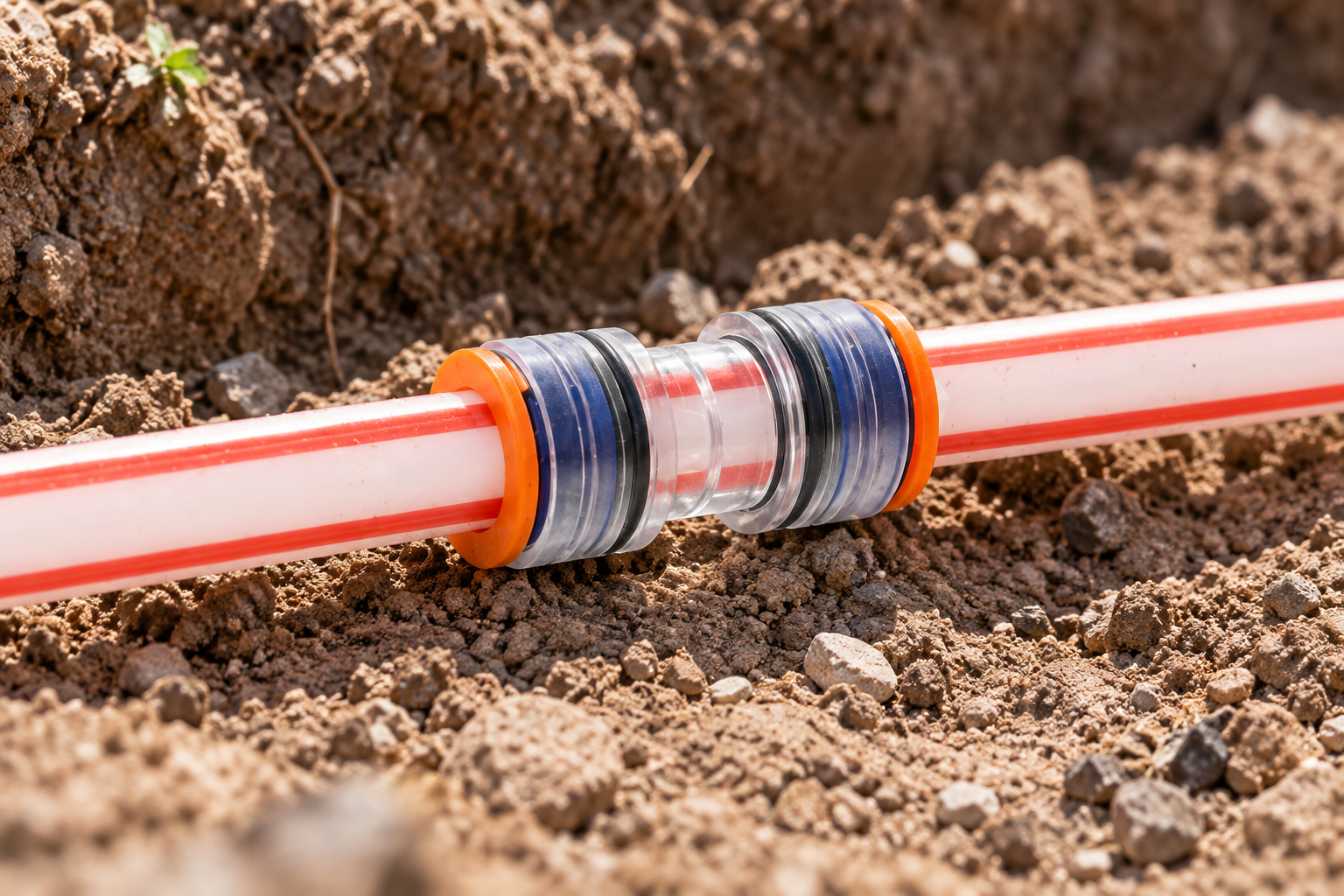
동일한 크기의 덕트에는 HDPE 직선 보강 커넥터를 사용하고, 호칭 치수가 변경될 때는 HDPE 마이크로덕트 푸시핏 리덕터를 사용하며, 육안 검사가 중요한 곳에는 투명 마이크로 덕트 리덕터 커넥터를 사용하십시오. 직선형 퀵 커플러 외경이 같은 이음매에 유용한 참고 자료이며, 다음 항목과 비교해 보십시오. 마이크로덕트 리듀서. 문제 혜결 가이드 공기 누출 막기 공칭 치수만으로는 불충분한 이유를 설명합니다.
| 신청 | 가장 좋은 시작 선택 | 확인 |
|---|---|---|
| 챔버를 통과하는 동일한 덕트 | 스트레이트 커넥터 | Equal OD and depth marks |
| 간선-분기 전환 | Push-fit reducer | Two independent port ranges |
| Visible test point | Transparent reducer or straight body | Window clarity and seal contrast |
| Buried route | 기록된 야외 자재 | UV, soil and temperature evidence |
Testing without inventing a universal pressure number
Write a test plan before installation. Define medium (clean dry air or nitrogen), ramp rate, target pressure, hold time, allowable decay and gauge accuracy. Base values on the connector datasheet, duct specification and network owner’s method. ISO 1167 is a pressure-test method for thermoplastics piping components, not a blanket rating for assembled microduct fittings. Keep people clear of pressurized ends and vent safely.
A transparent fitting can reveal a tube that stops short, but it cannot show microscopic seal damage. If decay occurs, test a capped section to separate duct porosity from joint leakage. Re-test after temperature stabilizes because air pressure changes with temperature.
Outdoor exposure, maintenance and total cost
Ask for seal polymer, body resin or alloy, operating-temperature limits and accelerated UV method such as ISO 4892-3 or ASTM G154. A “UV resistant” claim without duration, specimen geometry or acceptance criteria is incomplete. Burial may require chemical compatibility and load testing in addition to UV evidence.
Maintenance is inexpensive when planned: retain spare seals and clips, protect fittings from grit, and inspect transparent windows during chamber visits. Replacing one contaminated seal is usually lower risk than repeatedly tightening a fitting that has no torque adjustment. Track batch, installer, dimensions and test result to reduce troubleshooting time across a route.
For larger rollouts, standardize a field worksheet. Include duct reel number, measured OD at the cut, wall thickness, ambient temperature, installer initials and photographs of the insertion marks. A worksheet turns a recurring leak into a traceable process and supports warranty discussions without implying that every failure has the same cause.
Plan inventory by transition, not by nominal box count. Keep straight reinforced connectors for same-size repairs, reducers for feeder changes, spare clips and sealed O-ring kits. Store elastomers away from ozone, solvents and direct sunlight. If a transparent body is used, protect it from impact in the chamber; optical clarity is useful only while the inspection window remains intact.
When a route crosses climates, qualify the complete assembly: duct, fitting, seal, clip and any protective sleeve. A laboratory UV result on the body alone does not establish service life for the seal. Likewise, a pressure hold at room temperature does not represent thermal cycling. Ask the supplier to state test specimen, duration, acceptance criteria and whether results apply to production batches.
Standards and selection support
ISO 4427-2 addresses PE pipe dimensions and performance; ISO 3126 addresses measuring dimensions; ISO 1167 describes hydrostatic internal-pressure testing; ISO 4892-3 and ASTM G154 describe fluorescent-UV exposure. These references do not confer certification on a connector. Commercial documents should state the exact product, test method and scope. Zhejiang Oulu, also associated with Oulu sourcing discussions, can provide configurable microduct fittings and drawings; request evidence for the exact size and environment rather than relying on a generic catalogue statement.
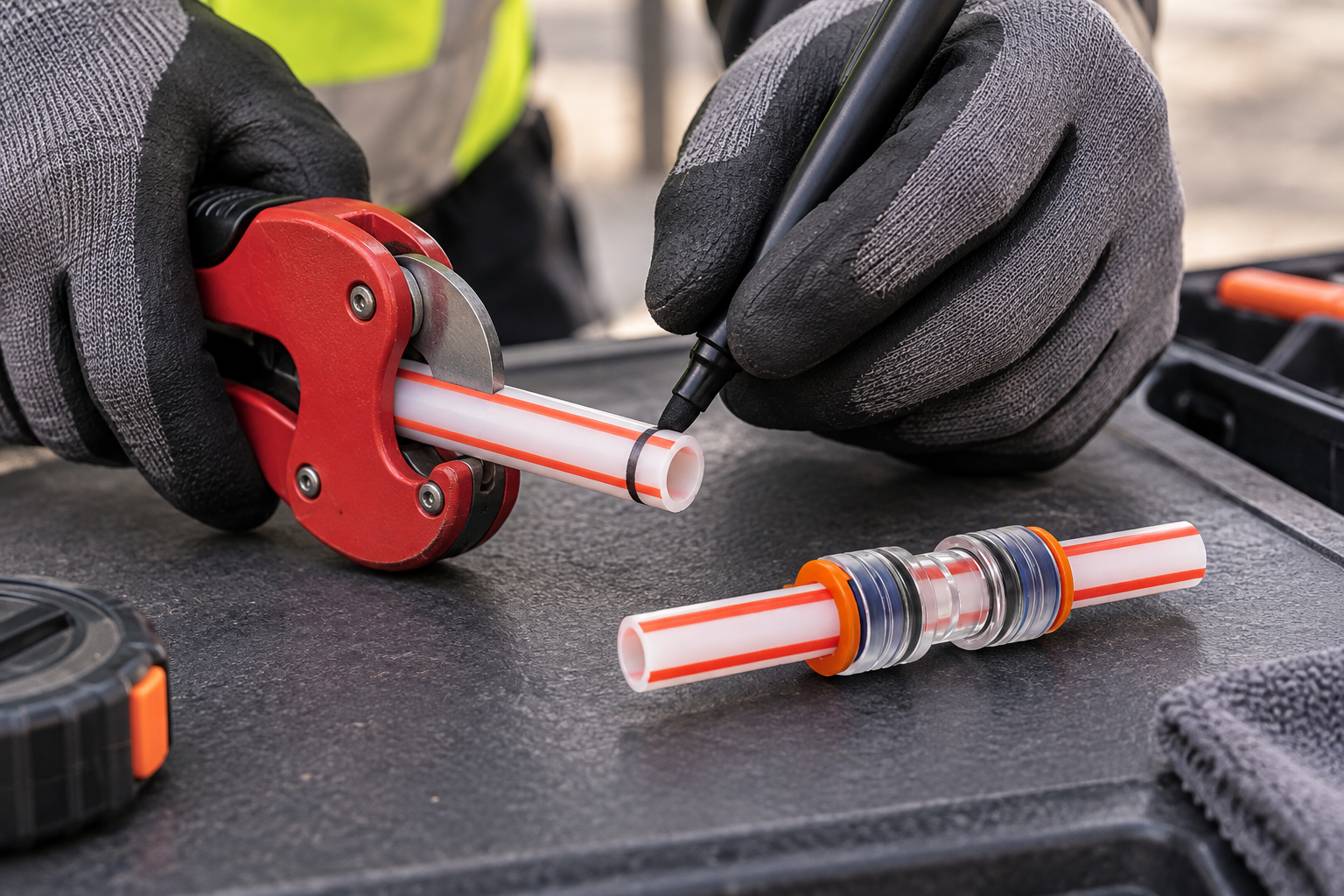
How should a compression-fitting installation be handed over?
A repeatable handover shows that the fitting, duct and test were treated as one assembly. Include the measured OD, ID and wall thickness, the cut and deburring check, insertion mark, seal condition, connector code, route location and the pressure or leak result required by the project. Transparent bodies can support visual inspection, but they do not replace the written record.
Pair the microduct connector range with the reducer product page 그리고 reducer sizing guide when a repair includes a change in duct size.
자주 묻는 질문
How can the HDPE compression fittings join ducts with different wall thicknesses?
They can join different wall thicknesses when each tube’s measured OD, ID and wall fall within the fitting’s port and seal design. Confirm insertion depth and elastomer compatibility in the supplier drawing; nominal OD alone is not enough.
What temperature range should the HDPE compression fittings withstand?
Use the published range for the body and seal combination, then check installation temperature and cyclic exposure in your project. HDPE resin data cannot be used to infer a universal fitting rating.
How can installers visually check that the HDPE compression fittings is fully seated?
Mark the specified depth before insertion and verify the mark reaches the body stop evenly. Through a transparent body, look for a continuous tube end and no visible gap; confirm marks stay fixed during the pressure hold.
When should the seals or body of the HDPE compression fittings be replaced?
Replace seals that are cut, flattened, swollen, dirty or removed contrary to reuse guidance. Replace bodies with cracked windows, damaged collets or retention loss found during inspection.
Where can installers use the HDPE compression fittings in fiber and telecom networks?
Typical uses include chamber repairs, feeder-to-branch transitions, building entries and air-blown fiber routes. Match the connector’s environment rating and network owner’s test method to each location.
How do you choose the correct duct diameter for the HDPE compression fittings?
Measure actual OD, ID and wall thickness at the prepared end, compare each value with the port drawing and account for ovality. If any value is outside range, select a different size or reducer and document approval.
Does a transparent compression fitting prove that the duct is fully seated?
It can make the seating zone easier to inspect, but the installer still has to verify the insertion mark, lock, seal and approved test result. Visibility is an aid to inspection, not a substitute for the installation instruction.
What is the most common reason a new compression fitting leaks at the first bend?
A diagonal or damaged cut, incomplete insertion, an incorrect OD range or bending load at the joint are common checks. Isolate those causes before changing pressure or blaming the blower.
참고문헌
- ISO 3126: Plastics piping systems – determination of dimensionsOfficial ISO page; measurement reference.
- ISO 4427-2: Polyethylene pipes and fittingsOfficial ISO page; PE component terminology.
- ASTM G154: Operating fluorescent ultraviolet exposure apparatusOfficial ASTM page; UV exposure method context.
Square cuts, measured dimensions and documented tests make an airtight seal repeatable. Review the microduct connector range and contact the supplier with your drawing and test plan.
Finally, brief crews on the same seven steps and require a photograph of each insertion mark. Consistent records make audits straightforward and reveal whether failures cluster by duct batch, weather or installation shift. That evidence supports targeted training and avoids unnecessary replacement of sound fittings.