
When a maintenance engineer in Rotterdam replaced a leaking line beside a packaging machine, the repair looked routine: cut the tube, push it into a new straight connector, and restart. Within minutes, the actuator began cycling slowly and the line hissed again. The fitting was not simply “bad”; an oval tube end and a mismatch between tube outside diameter and connector specification had defeated the seal.
The short answer is: Most fitting failures trace to tube preparation, pressure/temperature duty, thread treatment, or an incompatible material—not the connector alone. ISO 4414 frames pneumatic systems around safe design and operation, while ISO 8573-1 classifies compressed-air contaminants; together they support a practical action: verify tube OD, cut quality, thread interface, and air quality before replacing parts. Start with a controlled isolation and leak test, then correct the cause rather than repeatedly tightening the joint.
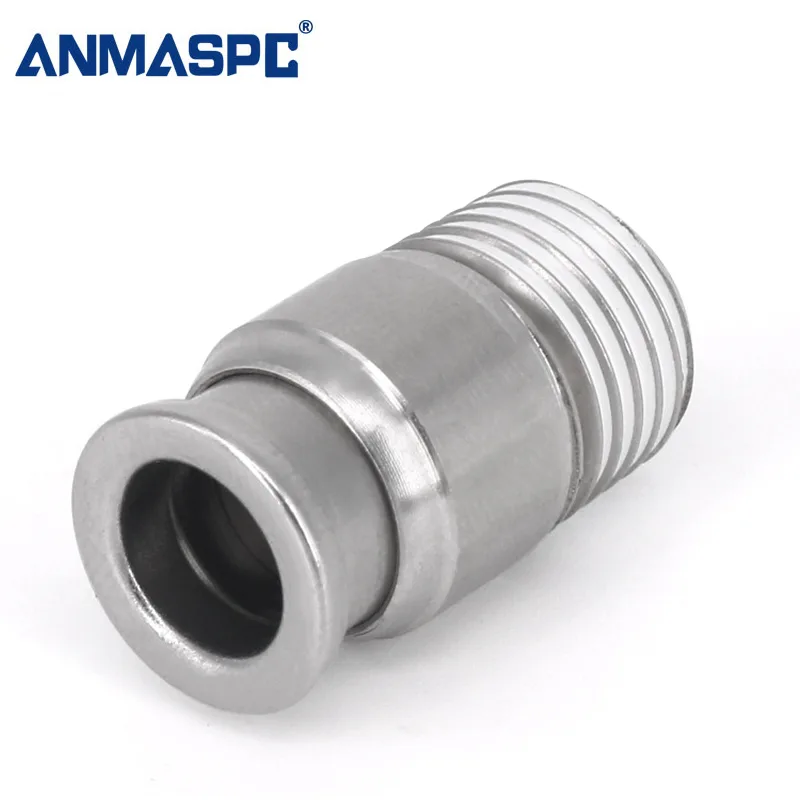
Pneumatic straight fittings join tubing or threaded ports in a direct line. Their reliability depends on the complete interface through installation, vibration, and service—not on the connector alone.
Why a straight fitting starts to leak
Tube-end defects and incomplete engagement. In a push-in connection, the collet holds the tube and an internal seal closes around its outside diameter. An angled, burred, scratched, painted, or out-of-round tube can defeat either function. Make a square, clean cut and insert fully to the stated stop; after rework, do not shorten the tube into a damaged section.
Thread, seal, and torque errors. BSPP, BSPT, NPT, and metric threads are not interchangeable because they look similar. Some use a face seal or bonded washer; tapered threads need controlled engagement and the approved sealing method. Cross-threading, excess tape, and overtightening can damage a port. ISO 4414 is a system-safety standard, not a fitting certification.
Duty conditions beyond the specification. Pressure spikes, heat, vibration, washdown, lubricants, and contaminated air change risk. A nominal 6 bar line is about 600 kPa, but selection must use the actual maximum pressure and transient conditions. ISO 8573-1 classifies particulate, water, and oil contamination; it does not certify a connector for every chemical.
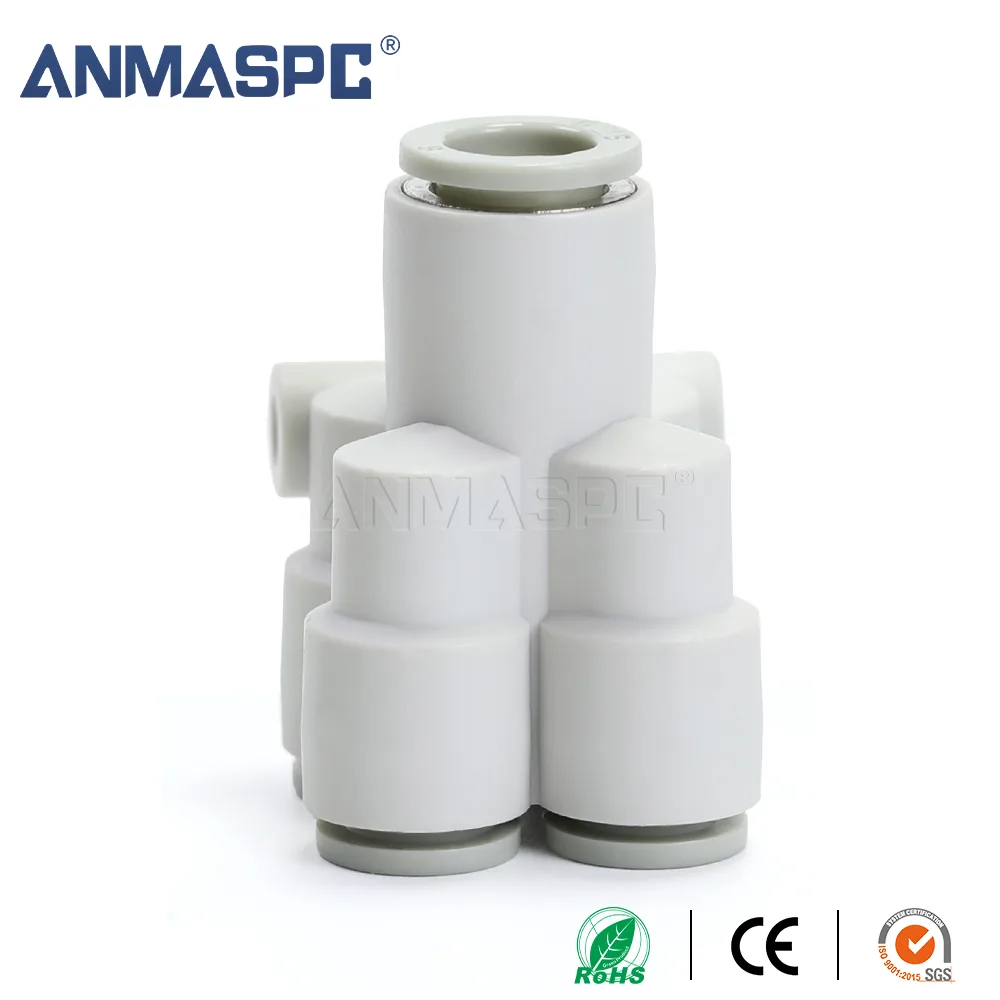
Check the tube, thread, and seal before replacing parts
Follow the plant isolation procedure, exhaust stored energy, then inspect the fitting, tube, port, and supports. OSHA cautions that compressed air can cause serious injury. Restore pressure in a controlled manner and use the site-approved leak-detection method. Bubble solution is useful locally; higher-consequence applications should use the equipment maker’s defined pressure-decay test and record pressure and duration.
Air leakage is often audible, but a hiss does not prove the connector is the source. After safe depressurization, inspect seating, the witness mark, seal, and tube end. Replace cracked parts; if the leak returns after a cycle, investigate tube movement, bend radius, side load, and vibration support.
| Sintoma observado | Likely mechanism | Useful check | Ação corretiva |
|---|---|---|---|
| Hiss at tube entry | Damaged, undersized, or incompletely inserted tube | Inspect square cut and insertion witness mark | Recut or replace tube; insert to the specified stop |
| Leak at threaded port | Wrong thread family, seal method, or torque | Verify port and fitting thread specification | Use the specified mating part and sealing approach |
| Tube ejects under load | Tube OD/tolerance or collet engagement problem | Check tube material, OD, and retention after isolation | Replace incompatible parts; remove side load |
| Slow actuator or pressure loss | Leak, restriction, or contaminated supply | Compare pressure at supply and point of use | Locate loss and review filtration and line sizing |
Choose the connection for the service conditions
Push-to-connect fittings can reduce assembly time when the specified tube and duty conditions are respected. Threaded adapters may better suit a fixed port interface. Compare rework, leak testing, downtime, and possible port damage—not only unit cost.
| Selection dimension | Push-in straight connector | Threaded straight adapter | Implicação para a aquisição |
|---|---|---|---|
| Installation speed | Fast when tube is square-cut and fully seated | Requires controlled thread engagement | Compare installed labor, not only purchase price |
| Primary compatibility control | Tube OD, material, tolerance, and pressure | Thread family, seal type, port material, and torque | Specify both sides of the interface on the PO |
| Maintenance exposure | Tube can be replaced without turning the body | Repeated disassembly can affect threads or seals | Plan a documented inspection/replacement method |
| Total-cost driver | Cut quality and avoidance of tube damage | Correct sealing and avoidance of port damage | Track repeat leak calls and machine downtime |
As an illustrative calculation, a connector that costs slightly more but avoids one repeat call-out can lower total cost when the avoided labor, lost output, and re-test time exceed the price difference. This is not a universal saving claim; the result depends on labor rates, machine criticality, and the documented failure rate at the site.
Use standards to set the safety boundary
Use standards precisely. ISO 4414 addresses safety requirements for compressed air systems and components. ISO 8573-1 establishes compressed-air purity classes. ISO 12100 addresses machine risk assessment and reduction. None by itself proves a fitting is approved for food contact, potable water, explosive atmospheres, or every market.
Ask for rated media, pressure and temperature range, compatible tube materials, thread standard, and test documentation. A pressure-decay test is a method or acceptance procedure unless its governing standard and scope are stated. Unsupported compliance claims create commercial risk.
What to record after a repair
- Define the port thread, seal, tube OD/material, pressure, temperature, media, and exposure on the purchase order.
- Standardize tube cutting and insertion checks; avoid tool damage and side load.
- Set an ISO 8573-1 air-quality target where appropriate and align filtration to duty.
- Record repeat faults; inspect supports, bend radius, and machine vibration before replacing parts again.
- Request dimensional and application documentation for critical lines. ANMASPC / Microduct Connector can help buyers review configurable product options and documentation before a production change; for an application discussion, use the contact team.
Use the symptom to narrow the cause
Replacing a leaking straight fitting without checking the interface often leaves the same fault in the line. Start with the symptom, isolate the circuit and inspect the tube end, thread, seal and support. A fitting that seals at rest may still leak when the actuator moves or the line reaches its working pressure.
| Symptom | Likely checks | Repair decision |
|---|---|---|
| Leak at a push-in tube end | Tube OD, square cut, insertion depth and O-ring | Recut or replace the damaged interface, then retest |
| Leak at a threaded port | BSP/NPT/metric form, seal method and cross-threading | Use the specified seal and replace damaged threads |
| Leak returns during movement | Bend radius, side load, vibration and tube support | Reroute or support the tube before changing parts |
| Fitting releases under pressure | Tube hardness, collet engagement and assembly limit | Isolate the line and check the complete rated assembly |
Compare the failure with the one-touch fitting guide and the air fitting selection guide before standardizing a replacement.
What 2026 buyers should document after a leak
Recent search questions about pneumatic straight fittings focus on diagnosis, not just tightening force. Record the tube outside diameter, tube material, thread identification, seal condition, operating pressure and the point where the leak was found. ISO 4414 provides system-level pneumatic safety guidance; it does not replace the supplier’s model-specific pressure, temperature or media limits.
For a repeatable repair, isolate stored energy, cut the tube square, inspect the sealing zone, refit the approved combination and verify the complete circuit. The pneumatic fittings maintenance guide e pneumatic parts range are useful internal references when a maintenance team is standardizing replacement parts.
Perguntas frequentes
Why do pneumatic straight fittings leak?
Common causes are a rough or angled tube cut, incomplete insertion, wrong tube OD, damaged sealing surfaces, incompatible threads, or duty outside the specified pressure and temperature range. Isolate the line, inspect the full interface, and test after the correction; do not assume the visible fitting body is the source.
How do you stop an air fitting from leaking?
Identify whether the leak is at the tube entry, thread, body, or adjacent tube before changing parts. Use the fitting maker’s specified tube and thread method, prepare the tube cleanly, and confirm the joint with a controlled leak check at the intended operating conditions.
What causes a push-to-connect fitting to fail?
A push-in fitting may lose retention or sealing when the tube is incompatible, out of tolerance, scratched, poorly cut, or subjected to excessive side load. Contamination, heat, chemical exposure, or installation beyond the stated pressure range can also affect performance; check the product documentation and the system conditions together.
Can pneumatic fittings be reused?
Reuse depends on the manufacturer’s instructions and the condition of the fitting, seal, tube, and threads. Do not reuse a component with a cracked body, damaged collet, distorted seal, compromised thread, or unknown service history; for critical service, replacement and documented testing are usually the safer maintenance choice.
How tight should pneumatic fittings be?
Threaded fittings should be tightened to the manufacturer’s torque or assembly guidance for the exact thread, port material, and sealing arrangement. Push-in tube connections are not tightened by torque: insert the prepared tube fully to the stop and verify retention in accordance with the supplier’s procedure.
What tubing works best with pneumatic straight fittings?
The best tubing is the material and exact outside diameter that the fitting manufacturer lists for the pressure, temperature, bend radius, and media in the application. Polyamide, polyurethane, polyethylene, and fluoropolymer tubing each have different flexibility and chemical/thermal characteristics, so specify from documentation rather than selecting by appearance.
Does ISO 4414 specify the pressure rating of every straight fitting?
No. ISO 4414 gives general rules and safety requirements for pneumatic systems and components. The exact fitting datasheet still controls the approved pressure, temperature, medium and installation limits.
What evidence should a buyer request after a recurring fitting leak?
Request the fitting code, tube OD and material, thread standard, seal specification, operating conditions, failure location, corrective action and the retest record. That evidence is more useful than a generic claim that the fitting is high pressure.
Referências
- ISO 4414: Pneumatic fluid power – general rules and safety requirementsOfficial ISO standard page; scope checked 2026-10-08.
- ISO 12100: Safety of machinery – risk assessment and risk reductionOfficial ISO standard page; used for the system-risk boundary.
- ISO 8573-1: Compressed air – contaminants and purity classesOfficial ISO standard page; used for air-quality specification.
A fitting is a small component, but its reliability is a system decision: specify the interface, prepare it consistently, and verify it under the conditions that actually matter. When you are ready to source or standardize components, review ANMASPC / Microduct Connector’s pneumatic parts and contact the team with your tube, thread, and duty requirements.
Practical conclusion: A pneumatic straight fitting is rarely an isolated failure. Check the tube, thread, seal and support in that order, document the cause, and retest the complete assembly before returning the machine to service.


