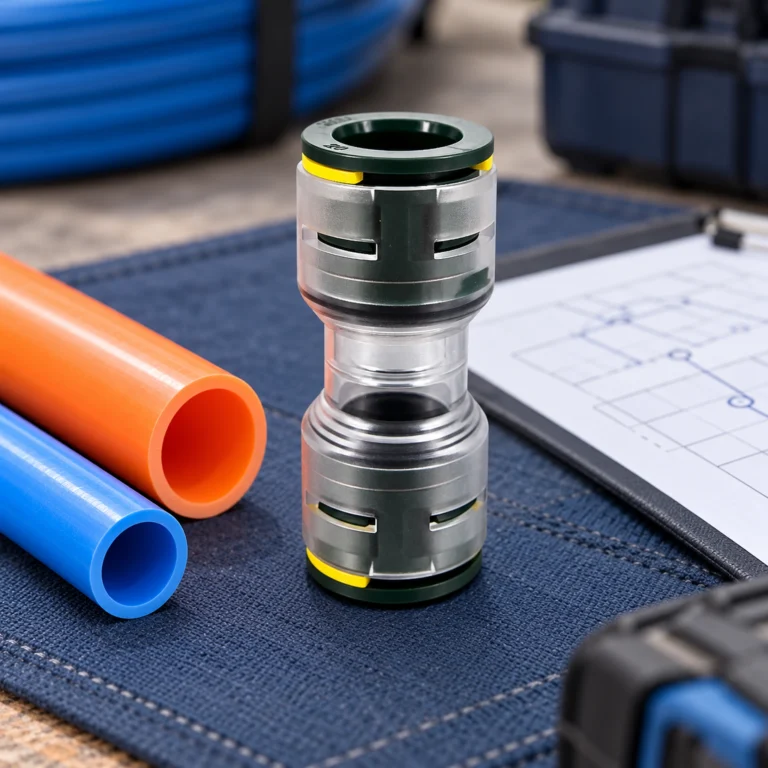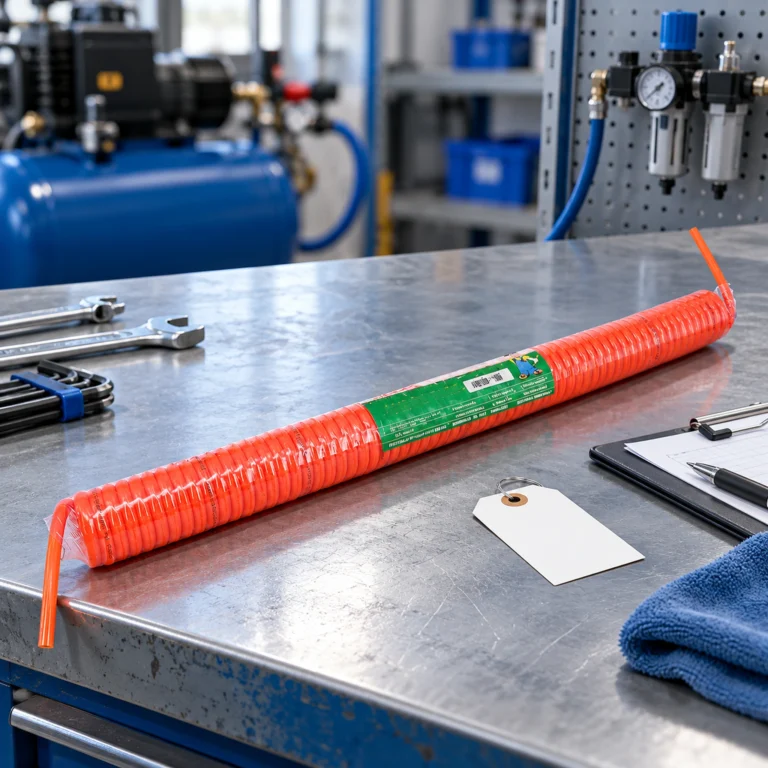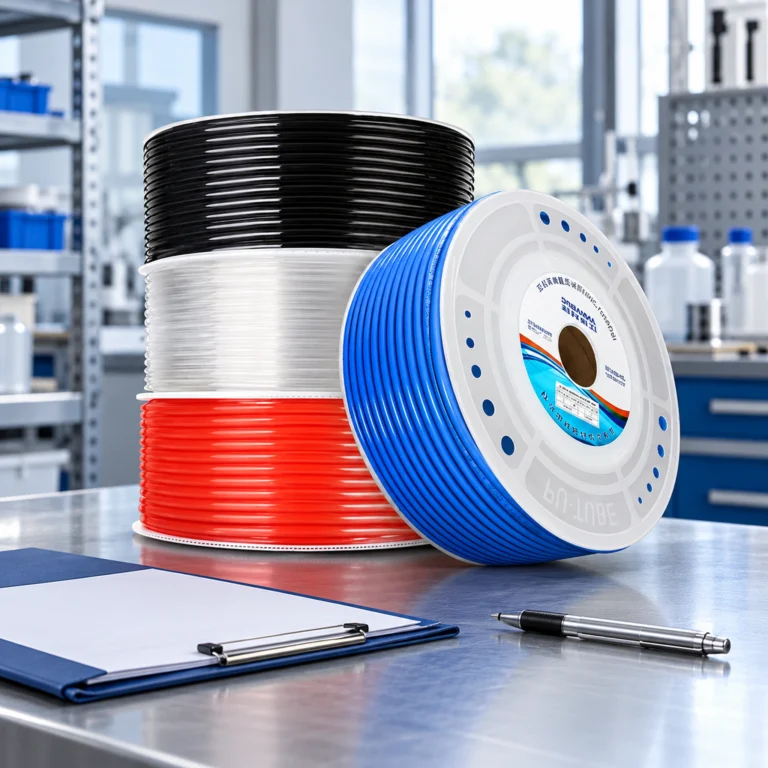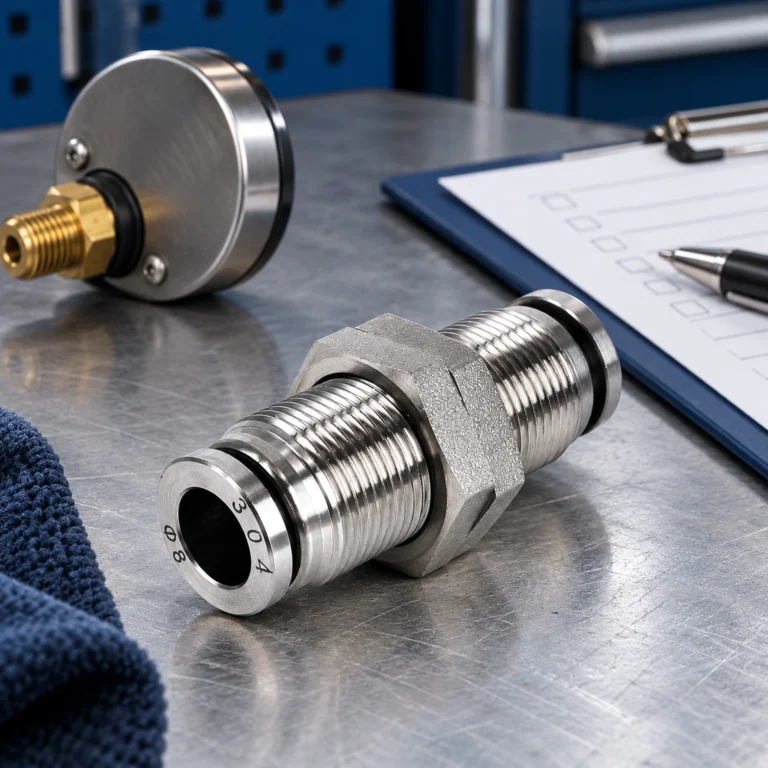
A pneumatic straight fitting can leak at the tube entry, threaded port, body or adjacent tubing. Those faults can sound similar while requiring different repairs. Locate the actual interface first, then inspect the tube, thread, seal and support under the plant’s isolation and testing procedure. Replacing the connector without finding the cause often leaves a recurring fault.
Common fitting faults involve tube preparation, pressure and temperature, thread treatment or material compatibility. Inspect these conditions alongside the fitting itself. ISO 4414 frames pneumatic systems around safe design and operation, while ISO 8573-1 classifies compressed-air contaminants; use them alongside the supplier instructions to check tube OD, cut quality, thread interface, and air quality before replacing parts. Start with a controlled isolation and leak test, then correct the cause rather than repeatedly tightening the joint.
Pneumatic straight fittings join tubing or threaded ports in a direct line. Their reliability depends on the complete interface through installation, vibration, and service—not on the connector alone.
Why a straight fitting starts to leak
Tube-end defects and incomplete engagement. In a push-in connection, the collet holds the tube and an internal seal closes around its outside diameter. An angled, burred, scratched, painted, or out-of-round tube can defeat either function. Make a square, clean cut and insert fully to the stated stop; after rework, do not shorten the tube into a damaged section.
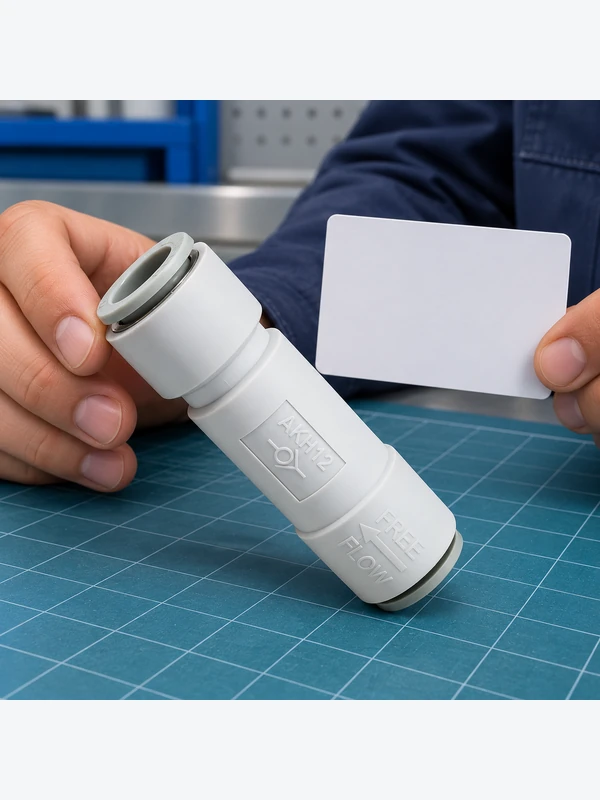
Thread, seal, and torque errors. BSPP, BSPT, NPT, and metric threads are not interchangeable because they look similar. Some use a face seal or bonded washer; tapered threads need controlled engagement and the approved sealing method. Cross-threading, excess tape, and overtightening can damage a port. ISO 4414 is a system-safety standard, not a fitting certification.
Duty conditions beyond the specification. Pressure spikes, heat, vibration, washdown, lubricants, and contaminated air change risk. A nominal 6 bar line is about 600 kPa, but selection must use the actual maximum pressure and transient conditions. ISO 8573-1 classifies particulate, water, and oil contamination; it does not certify a connector for every chemical.
Check the tube, thread, and seal before replacing parts
プラントの隔離手順に従い、蓄積されたエネルギーを排出した後、継手、チューブ、ポート、および支持金具を点検してください。OSHA(労働安全衛生局)は、圧縮空気が重篤な傷害を引き起こす可能性があると警告しています。管理された方法で圧力を復旧させ、サイトで承認された漏れ検知方法を使用してください。石鹸水(バブル液)は局所的に有用ですが、より重大な結果を伴う用途では、機器メーカーが定めた圧力低下試験を使用し、圧力と時間を記録してください。.
Air leakage is often audible, but a hiss does not prove the connector is the source. After safe depressurization, inspect seating, the witness mark, seal, and tube end. Replace cracked parts; if the leak returns after a cycle, investigate tube movement, bend radius, side load, and vibration support.
| 確認された症状 | 可能性の高いメカニズム | 便利なチェック | 是正処置 |
|---|---|---|---|
| 地下鉄の入口で威嚇する | 破損した、サイズが不適合の、または不完全に挿入されたチューブ | 角切りの確認と挿入目印の点検 | チューブを切断または交換し、指定されたストップの位置まで挿入してください。 |
| ねじ込みポートからの漏れ | ネジ山系統、シール方法、またはトルクの不一致 | ポートおよび継手のねじ規格を確認する | 指定された嵌合部品とシール方法を使用してください |
| 負荷がかかるとチューブが飛び出す | チューブの外径/公差またはコレットの噛み合わせの問題 | 確認 tube material, OD, and retention after isolation | 不適合な部品を交換し、サイドロードを取り除いてください。 |
| アクチュエーターの動作不良または圧力低下 | 漏出、制限、または汚染された供給 | 供給源と使用地点の圧力を比較する | 損失箇所の特定、およびろ過と配管サイズの再検討 |
Locate tube-entry and port-thread leaks separately
Mark the suspected joint and distinguish the two interfaces before disassembly. A push-in tube entry seals against the tube’s outside surface; a threaded adapter has a separate port interface whose sealing arrangement depends on its design. The location of a hiss alone is unreliable because air can travel along surrounding surfaces. Use the site-approved leak-detection method to identify where leakage first appears, under controlled test conditions and with access kept outside moving or stored-energy hazards.
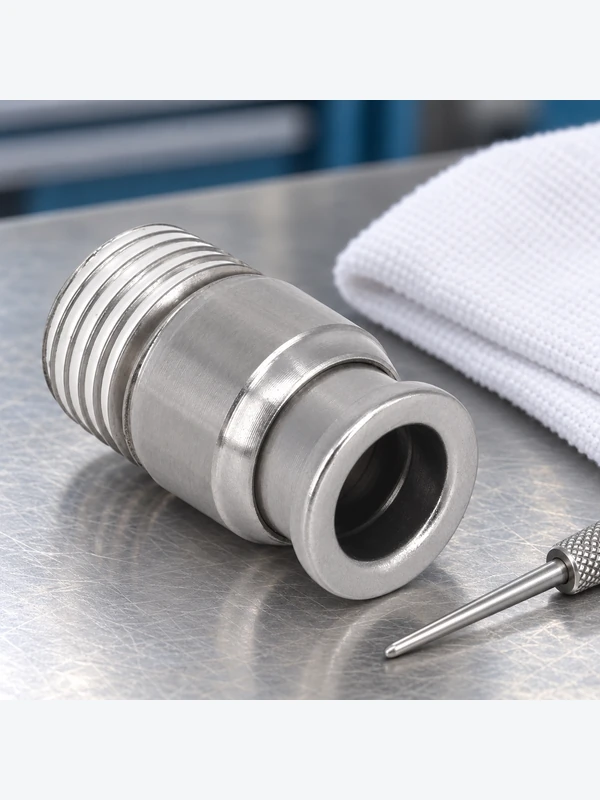
Isolate the equipment and release stored pressure before touching, loosening or removing the assembly. Inspect the tube sealing zone for scoring, an angled cut, ovality and damage from a previous collet. Verify tube OD and material from markings or the controlled specification rather than colour. Confirm the fitting’s insertion instructions and release method. The one-touch fitting guide gives background on the gripping and sealing interface, while the actual supplier instructions determine the permitted tube combination.
Inspect the port separately. Record the complete thread designation and how the joint is intended to seal: on the thread, against a face, or through a specified gasket or O-ring. A fitting that starts to screw into a port is not proof of compatibility. Avoid adding sealant to a tube entry or compensating for damaged threads with extra tape. Replacement and assembly torque must follow the exact product and port instructions.
After the approved correction, perform a controlled retest. Keep the local leakage result separate from a pressure-drop observation across the whole circuit; a restriction elsewhere can still slow an actuator after the joint is repaired. Record the fitting code, tube identity, observed leak location, corrective action and test conditions. This turns a repeated “bad fitting” complaint into a fault history that engineering can compare across machines.
Choose the connection for the service conditions
Push-to-connect fittings can reduce assembly time when the specified tube and duty conditions are respected. Threaded adapters may better suit a fixed port interface. Include rework, leak testing, downtime and possible port damage in the cost comparison.
| 選択次元 | プッシュインストレートコネクタ | ストレート継手 | 調達への影響 |
|---|---|---|---|
| インストール速度 | チューブが直角に切断され、完全に差し込まれている場合、速い | 制御されたスレッドの関与が必要です | 購入価格だけでなく、据付労務費も比較してください |
| 主要な互換性コントロール | チューブの外径、材質、公差、圧力 | ねじの種類、シール形状、ポートの材質、トルク | PO上でインターフェースの両側を指定してください |
| 保守露出 | 本体を回転させずにチューブを交換できます | 繰り返し分解すると、ねじやシールに影響を与える可能性があります。 | 文書化された点検・交換方法を立案する |
| トータルコストドライバー | 切断品質とチューブの損傷回避 | 適切な密閉とポート破損の回避 | 再発する水漏れの連絡と機械のダウンタイムの追跡 |
For example, a connector that costs slightly more but avoids one repeat call-out can lower total cost when the avoided labor, lost output, and re-test time exceed the price difference. This is not a universal saving claim; the result depends on labor rates, machine criticality, and the documented failure rate at the site.
Reproduce a movement-related fault without handling a live joint
A connection that seals at rest but leaks during a machine cycle needs a test that represents that cycle. First review tube routing in the safely isolated state: check whether travel pulls the tube sideways, whether the bend tightens at one end of motion, and whether a support transfers force into the connector. A stronger fitting will not necessarily correct a short tube, an unsuitable bend or a moving assembly that requires a different connection design.
Agree a controlled test with the responsible maintenance and safety personnel. Record the machine position, authorised operating cycle, supply conditions and point where the symptom occurs. Observe through the normal safeguards or appropriate remote instrumentation; never reproduce the fault by pushing, bending or tightening a pressurised joint by hand. If the test cannot be performed with the required guarding and access controls, revise the procedure before continuing.
Compare the rest condition and movement condition at the same identified measurement points. Note pressure at the supply and point of use, the timing of the leak, actuator demand and any temperature change. Do not label ordinary cycle-related pressure change as a quantified leakage rate without the necessary measurement method. The メンテナンスガイド can support the inspection plan, but it does not establish a universal pass pressure, test duration or number of cycles.
The U.S. Department of Energy’s leak-management guidance treats detection, repair and follow-up as a continuing process. After each repair, verify the result, tag unresolved faults and check whether leakage returns at the same location. Calculate any energy saving from measured operating hours and site data rather than attaching a generic percentage to a new connector. Check the 空気圧部品のラインナップ only after the interface and duty requirements have been defined.
Follow isolation rules and check the fitting’s operating limits
Use standards precisely. ISO 4414 addresses safety requirements for compressed air systems and components. ISO 8573-1 establishes compressed-air purity classes. ISO 12100 addresses machine risk assessment and reduction. None by itself proves a fitting is approved for food contact, potable water, explosive atmospheres, or every market.
定格媒体、圧力と温度の範囲、適合するチューブ材質、ねじ規格、およびテスト文書をご提示ください。圧力減衰試験は、その準拠規格と適用範囲が明記されていない限り、単なる試験方法または合否判定手順に過ぎません。根拠のない適合主張は商業上のリスクを生みます。.
What to record after a repair
- 発注書には、ポートのねじ規格、シール、チューブの外径/材質、圧力、温度、流体、および曝露環境を明記してください。.
- チューブ切断と挿入確認の標準化;工具の破損やサイドロードの回避。.
- 適宜ISO 8573-1の空気質目標を設定し、ろ過を用途に適合させてください。.
- 再発する故障を記録し、部品を再度交換する前に、支持部、曲げ半径、および機械の振動を点検してください。.
- クリティカルラインの寸法および用途に関するドキュメントをリクエストしてください。ANMASPC / マイクロダクトコネクタは、生産変更の前にバイヤーが設定可能な製品オプションやドキュメントを確認するのに役立ちます。用途についての詳細な協議をご希望の場合は、お問い合わせチームまでご連絡ください。.
よくある質問
なぜ空気圧用ストレート継手はエア漏れを起こすのですか?
主な原因には、チューブの粗い切断や斜め切断、挿入不良、誤ったチューブ外径、シール面の損傷、不適合なネジ、または指定された圧力・温度範囲外での使用があります。配管を遮断し、接続部全体を点検し、修正後にテストを行ってください。目に見える継手本体が原因であると決めつけないでください。.
エア継手の空気漏れを止めるにはどうすればよいですか?
部品を交換する前に、漏れがチューブの挿入部、ねじ部、本体、または隣接するチューブのどこにあるかを特定してください。継手メーカーが指定するチューブおよびねじの施工方法に従い、チューブをきれいに準備し、意図された作動条件下で制御された漏れテストを行い接続部を確認してください。.
プッシュ・アンド・コネクト継手が故障する原因は何ですか?
プッシュイン継手は、チューブの不適合、公差外れ、傷、切断不良、過度の横荷重がかかった場合、保持力やシール性が低下することがあります。また、異物の混入、熱、化学物質への暴露、規定圧力を超える設置も性能に影響を与えるため、製品ドキュメントとシステム条件の両方を確認してください。.
空気圧継手は再利用できますか?
再利用は、メーカーの指示、ならびに継手、シール、チューブ、およびねじ山の状態によって異なります。本体に亀裂がある部品、損傷したコレット、変形したシール、損傷したねじ山、または使用履歴が不明な部品は再利用しないでください。重要度の高い用途においては、通常、交換と記録に残るテストの実施がより安全な保守選択肢となります。.
空気圧継手はどのくらいきつく締めるべきですか?
ねじ込み継手は、特定のねじ山、ポートの材質、およびシール構造に関するメーカーの指定トルクまたは組立ガイダンスに従って締め付ける必要があります。プッシュイン式チューブ継手はトルクで締め付けるものではありません。加工したチューブをストッパーまで完全に挿入し、サプライヤーの手順に従って抜け止めを確認してください。.
空気圧用ストレート継手には、どのチューブが最適ですか?
最適なチューブとは、継手メーカーが用途における圧力、温度、曲げ半径、流体に対して指定している材質および正確な外径を持つものです。ポリアミド、ポリウレタン、ポリエチレン、フッ素樹脂の各チューブは、それぞれ異なる柔軟性、耐化学薬品性、耐熱性を備えているため、見た目で選ぶのではなく、仕様書に基づいて指定してください。.
Does ISO 4414 specify the pressure rating of every straight fitting?
No. ISO 4414 gives general rules and safety requirements for pneumatic systems and components. The exact fitting datasheet still controls the approved pressure, temperature, medium and installation limits.
What evidence should a buyer request after a recurring fitting leak?
Request the fitting code, tube OD and material, thread standard, seal specification, operating conditions, failure location, corrective action and the retest record. That evidence is more useful than a generic claim that the fitting is high pressure.
Why can a fitting seal when stationary but leak while the machine moves?
Tube movement can impose side load, tighten a bend or disturb a damaged sealing zone. Inspect the route while safely isolated and reproduce only the authorised operating cycle with safeguards in place. A static pass does not demonstrate satisfactory behaviour during movement; record the cycle condition and location of the fault.
Should thread tape be added to stop a leak at the tube entry?
No. Thread sealant is not a repair for the tube-to-seal interface. Identify tube size, insertion, surface condition and compatibility, then follow the manufacturer’s repair instructions. A threaded port may require its own specified sealing method, but the two interfaces should be diagnosed separately.
参考文献
- SMC — KQ/KQ2 one-touch fittings catalogue (series-specific tube and assembly data)
- U.S. Department of Energy — Improving Compressed Air System Performance: Minimize Compressed Air Leaks
- ASME B1.20.1 — Pipe Threads, General Purpose (Inch), official scope
Summary
Locate the leak at the tube entry or threaded port before deciding how to repair the fitting. Separate the tube entry from the threaded port, isolate stored energy before intervention and inspect the complete tube-and-fitting combination. Correct the root cause, then verify the result under the authorised conditions that produced the fault. Where leakage appears during movement, check routing and support and use a safeguarded operating-cycle test rather than manipulating a live connection. Retain the part identities, leak location and before-and-after observations. Those records make repeated faults easier to investigate and help distinguish a connector defect from tube damage, incompatible threads, restricted flow or mechanical loading.