PU hose and PA hose are two popular types of hoses used for various applications. While both serve the purpose of fluid or air transfer, they have some distinct differences in terms of their properties and performance.
How do flexibility and service conditions affect PU and PA hose?
Uma diferença percetível entre a mangueira de PU e a mangueira de PA é a respetiva dureza. As mangueiras de PU são mais macias em comparação com as suas congéneres de PA. Esta macieza torna as mangueiras de PU mais flexíveis e fáceis de manobrar, permitindo uma instalação e utilização fáceis em espaços apertados. Por outro lado, as mangueiras de PA apresentam uma maior dureza, o que as torna mais rígidas e menos flexíveis.
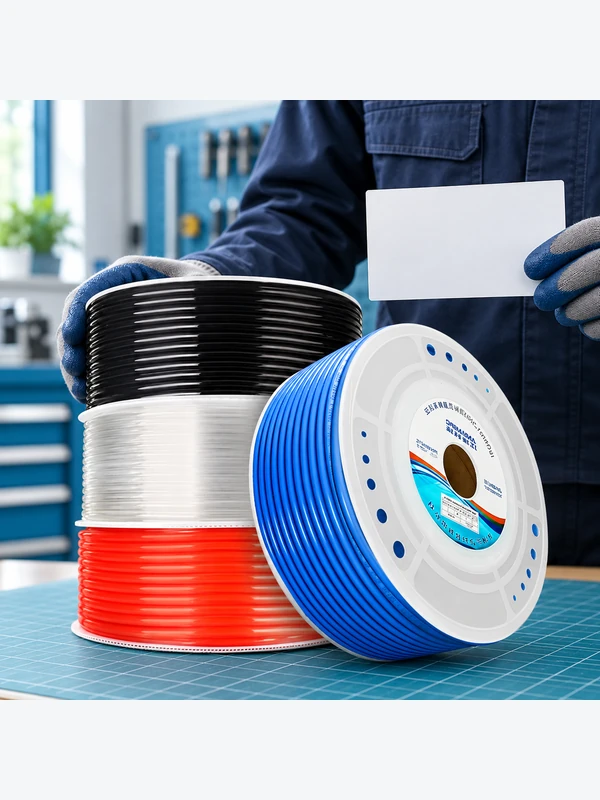
Another significant difference between PU hose and PA hose relates to their temperature and pressure resistance. PA hoses have better high temperature and pressure resistance compared to PU tubes. This makes them suitable for applications where the transfer of hot fluids or gases is involved, as well as for high-pressure systems. On the contrary, PU hoses are not as resistant to high temperatures and pressures, limiting their use in such conditions.
As mangueiras de PU são conhecidas pela sua excelente resistência à abrasão. Conseguem suportar o desgaste, tornando-as ideais para aplicações onde a mangueira entra em contacto com superfícies rugosas ou sofre movimentos frequentes. Esta propriedade das mangueiras de PU garante a sua durabilidade e maior vida útil, conferindo-lhes uma vantagem sobre as mangueiras de PA em termos de longevidade.
Em termos de resistência química, tanto os tubos flexíveis de PU como os de PA apresentam boa resistência a uma vasta gama de produtos químicos. Podem suportar a exposição a óleos, solventes, ácidos e álcalis, tornando-os adequados para várias aplicações industriais. No entanto, é importante notar que a resistência específica a determinados químicos pode variar consoante a formulação do tubo flexível, pelo que é crucial escolher o tipo certo de tubo para a aplicação pretendida.
No que diz respeito à relação custo-eficácia, os tubos de PU tendem a ser mais económicos em comparação com os tubos de PA. Isto torna-os uma escolha popular para aplicações onde as restrições orçamentais são uma preocupação. Além disso, os tubos de PU são relativamente leves, o que torna o manuseamento e o transporte mais fáceis e convenientes.
Em suma, a diferença entre a mangueira de PU e a mangueira de PA reside na sua dureza, resistência à temperatura e à pressão, resistência à abrasão, resistência química e relação custo-benefício. As mangueiras de PU são mais macias, mais flexíveis e oferecem excelente resistência à abrasão, enquanto as mangueiras de PA possuem melhor resistência a altas temperaturas e pressões. A escolha entre ambas depende dos requisitos específicos da aplicação, tais como a temperatura, a pressão e a natureza do fluido ou gás a ser transportado.
How should PU and PA hose be compared at the actual operating temperature?
PU hose, PA hose and the selected fitting system should be specified together. Current engineering guidance puts the emphasis on the actual duty cycle: tube OD and wall, bend radius, movement, temperature, medium and the pressure value at that temperature. PU and PA are useful candidates in different conditions, but neither material label is a universal rating.
| Check before approval | Evidência a solicitar |
|---|---|
| Pressure and temperature | Working rating for the exact size, with derating or temperature limits. |
| Media exposure | Compatibility chart for the actual fluid, concentration and exposure time. |
| Motion and assembly | Bend radius, abrasion guidance, tube tolerance and approved connector series. |
Record these fields in the RFQ and link the chosen tube to the site’s pneumatic parts range. Avoid using burst or test pressure as a continuous operating value.
The practical PU-versus-PA decision starts with temperature, pressure and movement at the same time. Festo describes its standard polyamide PAN tubing with a pressure range that varies by product and notes that polyurethane and polyamide have different chemical and handling behaviour. That is useful selection context, not a universal rating for every compound. Record the exact tube code, outside diameter, wall, temperature and pressure condition in the purchase request.
| Duty question | PU is often investigated when… | PA is often investigated when… |
|---|---|---|
| Routing and motion | Flexibility, compact routing or repeated movement dominate | Dimensional stability and a firmer route are useful |
| Heat and pressure | The exact series confirms the operating envelope | The exact series offers the required temperature or pressure margin |
| Media | The formulation is documented for the actual medium | The formulation is documented for oil, fuel or other specified media |
| Connector fit | OD, wall and hardness match the fitting drawing | OD, wall and hardness match the fitting drawing |
Do not copy a burst value into the working-pressure field. Ratings can change with diameter, wall, temperature, pulsation and the fitting used at each end. A tube may also be chemically compatible in a static chart but fail after repeated exposure, cleaning or flexing. Where the line moves, keep the first bend supported and check abrasion at guides and clamps. Where it is heated, confirm the rating at the actual ambient and medium temperature.
Use a small qualification sample before standardizing a replacement. Measure the tube, assemble the proposed pneumatic fitting system, pressurize within the approved window, and inspect retention and leaks after the representative cycle. Keep the sample ID and test condition with the data sheet. For maintenance teams, the pneumatic maintenance guide provides a related inspection path.
How do fittings, movement and support affect the hose choice?
The tube is only one part of a pneumatic boundary. A flexible PU tube can be damaged by a sharp panel edge, while a stiffer PA tube can transfer side load to a push-in fitting if the route has no support. Check the first bend, clamp spacing, release-ring access and the tube end after a representative cycle. If the fitting seal is compatible but the tube is oval or scored, replacing the connector alone may not solve the leak. Add the hose, connector and support method to the same approved drawing.
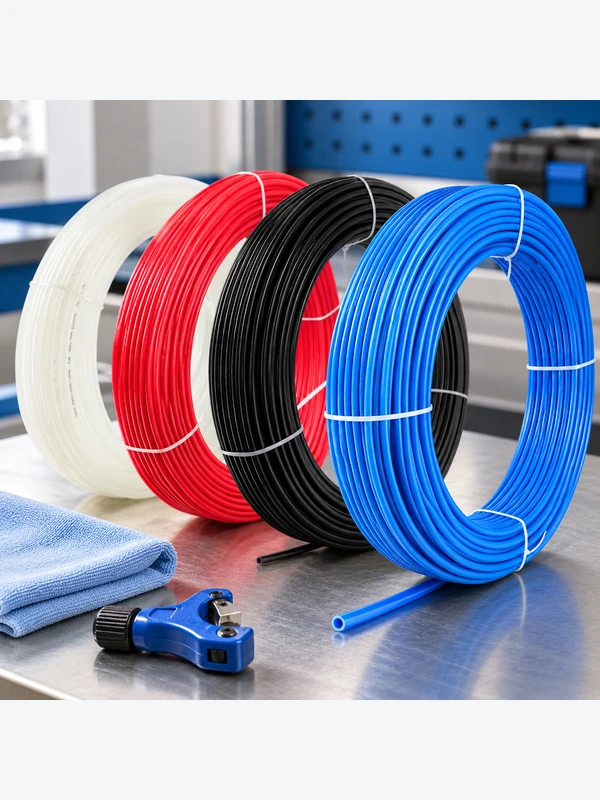
For a repeat order, record colour and marking only as identification fields; they do not prove material or pressure. Ask for the current data sheet and use the exact part number in the maintenance store.
How should a PU or PA replacement hose be approved?
Start with the installed duty rather than assuming that the old hose material is the correct specification. Note where the tube moves, where it rubs against adjacent equipment and where heat or cleaning fluid reaches it. Separate those observations from the nominal material name. A hose selected for a stationary cabinet line may face a different combination of bend, vibration and access requirements when moved onto an actuator.
O hose replacement specification should identify the exact supplier part, outside diameter, wall or inside diameter, medium, operating temperature and pressure, fitting interface and route support. Keep the current product data with the order. When comparing alternatives, ask whether both ratings describe the same size and operating condition; a higher catalogue value for another diameter does not settle the choice. Also check whether the proposed fitting accepts the selected tube material and tolerance.
Use a representative assembly to review access, bending and the agreed leak-check method before changing a complete machine. Record the tube and fitting codes together, inspect the cut end and insertion, and confirm that the line can move without being stretched or pinched. If the service later changes, reopen the comparison instead of treating the original PU-versus-PA decision as permanent. Keep colour and printed markings as identification aids, alongside the technical specification rather than in place of it.
Perguntas frequentes
Can a nominally matching fitting be used for either hose?
Only when the supplier approves the material, OD, wall and tolerance for the exact fitting. A matching nominal size is not enough.
What is the safest way to compare price?
Compare the same duty cycle, replacement interval, fitting family and test requirement; a lower unit price can be offset by early leaks or rework.
Which current source should a buyer keep with the order?
Keep the exact tube datasheet and compatibility chart, plus the fitting drawing and assembly instruction. Parker’s technical catalogue is useful context, but it does not rate every supplier’s tube.
Which hose is more flexible, PU or PA?
PU is commonly chosen for flexibility, but the actual bend radius depends on tube size, reinforcement, temperature and the manufacturer’s data.
Is PA always better for high pressure?
PA often has higher stiffness and may suit demanding pressure conditions, but only the exact size and rating can answer the question.
Which hose resists abrasion better?
PU is frequently considered for moving or rubbing applications, yet verify the abrasion method and service conditions rather than relying on a generic material claim.
How should chemical compatibility be checked?
Identify the actual fluid, concentration, temperature and exposure time, then consult the tube supplier’s compatibility chart.
What should be recorded when ordering replacement hose?
Record material, OD, wall, colour, pressure and temperature conditions, medium, bend or motion requirement, length and fitting code.
Is PU automatically unsuitable for water?
No universal answer is safe. Water chemistry, temperature and the exact PU formulation matter; use the supplier compatibility table for the named tube.
Can PA pressure data be transferred to a different diameter?
No. Pressure values are size- and condition-specific. Confirm the exact tube code and temperature derating before approval.
Referências
- Parker Technical Tubing and Hose – product-specific compatibility and rating context.
- ISO 14743:2020 – official scope for push-in connectors and thermoplastic tubes.
- Festo compressed-air hose selection aid
- Festo pneumatic tubing range
Summary
PU and PA selection is a duty-cycle decision, not a material-name shortcut. Confirm the exact tube dimensions, operating temperature, pressure, medium, movement and fitting interface before comparing suppliers. Then keep the data sheet and assembly method with the order so a replacement uses the same evidence. This process reduces leaks and avoids copying a rating from another size or compound.