
정비 엔지니어는 누유하는 공기 배관을 두 번이나 교체한 뒤에야, 연결 부품이 단순히 나사 규격만으로 선택되었음을 알게 될 수 있습니다. 튜브의 외경(OD), 포트의 나사, 사용 매체, 그리고 작동 압력과 온도 한계 등 모든 요소가 서로 일치해야 합니다. 물리적으로 맞는 푸시인형 연결 부품이라도 회로에는 적합하지 않은 연결일 수 있습니다. 이 안내서는 다음 사항에 대한 답을 제공합니다: 공압 피팅 어떤 피팅이 사용되는지, 각 피팅의 연결 기능은 무엇인지, 그리고 모든 시스템에 하나의 피팅이 적합하다는 전제 없이 이를 어떻게 선택해야 하는지에 대해 설명합니다. 이는 특정 피팅이 모든 기계, 유체 또는 규제된 적용 분야에 적합하다는 주장이 아니라, 일반적인 산업용 및 상업용 압축공기 시스템에 초점을 맞추고 있습니다.
공압 이음쇠는 배관을 연결하고 분기하며, 방향을 정하거나 제어하고, 끝단을 마감하여 압축 공기가 밸브, 실린더, 구동기, 공구 및 계측기로 전달될 수 있도록 합니다. 주문하기 전에 다음 네 가지 사항을 반드시 명시하십시오: 튜브 외경, 포트 나사산, 사용 매체, 그리고 압력/온도 범위입니다. ISO 1219-1은 유압 회로 기호를 해석하는 데 사용되는 표기법을 규정하지만, 특정 이음쇠의 인증을 의미하는 것은 아닙니다. 실제적인 다음 단계는 장비 제조사의 연결 도면을 이음쇠 및 튜브 제조사의 데이터와 비교한 후, 시험 조립품을 검사하여 밀착 상태와 누설 여부를 확인하는 것입니다.
공압 피팅은 작업 시스템의 어디에 사용됩니까?
피팅은 공압 회로가 하나의 부품이나 방향에서 다른 부품이나 방향으로 변경되는 모든 지점에 설치됩니다. 일자형 푸시인 피팅은 튜브를 밸브나 실린더에 연결하고, 엘보는 캐비닛 공간이 제한된 곳에서 배관의 방향을 바꿉니다. 티 또는 매니폴드는 공급 라인을 둘 이상의 분기로 나누며, 벌크헤드 피팅은 패널을 관통합니다. 또한 플러그나 소음기는 사용하지 않는 포트를 막아줍니다. 생산 셀에서는 동일한 회로에 이러한 기능들이 여러 개 포함될 수 있으므로, 피팅은 장식적인 부속품이 아니라 시스템 구성의 일부입니다.
대표적인 적용 분야로는 기계 자동화, 픽앤플레이스 장비, 포장, 조립 지그, 작업장용 공압 공구, 계측기 및 유지보수 패널 등이 있습니다. 적용 분야만으로는 적합성을 판단할 수 없습니다. 오일 미스트, 수증기, 진공, 화학적으로 부식성인 매체, 옥외 노출 또는 비정상적인 온도 등은 재질과 밀봉재의 선택을 변경시킬 수 있습니다. 이러한 이유로 SMC와 Festo의 카탈로그에서는 연결 기술을 튜브, 나사산, 기능 및 사용 환경에 따라 구분하고 있습니다.SMC 이음쇠 및 튜빙 문서; Festo 연결 기술 문서).
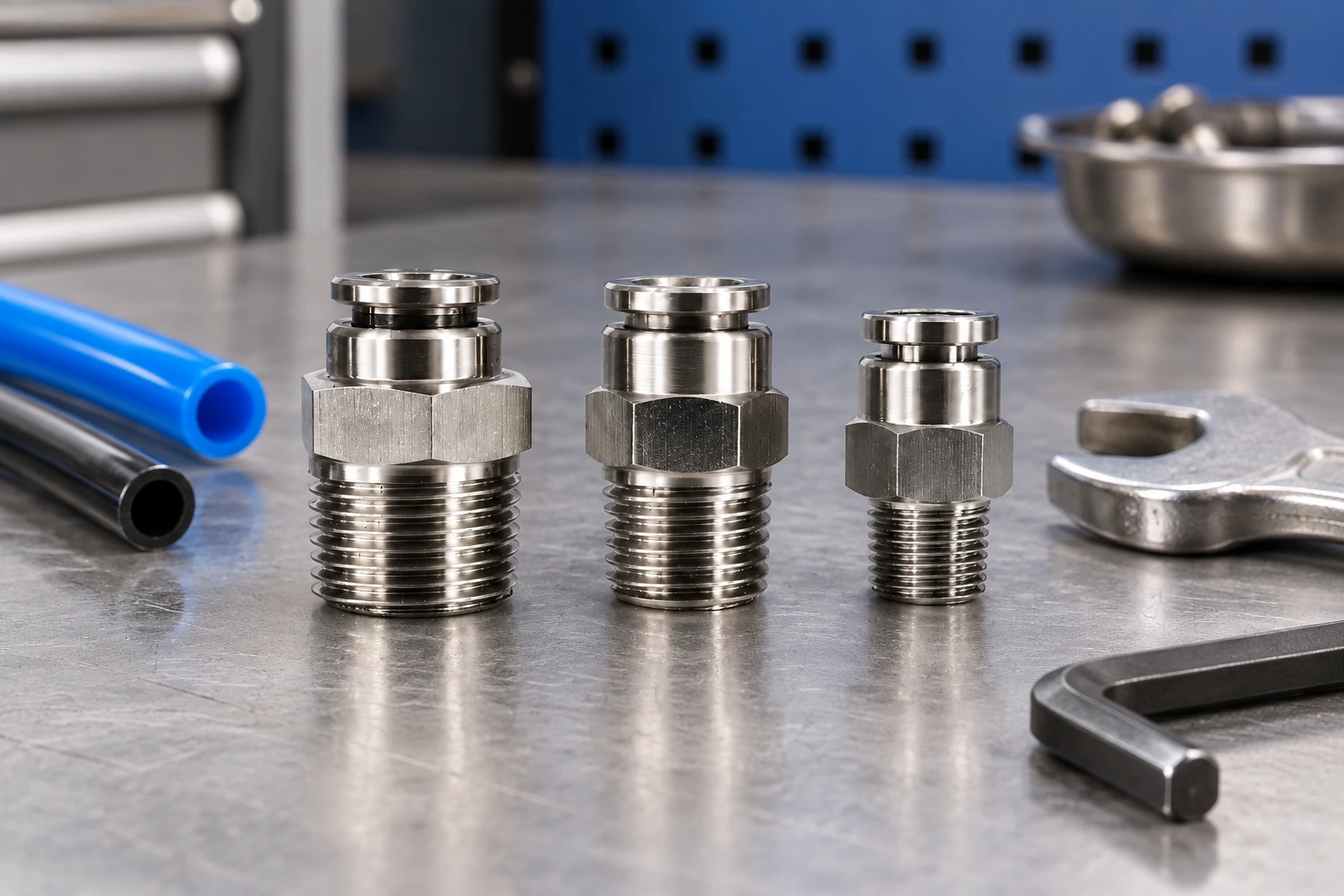
공압 이음쇠는 어떤 연결 기능을 수행하나요?
피팅은 튜브를 부품에 어떻게 연결하나요?
튜브-포트 이음쇠는 유연한 튜브와 밸브, 실린더, 레귤레이터 또는 게이지와 같은 나사산 부품 간의 기계적 고정과 밀봉을 제공합니다. 푸시인 방식에서는 콜레트가 튜브를 잡아주고 내부 씰이 튜브 외면을 감싸며 밀폐됩니다. 튜브는 직각으로 절단하고 버를 제거한 후 제조사에서 권장하는 깊이까지 완전히 삽입해야 합니다. 명목 외경(OD)이 정확하더라도 튜브가 불균일하게 밀착되면 누설이 발생할 수 있습니다.
엘보, 티, 매니폴드는 라우팅을 어떻게 관리하나요?
방향형 이음쇠는 튜브가 권장 반경 이하로 구부러지는 것을 방지하고 포트 부위의 응력을 줄일 수 있습니다. 티와 매니폴드는 공급을 분배하며, 레듀서는 두 가지 지정된 사양 간에 변환을 수행합니다. 튜브 크기s. 배관 라우팅은 여전히 압력 강하와 유지보수 접근성에 영향을 미칩니다. 컴팩트한 엘보는 공간 확보에 도움이 될 수 있지만, 불필요한 굴곡을 추가하면 점검해야 할 이음매가 늘어납니다. 피팅의 형상은 전체 회로의 압력 등급을 변경하지 않으며, 가장 낮은 등급의 구성 요소가 최종적인 제한 기준이 됩니다.
차단형, 격벽형 및 배기형 이음쇠는 언제 유용합니까?
차단 또는 체크 기능은 제품 설계에서 해당 기능이 명시적으로 제공되는 경우에만 브랜치를 격리하거나 역류를 제한합니다. 벌크헤드 피팅은 패널을 관통하는 튜브를 지지하며, 배기 피팅이나 소음기는 밸브의 출구를 관리합니다. 이들은 기능적인 선택 사항이지 서로 바꿔 쓸 수 있는 명칭이 아닙니다. 일반 커넥터가 격리, 유량 제어 또는 소음 저감 기능을 제공한다고 가정해서는 안 됩니다. 회로 문서와 비교하여 심볼과 부품 설명을 확인하십시오; ISO 1219-1는 해당 도면을 해석하는 데 유용합니다.
공압 이음쇠는 어떻게 신뢰성 있는 연결을 형성하나요?
신뢰성 높은 조인트는 유지력, 밀봉성 및 적절한 하중 전달을 동시에 제공합니다. 유지력은 피팅의 클램핑 메커니즘에서 비롯되며, 밀봉성은 엘라스토머 또는 특수 설계된 접합부에 의해 확보됩니다. 하중 전달에는 튜브의 삽입 깊이, 나사 체결 정도 및 진동에 대한 지지가 포함됩니다. 허용되는 경우, 나사산 밀봉제는 반드시 피팅 제조사가 허용하는 부위에만 도포해야 합니다. 과도한 양의 밀봉제가 밸브 내로 유입되거나 의도된 나사 체결 상태를 변경할 수 있기 때문입니다.
신규 설치 시에는 적절한 게이지나 캘리퍼스를 사용하여 튜브 외경을 확인하고, 나사 규격과 성별이 일치하는지 점검하며, 밀봉재 및 본체 재질이 해당 매체를 허용하는지 확인하십시오. 연결이 완료된 후에는 단계적으로 가압하고 현장에서 승인된 누설 검사 방법을 사용하십시오. 눈에 보이는 기포, 압력 감소 또는 소음이 발생하면 공급 압력을 상향 조정하기보다는 해당 회로를 격리하고 접합부를 보완해야 합니다.
어떤 공압 이음부 유형이 일반적인 응용 분야에 적합한가요?
| 장착 방식 | 기본 기능 | 일반적으로 사용되는 곳 | 검증 초점 |
|---|---|---|---|
| 직선 푸시인 | 튜브-나사식 포트 연결 | 밸브, 실린더, 레귤레이터, 컴팩트 매니폴드 | 튜브 외경, 포트 나사산, 밀봉 재질, 압력 및 온도 한계 |
| 엘보 또는 스위블 엘보 | 방향을 변경하고 라우팅 부하를 줄이세요. | 밀집된 기계 패널과 움직이는 액추에이터 라인 | 클리어런스, 굴곡 반경, 회전 한계, 진동 지지 |
| 티, 크로스, 또는 매니폴드 | 하나의 공급 라인을 여러 개의 라인으로 분기 | 고정장치, 그리퍼, 센서 회로, 분배 블록 | 브랜치 유량 요구, 포트 수, 일반 나사 규격 |
| 리듀서 | 지정된 튜브 규격 간의 전환 | 서비스 교체 및 혼합 크기 조립 | 두 관의 외경, 유동 방향, 공간 및 지지대 |
| 벌크헤드 | 패널이나 인클로저에 튜브를 통과시킵니다. | 제어 캐비닛 및 보호된 기계 구역 | 패널 두께, 잠금 너트 접근성, 밀봉 및 인장 완화 |
| 플러그, 캡 또는 소음기 | 포트를 닫거나 배기 관리 | 사용하지 않는 밸브 포트 및 제어형 배기구 | 기능, 배기 흐름, 오염 및 유지보수 접근성 |
이 표는 선택 기준을 제시하는 자료일 뿐, 호환성을 보장하는 것은 아닙니다. 적합한 제품군은 여러 나사 규격이나 밀봉 방식을 사용할 수 있으며, “퀵”과 같은 제품명은 무제한적인 작동 범위를 의미하기보다는 연결 방식을 나타냅니다. 플라스틱 공압 부품 선택 가이드에서는 재질 및 적용 분야에 대한 보다 심층적인 비교 정보를 제공합니다.
튜빙이 기계와 함께 움직일 때 어떤 변화가 발생하나요?
정지형 캐비닛에 장착되는 피팅과 이동식 조립체의 연결부는 동일한 공칭 배관 크기를 가질 수 있지만, 서비스 요구 조건은 다를 수 있습니다. 배관이 굽혀지는 위치와 지지되는 위치를 파악하고, 전체 이동 과정에서 포트 부위가 비틀리는지 확인하십시오. 정적 작동 압력 등급 반복적인 굽힘, 진동 또는 회전에 대한 적합성을 보장하지 않습니다. 사양서에는 해당 동작을 명확히 기재하고, 선택된 부품 제조사로부터 해당 사용 조건에 대한 확인을 받아야 합니다.
세 가지 기능을 구분하십시오: 설치 시 방향 조정이 가능한 피팅 본체, 기계 운동 중에 굴곡되는 튜브, 그리고 연속 회전을 위해 설계된 조인트입니다. 이들은 서로 대체할 수 있는 표현이 아닙니다. 해제 슬리브에서 멀어지는 방향으로 굽히고, 필요한 서비스 루프를 확보하며, 가드 또는 기타 장치가 튜브를 치지 않도록 확인하십시오. 배치 상 표준 포트에 측면 하중이 가해지는 것을 방지할 수 없는 경우, 경로를 재검토하거나 엔지니어링 검토 후 목적에 맞게 설계된 커넥터를 선택하십시오.
통제된 시험 환경에서 실제 조립 상태를 평가하십시오: 튜브의 이동, 간극, 누출, 마모 및 해제 메커니즘에 대한 접근성을 확인합니다. 임의의 사이클 수를 설정하여 이를 내구성 시험이라고 칭하기보다는 관찰 조건과 중단 기준을 명시하십시오. 공압 파이프 커넥터 설치 가이드 준비를 체계적으로 정리하고 점검을 지원할 수 있지만, 특정 가동 연결부에 대한 기준은 제조업체의 동적 적용 데이터가 우선해야 합니다.
구매자는 피팅을 애플리케이션에 어떻게 맞춰야 할까요?
| 애플리케이션 질문 | 고려해야 할 연결 기능 | 구매 전 수집해야 할 증거 |
|---|---|---|
| 실린더에도 컴팩트 튜브 루트가 필요한가요? | 스트레이트, 엘보, 또는 스위블 엘보 | 실린더 포트 나사산, 튜브 외경, 굽힘 반경, 이동 여유 공간 |
| 하나의 공급원이 여러 개의 액추에이터에 전력을 공급합니까? | 티, 크로스, 또는 매니폴드 | 브랜치 수, 동시 수요, 포트 스레드 및 튜브 크기 |
| Must a tube cross a panel? | Bulkhead fitting | Panel thickness, access on both sides, seal and strain-relief requirements |
| Is a line being converted to another tube size? | 리듀서 | Both measured ODs, manufacturer-approved transition, support near the joint |
| Is an unused valve port being closed? | Plug or cap | Port thread, pressure/temperature envelope, future maintenance plan |
| Does exhaust need controlled outlet flow? | Silencer or exhaust fitting | Valve exhaust port, flow requirement, contamination and service conditions |
What must be checked before a pneumatic fitting is approved?
- Measure the tube OD. Nominal labels are not a substitute for the actual outside diameter. Push-in collets and seals are designed around the specified OD and tolerance.
- Identify the thread. Record thread standard, size, gender, and sealing method from the component drawing; do not infer a thread from appearance.
- Name the medium. Clean dry air, lubricated air, vacuum, inert gas, and other media can require different body or seal materials. Confirm chemical compatibility in the product documentation.
- Confirm pressure and temperature. Use the fitting maker’s published limits for the actual temperature, duty cycle, and environment. Never transfer a rating from a different tube, seal, or fitting family.
- Plan installation and maintenance. Leave access for insertion, release, leak inspection, and replacement. Keep tubes supported so vibration is not carried directly into the port.
These checks are especially important when replacing a fitting with a visually similar part. The KQ2 quick-connect coupling guide can help explain a specific quick-connection family, but its details should not be generalized to unrelated series.
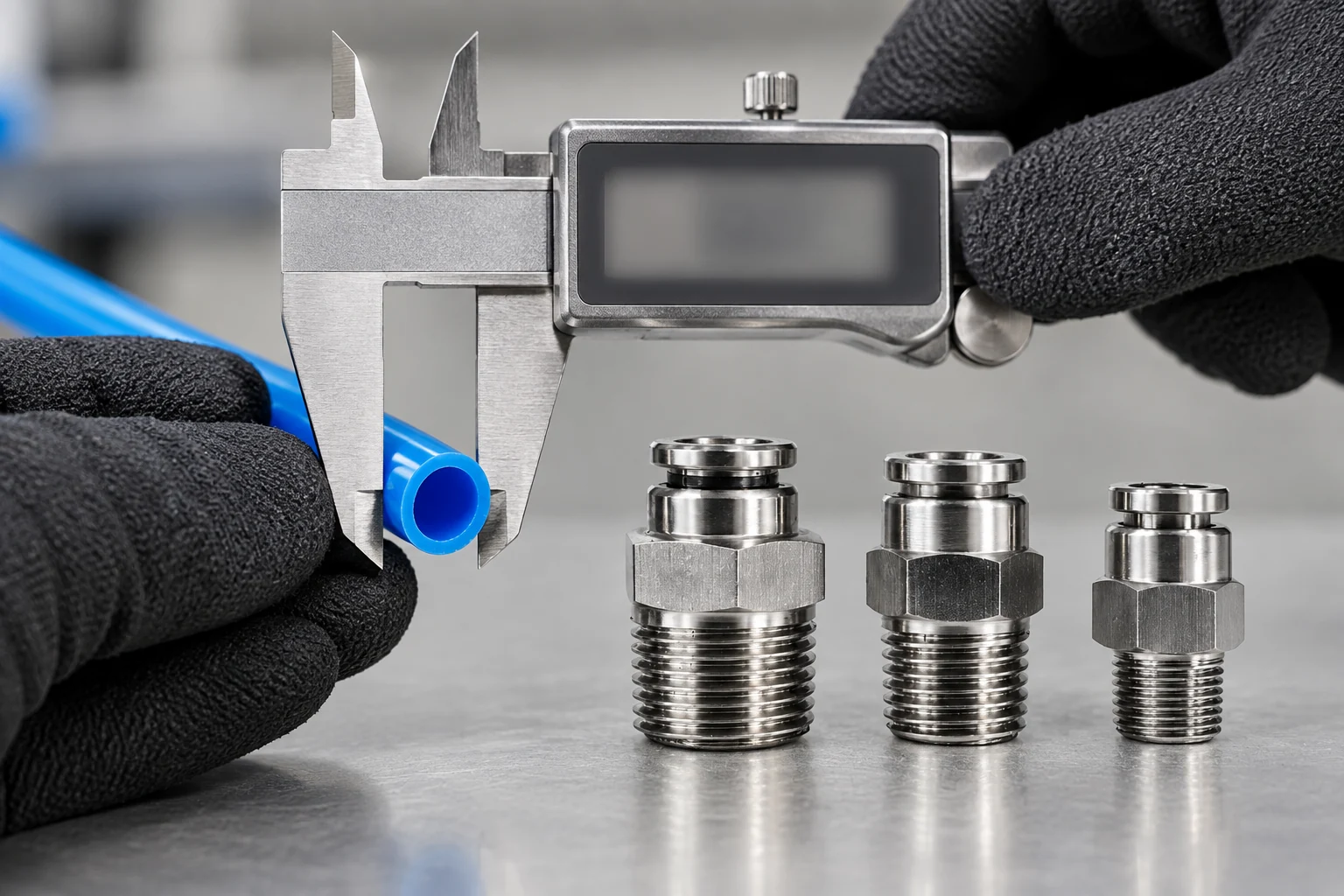
Which standards and documents help verify a fitting choice?
ISO 1219-1:2012 defines graphical symbols and circuit diagrams for fluid power, so it helps a team agree on what a connection is intended to do. It is not a product approval or a pressure test certificate. For the actual fitting, the controlling documents are the manufacturer’s current datasheet, installation instructions, material compatibility statement, and any application-specific regulation or site standard. SMC and Festo catalogs are useful primary product references because they show how tube sizes, threads, fitting functions, and environmental notes are presented; they do not make another manufacturer’s part interchangeable.
Where a machine falls under a local pressure, machinery, food-contact, or hazardous-location rule, the machine builder or responsible engineer must identify the applicable requirement. A generic “industrial use” statement is not evidence of compliance. Keep the selected part number, revision, and verification record with the machine file so a future replacement can be checked against the same boundary conditions.
How can a leak be traced to the right interface?
Mark whether leakage is at the tube seal, threaded port, body or another nearby component. A fitting beside a noisy exhaust may be blamed without being the source. Use the plant’s approved detection procedure and examine the circuit in its relevant operating state. A branch may seal while idle yet show a problem when tubing moves or downstream demand increases. Record that state so the maintenance team can reproduce the observation.
The U.S. Department of Energy’s Minimize Compressed Air Leaks identifies couplings, hoses, fittings, quick disconnects and point-of-use equipment among common leak locations. It also explains that lowering air demand does not automatically produce the maximum electrical saving without appropriate compressor-control response. A repair record should therefore distinguish a local seal correction from a measured system-energy improvement. Do not attach a generic energy-saving percentage to an individual fitting.
Where repeated reconnection leaves grip marks, inspect both the tube end and fitting condition. Follow the supplier’s reuse rules; replace parts with damaged sleeves, bodies or sealing surfaces and investigate the recurring load or contamination. The 공압 부품 유지 관리 가이드 provides related inspection questions for service teams. Keeping failed parts identified by machine zone and lot can reveal a shared routing or assembly issue before another replacement is fitted.
How should pneumatic fittings be maintained after installation?
Maintenance starts with visual inspection for tube scoring, cracked bodies, damaged threads, movement at the port, or contamination around the seal. Isolate and depressurize the branch before releasing a push-in tube; pulling a live line can create a sudden hose movement and damage the collet. Re-cut a damaged tube squarely and replace a fitting when the seal or gripping elements show wear. Avoid reusing a part if the maker’s instructions require replacement after removal.
Record recurring leaks by location and operating condition. A pattern may point to routing strain, unsupported vibration, wrong tube OD, chemical attack, or a pressure and temperature mismatch rather than a random fitting defect. The common pneumatic fitting issues guide provides a practical inspection sequence; site lockout and depressurization procedures remain mandatory.
자주 묻는 질문
Are pneumatic fittings and pneumatic couplings the same thing?
The terms overlap, but usage varies by catalog. “Fitting” often covers tube-to-port connectors, elbows, tees, reducers, and plugs, while “coupling” may describe a connector designed to join or disconnect two lines or components. Check the manufacturer’s part definition and drawing rather than treating the terms as proof of function.
Can I use any push-in fitting with the same tube size?
No. The tube OD is necessary but not sufficient: thread, seal material, medium, pressure, temperature, and fitting series also have to match. Use the tube and fitting manufacturer’s compatibility data and verify a sample connection before releasing a production order.
What is the most common cause of a push-in fitting leak?
Common causes include an incorrect tube OD, an angled or damaged tube cut, incomplete insertion, seal damage, side loading, or a mismatched thread at the component. Isolate the line, inspect the joint, and correct the underlying condition rather than simply tightening an unrelated part.
Do pneumatic fittings work with vacuum as well as compressed air?
Some do, but vacuum service must be stated in the product documentation. Vacuum can change how a seal is loaded and can draw contamination through a poor joint. Confirm the permitted vacuum range, tube material, and connection direction for the selected series.
How do I choose between plastic, brass, and stainless-steel fittings?
Start with the medium, temperature, pressure, corrosion exposure, weight, and installation environment. Plastic may suit a lightweight clean-air circuit, while metal may be selected for mechanical or environmental demands; neither choice is automatically correct without the manufacturer’s data and the application’s requirements.
When should a pneumatic fitting be replaced instead of repaired?
Replace it when the body, thread, collet, seal, or tube contact surface is damaged, when leakage returns after the verified installation checks, or when the service conditions have changed beyond its documentation. If the root cause is unknown, stop the branch and review OD, thread, medium, pressure, temperature, and routing before installing another part.
Can a normal push-in fitting be used on a moving axis?
Only within its documented application limits. Describe the tube motion, support, vibration and environment to the supplier. A body that swivels for alignment is not proof of suitability for continuous rotation or repeated tube articulation.
Does repairing one air leak prove that electricity use has fallen?
No. It can reduce local air loss, but electrical consumption also depends on compressor controls and operating demand. Verify air use and electrical use at defined boundaries before reporting a measured energy saving.
참고문헌
- SMC, KQ2 one-touch fitting catalogue: tube retention, sealing and connection configurations
- 미국 에너지부, 압축공기 누출 최소화, 팁 시트 3
요약
Pneumatic fittings connect, route and adapt an air circuit, but their suitability depends on the complete application. Match tube dimensions and material, port thread, medium and operating conditions before considering the connection shape. Then check movement, support and access throughout the machine cycle. A push-in connection should never be assumed to provide automatic shutoff, continuous rotation or a universal reuse allowance. When a leak occurs, identify the interface and operating state before replacing parts, and separate a local repair from an unmeasured energy-saving claim. Oulu’s 공압 부품 범위 can support a documented selection process when the exact connection requirements and model-specific limits are provided for review.



