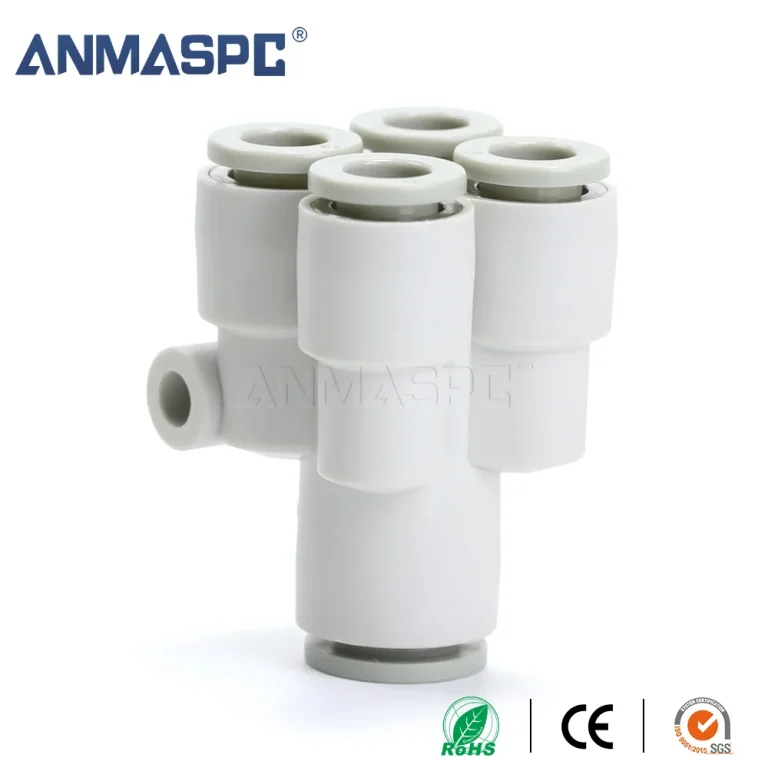
KQ2 Series Pneumatic Quick-Connect Couplings: The Cost-Effective Alternative for Industrial Excellence
By Oulu
KQ2 seriespneumaticquick-connect couplings are designed for distributors, panel builders and maintenance teams that need dependable tube connections without adding unnecessary complexity to their inventory. The range combines a compact push-to-connect structure with practical material options, helping industrial air-line projects move from specification to installation with confidence.
For buyers replacing common pneumatic fitting systems, a clear selection process matters as much as unit cost. The following guide explains how KQ2-style couplings support routine compressed-air applications, what to check before ordering and how to build a practical purchasing specification for your project.
Why choose KQ2 series quick-connect couplings?
A quick-connect coupling should make installation easier while maintaining stable holding force and a consistent seal. KQ2 series fittings are intended for compact pneumatic circuits where technicians need fast tube insertion, simple release and an orderly installation layout.
Reliable day-to-day installation
Push-to-connect operation: Insert the tube to the marked depth and the internal gripping mechanism secures it in place.
Compact body profile: Suitable for control cabinets, machine frames and other locations where fitting clearance is limited.
Simple tube release: Press the release sleeve evenly before removing the tube to support clean maintenance work.
Flexible direction options: Straight, elbow, tee and branch configurations help keep pneumatic lines organized.
These features make the series suitable for machine builders that need a common fitting family across equipment assembly, service replacement and OEM projects.
Material and sealing considerations
Fitting performance depends on more than the body shape. Tube material, operating environment and air quality all influence long-term sealing behavior. Before purchasing, confirm the tubing outside diameter, thread type, working pressure range and media compatibility for the intended application.
A correct tube cut and full insertion depth are essential for reliable sealing. A fitting cannot compensate for damaged tubing, uneven cuts or an incompatible tube outside diameter.
Points to verify before installation
Tube condition: Use clean, round tubing with a square cut end. Remove burrs that could affect the seal or gripping mechanism.
Thread standard: Confirm whether the connection requires BSPP, BSPT, NPT or another applicable specification.
Working medium: Verify that the fitting, seal and tube are suitable for compressed air, vacuum or the selected inert gas application.
Temperature and pressure: Check your system requirements against the approved product data before use.
Typical configuration guide
Configuration
Typical use
Selection point
Straight union
Connects two tubes in one continuous run
Confirm both tube outside diameters
Male elbow
Changes tube direction at a threaded port
Confirm thread type and swivel clearance
Branch tee
Splits one air line into two tube routes
Match all three tube sizes
Bulkhead union
Passes a tube connection through a panel
Check panel thickness and mounting-hole size
Reducer union
Connects different tube outside diameters
Verify the flow requirement for the smaller line
When a project includes multiple machine zones, standardizing the tube sizes and thread types can reduce the number of fitting variants that need to be stocked. This also makes replacement parts easier for service teams to identify.
Applications in pneumatic systems
KQ2 series couplings can be specified for a broad range of low-to-medium pressure pneumatic circuits, provided the final application is reviewed against the product data. Common examples include:
Automation equipment and pick-and-place systems
Packaging, labeling and conveying machinery
Air preparation units and valve manifolds
Testing fixtures and workshop air lines
OEM control panels and machine retrofits
How to compare replacement fittings
When comparing a KQ2-style coupling with an existing fitting, start with the mechanical interface rather than the product name. Equivalent-looking fittings may use different thread geometry, tube tolerance or sealing materials. A side-by-side review avoids unnecessary rework after delivery.
Recommended comparison checklist
Tube outside diameter and tubing material
Port thread designation and effective thread length
Overall installation envelope and wrench clearance
Required operating pressure, vacuum level and temperature range
Media, environmental exposure and maintenance frequency
Packaging quantity, labeling and traceability requirements
For critical replacement projects, preparing a sample request with clear dimensions and application notes is often the most efficient way to confirm compatibility before placing a volume order.
Procurement and OEM support
Professional buyers usually need more than a single fitting reference. A complete quotation can group related couplings, adapters and tube accessories into a structured item list, making it easier to review quantities, packaging and delivery requirements.
Support for project-based purchasing
Oulu can assist with product matching, sample evaluation, specification clarification and export-oriented packing requirements. For OEM orders, the purchasing team can also discuss selected materials, thread combinations, color identification and carton labeling according to the confirmed production plan.
Installation and maintenance tips
Good installation practice helps fittings perform consistently throughout the service cycle. Keep tube ends clean, avoid sharp bends close to the coupling and inspect pneumatic lines regularly in areas subject to vibration or frequent movement.
Cut tubing squarely with an appropriate tube cutter.
Insert the tube fully until it reaches the internal stop.
Do not pull the tube before confirming that the release sleeve has returned to its normal position.
Release the tube by pressing the sleeve evenly and withdrawing the tube in a straight direction.
Replace worn, scratched or deformed tubing before reconnecting it.
Request a quotation
To prepare an accurate quotation, provide the fitting configuration, tube size, thread standard, estimated quantity and the intended operating conditions. If you are replacing an existing component, include clear photos or dimension drawings so the engineering team can review the connection details before confirming the recommended option.
What current KQ2 selection data changes for pneumatic buyers
Updated selection note: SMC’s current KQ2 catalog presents a broad one-touch range and states that the series can be used in vacuum down to −100 kPa, while also describing multiple body configurations and thread options. These are catalog-level signals, not a universal rating for every KQ2 variant. Buyers should confirm the exact model, tube OD, thread standard, seal material, pressure direction, temperature and media before comparing alternatives. The official SMC KQ2 reference is the right place to verify the selected code.
Project question
Evidence to request
Why it matters
Will the tube stay retained?
Approved tube OD and insertion-depth instruction
A push-in body cannot compensate for an incorrect tube size or an unseated tube.
Will the fitting suit the circuit?
Working pressure, vacuum direction, temperature and media limits for the exact code
Family-level marketing language is not a substitute for model-level data.
Will maintenance be repeatable?
Release procedure, spare seal policy and inspection interval
Repeatable servicing reduces accidental tube damage and unplanned downtime.
A useful 2026 buying trend is the move from “fastest installation” to traceable installation: record the tube material, cut condition, insertion check and leak result for each machine zone. That record is more valuable than choosing by body shape alone, especially when an OEM mixes compact cabinets, moving axes and vacuum pick-and-place circuits.
Frequently asked questions about KQ2 pneumatic quick-connect couplings
What does KQ2 mean in a pneumatic fitting order?
KQ2 identifies a one-touch fitting family. The suffix still determines the body style, thread, tube size and material, so the full ordering code is required.
Can every KQ2 fitting be used for vacuum?
No. Confirm the vacuum direction and limit for the exact model in the current manufacturer catalog before using it in a vacuum circuit.
How should a tube be prepared before insertion?
Use a clean, square cut, remove burrs, insert to the specified stop and pull back gently to confirm retention. Follow the fitting instruction for the selected tube.
What should replace a leaking KQ2 fitting?
First isolate whether the leak is at the tube cut, fitting seal, thread or downstream component. Replace the damaged seal or fitting with the same approved specification rather than a visually similar code.
Does a compact fitting always improve a machine design?
Compact dimensions can help in crowded panels, but bend radius, access for release, tube movement and service clearance still control the layout.
What information should a buyer send for a quotation?
Send the full fitting code or drawing, tube OD and material, thread standard, pressure/vacuum condition, temperature, medium and expected quantity.