
사례로 제시된 시나리오이며, 실제 고객 사례는 아닙니다. 심천의 한 제어 엔지니어가 개방 속도가 느린 밸브를 교체했을 때, 새 코일은 전원이 공급되었지만 액추에이터는 여전히 작동하지 않았습니다. 간단한 압력 검사 결과, 선택된 파일럿 작동식 설계가 장치가 필요로 하는 차압을 제공하지 못한다는 사실이 드러났습니다. 겉으로 보이는 고장은 불량 밸브처럼 보였지만, 근본 원인은 제품 분류와 사양 설정에 있었습니다. 이러한 구분이야말로 적절한 선택을 위한 실질적인 출발점입니다. 솔레노이드 밸브 유형.
솔레노이드 밸브s는 일반적으로 세 가지 운영 계열로 분류됩니다: 직접 작동식, 반직접식(단계식) 및 파일럿 작동식. 첫 번째 선택 기준은 “어떤 밸브가 가장 저렴한가?”가 아니라 “이 설계가 제공되는 압력에서, 요구되는 오리피스, 유체, 전압 및 고장 위치 조건 하에 신뢰성 있게 개방되는가?”입니다. ISO 4414:2010는 공압 유체 동력 시스템을 위한 안전 프레임워크를 제공하며, 미국 에너지부는 압축공기를 무료로 제공되는 자원이 아닌 관리 대상 시스템으로 간주할 것을 권고합니다. 먼저 문서화된 작업 조건을 설정하고, 제조업체의 압력 및 매체 한계를 확인한 다음, 설치, 전기 제어 및 유지보수 접근성을 점검하십시오.
솔레노이드 밸브의 세 가지 주요 유형은 무엇입니까?
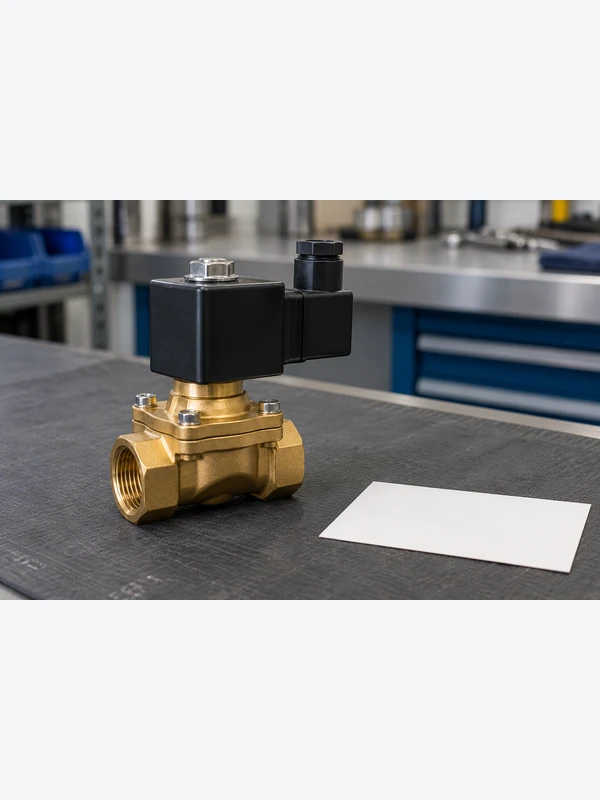
솔레노이드 밸브는 전원이 인가된 코일을 사용하여 플런저, 다이어프램 또는 피스톤을 이동시켜 유체의 흐름 경로를 변경합니다. 작동 방식 계열은 개방력의 어느 정도가 전자기 액추에이터에서 직접 발생하고, 어느 정도가 내부 파일럿 통로를 통해 작용하는 유체 압력에 의해 발생하는지를 결정합니다. 아래의 세 가지 계열은 제품의 보편적인 등급이나 인증을 의미하는 것이 아니라 작동 원리를 설명한 것입니다.
| 유형 | 개폐력은 어떻게 생성되는가 | 압력 의존성 | 전형적인 선택 질문 |
|---|---|---|---|
| 직접 작동식 | 코일이 닫힘 요소를 직접 들어올리거나 이동시킵니다. | 특정 설계에 따라, 차압이 거의 또는 전혀 없는 경우에도 적합할 수 있습니다. | 코일이 최대 압력 및 유체 조건 하에서 필요한 오리피스를 이동시킬 수 있습니까? |
| 반직접 / 단계별 | 코일이 파일럿 동작을 시작하고, 이후 메인 부품은 압력 차를 이용합니다. | 일부 설계는 차압이 0일 때부터 작동할 수 있습니다. 제조사가 명시한 한계와 장착 지침을 반드시 확인하십시오. | 해당 라인은 무압 시동이 필요한가요? 또한 설치 방향이 지정되어 있나요? |
| 파일럿 작동식 | 코일이 파일럿 통로를 열고, 라인 압력이 메인 다이어프램 또는 피스톤을 작동시킵니다. | 데이터 시트에 명시된 최소 차압이 필요합니다. | 입구 압력과 유량이 조정 밸브의 작동 범위 내에 유지될까요? |
제공된 제품 설명은 해당 계열 내에서도 다이어프램형과 피스톤형 구조를 구분합니다. 이는 두 번째 분류 기준으로, 재질, 밀봉 방식, 유체 적합성 및 오염 내성에 따라 동일한 작동 원리를 가진 두 밸브라도 올바른 선택이 달라질 수 있습니다.
직접 작동 방식은 파일럿 작동 방식과 어떻게 다릅니까?
직동식 밸브에서는 전원이 인가된 코일이 폐쇄 부재를 시트에서 들어올리는 데 필요한 동작을 제공합니다. 전원이 차단되면 스프링 또는 지정된 복귀 메커니즘이 부재를 원위치로 되돌립니다. 작동이 국부적으로 이루어지므로, 이 설계는 낮은 압력차 또는 무압력차 조건에서도 유용할 수 있지만, 가용 자력, 오리피스 크기, 온도 및 점도 주기는 여전히 제한 요인으로 작용합니다.
유압식 밸브는 회로에 이미 존재하는 압력을 이용합니다. 코일에 전원을 공급하면 작은 파일럿 경로가 열리고, 이로 인한 압력 불균형이 메인 차단부를 움직입니다. 이를 통해 코일이 메인 부품 전체를 직접 들어올릴 필요 없이 더 큰 유량 경로를 지원할 수 있지만, 무압 상태에서도 작동한다고 가정해서는 안 됩니다. 가압된 매니폴드에서는 정상적으로 작동하는 밸브라도, 시운전, 진공 상태 또는 저압 세정 중에는 최소 차압 조건을 충족하지 못하면 개방되지 않을 수 있습니다.
왜 오리피스 크기가 중요한가요?
오리피스는 유체가 통과하는 조절 가능한 개구부입니다. 이를 확대하면 유량 용량이 향상될 수 있지만, 직접 작동식 메커니즘에 필요한 힘도 증가하며, 파일럿 방식의 경우 최소 필요 압력이 달라질 수 있습니다. 포트의 나사산 크기만으로 용량을 추정하지 마십시오. 정확한 모델의 경우 제조사가 제공하는 유량 계수, 압력 범위, 사용 가능 매체 및 온도 데이터를 비교하십시오.
입구 압력과 출구 압력이 같아지면 어떻게 되나요?
밸브를 시동, 정상 유량, 폐쇄 및 모든 등압 상태에서 평가하십시오. 내부식 작동 방식의 설계는 특정한 최소 압력 차 작동하려면. 사용 가능한 압력 차이는 콘센트가 가득 차거나 회로가 닫히거나 공급이 감소하면 사라질 수 있습니다. 공칭 공급압력 값만으로는 주기의 해당 시점에서 파일럿 장치가 작동할 수 있는지 여부를 알 수 없습니다.
직동식 설계는 동일한 방식으로 내부 유도 압력에 의존하지 않고 액추에이터를 통해 밀봉 부품을 직접 이동시킵니다. Festo의 공개 VZWD 제품 페이지에서는 해당 라인업을 직동식으로 명확히 표기하고, 압력 차가 필요하지 않다고 명시하고 있습니다. 이는 유용한 문서화된 사례일 뿐, 모든 직동식 밸브를 어떤 매체, 유량, 진공 수준 또는 역압에도 무조건 사용할 수 있다는 일반적인 허용을 의미하지 않습니다. 최종 제한 사항은 여전히 정확한 코드에 따라 결정됩니다.
내부식, 외부식 및 보조 리프트 방식의 설계를 구분하십시오. 외부 공급형 파일럿은 공정 라인과 다른 공급 요구 사항을 가질 수 있습니다. 기계식 보조 리프트 방식은 차압이 0일 때도 작동하도록 문서화되어 있을 수 있지만, 구매자는 해당 모델에 대해 이 내용을 반드시 확인해야 합니다. 밸브는 리셀러의 포괄적인 표기만으로 판단하지 말고, 제조사의 기능 설명과 회로 기호를 기준으로 분류하십시오.
실제 자동화 회로에는 어떤 밸브 분류가 적합한가요?
부품 번호를 선택하기 전에 작업 조건을 간략한 데이터 시트로 작성하면 선택이 더욱 신뢰성 있게 이루어집니다. 사용 매체, 정상 압력 및 최대 압력, 요구 유량, 온도, 사용 가능한 전원 공급, 스위칭 주파수, 응답 요구 사항, 포트 배치, 그리고 전원 또는 공기가 차단된 후 기계가 수행해야 할 동작을 기록하십시오. ISO 4414:2010는 시스템 수준의 안전성을 고려할 것을 요구하며, 밸브는 저장된 에너지, 배기 경로 및 해당 밸브가 제어하는 액추에이터와 분리하여 단독으로 선택해서는 안 됩니다.
| 디자인 치수 | 기록할 것 | 왜 선택을 바꾸는가 | 인증 조치 |
|---|---|---|---|
| 중간 | 공기, 물, 가스, 오일, 증기 또는 기타 지정된 유체 | 씰 및 본체 재료, 윤활 조건과 오염 허용 한계는 서로 다릅니다. | 매체를 정확한 호환성 차트에 맞추고, 공압 관련 목록을 일반화하지 마십시오. |
| 압력 | 최소, 정상 및 최대 입구 압력; 해당되는 경우 출구 압력 | 파일럿 작동식 설계는 명시된 차압이 필요하며, 직접 작동식 설계에는 힘과 압력 한계가 있습니다. | 작동 범위와 필요 최소 차압을 모두 확인하십시오. |
| 흐름 경로 | 오리피스, 포트 배치 및 요구 유량 | 오리피스는 용량, 코일 힘 및 압력 강하에 영향을 미칩니다. | 포트 크기만이 아니라 모델 데이터 시트와 시스템의 유량 계산을 사용하십시오. |
| 실패 위치 | 정상적으로 닫혀 있음, 일반적으로 열려 있는 상태 또는 기타 정의된 안전 상태 | 전력 손실, 제어 로직 및 유지보수 격리는 복귀 상태에 따라 달라집니다. | 전원 공급 및 압력 손실 시의 위험성 평가와 기계 작동 순서를 검토하십시오. |
| 전기 작업 | Coil voltage, AC/DC, connector, duty cycle and switching frequency | An incorrect coil can overheat, chatter or remain unenergized. | Check the coil label, wiring, suppression and controller output before commissioning. |
How should engineers compare the total cost of each type?
Unit price is only one line in the decision. A valve that requires a pressure differential may need a different start-up sequence; a direct-acting valve may trade a simpler pressure requirement for a smaller flow path or higher coil demand. Maintenance time, spare-part identity, access to the coil, air quality, leakage checks and unplanned downtime all belong in the total-cost discussion. The DOE compressed-air sourcebook emphasizes finding and correcting system losses, so include leakage and unnecessary energization in the operating review rather than attributing every loss to the valve body.
For a new machine, compare at least two technically valid options using the same duty point. For a replacement, preserve the existing connection and control intent only after confirming that the new valve’s pressure, flow, response and fail state are equivalent for the application. “Fits the thread” is not an engineering equivalence test.
What standards and checks should govern specification?
ISO 4414:2010 covers general rules and safety requirements for pneumatic fluid-power systems and their components. It is a system safety standard, not a blanket product certification. ISO 12100 principles are useful when the valve is part of machinery risk assessment, although the supplied reference list does not establish a certification claim for any particular component. IEC 60730-2-8:2018 addresses particular requirements for electrically operated water valves; its scope should be checked against the actual medium and application before it is cited.
Commercial documentation should state the applicable market, medium and test basis. A standard reference does not prove that a specific model is certified, and a supplier’s catalog statement does not replace a review of the final assembly. Ask for the current data sheet, wiring information, pressure limits, material details and any test or conformity documents that are relevant to the destination market.
How should startup and shutdown be included in the valve test?
Write a short sequence describing inlet pressure, outlet condition and command state before energization, during normal operation and after power removal. Include low-pressure startup and any back-pressure condition that belongs to the real process. The intended de-energized valve position should be recorded, but do not equate normally closed with a validated safe machine state: stored pressure, load movement and other circuit elements still require a separate safety assessment.
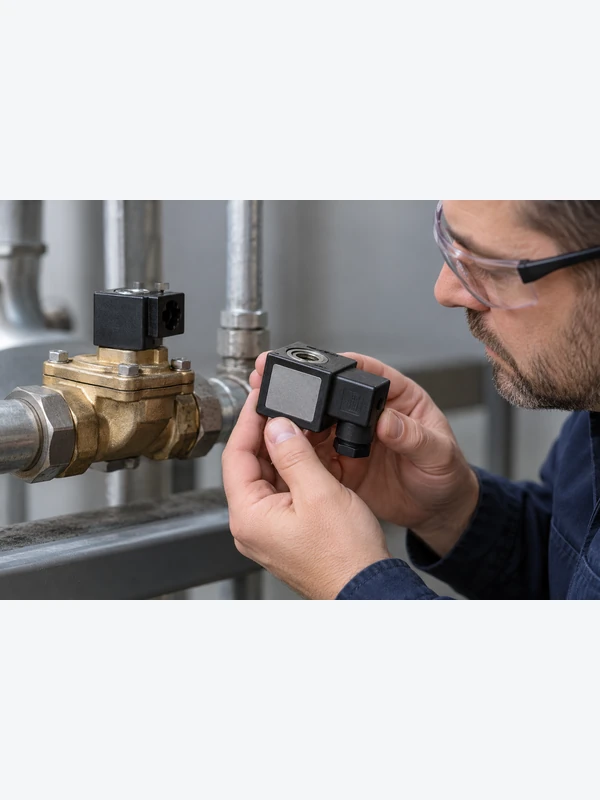
Record the full assembly reference, coil voltage and AC/DC type, electrical connector, permitted duty and installation orientation. A coil that fits mechanically is not sufficient evidence for electrical interchangeability. Check the current manufacturer documentation before replacing the coil, and do not operate a detached coil unless its instructions explicitly permit that action. Isolation must address both electrical energy and the relevant pressurized medium.
For acceptance, compare actual switching and leakage with the defined procedure and limits. If a valve works once at full supply but fails during repeated startup, record the inlet and outlet conditions rather than only replacing the coil. The pneumatic cylinder mechanics guide helps where valve behavior affects an actuator, and the 공압 부품 유지 관리 가이드 covers adjacent connection problems. Keep those diagnoses separate so a leaking port or restricted exhaust is not misclassified as a solenoid fault.
What is a practical five-step selection process?
- Define the duty point. Write medium, minimum and maximum pressure, temperature, flow, porting, voltage and switching pattern.
- Choose the operating family. Use direct-acting when the pressure and orifice duty suit direct force; consider semi-direct or pilot operation only after verifying pressure conditions.
- Confirm the fail state. Document normally open or normally closed behavior and the machine response to loss of power, air or signal.
- Check the installation. Confirm orientation, manifold spacing, exhaust routing, coil access, contamination control and service isolation.
- Validate before release. Bench-test the exact configuration at the real pressure and temperature range, then record the part number and replacement criteria.
Oulu / ANMASPC lists pneumatic fittings, hoses, cylinders, valves and related pneumatic parts. Treat that category as a sourcing starting point; request the model-specific documentation needed for the application rather than assuming that a catalog family carries one common rating. The products directory can help narrow the component family before engineering review.
자주 묻는 질문
솔레노이드 밸브의 세 가지 주요 유형은 무엇입니까?
The three main operating families are direct-acting, semi-direct or step-by-step, and pilot-operated. They differ in how the coil and line pressure move the closing element. Confirm the exact construction and pressure limits in the manufacturer’s data sheet.
What is the difference between direct-acting and pilot-operated solenoid valves?
Direct-acting valves use the coil to move the main closing element directly. Pilot-operated valves use the coil to open a small pilot passage, then use a pressure differential to move the main element. The latter therefore needs the stated minimum differential pressure.
Can a pilot-operated solenoid valve work at zero pressure?
Do not assume so. Some semi-direct designs can start at zero differential pressure, but a conventional pilot-operated design normally depends on pressure imbalance. Check the specific model’s minimum differential pressure and test the start condition during commissioning.
How do I choose a normally open or normally closed solenoid valve?
Choose the state that gives the required machine behavior when the coil is de-energized, then confirm it against the risk assessment and sequence of operations. Consider both loss of electrical power and loss of supply pressure; the safest state is application-specific.
What should be checked before replacing a solenoid valve coil?
Check voltage, AC or DC type, connector, power and duty cycle, coil temperature limits, suppression and the valve’s compatibility with the replacement coil. A coil that physically fits may still be electrically incorrect. Record the original part marking and compare it with the replacement documentation.
Why does a solenoid valve buzz or fail to open?
Possible causes include incorrect voltage, loose wiring, a contaminated plunger, excessive pressure, insufficient pilot differential, wrong orientation or a damaged seal. Isolate energy safely, verify the electrical supply and pressure against the data sheet, and inspect the complete circuit before replacing parts.
Does every pilot-operated valve need process pressure to open?
No single rule covers all pilot arrangements. Internally piloted, externally piloted and mechanically assisted designs can have different requirements. Check the exact model’s minimum differential and pilot-supply conditions.
Does normally closed mean the whole machine is safe after power loss?
No. It describes the valve’s specified normal state, not the safety of the complete machine. Consider trapped pressure, gravity loads, downstream volume and the validated circuit response to power removal.
참고문헌
- Festo, Solenoid valve VZWD: directly controlled function and no-pressure-difference requirement; manufacturer-specific example
- U.S. Department of Energy, Minimize Compressed Air Leaks: valves and connection points in the system
요약
A solenoid valve should be classified by both its flow function and its actuation method. Establish the medium, flow requirement and inlet-to-outlet pressure conditions through the complete cycle before choosing direct actuation, an internal pilot or another documented arrangement. Check minimum differential, reverse-pressure restrictions and the exact coil specification instead of treating port size or voltage alone as compatibility. Include startup, shutdown and the intended de-energized state in acceptance, while keeping the machine’s safety assessment separate from a normally open or normally closed label. Oulu’s pneumatic range can be reviewed against that written specification, with current model documentation obtained before approving a valve or replacement coil.



