When a telecom contractor in Manchester encountered repeated fiber-blowing stoppages on a new business-park route, the crew first replaced the blowing machine and then increased compressor output. Within minutes, a pull rope again jammed at a bend and water appeared at an open duct end. The reversal came when the planner checked the route records: the issue was not a defective machine, but an underspecified duct system—tight bends, inconsistent bore, and unsealed joints had undermined the installation before cable work began.
សេចក្តីសង្ខេប៖ Choose the duct around the cable-installation method, route geometry, and water-control plan—not just nominal diameter. For blown-fiber networks, a smooth bore and controlled bends often matter more than a lower duct price; ISO 14520-1 distinguishes requirements for plastic cable-duct piping systems. Specify the duct, couplers, end seals, and acceptance tests together, then confirm documented dimensions before mobilization.
Start with the installation scenario, not a catalogue size
These plastic air ducts are polymer conduits that create a protected, low-friction path for air-assisted cable or fiber installation. In telecom work, they may be direct-buried ducts, subducts inside larger conduits, or smaller microduct pathways that allow later capacity additions.
First define whether the route will carry power, communications cable, or air-installed microcables. A utility corridor may prioritize crush resistance and cable pulling; a fiber access network typically prioritizes controlled inside diameter, a low-friction inner surface, and route continuity. ISO 14520-1 covers buried and above-ground plastic cable ducts; it is a system standard, not proof that every duct suits every blowing distance or soil condition.
Route geometry gives the next constraint. Record the internal diameter, length, bend radius, elevation changes, access points, and cable outside diameter. The cable must retain adequate annular space for airflow, so the equipment manufacturer’s cable-to-duct guidance should govern the final ratio. A 10 mm microcable in a nominal 14/10 mm microduct leaves far less airflow margin than the same cable in a larger bore.
Match material and construction to the installation method
HDPE microducts are commonly selected because high-density polyethylene combines flexibility, impact resistance, corrosion resistance, and a smooth internal pathway. Consider the complete assembly: duct wall, internal low-friction layer where specified, couplers, seals, and closures. A good duct can still perform poorly if a connector introduces a step, ovality, or air leak.
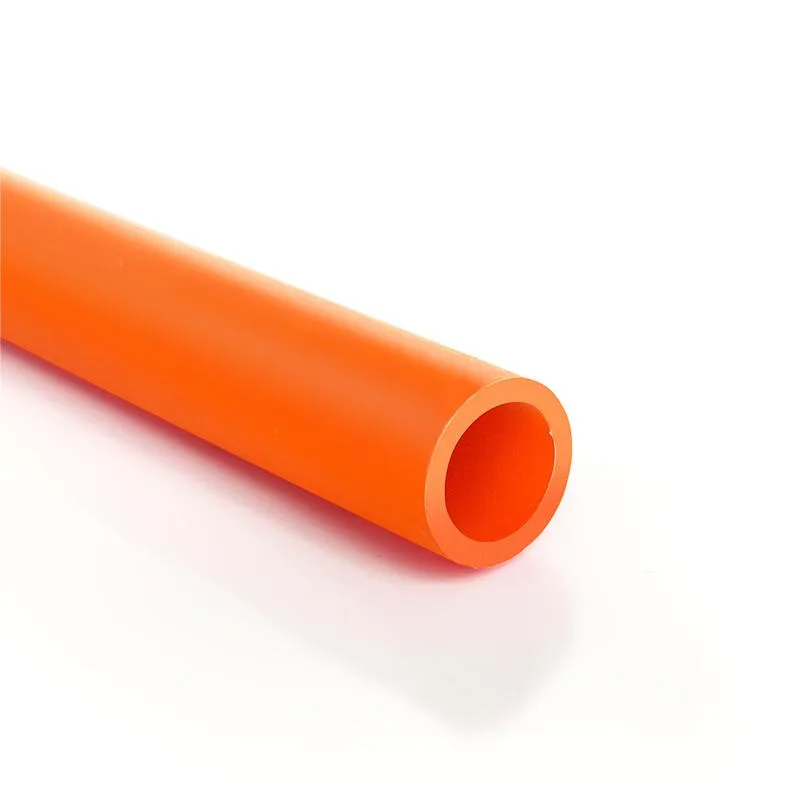
For an air-blown fiber route, air containment and friction management work together. Leakage reduces pressure at the cable; roughness, debris, and tight bends raise resistance. ASTM F2160 measures unrestrained linear thermal expansion of polyolefin pipe and tubing. It can indicate movement risk in exposed applications, but does not certify blowing performance. Specifications should define pressure, lubricant policy, cleaning, and proof testing.
The lowest unit-cost duct may create the highest route cost if it requires access pits, cable retrieval, or rework after a failed blow. Illustratively, avoiding one extra excavation and crew return can outweigh a modest material saving. Include expansion capacity, joint reliability, delivery lengths, and traceability in the total-cost review.
| Approach | Best fit | Installation performance | Maintenance and TCO tendency |
|---|---|---|---|
| Large utility duct | Mixed services or pulled cables | Space for subducts; performance depends on internal condition | Higher civil material footprint, but can support future segregation |
| Single HDPE duct | Dedicated cable route | Flexible routing; verify bore and bend control | Moderate initial cost; replacement can be disruptive if capacity is exhausted |
| Multiway microduct bundle | FTTx expansion and staged connections | Separate pathways help isolate later installations | Often higher initial specification effort, with lower disruption for adds and changes |
Size the pathway from cable, air, and civil constraints
Duct sizing is a system calculation, not a nominal-diameter lookup. Start with the supplier’s measured inside diameter and cable manufacturer’s maximum outside diameter, then account for couplers, bends, and the blowing equipment’s operating window. Longer routes generally benefit from stable bore control and fewer joints. Before a long blow, prove the route with a mandrel and clean it with a duct-sized sponge or swab.
For direct burial, specify depth, warning tape, markers, and crossing protection according to local authority and network-owner rules. BICSI’s Outside Plant Design reference treats pathway planning as a coordinated civil, cable, and access design problem. A conduit standard does not replace local excavation safety rules or manufacturer installation limits.
| Route condition | What to specify | Pre-installation check | Primary risk controlled |
|---|---|---|---|
| Short internal or campus run | Compatible bore, fire/building requirements where applicable, accessible terminations | Measure path and inspect bends | Cable damage at fittings |
| Long underground fiber run | Continuous reel lengths where feasible, sealed joints, route records | Mandrel, swab, and air-leak check | Blowing loss and costly re-entry |
| Wet ground or flood-prone area | Water-blocking end caps, gas/water-tight connectors as required, protected chambers | Inspect every termination and enclosure interface | Ingress and debris migration |
| Future-capacity corridor | Spare microducts, clear labels, documented occupancy | Confirm spare paths remain capped and traceable | Repeat excavation |
Use standards correctly and document what they do not cover
Standards should improve procurement clarity, not become marketing shorthand. ISO 14520-1 establishes general requirements for plastic cable-duct piping systems. ASTM D3350 classifies polyethylene materials, but is not an installation approval; ASTM F2160 is a thermal-expansion test method, not product certification. In the United States, OSHA excavation requirements are worker-safety rules, not duct-performance standards.
Unsupported claims such as “waterproof,” “standards compliant,” or “suitable for all blown fiber” can trigger rejected submittals or corrective work. State the destination market, environment, cable method, and test evidence required. Ask for batch identification, dimensional tolerances, and connector compatibility records.
A practical procurement sequence
- Map the route and assign every section an installation method, cable size, bend limit, and environmental exposure.
- Specify measured bore, wall construction, reel length, connector type, end sealing, and evidence needed for acceptance.
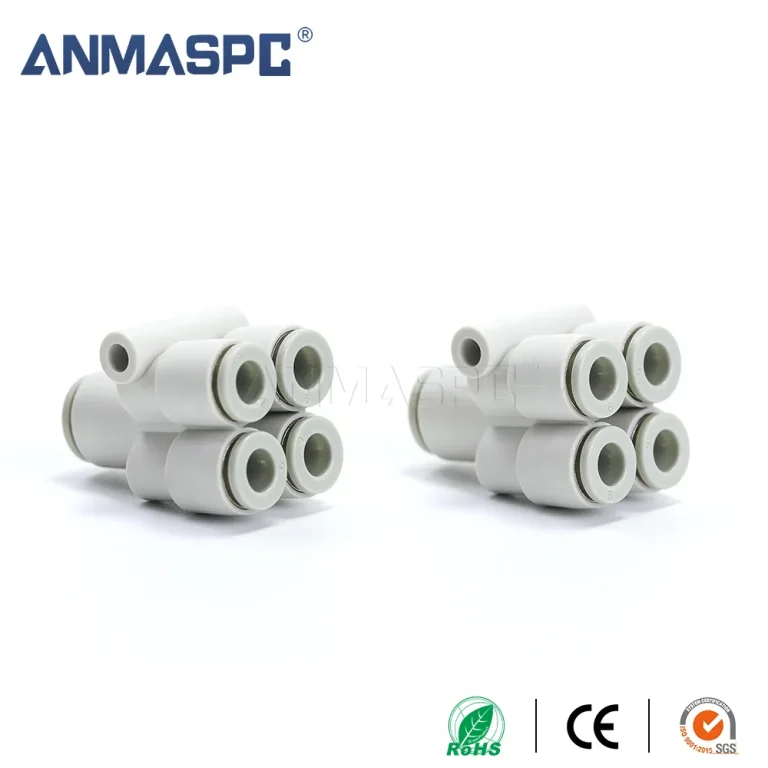
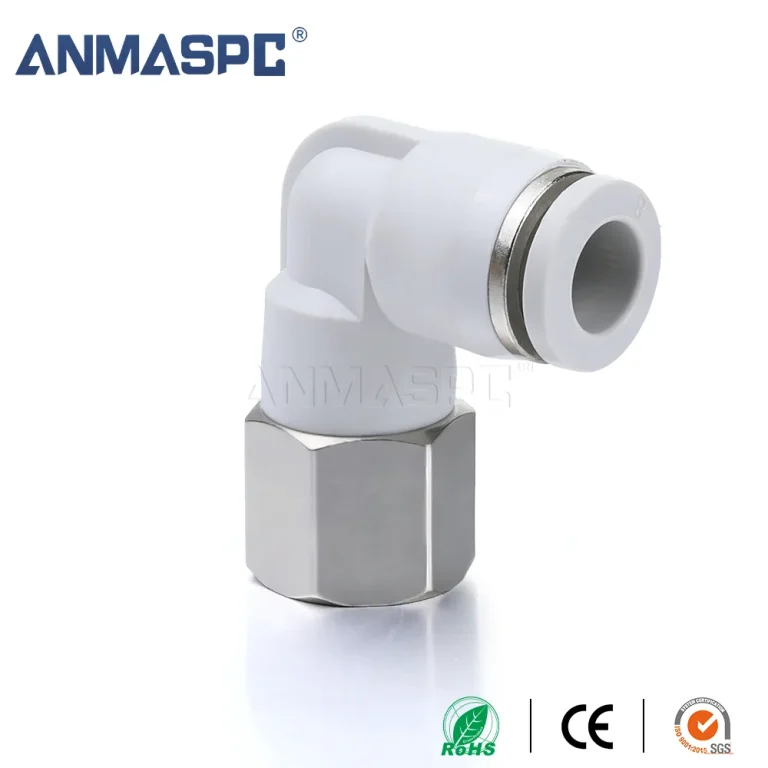
- Check that fittings retain a smooth pathway; compatible microduct connectors should be selected as part of the duct system, not after delivery.
- Plan a documented duct installation acceptance process: visual inspection, route proving, cleaning, and a pressure or leakage check where the cable method requires it.
ANMASPC / Microduct Connector supports buyers needing configurable pathways, fittings, and documentation. For compressed-air work, review fiber blowing machines against duct and cable sizes before deployment.
សំណួរដែលសួរញឹកញាប់
What are plastic air ducts used for?
They create a protected pathway for installing and replacing fiber, communications cable, or selected utility cables. In fiber projects, the pathway can support air-assisted installation and later network expansion; the planned cable method determines the duct construction and accessories.
Why is HDPE used for microducts?
HDPE offers useful flexibility, toughness, and resistance to many common environmental exposures while providing a suitable base material for smooth microduct pathways. Buyers should still verify the actual system dimensions, joint design, and application evidence rather than relying on the resin name alone.
What size duct is needed for air-blown fiber?
The correct size depends on the cable outside diameter, blower capability, route length, and bends. Use the cable and equipment manufacturers’ compatibility guidance, then validate the real inside diameter and route condition before the production blow.
Can fiber be installed in an existing plastic duct?
Often yes, if the duct is continuous, clean, dry enough, and large enough for the cable and airflow or pulling arrangement. Survey and prove it first; crushed sections, debris, or unsealed chambers may need remediation.
How do you prevent water from entering a duct?
Seal open ends, select compatible connectors and closures, and protect chamber interfaces from standing water and debris. The effective solution is route-wide: one uncapped spare duct or poorly seated connector can compromise an otherwise well-specified system.
What is the difference between a duct and a microduct?
A duct is the broader protective conduit category, often sized for one or more cables or subducts. A microduct is a smaller, purpose-designed pathway—frequently bundled with others—for placing microcables and preserving spare capacity in fiber networks.
ឯកសារយោង
- ISO 14520-1: Plastics piping systems for buried and above-ground cable ducts
- ASTM D3350: Polyethylene Plastics Pipe and Fittings Materials
- ASTM F2160: Linear Thermal Expansion of Polyolefin Pipe and Tubing
- OSHA 29 CFR 1926 Subpart P: Excavations
A reliable fiber pathway is designed as a system: the right bore, the right joints, the right route proof, and the evidence to support each choice.
When you are ready to turn that specification into a scalable pathway, explore HDPE microduct options from ANMASPC / Microduct Connector and contact the team with your route, cable, and installation requirements.