
در یک مشخصات نصب فیبر، “کانال هواپخش پلاستیکی”باید به مسیر کابلکشی مورد استفاده برای نصب با کمک هوا اشاره داشته باشد، نه یک لوله هوادهی HVAC یا لوله فشار آب. قبل از مقایسه محصولات، آن منظور را تعریف کنید. کابل، سوراخ واقعی،", هندسه مسیر, سیستم اتصال و روش پذیرش تعیین میکنند که آیا مسیر برای نصب برنامهریزیشده مناسب است یا خیر.
لوله را بر اساس روش نصب کابل، هندسه مسیر و طرح کنترل آب با در نظر گرفتن قطر قابل استفاده مورد نیاز انتخاب کنید. در شبکههای فیبر اپتیکی پرتابی، قبل از مقایسه قیمت، به صاف بودن داخل لوله و کنترل انحناها توجه کنید. الزامات مربوط به کابل و لوله را همراه با دستورالعملهای نصب توسط تأمینکننده بررسی کنید. لوله، اتصالدهندهها، پیمانکارهای انتهایی و آزمونهای پذیرش را بهطور همزمان مشخص کنید، سپس قبل از شروع عملیات، اطمینان حاصل کنید که ابعاد مستند شده است.
نوع کابل و روش نصب را تعیین کنید
این لولههای پلاستیکی هوادهی، کانالهای پلیمری هستند که مسیری محافظتشده و با اصطکاک پایین برای نصب کابل یا فیبر اپتیکی با کمک هوا ایجاد میکنند. در کارهای مخابراتی، ممکن است بهصورت لولههای زیرزمینی مستقیم، زیرلولههای داخل کانالهای بزرگتر یا مسیرهای میکرولولهای کوچکتر قرار داشته باشند که امکان افزودن ظرفیت در آینده را فراهم میکنند.
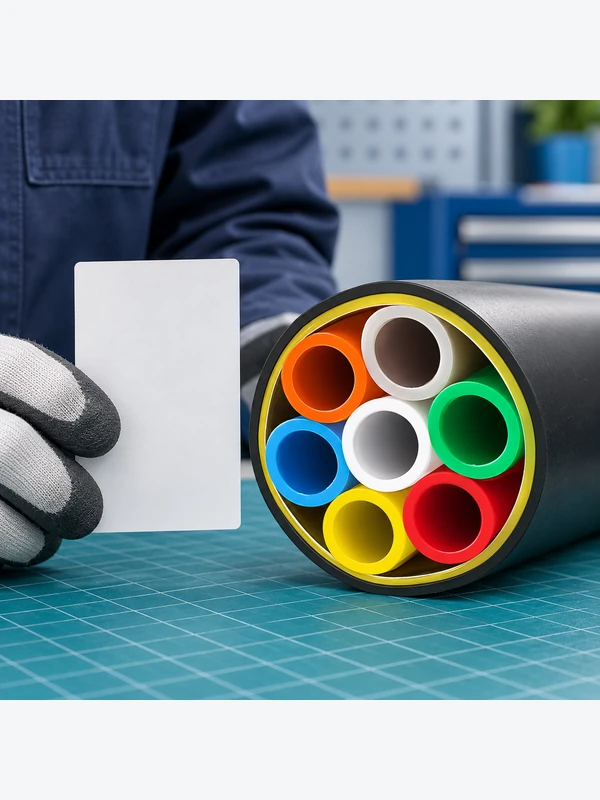
ابتدا تعیین کنید که مسیر قرار است برق، کابل ارتباطات یا میکروکابلهای هوایی را حمل کند. یک کارگاه خدمات عمومی ممکن است به مقاومت در برابر فشرده شدن و کشش کابل اهمیت دهد؛ در حالی که یک شبکه دسترسی فیبر نوری معمولاً به قطر داخلی کنترل شده، سطح داخلی با اصطکاک پایین و تداوم مسیر ارجحیت میدهد. IEC 61386-24 الزامات و آزمایشاتی را برای سیستمهای لولهکشی زیرزمینی مشخص میکند؛ دامنه کار آن تضمینی برای یک مسافت خاص در جوشکاری یا مناسب بودن برای هر شرایط خاک نیست.
هندسه مسیر محدودیت بعدی را ایجاد میکند. قطر داخلی، طول، شعاع خم، تغییرات ارتفاع، نقاط دسترسی و قطر بیرونی کابل را ثبت کنید. کابل باید فضای حلقوی مناسبی برای جریان هوا حفظ کند؛ بنابراین، راهنمایی سازنده تجهیزات در مورد نسبت کابل به لوله باید تعیینکننده نسبت نهایی باشد. اگر قطر بیرونی کابل به قطر داخلی لوله نزدیک شود، ممکن است برای روش پیشبینیشده فاصله کافی وجود نداشته باشد؛ بنابراین، یک ترکیب با قطرهای برابر را بهعنوان یک طراحی عملی برای فویش قبول نکنید.
Distinguish cable duct from pressure pipe and indoor pathway
HDPE products are made for different services, including pressure piping and cable protection. A pressure pipe is specified for carrying its declared fluid under its governing requirements; a cable duct protects and manages cable; an indoor pathway must satisfy the applicable building and installation requirements. The same polymer family can appear in all three contexts without making the finished products interchangeable. Check the declared use and documentation for the exact product.
For buried cable pathways, the official IEC 61386-24 scope covers conduit systems and conduit fittings for protection and management of insulated conductors or cables in electrical installations or communication systems. It includes metallic, non-metallic and composite systems. That scope helps identify the correct category, but it does not publish a universal cable-to-duct ratio or certify any particular supplier’s field blowing result. Review the declared product evidence and project requirements separately.
For air-assisted installation, obtain the usable bore, OD, tolerances, route limitations, joint details and the approved cable pairing. A pressure-pipe wall or nominal pipe size cannot substitute for those fields. A thicker wall can change usable passage at the same OD, while a connector designed for another OD or construction may not grip or seal correctly. Review the گزینههای میکروکانال HDPE with the actual cable and fitting information rather than treating all polyethylene tubes as equivalent.
At a building transition, verify the location where the outdoor product ends and the indoor pathway or entry arrangement begins. Confirm applicable fire and penetration requirements with the responsible designer. Do not transfer a burial rating to an indoor fire claim, or use an air-pressure test to claim fire resistance. Record the buried, entry and indoor requirements separately, then verify the proposed product at each location.
Match the duct material to the installation method
HDPE microducts are commonly selected because high-density polyethylene combines flexibility, impact resistance, corrosion resistance, and a smooth internal pathway. Consider the complete assembly: duct wall, internal low-friction layer where specified, couplers, seals, and closures. A step, oval section or air leak at a connector can obstruct cable passage even when the duct itself meets the specification.
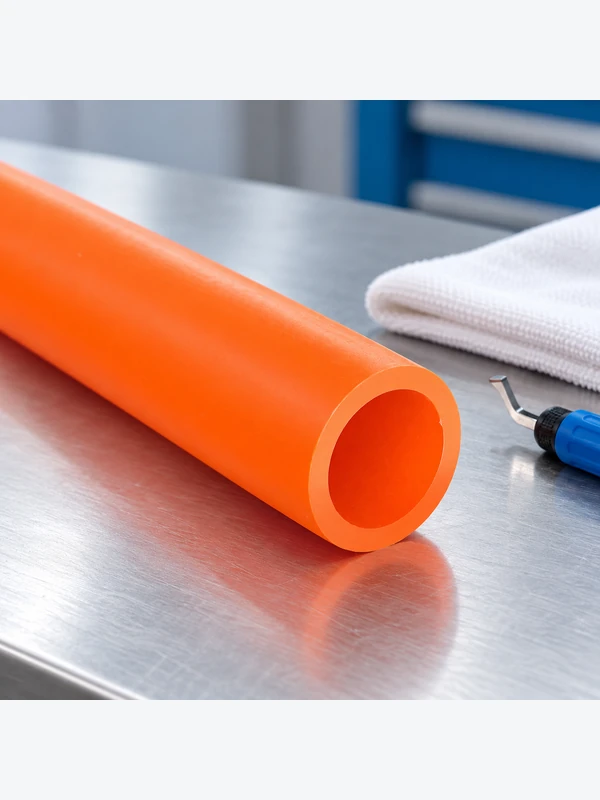
For an air-blown fiber route, air containment and friction management work together. Leakage reduces pressure at the cable; roughness, debris, and tight bends raise resistance. Temperature changes can affect duct dimensions and route movement; use the duct manufacturer’s installation and restraint guidance rather than inferring a universal allowance. Specifications should define pressure, lubricant policy, cleaning, and proof testing.
The lowest unit-cost duct may create the highest route cost if it requires access pits, cable retrieval, or rework after a failed blow. Illustratively, avoiding one extra excavation and crew return can outweigh a modest material saving. Include expansion capacity, joint reliability, delivery lengths, and traceability in the total-cost review.
| Approach | بهترین تناسب | Installation performance | تمایل به نگهداری و هزینه کل مالکیت (TCO) |
|---|---|---|---|
| Large utility duct | Mixed services or pulled cables | Space for subducts; performance depends on internal condition | Higher civil material footprint, but can support future segregation |
| Single HDPE duct | Dedicated cable route | Flexible routing; verify bore and bend control | Moderate initial cost; replacement can be disruptive if capacity is exhausted |
| Multiway microduct bundle | FTTx expansion and staged connections | Separate pathways help isolate later installations | Often higher initial specification effort, with lower disruption for adds and changes |
Size the pathway from cable, air, and route constraints
Size the duct using the cable dimensions, usable bore and route conditions. Start with the supplier’s measured inside diameter and cable manufacturer’s maximum outside diameter, then account for couplers, bends, and the دستگاه بادکننده’s operating window. Longer routes generally benefit from stable bore control and fewer joints. Before a long blow, prove the route with a mandrel and clean it with a duct-sized sponge or swab.
For direct burial, specify depth, warning tape, markers, and crossing protection according to local authority and network-owner rules. BICSI’s Outside Plant Design reference treats pathway planning as a coordinated civil, cable, and access design problem. A conduit standard does not replace local excavation safety rules or manufacturer installation limits.
| شرایط مسیر | چه چیزی باید مشخص شود | Pre-installation check | Primary risk controlled |
|---|---|---|---|
| Short internal or campus run | Compatible bore, fire/building requirements where applicable, accessible terminations | Measure path and inspect bends | Cable damage at fittings |
| Long underground fiber run | Continuous reel lengths where feasible, sealed joints, route records | Mandrel, swab, and air-leak check | Blowing loss and costly re-entry |
| Wet ground or flood-prone area | Water-blocking end caps, gas/water-tight connectors as required, protected chambers | Inspect every termination and enclosure interface | Ingress and debris migration |
| Future-capacity corridor | Spare microducts, clear labels, documented occupancy | Confirm spare paths remain capped and traceable | Repeat excavation |
Requalify the route when cable, bends or air supply change
A successful blowing trial describes the tested combination, not every later job on the route. Keep the cable identity and OD, duct bore and construction, route length, bend arrangement, joins, lubricant policy and machine setup with the result. Record compressor delivery and treatment at the relevant operating conditions; a maximum pressure label alone does not describe the air supply available during installation.
Review the trial when a change affects resistance, clearance or air delivery. Examples include a different cable construction, a new reducer, an added bend, a repaired or flattened duct section, a changed lubricant, or a different compressor and hose arrangement. Engineering should decide which section and acceptance checks must be repeated. A minor administrative change does not automatically require a new trial, but an unrecorded physical change should not be assumed harmless.
Plumettaz’s IWCS 2021 test-guideline abstract highlights how bend-only test trajectories and speed behaviour can influence comparisons, and recommends controlling the end condition of a test. Its example settings belong to that test discussion; they are not operating instructions for every duct or machine. The practical lesson is to retain the route and test method, then make changes visible before comparing results or transferring an approval.
When a route is re-opened, inspect accessible ends and joints for ingress or disturbance and use the approved continuity, cleaning and leakage checks. The microduct fitting guide connects those joint checks to route preparation. Compare cable blowing machines only after the pathway and utilities have been defined, so a blocked duct or inadequate air delivery is not mistaken for an equipment limitation. Keep revised acceptance evidence with the current route drawing.
Check the requirements for buried cable conduit
Standards should improve procurement clarity, not become marketing shorthand. IEC 61386-24 addresses underground conduit systems for cable protection and management. A resin classification, pipe designation or a single laboratory test is not approval of an entire installed cable route. In the United States, OSHA excavation requirements are worker-safety rules, not duct-performance standards.
Unsupported claims such as “waterproof,” “standards compliant,” or “suitable for all blown fiber” can trigger rejected submittals or corrective work. State the destination market, environment, cable method, and test evidence required. Ask for batch identification, dimensional tolerances, and connector compatibility records.
What to confirm before ordering a plastic duct
- Map the route and assign every section an installation method, cable size, bend limit, and environmental exposure.
- Specify measured bore, wall construction, reel length, connector type, end sealing, and evidence needed for acceptance.
- Check that fittings retain a smooth pathway; compatible microduct connectors should be selected as part of the duct system, not after delivery.
- Plan a documented duct installation acceptance process: visual inspection, route proving, cleaning, and a pressure or leakage check where the cable method requires it.
ANMASPC / Microduct Connector supports buyers needing configurable pathways, fittings, and documentation. For compressed-air work, review fiber blowing machines against duct and cable sizes before deployment.
سوالات متداول
What are plastic air ducts used for?
They create a protected pathway for installing and replacing fiber, communications cable, or selected utility cables. In fiber projects, the pathway can support air-assisted installation and later network expansion; the planned cable method determines the duct construction and accessories.
Why is HDPE used for microducts?
HDPE offers useful flexibility, toughness, and resistance to many common environmental exposures while providing a suitable base material for smooth microduct pathways. Buyers should still verify the actual system dimensions, joint design, and application evidence rather than relying on the resin name alone.
What size duct is needed for air-blown fiber?
The correct size depends on the cable outside diameter, blower capability, route length, and bends. Use the cable and equipment manufacturers’ compatibility guidance, then validate the real inside diameter and route condition before the production blow.
Can fiber be installed in an existing plastic duct?
Often yes, if the duct is continuous, clean, dry enough, and large enough for the cable and airflow or pulling arrangement. Survey and prove it first; crushed sections, debris, or unsealed chambers may need remediation.
How do you prevent water from entering a duct?
Seal open ends, select compatible connectors and closures, and protect chamber interfaces from standing water and debris. The effective solution is route-wide: one uncapped spare duct or poorly seated connector can compromise an otherwise well-specified system.
What is the difference between a duct and a microduct?
A duct is the broader protective conduit category, often sized for one or more cables or subducts. A microduct is a smaller, purpose-designed pathway—frequently bundled with others—for placing microcables and preserving spare capacity in fiber networks.
Can a larger nominal duct always carry more fiber?
Not necessarily. Usable performance also depends on cable-to-bore fit, bend profile, surface condition, joint alignment, air sealing and the approved installation method. Confirm the pairing with route measurements and a representative test.
What should be checked before using a plastic duct for air-assisted installation?
Check continuity, bore condition, water or debris, bend and access points, duct and cable compatibility, connector sealing, air supply limits and the records required for the installation handover.
Is a pressure-rated HDPE water pipe automatically suitable as a blowing duct?
No. Pressure-pipe service does not establish the cable passage, friction, joining details or installation window needed for air-blown cable. Verify the intended cable-duct application, dimensions, cable pairing and project acceptance evidence for the exact product.
Does a successful route test remain valid after changing the cable or compressor?
It may require review. Compare the new cable, duct geometry, air delivery and setup with the tested configuration. If the change affects clearance, friction, route resistance or available air, agree an appropriate requalification before relying on the previous result.
مراجع
- IEC 61386-24:2004 — سیستمهای لولهکشی زیرزمینی، حوزه کاری رسمی
- گریفیون و یانکر / پلومتاز — راهنماهای اجرای آزمایشات باد کردن کابل، خلاصه مقاله IWCS 2021
خلاصه
Choose a plastic cable duct from its intended service, measured geometry and installation method. HDPE material alone does not make a pressure pipe, buried cable conduit and indoor pathway interchangeable. Verify the usable bore, cable pairing, connector compatibility, bends, exposure and acceptance procedure together. Keep the tested route and air-supply configuration with the result, and review that evidence when physical conditions change. Treat underground conduit requirements, product data, blowing trials and building-entry protection as distinct parts of the specification. Keep dimensions, cable pairing, joint details and trial results in the route record so purchasing and installation teams can check the same configuration.



