
Kada je ilustrativni nadzornik telekomunikacijskog objekta u Rotterdamu pravilno isekao kraj cijevi i namontirao novi spojnik, vidljivi kvar se pojavio za nekoliko minuta: spoj se nije čvrsto zatvorio i zračni tok nije bio hermetičan. Pregled radnog naloga promijenio je prvobitnu pretpostavku. Spojnik nije nužno bio neispravan; odabrana veličina nije odgovarala izmjerenoj cijevi, a način instalacije nije precizirao uslove brtvljenja i oslonca. To je praktični problem koji stoji iza kako odabrati a mikrokanalni konektor: odabir, dimenzioniranje, okolina i proces moraju biti usklađeni prije nego što dio stigne do jarka.
Odaberite konektor za mikrocev iz mjerenih dimenzija cijevi, potrebnog tipa spoja, okruženja trase, zadaće brtvljenja i pristupa potrebnog za održavanje. IEC 60794-5:2020 se odnosi na vanjske mikrocevi, dok ISO 9001:2015 se odnosi na sistem upravljanja kvalitetom proizvođača; ni jedan od njih sam po sebi nije dokaz da je određeni konektor certificiran za svaku trasu. Preporučena radnja je da se zabilježe stvarne veličine i konstrukcija cijevi, odabere dokumentovana porodica konektora i provjeri ugradnja i brtvljenje pri instalaciji prije odobrenja trase.
Šta mora da se podudara prije nego što se odabere spojnik?
Spojnica je dimenzionalni i funkcionalni spoj, a ne samo navlaka koja spaja dva kraja cijevi. Počnite tako što ćete identificirati materijal mikrocevi i izmjeriti stvarni vanjski promjer te relevantne podatke o debljini zida ili unutrašnjem promjeru na mjestu spoja. Uporedite te mjerenja sa tehničkim podacima proizvođača; nemojte birati prema nominalnoj oznaci kopiranoj s starog crteža ukoliko instalirana cijev može poticati iz drugačije serije ili imati drugačiji format.

Zatim definirajte koju funkciju spoj treba da obavlja. Ravni spoj održava istu putanju kanala; spoj za redukciju spaja različite dimenzije samo kada je takav prelaz predviđen projektom. Završna čep ili završni element ima drugačiju svrhu od prolaznog spoja jer zatvara i štiti otvoreni kraj. Pri odabiru također treba navesti da li je spoj privremen tokom izgradnje ili se očekuje da ostane na tom mjestu tokom cijelog vijeka upotrebe instalacije.
- Veličina: Zabilježite izmjerene dimenzije kanala i uporedite ih sa navedenim opsegom priključka.
- Geometrija: Potvrdite da li je na trasi potrebna ravna spojnica, planirano smanjenje, razvod ili završno zatvaranje.
- Okruženje: U specifikaciji projekta naznačite uvjete kao što su podzemni, pristupni okni, izloženi, vlažni ili direktno zakopani.
- Obaveza zaptivanja: Navedite da li spoj mora održavati prolaz za zrak, isključivati vlagu, štititi rezervni kanal ili ispunjavati drugi dokumentovani zahtjev.
- Pristup: Ostavite dovoljno prostora za pregled, popravku, označavanje ili zamjenu spoja bez oštećenja susjednih kanala.
Kako geometrija konektora i okruženje puta utiču na donošenje odluke?
Ista nominalna veličina kanala može zahtijevati različite odluke kada se geometrija trase ili okruženje promijene. Za ravnu dionicu može biti potreban kompaktni prolazni spoj, dok prijelaz između različitih veličina kanala zahtijeva dokumentovani dijeljeni prelaz i jasan smjer montaže. Spoj u instalacijskoj šahti može biti lako pregledan, ali zemljani spoj zahtijeva da projektni tim potvrdi da su odabrani elementi i način zaštite prikladni za pokopavanje. Izgled nije dokaz sposobnosti za direktno pokopavanje.
Razmotrite cijeli HDPE sistem, a ne samo spoj pojedinačno. HDPE mikrokanal Vodič može pomoći instalaterima da razjasne odnos između konstrukcije kanala i ugradnje optičkih vlakana, ali specifikacija projekta i trenutna dokumentacija proizvoda i dalje predstavljaju ključne dokumente za donošenje odluka. Ako trasa sadrži mješovite materijale kanala, neobične debljine zidova ili popravljeni dio, zabilježite tu činjenicu i prije naručivanja konektora pribavite potvrdu o kompatibilnosti.
| Tačka odluke | Dokazi za evidentiranje | Posljedica odabira |
|---|---|---|
| Dimenzije kanala | Izmjerene informacije o vanjskom promjeru, provrtu ili zidu, kao i bilo koje odstupanje na spoju | Odaberite spojnicu čiji dokumentirani opseg odgovara ugrađenom kanalu. |
| Geometrija zgloba | Pravi prolaz, planirano smanjenje, razvod, popravka ili završetak | Koristite vrstu spojnice predviđenu za tu veza; ne improvizirajte prijelaz. |
| Sredina rute | Podzemni, pristupni jašak, izloženi, mokri ili direktno u zemlji položen uslov | Potvrdite obaveze vezane za zaptivanje, zaštitu i ugradnju u projektnoj dokumentaciji. |
| Zahtjevi za zrak i vlagu | Obavezni zračni tok, zaštita od vlage ili zaštita rezervnog kanala | Navedite odgovarajući pečat i način zaštite krajeva. |
| Pristup održavanju | Radni prostor, položaj oznaka i budući pristup za inspekciju ili zamjenu | Omogućite provjeru ili ponovnu izradu spoja bez opterećenja cijevi. |
Koji postupak instalacije sprečava curenje i neusaglašenost?
Čak i dobar odabir spojnice može da podbaci ako je kraj cijevi loše pripremljen. Cijev isjeckajte ravno odobrenim alatom, uklonite ostatke materijala i ivice, te provjerite da kraj nije ovalan ili oštećen. Prije umetanja uskladite obje cijevi, a zatim ih potpuno gurnite u spojnicu prema uputstvima dobavljača. Ne uvrtajte, ne savijajte niti ne forsirajte sklop kako biste nadoknadili pogrešnu veličinu ili zaprečeni put.
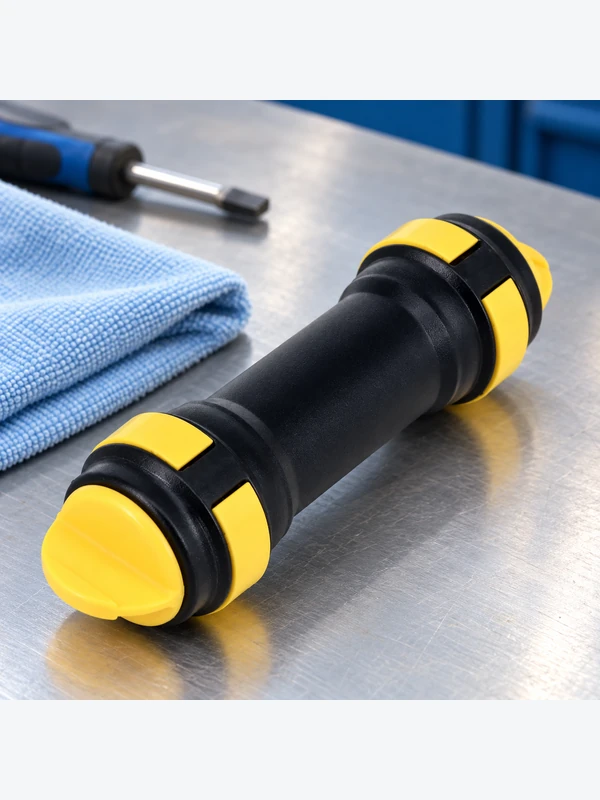
Nakon montaže, provjerite usidrenost i oslonac. Prozirni spojnik može učiniti vidljivom poziciju umetanja, ali vizuelna potvrda je samo jedan dio procesa prihvata. Spoj također mora biti zaštićen od bočnih opterećenja, oštrih prelaza savijanja i slučajnog pomeranja tokom nasipanja ili kasnijih kablarskih radova. Čuvajte kraj čistim dok se ne izvrši spajanje i postavite propisani čep ili poklopac svaki put kada kanal ostane otvoren.
Članak o proizvodnom postupku na sajtu pruža kontekst proizvodnje, ali ne smije zamijeniti izjavu o metodi instalacije. U poljskom evidenci treba navesti cijev, vrstu spojnica, instalatera, datum, lokaciju i sve eventualne korektivne mjere. Ta evidencija omogućava timu za održavanje da razlikuje problem u dimenzioniranju od kasnijeg poremećaja u trasi.
Kako kupac može provjeriti zaptivanje i pristup za održavanje?
Iskren odgovor je da spojnica postaje zrakotesna samo kada dimenzije cijevi, čisti rezovi, komponente brtve i dubina umetanja svi odgovaraju propisanoj montaži. Vizuelni pregled može otkriti nekompletno učvršćivanje ili pomjerenu brtvu, ali sam po sebi ne dokazuje zrakotesnost. Koristite projektom odobreni test pritiska, tesnosti ili provodljivosti gdje je to potrebno i zabilježite metodu i rezultat, umjesto da kopirate vrijednost prolaska sa nevezane trase.
Pristup za održavanje dio je iste odluke. Spoj skriven iza uskog zavoja ili neoslonjen na mjestu pristupa može biti teško pregledati, čak i ako ispočetka zadržava zrak. Ostavite jasnu oznaku i servisni prolaz, zaštitite konektor od kretanja i dokumentirajte svaki prijelaz koji bi buduće ekipe mogle pogrešno shvatiti kao standardni ravni spoj.
| Stavka prihvatanja | Šta instalacioni program provjerava | Šta bi zapis o primopredaji trebao da sadrži |
|---|---|---|
| Identitet i lokacija | Ispravan put kanala, položaj spoja i tip konektora | Označavanje rute, oznaka i referenca komponente |
| Završite pripremu | Kvadratni, čisti, neoštećeni rezovi i kompatibilni krajnici kanala | Potvrda inspekcije ili fotografija instalacije |
| Sjedišta i podrška | Potpuno ugradjivanje, vidljivo poravnanje i bez izbjegljivog bočnog opterećenja | Provjera instalatera i bilo koje bilješke o korektivnim mjerama |
| Provera brtvljenja ili zatvaranja | Specifikovana brtvljenja, čepovi ili poklopci ugrađeni za stanje trase | Zapis komponente i ekološke odgovornosti |
| Test projekta | Approved pressure, leak, continuity or other required check | Test method, date, result and responsible person |
| Future access | Label, working space and protection retained after completion | As-built drawing and maintenance note |
When does a route need an end stop, gas block or protective cover?
Specify the function before choosing the accessory. An end stop closes an unused duct end against the conditions stated in its documentation. A joint connector joins duct sections. A gas-blocking arrangement addresses a different duty: limiting migration through an entry in the configuration for which it was designed. A protective cover can address mechanical exposure around a connection. Similar-looking parts should not be substituted across those functions without written evidence.
The installation state matters. An empty duct and a duct containing a cable may require different sealing components. At a building entry, identify the duct OD, cable OD, wall or enclosure interface and applicable entry requirements. Ask which leakage path is controlled: the duct-to-fitting joint, the space around a cable, or the building penetration. A water-sealing claim for one interface does not establish blok gasaing, fire stopping or all building-entry duties.
Hexatronic’s connector and end-stop data sheet separates straight, reducing and end-stop functions and describes an external cover for its direct-buried configuration. This is a manufacturer-specific example of why a cover and base connector may need to be specified together. It does not prove that any uncovered connector can be made suitable for burial with an arbitrary shell. Confirm the complete selected assembly and its installation instructions before procurement.
Which connector should be used for an air-blown fiber route?
For an air-blown fiber route, select a connector that preserves the intended duct path and sealing condition while presenting a clean, supported bore to the installation equipment. Check the cable-and-duct plan, the connector dimensions, the end preparation method and the access-point arrangement together. The air-blown fiber installation comparison is useful for framing the route decision, but it does not establish a universal connector, pressure or distance limit.
Before blowing, verify continuity and remove or document obstructions. During the operation, stop if the cable behavior, air loss or connector movement differs from the approved method. Afterward, protect the cable end, inspect the joint and retain the optical and route records required by the contract. A connector that looks correct before blowing still needs post-installation acceptance.
Which standards should procurement teams cite?
Standards help define scope and verification; they should not be used as shorthand for unsupported product claims.
- IEC 60794-5:2020: Covers fibre-optic cable systems involving outdoor microducts. Use its scope alongside the project’s duct, connector and installation requirements.
- EN 50411-2-8: Relates to fibre-management systems and protective housings. Confirm that the relevant component and intended use fall within the document’s scope before citing it.
- ISO 9001:2015: Specifies quality-management-system requirements. It is not a product certification, a dimensional guarantee or proof that a connector suits a particular environment.
Commercially, unsupported standards language can mislead a buyer and make acceptance harder. Ask for the current declaration, technical data and test evidence that apply to the exact component and destination market. If the project requires a regulatory or customer-specific approval, state that requirement in procurement rather than assuming a general standard covers it.
How should a reused connector be accepted or rejected?
Begin with the manufacturer’s stated politika ponovne upotrebe and the project’s requirements. A part that can be released mechanically is not automatically approved for repeated service after burial, impact or contamination. Inspect the body, release parts, sealing surfaces and duct ends using the permitted method. Replace a component when damage, uncertain retention or recurring leakage puts it outside the documented acceptance condition.
Do not use tape, adhesive or an improvised sleeve to compensate for the wrong duct size or damaged interface. Such a repair can conceal the actual problem and change the assembly away from the tested configuration. If the product permits reconnection, prepare the duct ends as instructed and repeat the specified assembly and acceptance checks. Record that a reused component was involved so later inspection has an accurate history.
For stock control, separate serviceable unused parts from recovered material awaiting inspection. Keep the component reference and lot where available, and match the replacement against the route’s current requirements rather than an old photograph alone. The connector production and batch-record guide explains what supplier information can support this decision. For installation technique, the microduct connector installation guide addresses preparation and seating; neither guide overrides the selected product’s reuse restrictions.
What should buyers do before ordering?
- Measure the installed duct and attach the result to the purchase or technical query.
- Define the joint geometry, route environment, sealing duty and expected maintenance access.
- Request the connector drawing, installation instructions and compatibility statement for the selected duct.
- Agree the field inspection and any approved leak, pressure or continuity check before delivery.
- Require the handover records that will identify the joint and support future cable work.
Oulu / ANMASPC presents microduct connectors, duct plugs, HDPE microducts and related pneumatic products for B2B sourcing. Review the current opseg konektora za mikrocevi against the project specification, then ask for route-specific documentation before committing to a size or connector type. Product availability, configuration and any certification claim should be confirmed in the current supplier documents.
Često postavljana pitanja
How do I measure a microduct before choosing a connector?
Identify the duct at the actual joint, make a clean inspection cut if permitted, and record the outside diameter plus the relevant bore or wall information. Compare the measured condition with the connector drawing and specified range. If the duct is ovalised, damaged or from a mixed batch, pause and obtain a compatibility decision instead of relying on the label alone.
What is the difference between a straight and reducing microduct connector?
A straight connector joins compatible duct ends on the same intended path and size. A reducing connector is designed for a planned transition between different duct sizes and should be selected from a documented size pairing. It is not a substitute for correcting a measurement error or forcing mismatched ducts together.
Do microduct connectors need to be rated for direct burial?
That depends on the route design and the connector, seal and protection arrangement specified for it. Direct-burial suitability should be confirmed in current product documentation and the project specification; it cannot be inferred from a connector’s appearance or nominal size. Record the environmental duty before ordering.
How do I know whether a connector is airtight?
First verify the duct dimensions, clean square cuts, full insertion and correct seals. Then perform the project-approved pressure, leak or continuity check when required, because a visual seating check alone cannot establish airtightness. Keep the method and result with the joint record.
Can I reuse a push-fit microduct connector?
Reuse should be allowed only when the manufacturer’s instructions and the project method permit it. Inspect the connector, seals and duct ends for damage, contamination or loss of retention, and replace any component outside the documented condition. A connector that has been removed from a stressed or buried joint needs particular scrutiny.
Which connector should I use for an air-blown fiber route?
Use the connector that matches the duct dimensions, route geometry, sealing duty and air-blown installation method documented for the project. Confirm that the joint is fully seated, supported and free of avoidable air leaks before blowing. The cable, duct, connector and equipment should be checked as one system rather than selected independently.
Can an end stop be used as a gas block around an installed cable?
Not unless its exact design is documented for that function and cable-and-duct combination. An empty-duct closure and a seal around a cable control different interfaces. Obtain the correct entry and sealing arrangement.
Does adding a cover make any connector suitable for direct burial?
No. Confirm a complete approved configuration, including the connector, cover and installation method. A cover from another design does not establish the required mechanical or environmental performance.
Reference
- Hexatronic, Microduct Connectors and End Stops, 28701-MPB30601+, 2023: configuration and cover example
- Fiber Optic Association, Outside Plant Fiber Optic Cable Installation: pathway and cable-handling considerations
Sažetak
The right microduct connector matches both the duct interface and the task at the joint. Measure OD and ID, confirm the route and environmental duty, then distinguish a joining connector from an end closure, cable seal or protective cover. At building entries, identify every leakage path and obtain the documented arrangement for the actual cable-and-duct combination. Follow the selected installation and test method rather than compensating for a poor fit with improvised materials. Treat recovered components according to the manufacturer’s reuse policy and retain an inspection history. Oulu’s connector options can then be compared with the written project requirements, using the exact configuration and current product documentation before ordering.



