When a network construction manager in Manchester prepared a new housing development for cable blowing, the crew joined two 12/10 mm ducts, pressurised the route, and saw the gauge fall almost immediately. The first assumption was a defective fitting; the investigation instead found an outside-diameter mismatch and no documented pressure test at handover. Once the duct and connector dimensions were specified as one system, the route passed its test. The lesson is practical: reliable Гэр бүл бүрд шилэн кабель depends as much on selection, sizing and installation control as on the individual part.
The short answer is: FTTH (fiber to the home) takes an optical access network to the subscriber residence, rather than stopping at a street cabinet or building. For a ducted build, specify the duct outside diameter, cable range, pressure-test procedure and traceability together; IEC 60794-1-2 provides cable test methods, while conduit requirements have separate scope. This approach helps planners protect installation windows and gives contractors a repeatable acceptance process.

FTTH is an access network, not just a cable choice
FTTH is one member of the wider FTTx family. Its final optical distribution point is the home, so the civil route, duct path, closures and in-building transition all influence service delivery. The ITU-T G.9807.1 recommendation defines 10-gigabit-capable symmetric passive optical network transmission requirements; it does not prescribe a particular duct or connector. That distinction matters when a buyer translates an access design into a materials schedule.
A fiber optic network normally separates feeder, distribution and drop portions. Designers allocate optical-loss budget across splitters, fibre, splices and connectors, then plan a physical pathway that permits installation and future intervention. For bend-sensitive residential sections, ITU-T G.657 identifies bend-insensitive single-mode fibre categories; compatibility with the selected cable and route still needs confirmation from the cable manufacturer.
Why microduct pathways matter in the last mile
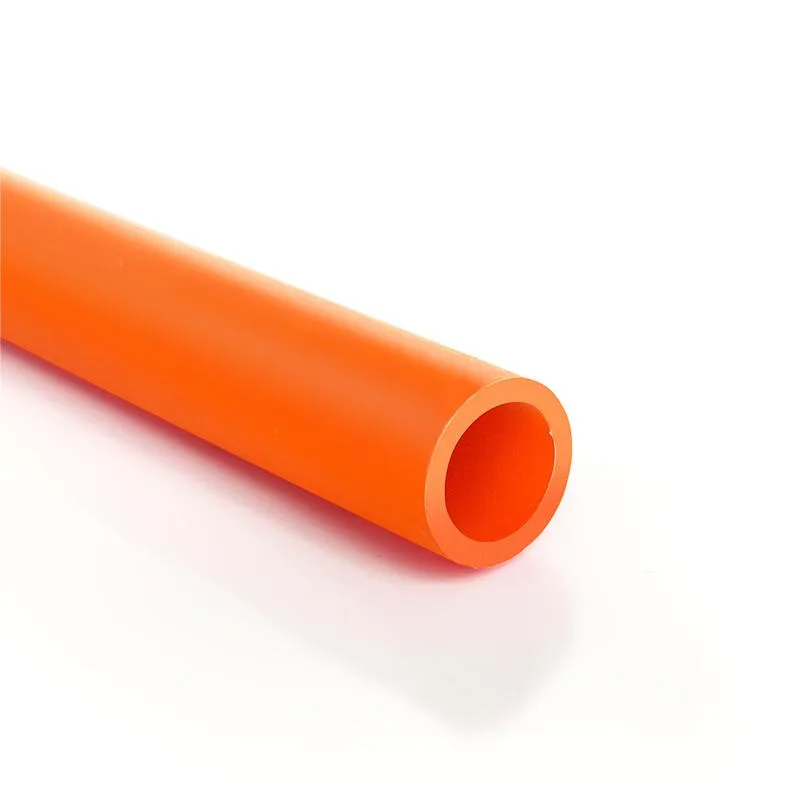
Microducting divides a larger pathway into dedicated small conduits, so a team can install a cable when demand, design approval or take-up justifies it. HDPE microducts are commonly selected for underground and outdoor pathway systems because polyethylene combines low mass with useful toughness; the relevant wall construction, friction performance, burial conditions and joining method remain project-specific.
For air-blown installation, the duct bore, cable diameter, route geometry and compressor capacity work together. A 10/8 mm duct, for example, has an 8 mm nominal internal diameter, but that figure alone does not establish the permissible cable range or blowing distance. Use the cable and blowing-machine supplier’s documented installation window, then validate the representative route before production quantities. IEC 60794-1-2 includes tensile, crush and temperature-cycling test methods for optical-fibre cables; it is not approval of a completed duct route.
How connectors protect the route and the build schedule
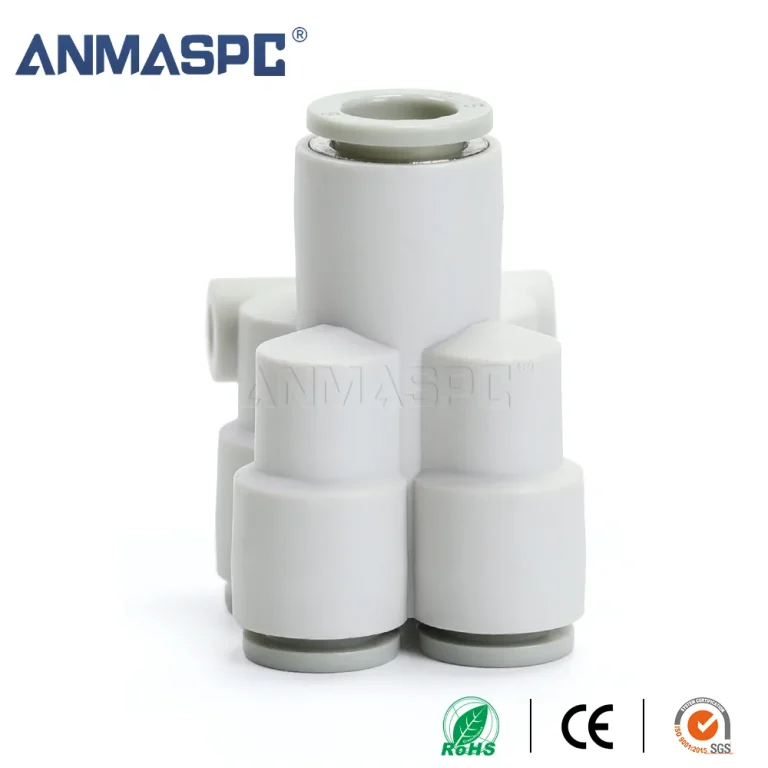
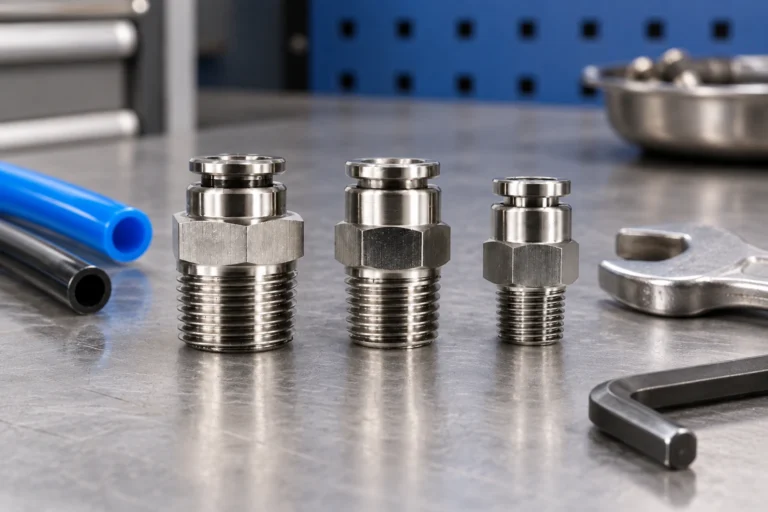
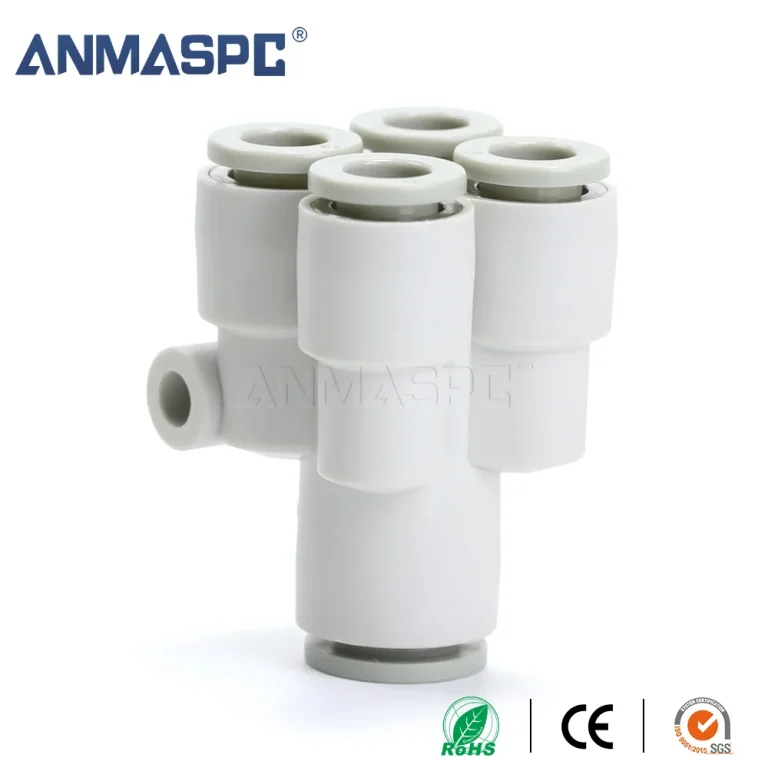
микро хоолойн холбогчид create a removable mechanical joint between compatible ducts, typically using a push-fit grip and a seal. Their job is to retain the tube while maintaining a sufficiently tight pneumatic path for the installation method. A straight connector may suit a planned extension; a reducer, end stop or gas-blocking element addresses a different interface or exposure. The correct type cannot compensate for an oval, scored or incorrectly cut duct end.
Before cable blowing, contractors should cut ducts square, remove burrs, confirm insertion depth, secure the joint from tensile loading and perform the specified pressure or leakage test. A failed test is more than a quality nuisance: it can consume crew time, postpone cable installation and require excavation or access work after other trades have moved on. These are total-cost drivers even where the unit cost of a connector is small.
Compare pathway options by installation and maintenance
| Pathway approach | Initial coordination | Capacity flexibility | Installation implication | TCO consideration |
|---|---|---|---|---|
| Direct-buried cable | Route and protection designed around one cable | Lower once buried | Repair or upgrade may require civil access | Can shift cost toward future excavation |
| Single conventional duct | One larger pathway to manage | Depends on spare bore and access | Pulling or blowing rules depend on cable and duct | Shared-pathway congestion can affect later work |
| Multiway microduct system | Requires clear duct and joint schedule | Dedicated bores can be reserved | Supports staged cable installation where validated | More up-front specification; potentially fewer disruptive upgrades |
The last row is not automatically the least-cost option. Its value grows where phased take-up, multiple service areas or future network changes make protected spare pathways commercially useful. Any savings calculation should be labelled illustrative and should include civil access, testing, reinstatement and downtime risk—not only materials.
Choose duct and connector sizes from the cable plan
| Шийдвэрийн цэг | What to record | Why it changes the result |
|---|---|---|
| Duct interface | Nominal outside diameter and actual measured tolerance | Connector gripping and sealing depend on the outside surface |
| Usable bore | Internal diameter, route length, bends and access points | Determines the cable-installation window, not merely nominal size |
| Cable interface | Cable diameter, stiffness and supplier blowing guidance | Controls friction, air flow and safe installation settings |
| Орчин | Buried, direct-sunlight, chamber, building-entry or gas-blocking need | Changes material, sealing and protection requirements |
Use each standard for the claim it covers
Standards should be written into procurement documents with their scope intact. IEC 60794-1-2 specifies optical-fibre cable measurement and test procedures; it does not certify a connector. IEC 60794-5-20 addresses outdoor microduct optical-fibre cables, whereas ITU-T G.657 concerns the attributes of bend-insensitive single-mode fibre. EN 61386-24 covers particular requirements for conduit systems intended to be buried underground. A project in Europe may use EN requirements and local utility rules; another destination may require different national codes or customer specifications.
Ask suppliers to state what was tested, to which revision and on which product configuration. Avoid marketing a component as “IEC certified” when the cited document is a test method or applies to cable rather than the connector. Unsupported claims can create tender risk, delay acceptance and complicate defect responsibility.
What to check before ordering FTTH duct components
- Issue a route schedule that pairs every duct outside diameter with its connector type and cable plan.
- Request dimensional tolerances, material information, installation instructions and declared test evidence for the exact configuration.
- Set a clear pressure-test and visual-inspection hold point before cable blowing; record route, date and result.
- Trial the longest or most complex representative route using the intended cable, lubricant and blowing parameters.
For buyers seeking configurable pathway components, ANMASPC / Microduct Connector can support the discussion with product-range and documentation questions. Start by reviewing the available HDPE microduct options, then match them to the route and installation plan rather than sourcing fittings in isolation.
What the 2026 coverage discussion changes for FTTH procurement
The European Commission’s 2026 connectivity coverage report and FTTH Council Europe’s 2026 market panorama keep coverage, deployment pace and access-network planning visible buyer topics. They are market and infrastructure references, not a connector approval. A project team still has to translate the route into measured duct dimensions, cable requirements, connector type, access points and acceptance tests.
For an auditable bill of materials, connect the microduct connector range to the HDPE microduct specifications and the planned cable blowing equipment. This makes the FTTH article useful to both network planners and installation contractors instead of treating FTTH as a cable-only decision.
Түгээмэл асуултууд
What is FTTH?
FTTH is an optical access architecture in which fibre reaches the subscriber’s residence. It describes the network endpoint, not a single cable, connector or installation method; the physical pathway must be specified separately.
How do microduct connectors work?
They grip and seal compatible duct ends so the route can be joined without a conventional fusion operation. Correct outside-diameter matching, clean square cuts and a documented leakage test are essential to performance.
Why are microducts used for FTTH?
They create defined small pathways that can support staged fibre installation and segregated routes. The benefit depends on the network plan, spare-capacity strategy and the verified ability to install the selected cable.
What size microduct is used for fiber optic cable?
There is no universal size: the selection follows cable diameter, route length, bends, blowing equipment and required future capacity. Record both duct outside diameter and bore, then use the cable supplier’s installation guidance.
Can fiber be blown into an existing microduct?
Often it can, provided the duct is continuous, clean, undamaged and suitable for the cable and route. Inspect the pathway and carry out a representative blowing trial before relying on an existing installation.
What is the difference between FTTH and FTTB?
FTTH takes fibre to an individual home, while FTTB takes it to a building and may use another medium for the final in-building connection. That endpoint difference affects the distribution design, access responsibilities and materials schedule.
Does a national FTTH coverage report tell me which connector size to buy?
No. Coverage reports describe market or infrastructure status. Connector size must be selected from the measured microduct OD and ID, cable plan, route conditions and the selected supplier’s installation instructions.
What should be recorded before approving an FTTH microduct bill of materials?
Record cable and duct dimensions, connector and reducer codes, chamber or access locations, route constraints, installation method, leak or continuity checks and the documents required for handover.
Дүрийн баримжаа
- European Commission: Digital Decade 2026 connectivity coverage reportOfficial EU report page; published 2026-06-17 and checked 2026-10-08.
- FTTH Council Europe: 2026 FTTH Market PanoramaIndustry association publication page; used for current market context.
- ITU-T L.1700: Requirements for outside plant of optical fibre cable networksOfficial ITU recommendation page; outside-plant planning reference.
A durable FTTH build is not won at the final connection; it is protected at every specified interface along the route. When your bill of materials is ready for review, explore Microduct Connector’s microduct connector range and contact the ANMASPC team with your duct dimensions, cable plan and destination-market requirements.
Practical conclusion: A dependable FTTH pathway is specified as one system: cable, duct, connector, route access and acceptance test. Confirm the measured duct dimensions and connector function before approving the bill of materials.