
FTTH 光アクセス回線を家庭に引き込むことは可能ですが、近隣の光ファイバーラインは、実際に運用可能なサービスを提供するための段階の一つにすぎません。ドロップ経路の整備、ケーブルの敷設、光回線の受入試験、そして サービスの有効化 それぞれに独自の証拠が必要です。. マイクロダクトコネクタ その寸法、機能および設置方法が指定されたダクトシステムと一致する場合、当該物理的経路を支持すること。.
FTTH(ファイバー・トゥ・ザ・ホーム)は、光アクセスネットワークを路上のキャビネットや建物までではなく、加入者宅まで引き込む方式です。ダクト敷設の場合には、ダクトの外径、ケーブルの種類、耐圧試験手順、トレーサビリティをまとめて指定してください。IEC 60794-1-2ではケーブルの試験方法が規定されており、一方でコンジットの要件は別途対象範囲が定められています。このアプローチにより、計画者は施工期間を確保しやすくなり、施工業者には再現性のある受け入れプロセスが提供されます。.
FTTHネットワークがどのように家庭に接続されるか
FTTHは、広義のFTTxファミリーの一員です。その最終的な光分配点は家庭にあるため、土木ルート、ダクト経路、接続箱、および建物内への移行がサービス提供に影響を及ぼします。ITU-TのG.9807.1勧告では、10-gigabit-capable対称型受動光ネットワークの伝送要件が定められていますが、特定のダクトやコネクタを規定しているわけではありません。アクセス設計の資材一覧を作成する際には、ダクトとコネクタを別途指定してください。.
光ファイバーネットワークは通常、フィーダー部分、分配部分、ドロップ部分に分かれています。設計者は、スプリッター、光ファイバー、接続部およびコネクターにわたって光損失の予算を割り当てた後、設置および将来的な保守作業が可能な物理的な経路を計画します。曲げに敏感な住宅用区間については、ITU-T G.657が曲げに強い単モード光ファイバーのカテゴリーを定義していますが、選定したケーブルとルートとの互換性については、引き続きケーブルメーカーによる確認が必要です。.
マイクロダクトが段階的なラストマイルケーブル敷設をどのように支援するか
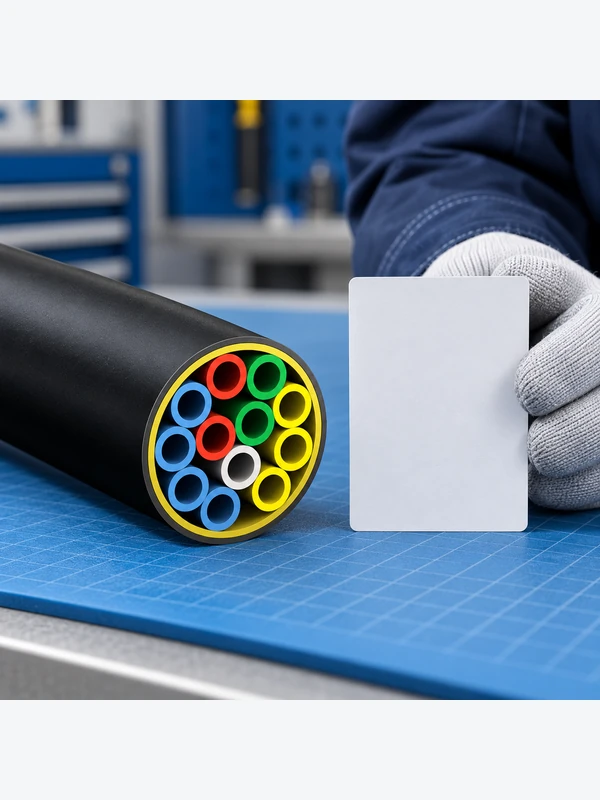
マイクロダクト工法は、大径の配管を専用の小口径ダクトに分割するため、チームは需要や設計承認が整った時点でケーブルを敷設できます。 テイクアップ それを正当化する。. HDPEマイクロダクト ポリエチレンは、軽量でありながら優れた耐衝撃性を備えているため、地下および屋外の通路システムに広く採用されています。ただし、適切な管壁構造、摩擦特性、埋設条件、接続方法については、依然としてプロジェクトごとに決定する必要があります。.
〜のために 空気吹き込み工法, 、ダクト内径、ケーブル直径、ルートの形状およびコンプレッサーの能力が相互に作用します。例えば、10/8 mmのダクトは公称内径が8 mmですが、その数値だけでは許容されるケーブルの範囲や送り込み距離を決定することはできません。ケーブルおよびブローア機の供給業者が提示する文書化された施工範囲を用い、その後、量産前に代表的なルートを検証してください。IEC 60794-1-2には、光ファイバーケーブルに対する引張試験、圧壊試験、温度サイクル試験の方法が含まれていますが、これは完成したダクトルートの承認を意味するものではありません。.
販売済みの住宅と稼働中の住宅では、異なる確認が必要です。
The European FTTH/B Market Panorama published on 17 March 2026 reports approximately 295 million homes passed across EU39, about 79% household coverage and approximately 54% take-up. Coverage and take-up describe different denominators and should not be used interchangeably. The regional report provides market context; it cannot show whether a particular address has a continuous drop duct, a permitted building entry or an activated optical terminal.
個別接続の際は、まず利用可能なアドレスと物理的な引き渡し点から着手してください。計画された配線ポート、利用可能な光ファイバーやスプリッターの割り当て、引き込み経路、許可状況、アクセス条件、建物内終端について確認を行ってください。図面に記載されている予備のマイクロダクトについては、顧客側の工事日までに、実際の敷設経路との一致および状態を確認しておく必要があります。遮断や不明な接続箇所は、通過したすべての住宅がケーブル吹込に対応可能であると仮定せず、工事上の問題として記録してください。.
次に、工事の完了とサービスの開通を区別してください。土木チームは、ケーブルやアクティブなサービスがまだ未着手であっても、検査済みの経路を引き渡すことができます。逆に、ケーブルは敷設されていても、端面の損傷、不適切なパッチマッピング、またはプロビジョニングの不備によりサービスが利用できない場合もあります。各工程に担当者と記録された結果を明示し、次のチームが実際に何が承認済みなのか把握できるようにします。引継ぎ記録には、各住所について、経路、ケーブルの試験、およびサービスの開通がそれぞれ完了しているかどうかを示す必要があります。.
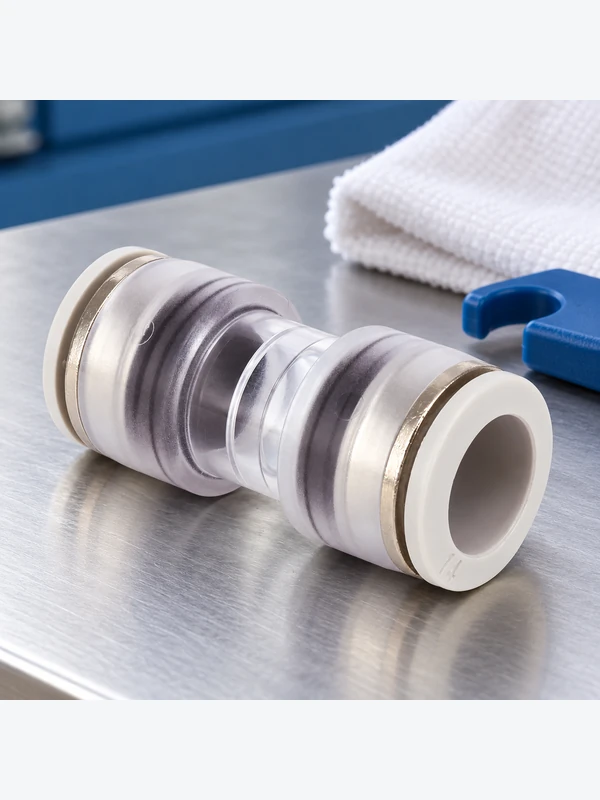
ダクト部品をこの順序に合わせて選定してください。アクセス可能なマイクロダクト用コネクタは接続部の点検を容易にしますが、実際の部品は依然としてダクトの外径、使用環境、およびシール機能に適合している必要があります。図面には、閉塞部、引き込み部、建物内への導入部に関する責任範囲を明示してください。その後、家庭向けサービスの開通遅延については、自動的にコネクタやアクセス技術の問題と断ずるのではなく、該当する段階で個別に調査する必要があります。.
ケーブル吹込み前にダクトを接続し、試験を行ってください。
マイクロダクト用コネクタは、互換性のあるダクト同士を接続するための取り外し可能な機械的継手で、通常はプッシュフィット式の保持機構とシールを備えています。その役割は、設置方法に必要な十分な気密性を確保しつつ、ダクトを確実に固定することです。直線型のコネクタは計画的な延長に適しており、レデューサー、エンドストップ、またはガス遮断部材は、異なる接続部や露出箇所に対応します。ただし、正しいタイプのコネクタであっても、変形していたり傷が付いていたり、切断面が不適切なダクト端を補正することはできません。.
ケーブル吹込工事の前には、施工業者はダクトを直角に切断し、バリを取り除き、挿入深さを確認し、継手部を引張荷重から保護するとともに、規定の圧力試験または漏れ試験を実施する必要があります。試験に不合格になると、ケーブル敷設が遅延し、他の工種が作業を終えた後に再度作業員を派遣したり、掘削やアクセス作業を行ったりする必要が生じます。コネクタのコスト比較を行う際には、これらのアクセス作業および作業員の人件費も考慮に入れてください。.
設置と保守の観点から経路オプションを比較する
| 経路アプローチ | 初期調整 | 容量の柔軟性 | インストールの影響 | TCO consideration |
|---|---|---|---|---|
| Direct-buried cable | Route and protection designed around one cable | Lower once buried | Repair or upgrade may require civil access | Can shift cost toward future excavation |
| Single conventional duct | One larger pathway to manage | Depends on spare bore and access | Pulling or blowing rules depend on cable and duct | Shared-pathway congestion can affect later work |
| Multiway microduct system | Requires clear duct and joint schedule | Dedicated bores can be reserved | Supports staged cable installation where validated | More up-front specification; potentially fewer disruptive upgrades |
The cost of a multiway microduct system depends on the planned installation and future use. Its value grows where phased take-up, multiple service areas or future network changes make protected spare pathways commercially useful. Any savings calculation should be labelled illustrative and should include civil access, testing, reinstatement and downtime risk—not only materials.
Choose duct and connector sizes from the cable plan
| 決定点 | 何を記録するか | Why it changes the result |
|---|---|---|
| Duct interface | Nominal outside diameter and actual measured tolerance | Connector gripping and sealing depend on the outside surface |
| Usable bore | Internal diameter, route length, bends and access points | Determines the cable-installation window, not merely nominal size |
| Cable interface | Cable diameter, stiffness and supplier blowing guidance | Controls friction, air flow and safe installation settings |
| 環境 | Buried, direct-sunlight, chamber, building-entry or gas-blocking need | Changes material, sealing and protection requirements |
Test the passive link, active service and home Wi-Fi separately
An FTTH handover should answer three separate questions. First, does the installed passive optical path meet its design and contract limits? Second, do the provisioned OLT, ONT and service profile deliver the agreed service at the defined test point? Third, does the customer’s home network deliver suitable coverage to the device being used? A Wi-Fi speed test from a distant room cannot distinguish all three.
For passive acceptance, record fibre identifiers, endpoints, test wavelengths, reference method and the agreed loss limits. The Fiber Optic Association distinguishes insertion-loss measurement with a source and power meter from OTDR event analysis. An OTDR trace helps locate splices, reflective events and faults; it is not interchangeable with a direct insertion-loss test. Use the operator’s required combination of tests and retain the setup with the results rather than simply attaching a screenshot labelled “passed.”
For active service, verify the correct terminal identity, port assignment, provisioning and test endpoint. Record the conditions of a wired performance test where the operator requires one, including the client equipment, interface capability and time of measurement. A device or server bottleneck should not be treated as evidence that the outside-plant duct is inadequate. Keep any active-service remedy separate from repairs to the passive fibre route.
For in-home wireless performance, assess gateway placement, coverage, interference and client capability under the relevant service procedure. Explain which result is being delivered to the customer: optical acceptance, service performance at the agreed interface, or wireless coverage in a room. The splice-box planning article supports the passive-route and maintenance discussion; it does not establish a wireless guarantee. Separate test records help the team locate the fault before replacing cable or connectors.
Which standards cover FTTH cables, fibre and buried conduits
Standards should be written into procurement documents with their scope intact. IEC 60794-1-2 specifies optical-fibre cable measurement and test procedures; it does not certify a connector. IEC 60794-5-20 addresses outdoor microduct optical-fibre cables, whereas ITU-T G.657 concerns the attributes of bend-insensitive single-mode fibre. EN 61386-24 covers particular requirements for conduit systems intended to be buried underground. A project in Europe may use EN requirements and local utility rules; another destination may require different national codes or customer specifications.
Ask suppliers to state what was tested, to which revision and on which product configuration. Avoid marketing a component as “IEC certified” when the cited document is a test method or applies to cable rather than the connector. Unsupported claims can create tender risk, delay acceptance and complicate defect responsibility.
What to check before ordering FTTH duct components
- Issue a route schedule that pairs every duct outside diameter with its connector type and cable plan.
- Request dimensional tolerances, material information, installation instructions and declared test evidence for the exact configuration.
- Set a clear pressure-test and visual-inspection hold point before cable blowing; record route, date and result.
- Trial the longest or most complex representative route using the intended cable, lubricant and blowing parameters.
For buyers seeking configurable pathway components, ANMASPC / Microduct Connector can support the discussion with product-range and documentation questions. Start by reviewing the available HDPE microduct options, then match them to the route and installation plan rather than sourcing fittings in isolation.
よくある質問
What is FTTH?
FTTH is an optical access architecture in which fibre reaches the subscriber’s residence. It describes the network endpoint, not a single cable, connector or installation method; the physical pathway must be specified separately.
How do microduct connectors work?
They grip and seal compatible duct ends so the route can be joined without a conventional fusion operation. Correct outside-diameter matching, clean square cuts and a documented leakage test are essential to performance.
Why are microducts used for FTTH?
They create defined small pathways that can support staged fibre installation and segregated routes. The benefit depends on the network plan, spare-capacity strategy and the verified ability to install the selected cable.
What size microduct is used for fiber optic cable?
There is no universal size: the selection follows cable diameter, route length, bends, blowing equipment and required future capacity. Record both duct outside diameter and bore, then use the cable supplier’s installation guidance.
Can fiber be blown into an existing microduct?
Often it can, provided the duct is continuous, clean, undamaged and suitable for the cable and route. Inspect the pathway and carry out a representative blowing trial before relying on an existing installation.
What is the difference between FTTH and FTTB?
FTTH takes fibre to an individual home, while FTTB takes it to a building and may use another medium for the final in-building connection. That endpoint difference affects the distribution design, access responsibilities and materials schedule.
Does a national FTTH coverage report tell me which connector size to buy?
No. Coverage reports describe market or infrastructure status. Connector size must be selected from the measured microduct OD and ID, cable plan, route conditions and the selected supplier’s installation instructions.
What should be recorded before approving an FTTH microduct bill of materials?
Record cable and duct dimensions, connector and reducer codes, chamber or access locations, route constraints, installation method, leak or continuity checks and the documents required for handover.
Does “homes passed” mean a customer can be activated immediately?
No. The term describes network availability under the report or operator’s definition. An individual address can still require permissions, a usable drop pathway, cable placement, optical tests, terminal installation and service provisioning. Check those stages locally rather than deriving readiness from a regional coverage percentage.
Can an OTDR pass replace an insertion-loss test or a Wi-Fi test?
No. An OTDR characterises events along the fibre, a source-and-power-meter measurement measures end-to-end insertion loss, and a Wi-Fi test includes the home’s wireless conditions. Follow the contract’s test plan and retain separate results with the correct endpoints and configuration.
参考文献
- Fibre Council Europe — European FTTH/B Market Panorama 2026, published 17 March 2026
- 光ファイバー協会 — 光時間領域反射計:イベント解析と挿入損失測定
- IEC 61386-24:2004 — Conduit systems buried underground, official scope
- ITU-T G.9804.3 Amendment 1 (2023) — 50G-PON PMD and triple wavelength coexistence, official abstract
要約
An FTTH connection needs an accepted pathway, tested optical link and activated customer service. Plan the duct, connectors, closures and drop route together, then record each handover stage against the correct address and fibre. Use coverage and take-up statistics as regional context, not as proof of local readiness. Test passive optical performance separately from active-service provisioning and home Wi-Fi, with the method and endpoints clearly identified. Record the owner and result of each stage so the installation team can trace an activation delay to the pathway, optical link, provisioning or home network.



