
부착된 상태를 유지하는 커넥터라도 누설이 발생할 수 있으며, 밀폐형 커넥터 역시 우발적인 분리로부터 보호가 필요할 수 있습니다. 이러한 구분은 작업자가 느슨해진 단말 마감을 교체하거나, 케이블 블로잉을 위한 예비 덕트를 준비할 때, 또는 건물 진입부에 가스 차단 장치를 규정할 때 매우 중요합니다. 겉보기상 더 튼튼해 보이는 클립을 추가하는 것은 실제 누설 경로를 변경하지 않은 채 분리 메커니즘만 개선할 수 있습니다. 반대로, 실링을 교체한다고 해서 노출된 콜레트가 외부 충격으로부터 보호된다는 보장은 아닙니다. 따라서 유용한 비교는 어떤 부속품이 더 튼튼한가가 아니라, 어느 인터페이스에서 제어가 필요한가입니다. 구매, 점검 또는 시험 대상을 결정하기 전에 별도의 유지력 확보, 공관 폐쇄, 덕트 접합 및 케이블 밀봉을 각각 고려해야 합니다.
짧은 답은 바로 마이크로 덕트 잠금 클립 prevents inadvertent operation of a compatible release mechanism; it does not form the pressure seal or increase a connector’s pressure rating. An end stop closes an empty duct, a coupler joins ducts, and a gas block seals the space around an installed cable. EN 50411-2-8:2009 covers several microduct connector functions, but its catalogue scope is not proof that a particular part is qualified. Choose the sealing component for the duct state first, then confirm exact accessory compatibility and separate leakage checks from retention inspection.
각 마이크로덕트 부속품은 실제로 무엇을 제어하나요?
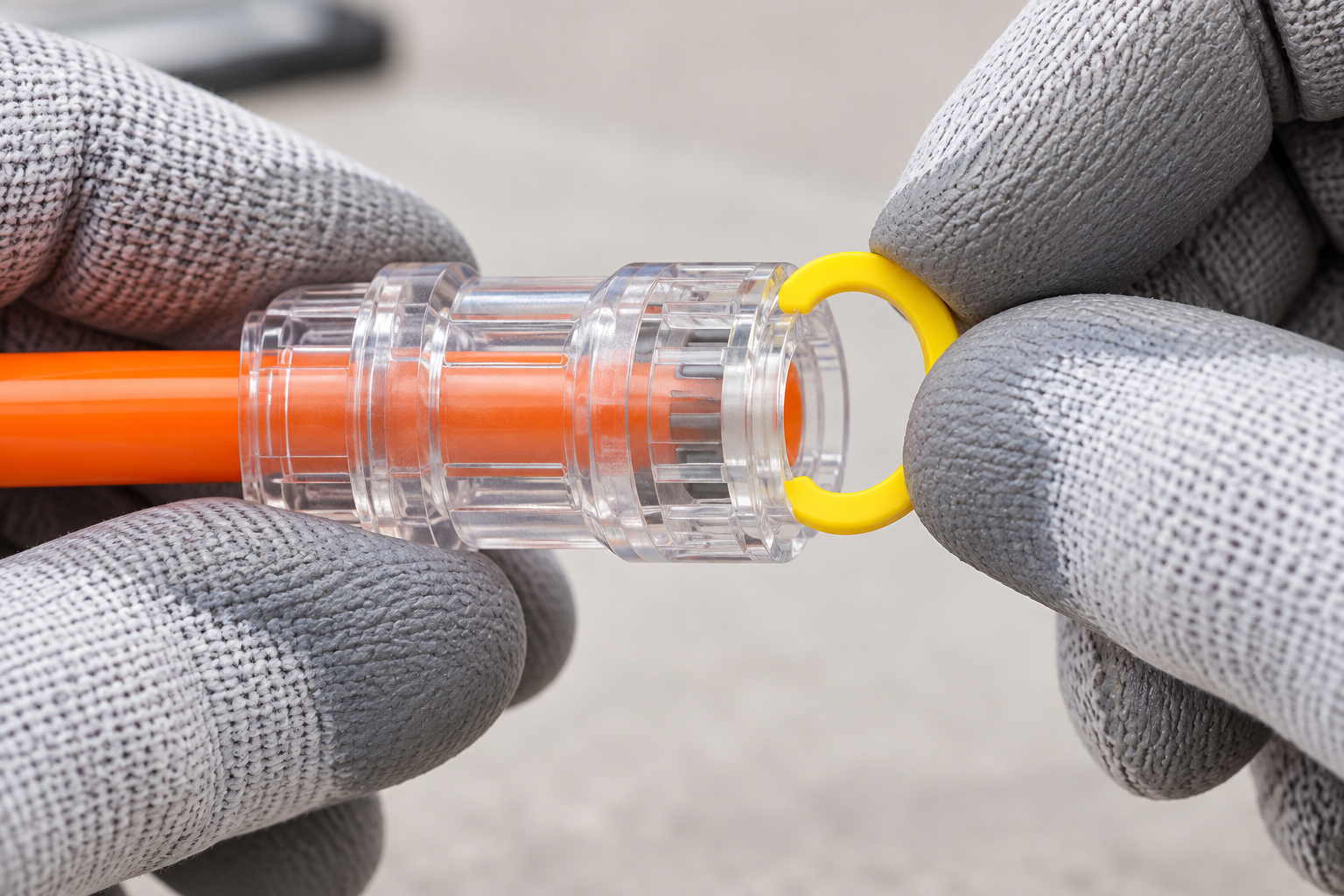
클립은 정의된 커넥터의 부속품이지, 대체 커넥터가 아닙니다. 클립의 결합 상태는 의도된 분리 동작을 방지해야 하며, 동시에 다른 부품을 방해해서는 안 됩니다. 또한 잘못된 덕트 직경, 불완전한 삽입, 손상된 튜브 또는 누출된 밀봉 상태를 보정할 수 없습니다. 엔드 스톱 대 가스 블록 비교 이는 왜 빈 도관과 케이블이 설치된 도관에 대해 서로 다른 폐쇄 방안을 적용해야 하는지 설명합니다.
| 구성 요소 | 주요 업무 | 그것이 규정하지 않는 것들 |
|---|---|---|
| 잠금 클립 | 호환 가능한 해제 메커니즘을 제한하십시오. | 공기, 물 또는 케이블 아눌러스 밀봉 |
| 엔드 스톱 또는 캡 | 빈 덕트 끝을 막기 | 설치된 케이블 주변의 밀봉재 |
| 스트레이트 커플러 | 호환되는 덕트 단부를 연결하세요 | 케이블 밀봉은 특별히 이를 위해 설계된 경우를 제외하고는 적용되지 않습니다. |
| 가스 블록 커넥터 | 지정된 덕트 및 케이블 인터페이스를 밀봉하십시오. | 방화 또는 범용 위험 가스 보호 |
| 보호 케이스 | 모델별 외부 보호 장치를 제공합니다. | 독립형 압력 또는 가스 씰 |
이러한 구분은 유지보수 비용을 효율적으로 관리하는 데에도 기여합니다. 커넥터의 누설로 인해 클립만 교체하면 결함이 그대로 남을 수 있는 반면, 클립이 없어서 피팅 전체를 교체하는 것은 제조사가 호환 가능한 교체 부품을 허용하고 조립품이 품질 검사를 통과한다면 불필요할 수 있습니다.
승무원들은 우발적 유출과 누출을 어떻게 구분할 수 있나요?
관찰된 증상부터 시작하십시오. 결함이 있다고 가정한 부품에서 시작하지 마십시오. 느슨한 클립은 고정 상태에 대한 발견 사항이고, 압력 감소는 시스템 테스트 결과입니다. 이 둘 중 어느 하나만으로는 챔버 내 물의 원인을 특정할 수 없습니다. 누수는 다른 배관 연결부에서도 발생할 수 있으며, 이미 존재하는 물이 검사 중인 피팅을 통해 유입되었음을 입증하는 것은 아닙니다.
| 관찰된 증상 | 조사할 질문 | 다음 조치 |
|---|---|---|
| 클립이 빠졌거나 제대로 장착되지 않았습니다. | 의도된 해제 동작이 제한되어 있습니까? | 액세서리 코드와 결합 형상을 확인하십시오. |
| 교란 시 덕트가 이동하거나 분리됩니다. | 삽입이 완료되었으며, 그립은 호환됩니까? | 준비 상태, 위치 조정, 유지 및 경로 지원을 검사합니다. |
| 피팅이 부착된 상태에서의 압력 손실 | 어떤 덕트 또는 실링 인터페이스에서 누출이 발생하고 있습니까? | 경로를 격리하고 승인된 절차에 따라 조사하십시오. |
| 거주 중인 출입구 근처의 물 | 경로는 케이블 애뉼러입니까, 아니면 다른 인터페이스입니까? | 케이블 씰을 선택하기 전에 경로를 추적하십시오. |
| 커넥터가 장착된 상태에서 쉘 래치가 열림 | 외부 보호 장치가 올바르게 조합되어 작동 중입니까? | 하우징을 하부 씰과 별도로 점검하십시오. |
FCST의 2025 설치 지침은 유용한 제조업체 사례를 제공합니다: 튜브가 완전히 장착되지 않은 상태에서 잡혀 있어 누출이 발생할 수 있습니다. 이 지침은 깨끗하고 둥글며 손상되지 않은 덕트 단부, 버 제거 및 직각 절단을 요구합니다. 이러한 사례는 겉보기 유지력이 완전 삽입의 증거가 아님을 설명하며, 모든 피팅에 FCST의 절차를 그대로 적용하기보다는 실제 커넥터 제조사의 치수와 지침을 사용해야 함을 보여줍니다.
클립이나 보호 케이스를 주문하기 전에 무엇이 일치해야 하나요?
정확한 커넥터 코드, 호환 액세서리 코드, 도면 버전 및 필요 수량을 요청하십시오. 덕트의 외경은 튜브 인터페이스를 결정하며, 내경과 벽체 구조는 별도의 루트 검사 항목입니다. 공통된 공칭 치수가 두 클립의 간격, 프로파일 또는 해제 방지 형상이 동일하다는 것을 의미하지 않습니다. 시각적 일치를 위해 액세서리를 강제로 조립하거나 쌓거나 변형하지 마십시오.
오울루의 클립 목록은 제한된 일반 정보만 제공하므로, 임의로 설정된 치수나 범용 제거 도구를 지원할 수 없습니다. 그 마이크로덕트 보호 쉘 대신, 특정 커넥터 유형에서 우발적인 콜렛 해제를 방지하도록 설계된 성형 탭이 있는 폴리프로필렌 스냅 잠금 덮개로 설명됩니다. 해당 쉘 구조는 느슨한 클립과 동등하지 않습니다. 쉘과 커넥터의 결합 상태 및 래치 체결 여부를 확인하십시오. 해당 제품 명세서에는 별도의 압력, 가스 또는 수밀 등급이 명시되어 있지 않습니다.
실용적인 추적성을 위해 커넥터 및 부속품 코드, 로트 표시, 덕트 형상, 조립 상태 및 검사 결과를 기록하십시오. 승인된 시험 절차, 시험 매체, 계측기 식별 정보와 결과를 루트 기록과 함께 보관하십시오. 이를 통해 교체 주문 시 유사한 부속품의 사진에 의존하지 않고 의도된 구성 그대로 재현할 수 있습니다.
How should a dormant spare duct change when cable is installed?
A capped spare duct and an occupied entry are different assemblies. During planning, identify where the temporary closure will be removed, how the opening will stay clean, and whether the completed route needs a 케이블-아너러스 씰. A locking clip cannot close the space between the cable and duct, even if it secures the connector perfectly.
게시된 Waterproof Air Gas Block range distinguishes 10 bar blowing pressure from cable sealing up to 0.3 bar. Its ring is open for blowing and rotated afterwards to seal, with two locking clips ordered separately. Those values describe different functions and states, not a cable-seal test at blowing pressure. Confirm the supplied model, duct fit and cable range before using any family-level specification.
Record the conversion from vacant to occupied duct and approve the new test configuration. An earlier empty-duct acceptance test does not validate the later cable interface. Leaving the wrong closure or an activated cable seal in the blowing path creates a process problem that adding a clip cannot solve.
What must be verified before release, reuse or outdoor service?
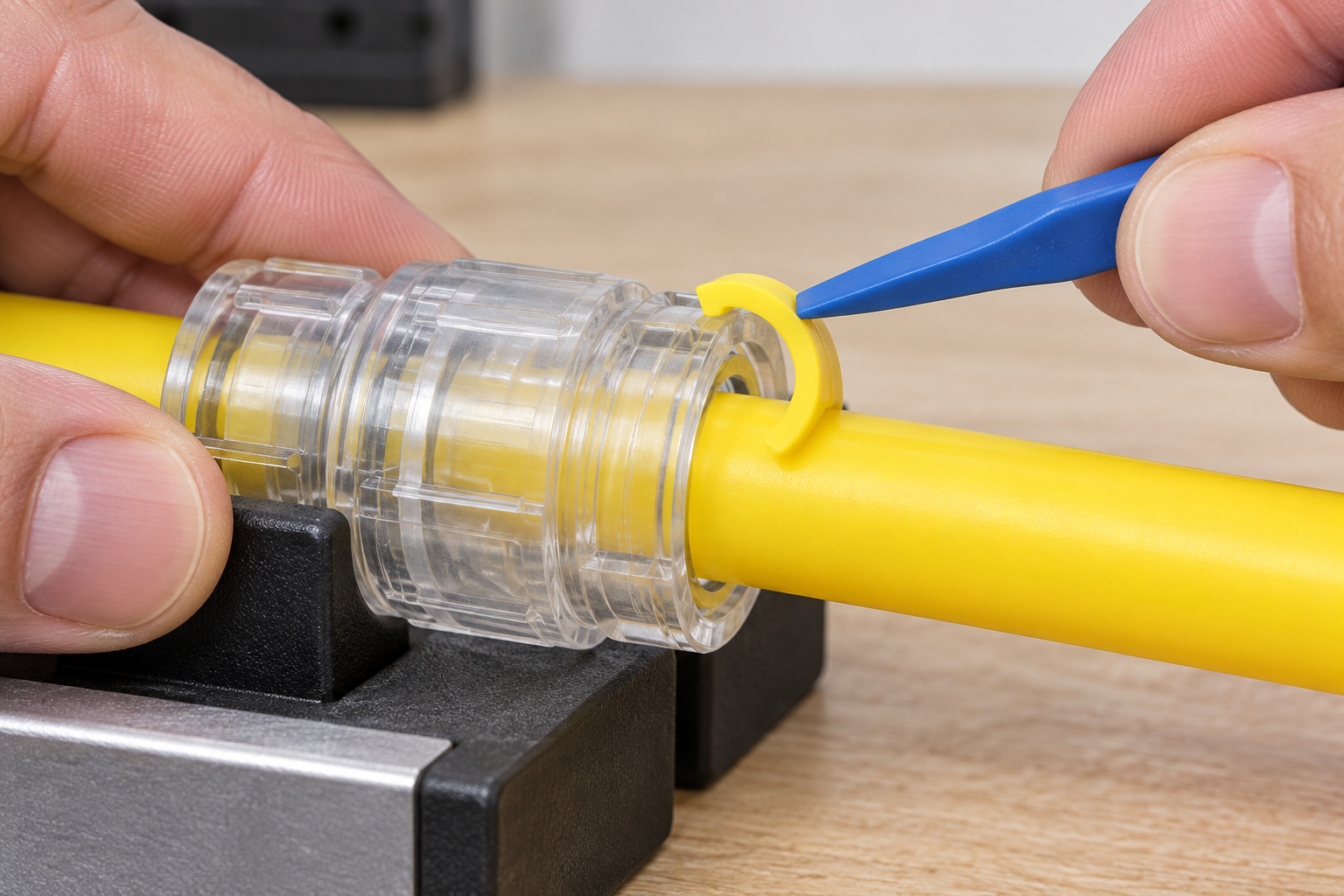
Verify isolation and zero energy using the approved site and manufacturer procedure before touching a release mechanism. Closing a valve or seeing one gauge at zero is not, by itself, verification of every trapped section. FCST’s instruction gives its release sequence as depressurizing, removing the clip, pushing the collet and pulling the duct. Treat that as a maker-specific example, not universal instructions or permission to release an unknown assembly.
Reuse requires explicit approval for the exact part plus inspection and the prescribed retest. Check the clip separately from the connector body and its sealing elements; there is no universal allowable number of cycles. Uncertain damage, incompatible replacement seals or missing instructions should trigger supplier clarification rather than improvised field repair.
Outdoor suitability likewise needs exact-code evidence. EN 50411-2-8:2009 excludes connectors intended for direct sunlight from its scope. ISO 4892-1:2024 concerns laboratory light-exposure methods and interpretation, not a clip certificate or a fixed hours-to-years conversion. Request applicable temperature limits and exposure evidence without assuming that a shell or clip has a universal sunlight rating.
What questions should installers ask about locking clips?
What pressure test confirms connector sealing when a locking clip is fitted?
Test the sealing assembly under its approved procedure. Inspect clip engagement separately because anti-release retention is not a pressure seal.
Does every microduct connector need a locking clip?
Follow the exact connector instructions for quantity and placement. Some designs use other retention arrangements; do not assume all families accept the same clip.
How is a locking clip removed without damaging the duct?
First verify zero energy through the approved procedure. Use the manufacturer’s release method and specified tools, without levering against the duct or improvising from another model’s instructions.
What UV and temperature rating should an outdoor clip have?
The declared limits must suit its actual exposure and service conditions. Obtain exact-part evidence; a standard citation alone does not establish outdoor suitability.
How can the connector’s sealing O-ring be checked for wear?
The seal belongs to the connector or closure, not the clip. After safe isolation, inspect accessible seals as instructed for damage, contamination or deformation and apply the maker’s replacement criteria.
Can a locking clip provide temporary network protection?
It can secure a compatible temporary closure, but cannot close an open duct by itself. Use an appropriate end stop and document its removal before cable installation.
Can a protective shell replace a separate locking clip?
Only when the exact assembly instructions establish that configuration. Shell tabs and snap-lock engagement are design-specific, not evidence that a clip is unnecessary on another connector.
What should be documented when a spare duct becomes occupied?
Record the new cable diameter, seal code and assembly state. Retest the relevant interfaces under the approved occupied-duct procedure instead of relying on the earlier vacant-duct result.
Which sources define the limits of these recommendations?
- FCST: Installation Instruction For Microduct Connector, 22 August 2025 provides the attributed preparation, clip and release example.
- NEN catalogue: EN 50411-2-8:2009 microduct connector scope identifies covered functions and the direct-sunlight exclusion.
- ISO 4892-1:2024 laboratory light-exposure guidance explains the method boundary, not product life.
How should buyers choose between retention and sealing?
Select the component for the pathway before selecting the accessory for its release mechanism. A vacant duct needs an appropriate closure; a joined route needs compatible duct interfaces; an occupied boundary may need a cable seal. Then confirm the connector code, accessory fit and assembly instructions, and keep leakage acceptance separate from retention inspection. Do not turn convenience into a rating: a fitted clip does not upgrade pressure capacity, a shell does not automatically seal, and an earlier empty-duct test does not qualify a later cable entry. Oulu supplies these related product families, but the useful procurement step is an exact-code compatibility check. Review the microduct locking clip product and ask for the matching drawing, release instructions and application evidence before approving the assembly.



