
ឧបករណ៍ភ្ជាប់ដែលនៅជាប់ជានិច្ចក៏នៅតែអាចមានការលេចធ្លាយបានដែរ ហើយឧបករណ៍ភ្ជាប់ដែលបិទជិតហើយក៏នៅតែត្រូវការការពារពីការដោះចេញដោយចៃដន្យ។ ការបែងចែកនេះមានសារៈសំខាន់នៅពេលក្រុមការងារជំនួសប៊ូលបញ្ចប់ដែលរលុង រៀបចំទុយោបន្ថែមសម្រាប់បោះខ្សែ ឬកំណត់ប្លុកឧស្ម័ននៅច្រកចូលអគារ។ ការបន្ថែមសោដែលមើលទៅរឹងមាំជាង អាចដោះស្រាយបញ្ហានៃយន្តការដោះចេញ ដោយមិនផ្លាស់ប្តូរផ្លូវនៃការលេចធ្លាយជាក់ស្តែងឡើយ។ ផ្ទុយទៅវិញ ការជំនួសស្រោបបិទជិតមិនបានធានាថាក្បាលខ្សែដែលបើកចំហរត្រូវបានការពារពីការរំខានឡើយ។ ដូច្នេះ ការប្រៀបធៀបដែលមានប្រយោជន៍មិនមែនស្ថិតនៅលើថាឧបករណ៍បន្ថែមណាមួយរឹងមាំជាងនោះទេ ប៉ុន្តែស្ថិតនៅលើថាតើចំណុចប្រសព្វណាដែលត្រូវការការគ្រប់គ្រង។ ត្រូវធ្វើការគ្រប់គ្រងការរក្សាទុក ការបិទទុយោទទេ ការភ្ជាប់ទុយោ និងការបិទជិតខ្សែដោយឡែកពីគ្នា មុនពេលសម្រេចចិត្តថាអ្វីដែលត្រូវទិញ ត្រួតពិនិត្យ ឬធ្វើតេស្ត។.
ចម្លើយខ្លីគឺថា សន្ទះចងខ្សៀរមីក្រូដាក្ត ការពារការដំណើរការដោយចៃដន្យនៃយន្តការបញ្ចេញដែលអាចប្រើបាន; វាមិនបង្កើតជាប្រព័ន្ធបិទជិតសម្ពាធ ឬបង្កើនកម្រិតសម្ពាធរបស់ឧបករណ៍ភ្ជាប់ឡើយ។ គ្រឿងបញ្ចប់មួយបិទបំពង់ទទេ, ឧបករណ៍ភ្ជាប់មួយផ្សាភ្ជាប់បំពង់, ហើយគ្រឿងបញ្ចុះឧស្ម័នមួយបិទជិតចន្លោះជុំវិញខ្សែកាបដែលបានដំឡើង។ EN 50411-2-8:2009 គ្របដណ្តប់មុខងារជាច្រើននៃឧបករណ៍ភ្ជាប់បំពង់មីក្រូ, ប៉ុន្តែវិសាលភាពនៃបញ្ជីរបស់វាមិនមែនជាភស្តុតាងថាផ្នែកជាក់លាក់ណាមួយត្រូវបានទទួលស្គាល់ឡើយ។ ជ្រើសរើសសមាសធាតុបិទជិតសម្រាប់ស្ថានភាពបំពង់ជាមុនសិន, បន្ទាប់មកបញ្ជាក់ពីភាពឆបគ្នាជាក់លាក់នៃគ្រឿងបន្ថែម, និងពិនិត្យការលេចធ្លាយដាច់ដោយឡែកពីការត្រួតពិនិត្យការរក្សាទុក។.
តើគ្រឿងបន្លាស់មីក្រូដាក់នីមួយៗពិតជាគ្រប់គ្រងអ្វី?
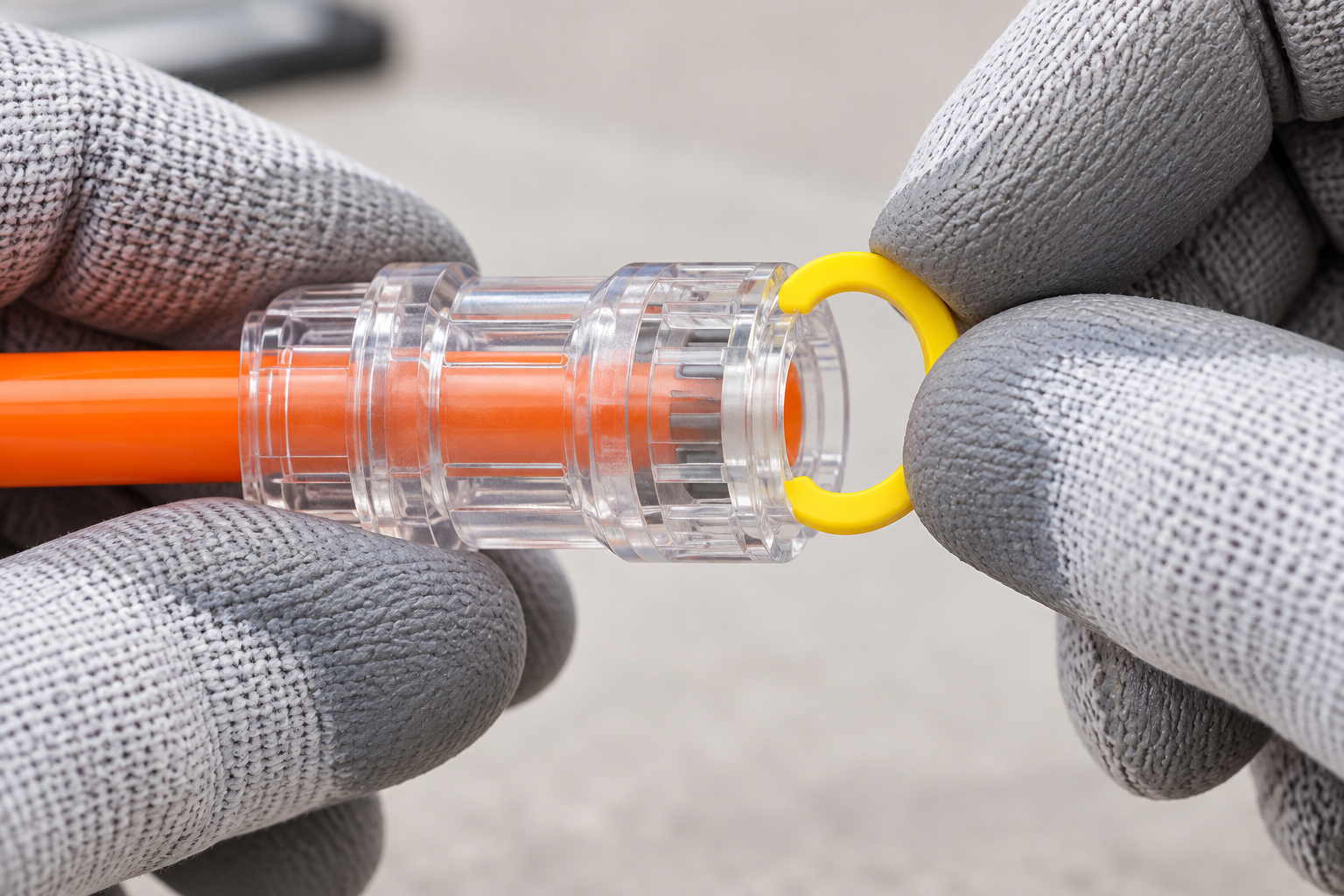
ចំណុចភ្ជាប់គឺជាឧបករណ៍បន្ថែមសម្រាប់ឧបករណ៍ភ្ជាប់ដែលបានកំណត់ មិនមែនជាឧបករណ៍ភ្ជាប់ជំនួសនោះទេ។ ការភ្ជាប់របស់វាត្រូវតែរារាំងចលនាដែលបានគ្រោងទុកសម្រាប់ដោះចេញ ដោយមិនរារាំងផ្នែកផ្សេងទៀតឡើយ។ វាមិនអាចកែតម្រូវអង្កត់ផ្ចិតបំពង់ខុស ការបញ្ចូលមិនពេញលេញ បំពង់ខូច ឬការបិទជិតមិនបានល្អបានឡើយ។ ការប្រៀបធៀបរវាងចុងដែលឈប់ និងប្លុកហ្គាស ពន្យល់ថាហេតុអ្វីបានជាបំពង់ទទេ និងបំពង់ដែលមានខ្សែកាបត្រូវការសម្រេចចិត្តបិទផ្សេងគ្នា។.
| ធាតុបង្ក | ការងារចំបង | អ្វីដែលវាមិនបានបង្កើតឡើង |
|---|---|---|
| ក្បាលសោរ | រារាំងយន្តការចេញផ្សាយដែលសមប្រកប | ការបិទជិតខ្យល់ ទឹក ឬចន្លោះរវាងខ្សែកាប |
| ចុងបញ្ចប់ ឬ គម្រប | បិទចុងលំហូរដែលទំនេរ | សំបកបិទជុំវិញខ្សែកាបដែលបានតំឡើងរួច |
| ឧបករណ៍ភ្ជាប់ត្រង់ | ភ្ជាប់ចុងទុយោដែលសមនឹងគ្នា | ការបិទខ្សែភ្លើង លុះត្រាតែវាត្រូវបានរចនាឡើងជាពិសេសសម្រាប់ការនេះ |
| ឧបករណ៍ភ្ជាប់ហ្គាស | បិទជិតចំណុចភ្ជាប់ខ្សែ និងបំពង់ដែលបានកំណត់ | ការការពារភ្លើង ឬការការពារឧស្ម័នគ្រោះថ្នាក់ទូទៅ |
| សំបកការពារ | ផ្តល់ការការពារខាងក្រៅជាក់លាក់សម្រាប់ម៉ូដែល | សោរដែលបិទជាប់គ្នាដោយសម្ពាធឬឧស្ម័ន |
ការបែងចែកទាំងនេះក៏ជួយរក្សាការចំណាយលើការថែទាំឱ្យស្ថិតក្នុងកម្រិតទាបផងដែរ។ ការជំនួសគ្រាប់ចុចព្រោះឧបករណ៍ភ្ជាប់មានការលេចធ្លាយ អាចធ្វើឱ្យចំណុចខ្វះខាតនៅតែមិនបានកែសម្រួល ខណៈដែលការជំនួសឧបករណ៍ភ្ជាប់ទាំងមូលព្រោះគ្រាប់ចុចរបស់វាត្រូវបានបាត់ អាចជាការមិនចាំបាច់ឡើយ ប្រសិនបើក្រុមហ៊ុនផលិតអនុញ្ញាតឱ្យប្រើគ្រឿងបន្លាស់ជំនួសដែលសមស្រប ហើយការតភ្ជាប់នោះឆ្លងកាត់ការត្រួតពិនិត្យទទួលយកបាន។.
តើក្រុមការងារអាចបែងចែកការបញ្ចេញចោលដោយចៃដន្យពីការធ្លាយបានដោយរបៀបណា?
ចាប់ផ្តើមពីរោគសញ្ញាដែលបានសង្កេតឃើញ មិនមែនពីផ្នែកដែលត្រូវបានសន្មតថាខូចទេ។ ក្រឡោតដែលរលុងគឺជាលទ្ធផលនៃការរក្សាទុក; ការធ្លាក់ចុះនៃសម្ពាធគឺជាលទ្ធផលនៃការធ្វើតេស្តប្រព័ន្ធ។ មិនមានអ្វីមួយដោយខ្លួនឯងអាចកំណត់បាននូវប្រភពទឹកនៅក្នុងបន្ទប់នោះទេ។ ការលេចធ្លាយអាចកើតឡើងនៅកន្លែងតភ្ជាប់ផ្លូវផ្សេងទៀត ហើយទឹកដែលមានស្រាប់មិនបញ្ជាក់ថាមានការជ្រៀតចូលតាមឧបករណ៍ដែលកំពុងត្រូវបានត្រួតពិនិត្យនោះទេ។.
| រោគសញ្ញាដែលបានសង្កេតឃើញ | សំណួរដែលត្រូវស៊ើបអង្កេត | សកម្មភាពបន្ទាប់ |
|---|---|---|
| កាត់ចោល ឬដាក់មិនពេញ | តើចលនានៃការបញ្ចេញដែលបានគ្រោងទុកត្រូវបានរក្សាទុកដែរឬទេ? | បញ្ជាក់លេខកូដនៃគ្រឿងបន្លាស់ និងរូបវិទ្យានៃការភ្ជាប់ |
| បំពង់ផ្លូវខ្យល់រំកិល ឬដាច់ចេញពីគ្នាក្នុងអំឡុងពេលមានការរំខាន | ការបញ្ចូលបានបញ្ចប់ហើយ ហើយដៃកាន់មានភាពស៊ីគ្នាឬទេ? | ពិនិត្យការរៀបចំ ការដាក់តាំង ការរក្សាទុក និងការគាំទ្រផ្លូវ |
| ការបាត់បង់សម្ពាធខណៈពេលដែលឧបករណ៍តភ្ជាប់នៅតែជាប់ | តើចំណុចតភ្ជាប់នៃទុយយោ ឬស្នូលបិទជិតមួយណាដែលកំពុងធ្លាយ? | បែងចែកផ្លូវនោះ ហើយធ្វើការស៊ើបអង្កេតតាមនីតិវិធីដែលបានអនុម័ត។ |
| ទឹកនៅជិតច្រកចូលដែលមានមនុស្សរស់នៅ | តើផ្លូវនោះគឺជាអង្គុយខ្សែកាប ឬជាផ្ទៃប្រសព្វមួយទៀត? | តាមដានផ្លូវមុនពេលជ្រើសរើសប្រអប់ខ្សៀក |
| សោរបើកខ្លឹម ខណៈពេលដែលត្រចៀកកាសនៅតែជាប់នៅកន្លែង | តើការការពារខាងក្រៅត្រូវបានផ្គូរផ្គង និងដំណើរការត្រឹមត្រូវហើយឬនៅ? | ពិនិត្យមើលស៊ុមដាច់ដោយឡែកពីសៀលខាងក្រោម |
សេចក្តីណែនាំការដំឡើង 2025 របស់ FCST ផ្តល់ជាឧទាហរណ៍ដ៏មានប្រយោជន៍ពីអ្នកផលិត៖ បំពង់អាចត្រូវបានកាន់ដោយមិនបានដាក់ចូលឱ្យពេញលេញ ដែលបណ្តាលឱ្យមានការលេចធ្លាយ។ វាទាមទារឱ្យមានចុងខ្សែបំពង់ស្អាត មូល មិនខូច, ការដកចោលស្នាមកោស, និងការកាត់ឱ្យជ្រុងស្មើ។ ឧទាហរណ៍នោះពន្យល់ថា ហេតុអ្វីការរក្សាដែលមើលឃើញមិនមែនជាភស្តុតាងនៃការដាក់ចូលពេញលេញនោះទេ; សូមប្រើវិមាត្រ និងសេចក្តីណែនាំពិតប្រាកដរបស់អ្នកផលិតឧបករណ៍ភ្ជាប់ ជំនួសឱ្យការផ្ទេរនីតិវិធីរបស់ FCST ទៅគ្រប់ឧបករណ៍ភ្ជាប់ទាំងអស់។.
តើអ្វីដែលត្រូវតែស្របគ្នាមុនពេលដែលកាបូប ឬសំបកការពារត្រូវបានបញ្ជាទិញ?
សូមបញ្ជាក់លេខកូដនៃឧបករណ៍ភ្ជាប់ជាក់លាក់ លេខកូដនៃគ្រឿងបន្លាស់ដែលអាចប្រើបាន កំណែនៃគំនូរ និងចំនួនដែលត្រូវការ។ អង្កត់ផ្ចិតខាងក្រៅនៃទុយោកំណត់ពីចំណុចប្រទាក់នៃទុយោ ខណៈដែលអង្កត់ផ្ចិតខាងក្នុង និងរចនាសម្ព័ន្ធនៃជញ្ជាំងត្រូវបានពិនិត្យដោយឡែកពីគ្នា។ ទំហំស្តង់ដាររួមមួយមិនបានបញ្ជាក់ថាក្ដាប់ពីរមានគម្លាត រូបរាង ឬរចនាសម្ព័ន្ធដែលរារាំងការដោះចេញដូចគ្នានោះទេ។ សូមកុំបង្ខំ ដាក់គ្រឿងបន្លាស់ពីលើគ្នា ឬកែប្រែគ្រឿងបន្លាស់ដើម្បីធ្វើឱ្យការត្រួតពិនិត្យរូបភាពដំណើរការបាន។.
បញ្ជីឃ្លីបរបស់ Oulu ផ្ដល់ព័ត៌មានទូទៅកម្រិតទាប ដូច្នេះវាមិនអាចគាំទ្រដល់វិមាត្រដែលបង្កើតឡើង ឬឧបករណ៍ដកចេញជាសកលបានឡើយ។ របស់វា សំបកការពារមីក្រូឌុច ត្រូវបានពណ៌នាថាជាគម្របចង្អូរជាប់ដោយផ្លាស្ទិកប៉ូលីប្រូពីលែន ដែលមានស្លាបច្រកចូលគ្នាដែលបានចាក់ថ្នាំកូត ដើម្បីទប់ស្កាត់ការដោះចង្អូរចេញដោយចៃដន្យនៅលើប្រភេទខួបភ្ជាប់ដែលបានកំណត់។ ការរៀបចំសំបកនោះមិនស្មើនឹងក្រវិលដែលរុយរោយឡើយ។ សូមបញ្ជាក់អំពីការផ្គូផ្គងរវាងសំបកនិងខួបភ្ជាប់ និងការចូលគ្នារបស់ចង្អូរ; បញ្ជីនេះមិនបានកំណត់ចំណាត់ថ្នាក់ការស្អិតជាប់ប្រឆាំងសម្ពាធខ្យល់ ឬទឹកដាច់ដោយឡែកឡើយ។.
For practical traceability, record connector and accessory codes, lot markings, duct geometry, assembly state and inspection outcome. Keep the approved test procedure, medium, instrument identification and result with the route record. This allows a replacement order to reproduce the intended configuration rather than rely on a photograph of a similar accessory.
How should a dormant spare duct change when cable is installed?
A capped spare duct and an occupied entry are different assemblies. During planning, identify where the temporary closure will be removed, how the opening will stay clean, and whether the completed route needs a ត្រាសំណាញ់ខ្សែកាប. A locking clip cannot close the space between the cable and duct, even if it secures the connector perfectly.
The published Waterproof Air Gas Block range distinguishes 10 bar blowing pressure from cable sealing up to 0.3 bar. Its ring is open for blowing and rotated afterwards to seal, with two locking clips ordered separately. Those values describe different functions and states, not a cable-seal test at blowing pressure. Confirm the supplied model, duct fit and cable range before using any family-level specification.
Record the conversion from vacant to occupied duct and approve the new test configuration. An earlier empty-duct acceptance test does not validate the later cable interface. Leaving the wrong closure or an activated cable seal in the blowing path creates a process problem that adding a clip cannot solve.
What must be verified before release, reuse or outdoor service?
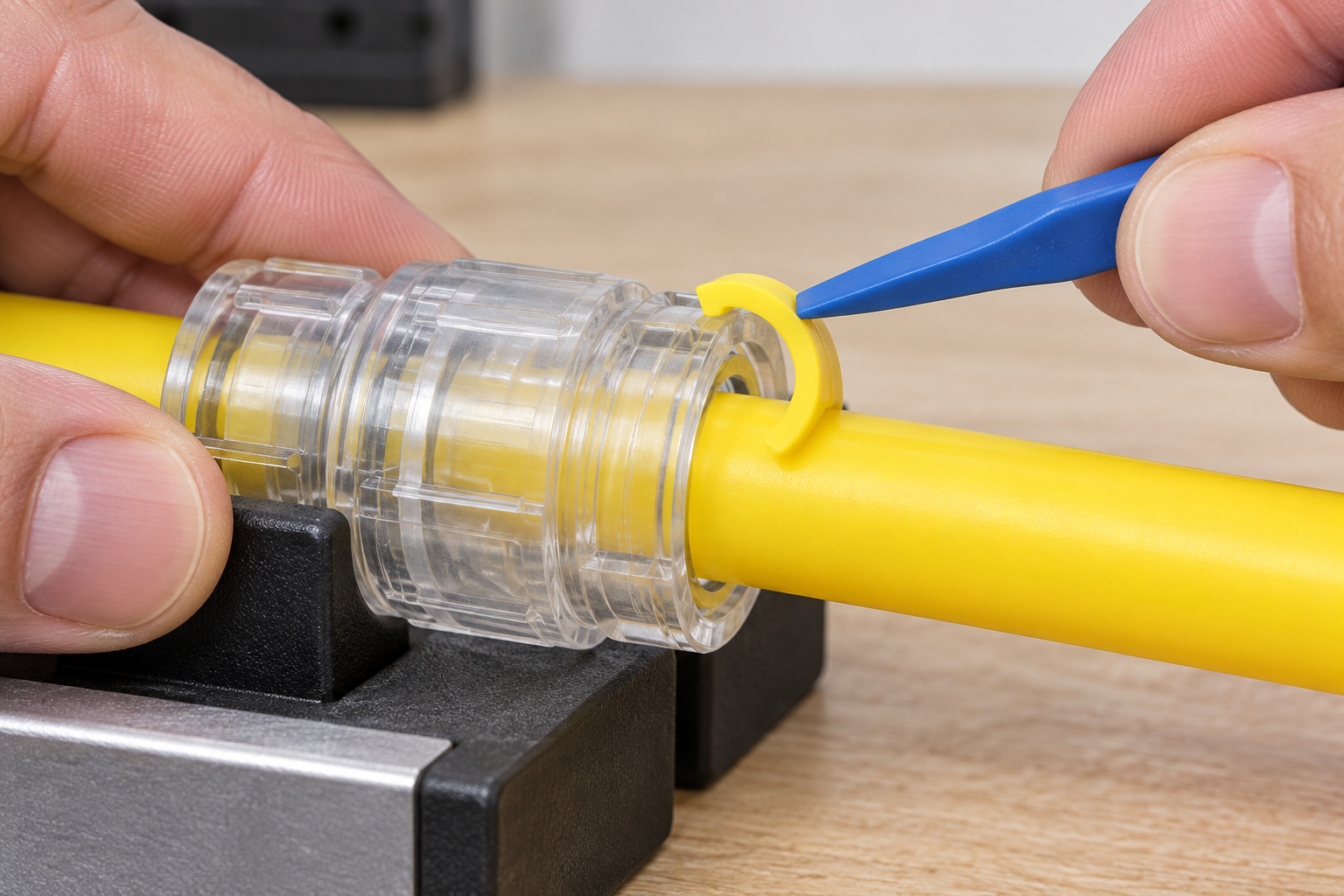
Verify isolation and zero energy using the approved site and manufacturer procedure before touching a release mechanism. Closing a valve or seeing one gauge at zero is not, by itself, verification of every trapped section. FCST’s instruction gives its release sequence as depressurizing, removing the clip, pushing the collet and pulling the duct. Treat that as a maker-specific example, not universal instructions or permission to release an unknown assembly.
Reuse requires explicit approval for the exact part plus inspection and the prescribed retest. Check the clip separately from the connector body and its sealing elements; there is no universal allowable number of cycles. Uncertain damage, incompatible replacement seals or missing instructions should trigger supplier clarification rather than improvised field repair.
Outdoor suitability likewise needs exact-code evidence. EN 50411-2-8:2009 excludes connectors intended for direct sunlight from its scope. ISO 4892-1:2024 concerns laboratory light-exposure methods and interpretation, not a clip certificate or a fixed hours-to-years conversion. Request applicable temperature limits and exposure evidence without assuming that a shell or clip has a universal sunlight rating.
What questions should installers ask about locking clips?
What pressure test confirms connector sealing when a locking clip is fitted?
Test the sealing assembly under its approved procedure. Inspect clip engagement separately because anti-release retention is not a pressure seal.
Does every microduct connector need a locking clip?
Follow the exact connector instructions for quantity and placement. Some designs use other retention arrangements; do not assume all families accept the same clip.
How is a locking clip removed without damaging the duct?
First verify zero energy through the approved procedure. Use the manufacturer’s release method and specified tools, without levering against the duct or improvising from another model’s instructions.
What UV and temperature rating should an outdoor clip have?
The declared limits must suit its actual exposure and service conditions. Obtain exact-part evidence; a standard citation alone does not establish outdoor suitability.
How can the connector’s sealing O-ring be checked for wear?
The seal belongs to the connector or closure, not the clip. After safe isolation, inspect accessible seals as instructed for damage, contamination or deformation and apply the maker’s replacement criteria.
Can a locking clip provide temporary network protection?
It can secure a compatible temporary closure, but cannot close an open duct by itself. Use an appropriate end stop and document its removal before cable installation.
Can a protective shell replace a separate locking clip?
Only when the exact assembly instructions establish that configuration. Shell tabs and snap-lock engagement are design-specific, not evidence that a clip is unnecessary on another connector.
What should be documented when a spare duct becomes occupied?
Record the new cable diameter, seal code and assembly state. Retest the relevant interfaces under the approved occupied-duct procedure instead of relying on the earlier vacant-duct result.
Which sources define the limits of these recommendations?
- FCST: ការណែនាំក្នុងការដំឡើងសម្រាប់ឧបករណ៍ភ្ជាប់មីក្រូឌាក់, 22 ខែសីហា 2025 provides the attributed preparation, clip and release example.
- NEN catalogue: EN 50411-2-8:2009 microduct connector scope identifies covered functions and the direct-sunlight exclusion.
- ISO 4892-1:2024 laboratory light-exposure guidance explains the method boundary, not product life.
How should buyers choose between retention and sealing?
Select the component for the pathway before selecting the accessory for its release mechanism. A vacant duct needs an appropriate closure; a joined route needs compatible duct interfaces; an occupied boundary may need a cable seal. Then confirm the connector code, accessory fit and assembly instructions, and keep leakage acceptance separate from retention inspection. Do not turn convenience into a rating: a fitted clip does not upgrade pressure capacity, a shell does not automatically seal, and an earlier empty-duct test does not qualify a later cable entry. Oulu supplies these related product families, but the useful procurement step is an exact-code compatibility check. Review the microduct locking clip product and ask for the matching drawing, release instructions and application evidence before approving the assembly.



