
یک اتصالدهندهای که به جای خود باقی میماند همچنان میتواند نشت داشته باشد، و حتی یک اتصالدهنده محکم شده هم ممکن است به حفاظت علیه رهاشدن تصادفی نیاز داشته باشد. این تمایز زمانی مهم میشود که گروه عملیاتی یک سرپوش پرهیزگار را تعویض میکند، یک لوله ذخیره را برای فشردن کابل آماده میسازد، یا در ورودی ساختمان یک بلوک گازی را مشخص میکند. اضافه کردن یک قفل ظاهری قویتر ممکن است به مکانیسم رهاشدن رسیدگی کند بدون اینکه مسیر واقعی نشت را تغییر دهد. در عوض، تعویض یک مهره یا پیچ نمیتواند اطمینان دهد که یک کلتِ نصبشده در معرض دسترسی از اختلال محافظت میشود. بنابراین، مقایسه مفید آن نیست که کدام افزونه قویتر است، بلکه این است که کدام رابط نیازمند کنترل است. قبل از تصمیمگیری درباره خرید، بازرسی یا آزمایش، مسئله نگهداری، بستن لوله خالی، اتصال لولهها و مهر و موم کابل را جداگانه در نظر بگیرید.
پاسخ سریع این است که یک کلید قفل میکروروپد prevents inadvertent operation of a compatible release mechanism; it does not form the pressure seal or increase a connector’s pressure rating. An end stop closes an empty duct, a coupler joins ducts, and a gas block seals the space around an installed cable. EN 50411-2-8:2009 covers several microduct connector functions, but its catalogue scope is not proof that a particular part is qualified. Choose the sealing component for the duct state first, then confirm exact accessory compatibility and separate leakage checks from retention inspection.
هر افزاره میکروکانال واقعاً چه کنترلی را انجام میدهد؟
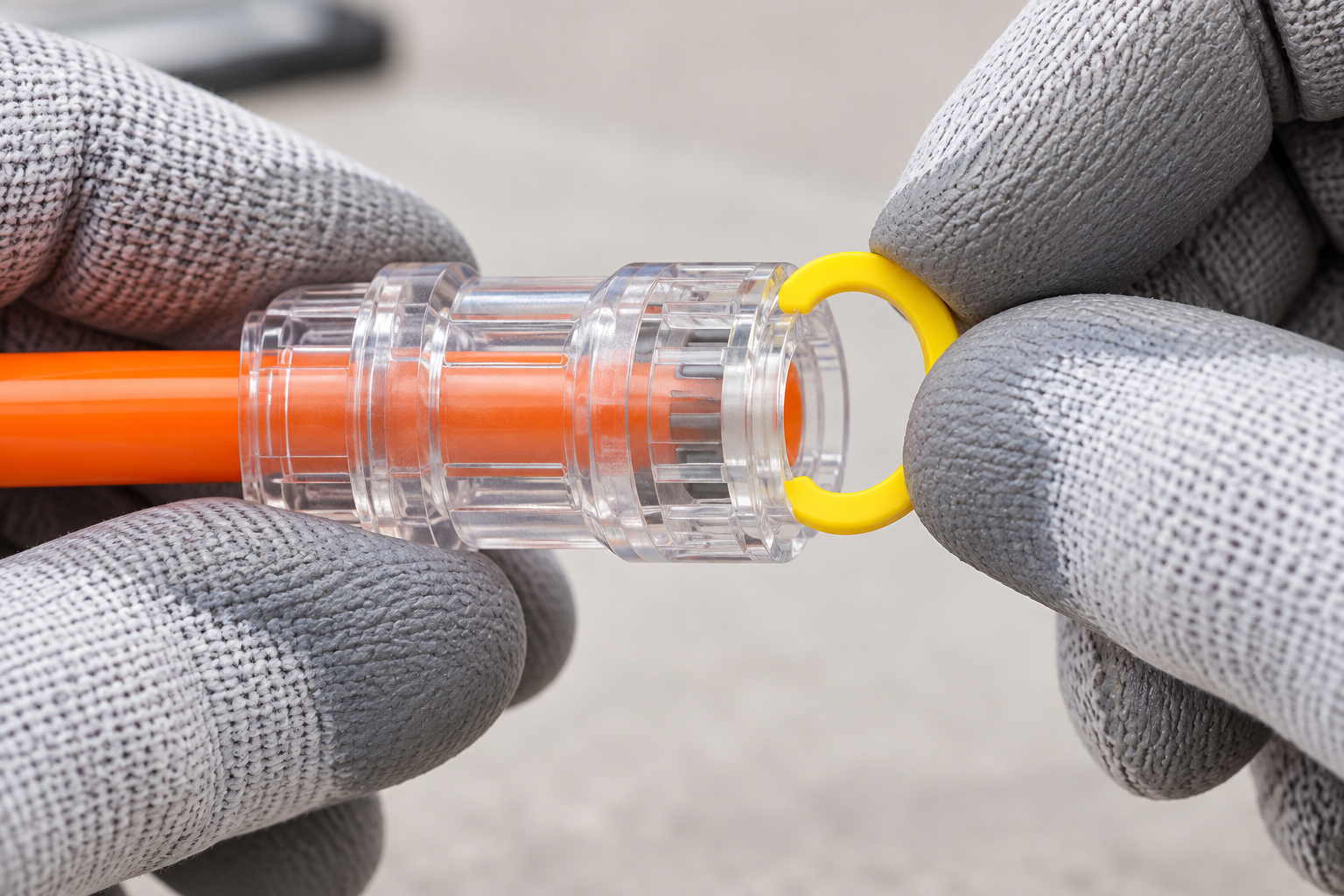
یک گیره، یک افزونه برای یک اتصالدهنده تعیینشده است و جایگزین آن نمیشود. سازگاری آن باید مانع حرکت رهاشدنی که قرار است اتفاق بیفتد شود، بدون اینکه به دیگر قطعات مانع برسد. نمیتواند قطر اشتباه لوله، واردنشدن کامل، خرابی لوله یا نشتی را اصلاح کند. مقایسه اند-استاپ در برابر گاز-بلاک توضیح میدهد که چرا لولههای خالی و لولههای دارای کابل نیازمند تصمیمات مختلف برای بستن هستند.
| واحد تشکیل دهنده | کار اصلی | آنچه آن را تأسیس نمیکند |
|---|---|---|
| کلید قفل | مکانیسم رها سازی مطابق را محدود کنید | سدادگی هوایی، آبی یا کابل-حلقوی |
| پایانگیر یا سرپوش | یک انتهای خالی کانال را ببندید | یک مهر و موم در اطراف کابل نصب شده |
| کوپلینگ مستقیم | پیوستن انتهای لولههای سازگار | پرکننده کابل، مگر اینکه به طور خاص برای آن طراحی شده باشد |
| اتصالات بلوک گازی | روابط مشخص شده لوله و کابل را محکم ببندید | جلوگیری از گسترش آتش یا حفاظت جهانی از گازهای خطرناک |
| پوست محافظ | حفاظت بیرونی مخصوص به مدل را فراهم کنید | یک سیستم عایق فشار یا گاز مستقل |
این تمایزات همچنین هزینههای نگهداری را تحت کنترل نگه میدارند. تعویض یک کلیپ به دلیل نشتی اتصال ممکن است علت مشکل را بدون تغییر بگذارد، در حالی که تعویض یک وصله کامل به دلیل فقدان کلیپ آن ممکن است غیرضروری باشد، اگر سازنده امکان استفاده از یک لوازم جانبی جایگزین سازگار را فراهم کند و مجموعه مورد تست پذیرش قرار گیرد.
خدمه چگونه میتوانند سرریز تصادفی را از نشت تمایز دهند؟
با علامت مشاهدهشده شروع کنید، نه با قطعهای که فرض میشود معیوب است. یک گیره شل یک یافته مربوط به اتصال است؛ کاهش فشار یک یافته آزمون سیستمی است. هیچکدام به تنهایی منبع ورود آب به حجره را مشخص نمیکند. نشت میتواند در اتصال دیگری رخ دهد، و وجود قبلی آب نشانهای بر ورود آب از وصلهای که در حال بررسی است نیست.
| عارضه مشاهده شده | سؤال برای بررسی | عمل بعدی |
|---|---|---|
| قطعه گمشده یا به طور ناقص قرار گرفته است | آیا حرکت انتشار مورد نظر محدود است؟ | کد افزونه و هندسه تعامل را تأیید کنید |
| کانال در حین اختلال حرکت میکند یا از کار میافتد | آیا وارد کردن کامل بوده و گرفتهکننده سازگار است؟ | بررسی آمادهسازی، جایگیری، نگهداری و پشتیبانی مسیر |
| فقدان فشار هنگامی که اتصال به جای خود باقی میماند | کدام لوله یا اتصال مهر و موم شده نشت دارد؟ | مسیر را جدا کنید و طبق روش مصوب تحقیق کنید. |
| آب در نزدیکی ورودی اشغال شده | آیا مسیر، حلقه کابل یا یک رابط دیگر است؟ | قبل از انتخاب یک مهر و موم کابل، مسیر را ردیابی کنید. |
| حلقه قفل باز است در حالی که اتصالدهنده همچنان نصب شده است | آیا محافظ بیرونی به درستی جفت شده و فعال است؟ | پوسته را بهطور جداگانه از پیمانکارهای زیرین بررسی کنید. |
دستورالعمل نصب 2025 شرکت FCST، مثالی مفید از سازنده ارائه میدهد: لوله میتواند بدون اینکه کاملاً وارد شود، گرفته شود و باعث نشتی شود. این دستورالعمل به انتهای تمیز، گرد و بدون آسیب لوله، حذف خراشها و برش عمودی اشاره میکند. آن مثال توضیح میدهد که چرا نگهداری ظاهری، دلیل بر ورود کامل نیست؛ به جای انتقال روش FCST به همه اتصالات، از ابعاد و دستورالعملهای واقعی سازنده اتصال استفاده کنید.
قبل از سفارش یک کلیپ یا پوسته محافظ، چه چیزی باید با هم مطابقت داشته باشد؟
کد دقیق اتصالدهنده، کد افزونه سازگار، نسخه طراحی و مقدار مورد نیاز را درخواست کنید. قطر بیرونی لوله تعیینکننده رابط لوله است، در حالی که قطر داخلی و ساختار دیواره بهعنوان بررسیهای جداگانه باقی میمانند. یک اندازه اسمی مشترک معتبر نیست برای اثبات اینکه دو کلیپ فاصله، پروفیل یا هندسه جلوگیریکننده از بازشدن یکسان دارند. برای تطبیق ظاهری، افزونهها را مجبور نکنید، روی هم قرار ندهید یا تغییر ندهید.
Oulu’s clip listing provides limited general information, so it cannot support invented dimensions or a universal removal tool. Its پوسته محافظ میکروداکت is described instead as a polypropylene snap-lock cover with moulded tabs intended to prevent accidental collet release on specified connector types. That shell arrangement is not equivalent to a loose clip. Confirm shell-to-connector pairing and latch engagement; the listing does not establish a separate pressure, gas or water-sealing rating.
For practical traceability, record connector and accessory codes, lot markings, duct geometry, assembly state and inspection outcome. Keep the approved test procedure, medium, instrument identification and result with the route record. This allows a replacement order to reproduce the intended configuration rather than rely on a photograph of a similar accessory.
How should a dormant spare duct change when cable is installed?
A capped spare duct and an occupied entry are different assemblies. During planning, identify where the temporary closure will be removed, how the opening will stay clean, and whether the completed route needs a سیم-حلقه مهرهای. A locking clip cannot close the space between the cable and duct, even if it secures the connector perfectly.
چیزهایی که منتشر شده است Waterproof Air Gas Block range distinguishes 10 bar blowing pressure from cable sealing up to 0.3 bar. Its ring is open for blowing and rotated afterwards to seal, with two locking clips ordered separately. Those values describe different functions and states, not a cable-seal test at blowing pressure. Confirm the supplied model, duct fit and cable range before using any family-level specification.
Record the conversion from vacant to occupied duct and approve the new test configuration. An earlier empty-duct acceptance test does not validate the later cable interface. Leaving the wrong closure or an activated cable seal in the blowing path creates a process problem that adding a clip cannot solve.
What must be verified before release, reuse or outdoor service?
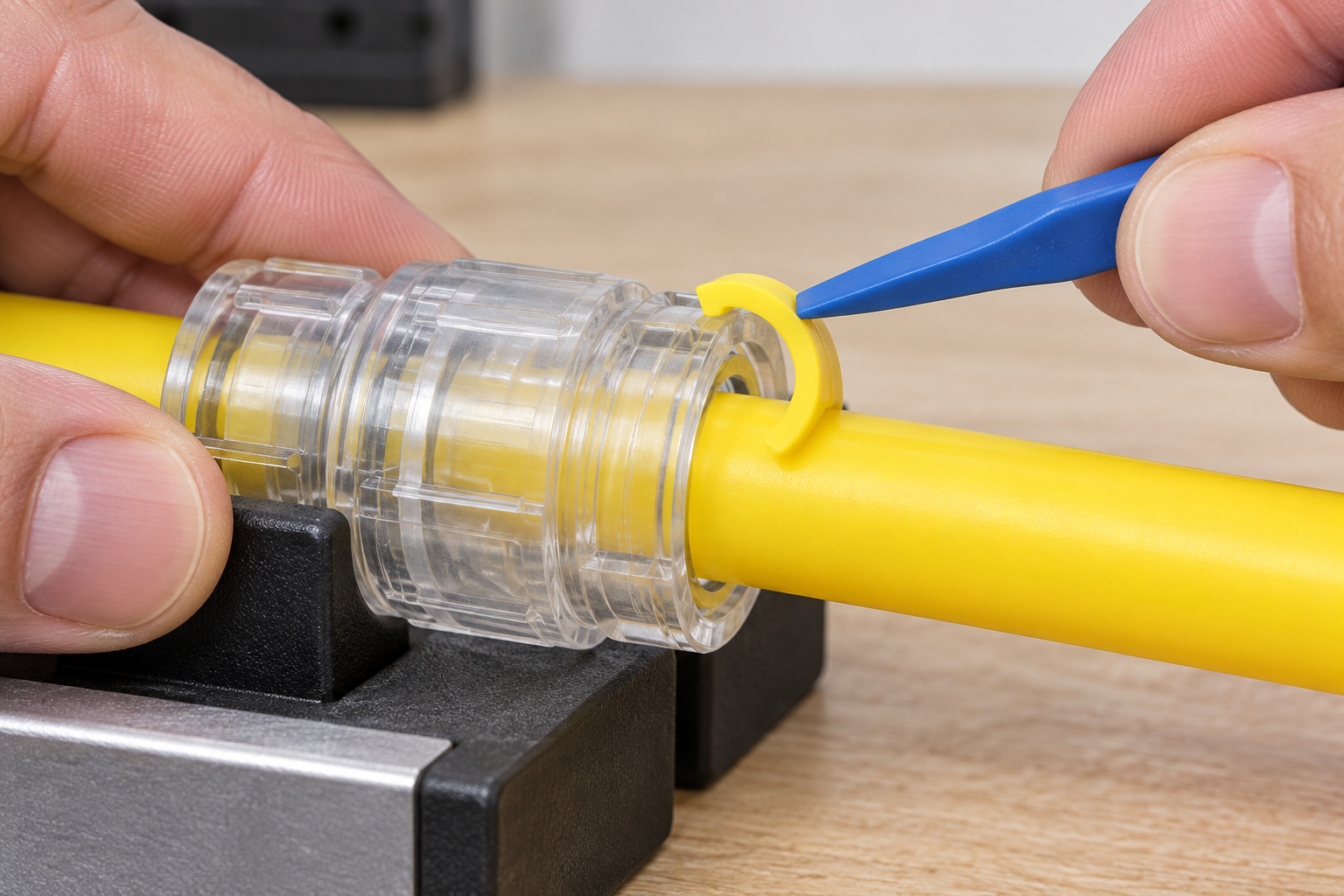
Verify isolation and zero energy using the approved site and manufacturer procedure before touching a release mechanism. Closing a valve or seeing one gauge at zero is not, by itself, verification of every trapped section. FCST’s instruction gives its release sequence as depressurizing, removing the clip, pushing the collet and pulling the duct. Treat that as a maker-specific example, not universal instructions or permission to release an unknown assembly.
Reuse requires explicit approval for the exact part plus inspection and the prescribed retest. Check the clip separately from the connector body and its sealing elements; there is no universal allowable number of cycles. Uncertain damage, incompatible replacement seals or missing instructions should trigger supplier clarification rather than improvised field repair.
Outdoor suitability likewise needs exact-code evidence. EN 50411-2-8:2009 excludes connectors intended for direct sunlight from its scope. ISO 4892-1:2024 concerns laboratory light-exposure methods and interpretation, not a clip certificate or a fixed hours-to-years conversion. Request applicable temperature limits and exposure evidence without assuming that a shell or clip has a universal sunlight rating.
What questions should installers ask about locking clips?
What pressure test confirms connector sealing when a locking clip is fitted?
Test the sealing assembly under its approved procedure. Inspect clip engagement separately because anti-release retention is not a pressure seal.
Does every microduct connector need a locking clip?
Follow the exact connector instructions for quantity and placement. Some designs use other retention arrangements; do not assume all families accept the same clip.
How is a locking clip removed without damaging the duct?
First verify zero energy through the approved procedure. Use the manufacturer’s release method and specified tools, without levering against the duct or improvising from another model’s instructions.
What UV and temperature rating should an outdoor clip have?
The declared limits must suit its actual exposure and service conditions. Obtain exact-part evidence; a standard citation alone does not establish outdoor suitability.
How can the connector’s sealing O-ring be checked for wear?
The seal belongs to the connector or closure, not the clip. After safe isolation, inspect accessible seals as instructed for damage, contamination or deformation and apply the maker’s replacement criteria.
Can a locking clip provide temporary network protection?
It can secure a compatible temporary closure, but cannot close an open duct by itself. Use an appropriate end stop and document its removal before cable installation.
Can a protective shell replace a separate locking clip?
Only when the exact assembly instructions establish that configuration. Shell tabs and snap-lock engagement are design-specific, not evidence that a clip is unnecessary on another connector.
What should be documented when a spare duct becomes occupied?
Record the new cable diameter, seal code and assembly state. Retest the relevant interfaces under the approved occupied-duct procedure instead of relying on the earlier vacant-duct result.
Which sources define the limits of these recommendations?
- FCST: Installation Instruction For Microduct Connector, 22 August 2025 provides the attributed preparation, clip and release example.
- NEN catalogue: EN 50411-2-8:2009 microduct connector scope identifies covered functions and the direct-sunlight exclusion.
- ISO 4892-1:2024 laboratory light-exposure guidance explains the method boundary, not product life.
How should buyers choose between retention and sealing?
Select the component for the pathway before selecting the accessory for its release mechanism. A vacant duct needs an appropriate closure; a joined route needs compatible duct interfaces; an occupied boundary may need a cable seal. Then confirm the connector code, accessory fit and assembly instructions, and keep leakage acceptance separate from retention inspection. Do not turn convenience into a rating: a fitted clip does not upgrade pressure capacity, a shell does not automatically seal, and an earlier empty-duct test does not qualify a later cable entry. Oulu supplies these related product families, but the useful procurement step is an exact-code compatibility check. Review the microduct locking clip product and ask for the matching drawing, release instructions and application evidence before approving the assembly.



