When a maintenance supervisor in Oulu replaced leaking connectors on a packing line, leaks stopped but cylinders still lost speed. The branch had mixed tube sizes, an unverified adapter, and a port restriction. The issue was not simply a bad fitting; it was selection and sizing of the air path.
ចម្លើយរហ័ស៖ Pneumatic fittings join tube, hose, valves, and actuators, but their value depends on compatible dimensions, thread form, material, seal, and published flow data. ISO 6358-1 provides a method for expressing pneumatic component flow characteristics; use it with the required pressure, temperature, and air-quality conditions to compare like-for-like parts. Specify every interface, then validate the assembled branch with a leak and pressure-drop check.
Related reading: air-hose fitting sourcing guide.
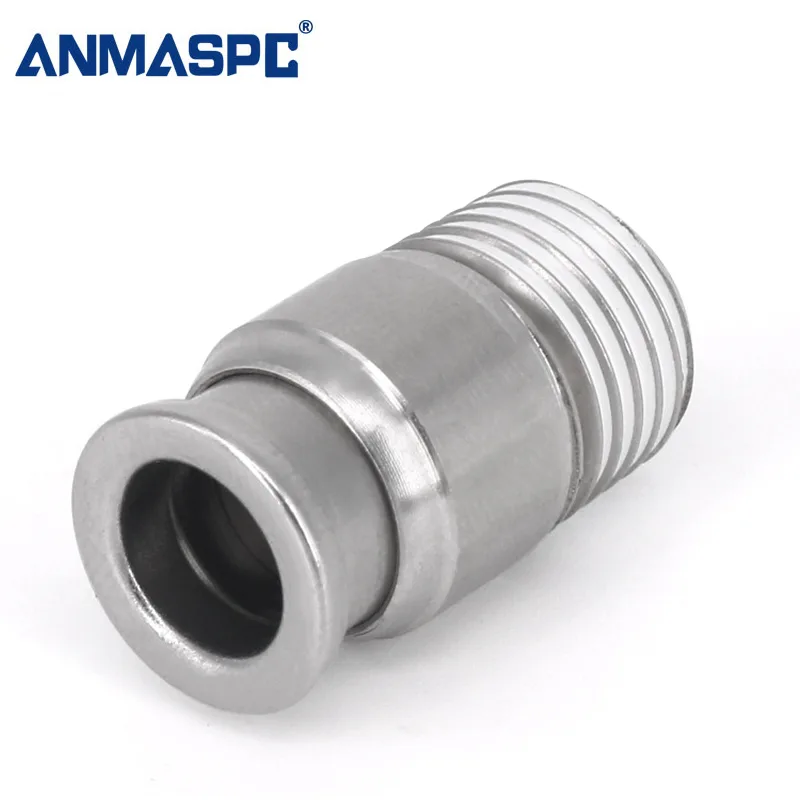
Where each pneumatic fitting is used
Pneumatic fittings create serviceable interfaces in compressed-air circuits. Straight unions join aligned tube runs; elbows change direction; tees divide supply; reducers connect tube sizes; and threaded adapters connect tubing to valves, regulators, manifolds, and cylinders. A fitting is both a mechanical joint and a potential flow restriction.
Features are application-specific. Push-to-connect designs can speed tube assembly; threaded connections define an equipment interface; swivels can ease routing. Verify bore, retention system, seal compatibility, and clearance. ISO 6358-1 determines flow-rate characteristics with compressible fluids, so buyers can request comparable data rather than rely on an unqualified “high-flow” label.
Choose the fitting shape for the tube route
Select the body configuration from the real route, not a catalog image. A straight fitting may keep an in-line run simple, while an elbow can protect tubing from a tight bend. Use a tee for a documented branch. In moving equipment, allow insertion clearance and support the line against bending loads.
| Fitting type | Typical application | Primary selection check | Common avoidable risk |
|---|---|---|---|
| Straight union or connector | Aligned tube extension or port connection | Tube OD, effective passage, and port interface | Choosing by thread size without checking tube compatibility |
| Elbow | Direction change near a valve or actuator | Routing clearance and permitted tube bend radius | Creating a tight bend or inaccessible release ring |
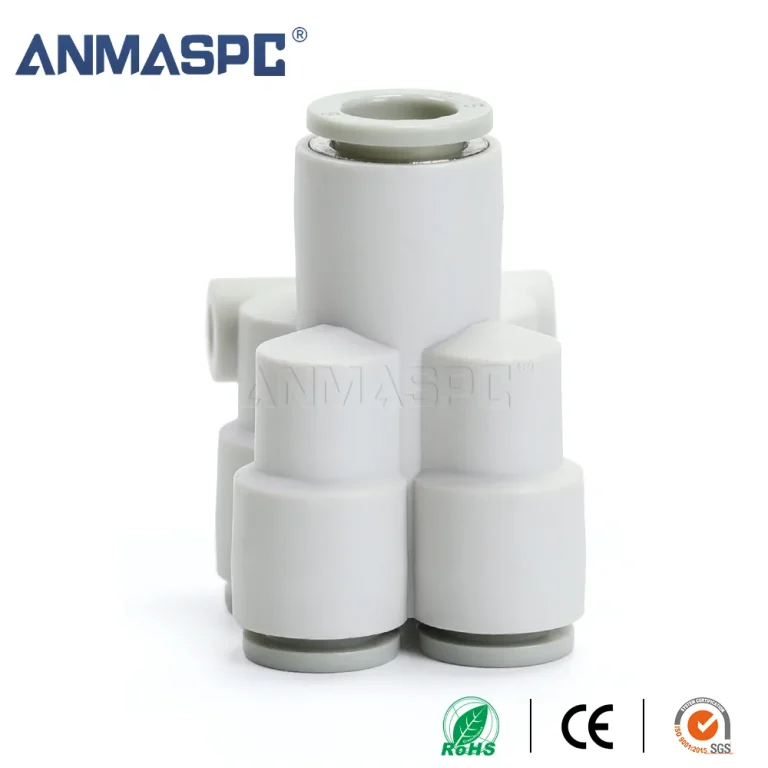
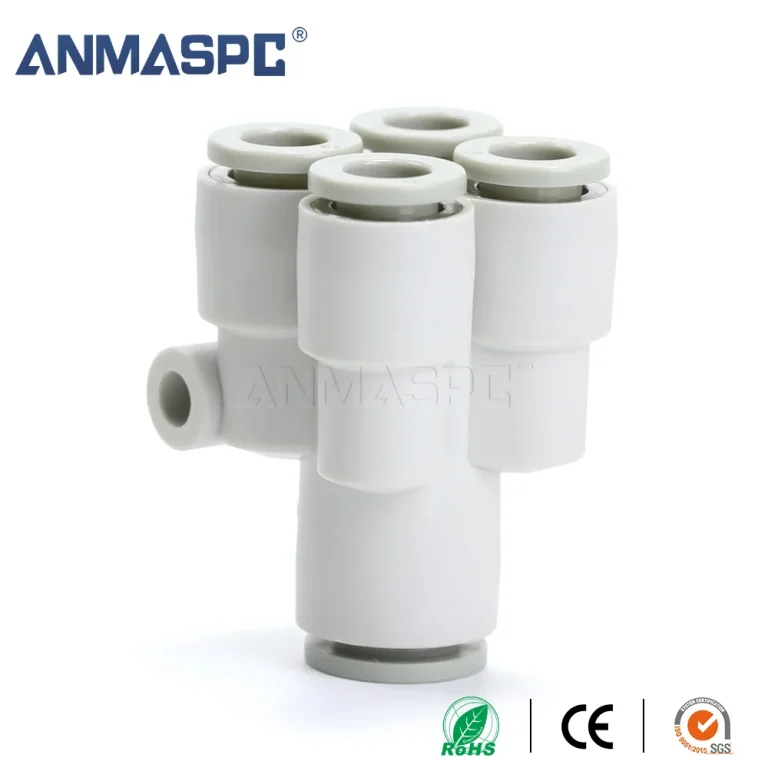
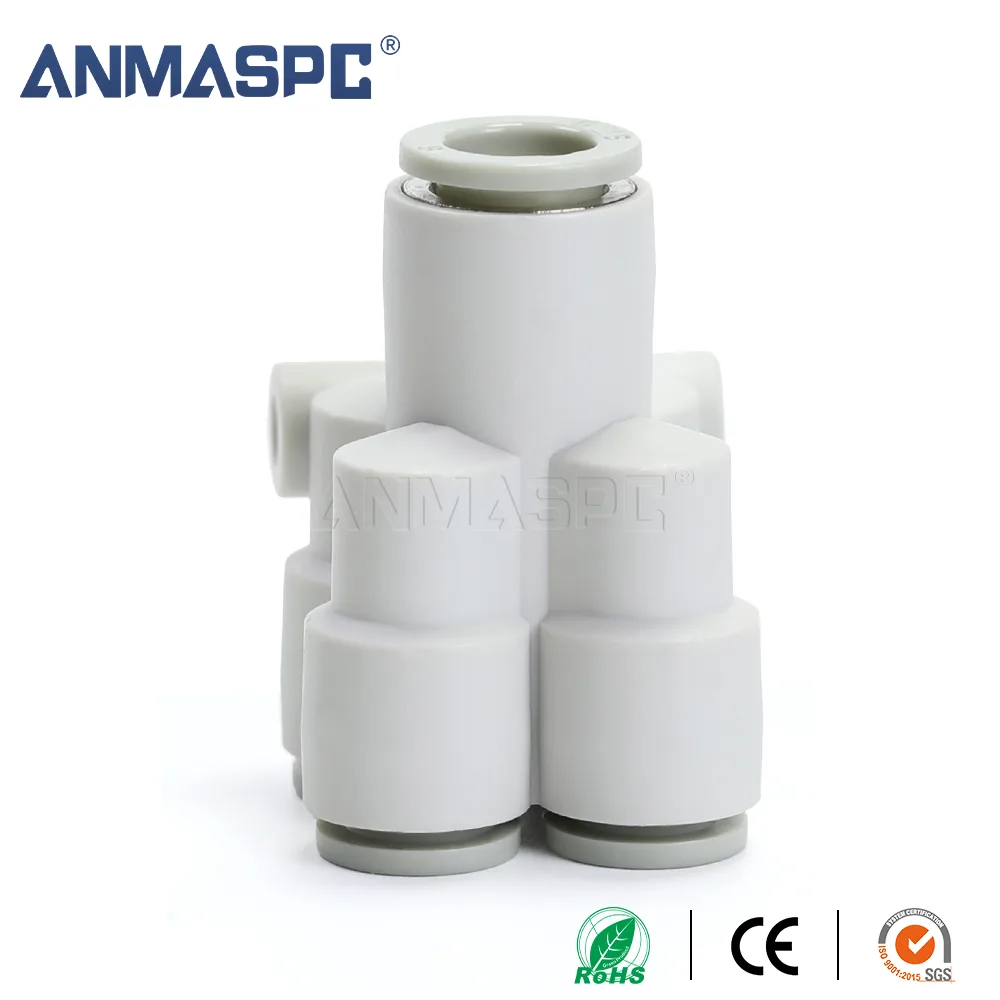
| Tee or Y connector | Planned supply or signal branch | Branch demand and flow data for the exact series | Undersizing the shared upstream path |
| ឧបករណ៍កាត់បន្ថយ | Transition between specified tube sizes | Both tube ODs and the resulting flow requirement | Using a reducer as an unreviewed bottleneck |
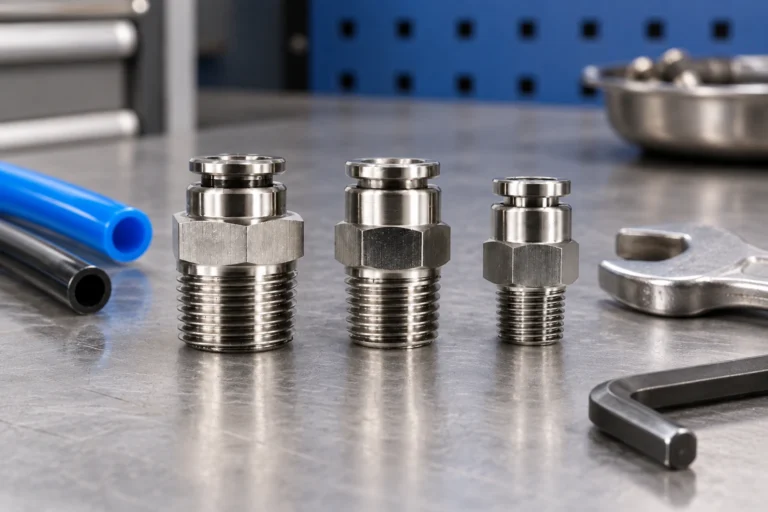
| Threaded adapter | Tube-to-port transition | Thread designation and sealing method | Mating similar-looking but incompatible threads |
Match the fitting, tube, and seal materials
Common constructions include engineered polymers, nickel-plated brass, and stainless steel. Polymer bodies may suit compact layouts; brass can provide a metal threaded interface; stainless steel may suit a documented corrosive environment. Choose from the actual fluid, exposure, cleaners, temperature, and equipment requirements.
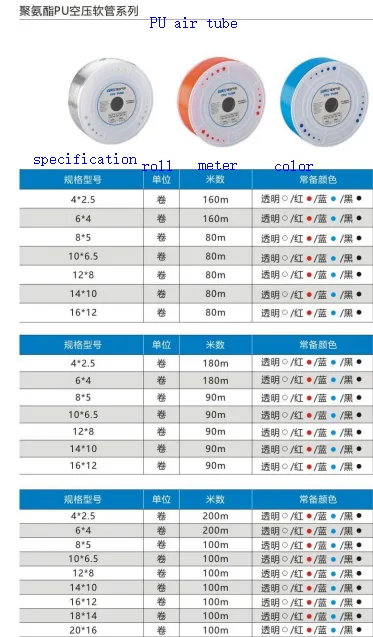
Tube material is equally important. Polyurethane and polyamide tubing differ in flexibility and application behavior, so the tube data sheet must be matched to the fitting maker’s stated tube range. Procurement teams comparing PU and PA air hose should confirm outside diameter tolerance, hardness, working conditions, and minimum bend radius before approving a push-in connection.
| Operating condition | Information to document | Why it matters | Verification step |
|---|---|---|---|
| General dry factory air | Tube OD, pressure range, temperature, thread, and seal type | Establishes the basic compatible assembly | Check drawings and supplier installation instructions |
| Frequent machine movement | Tube flexibility, bend radius, support points, and fitting orientation | Limits side load and fatigue at the joint | Observe a representative duty cycle |
| Wet, oily, or chemical exposure | Fluid and cleaner identity, contact duration, body and seal materials | Material compatibility cannot be inferred from a generic name | Obtain documented compatibility guidance |
| High-consequence production point | Flow characteristics, air-quality requirement, access, and inspection plan | Supports repeatable response and faster fault isolation | Run an acceptance leak and pressure check |
Check thread type and flow before installation
Thread labels that appear close are not automatically interchangeable. BSPP, BSPT, NPT, metric, and other forms can differ in profile, taper, pitch, and sealing arrangement. Confirm the port drawing and the component manufacturer’s instructions, including whether the seal is made on the thread, an O-ring or bonded seal, or a sealing face. Thread tape or sealant should be used only where the assembly instructions call for it; excess material can enter the pneumatic circuit.
Pressure loss is a system question. Collect cylinder bore and stroke, cycle rate, supply pressure, tube ID and length, valve port size, and every branch component. Compare proposed parts using a defined method such as ISO 6358-1. A lower unit price can be outweighed by commissioning time, leak checks, stops, or replacing an inaccessible fitting; these are evaluation factors, not a promise of savings.
Check the rating and inspect the finished joint
- Map the route from air preparation to end device, recording each tube size, port, adapter, and branch.
- State the pressure and temperature range, tube material, air-quality requirement, thread form, and sealing method on the purchase request.
- Request drawings, material information, and flow data for the exact configuration; inspect a first assembled unit before a larger order.
- Cut tubing squarely and burr-free, insert it to the specified depth, avoid side loading, and leak-test the completed branch.
ISO 4414 provides general pneumatic-system safety rules; it is not a blanket fitting certification. In the United States, OSHA’s 29 CFR 1910.242(b) 30 psi limit addresses ខ្យល់ដែលបានបង្ហាប់ used for cleaning, not normal automation-circuit design pressure. Assess requirements against the destination market, intended use, and product claims.
OULU can help buyers structure a fitting inquiry around the actual interfaces and application conditions. Start with the relevant pneumatic parts category, and provide the tube, port, media, and duty-cycle details needed to evaluate a configuration responsibly.
Start with the failure you need to avoid
“Pneumatic fitting” is a broad category, so the useful selection question is what could fail in this circuit. A push-in fitting may shorten assembly time but still needs a clean, correctly sized tube and bend support. A threaded adapter may suit a fixed port but can leak when the thread form or seal method is wrong. A barbed connection depends on hose ID and retention, while a bulkhead fitting adds panel thickness and access constraints.
Related reading: high-pressure air-hose application guide.
| Likely failure | Selection check | Installation control |
|---|---|---|
| Tube pulls out | Tube OD, hardness and collet range | Square cut, full insertion and pull-back check |
| Thread leaks | BSP, NPT or metric form and seal method | Use the specified seal and avoid cross-threading |
| Hose slips from a barb | Hose ID, barb geometry and clamp method | Inspect retention after movement and pressure cycling |
| Line becomes hard to service | Access, release clearance and spare standard | Keep an approved part number at the machine |
For the most common push-in questions, see one-touch fitting operation; for a family comparison, use the air hose fitting guide.
How do fitting design, flow and maintenance interact?
A fitting choice should be tied to the failure the line must avoid. Push-in parts reduce assembly time but depend on tube OD, cut quality, seal and release access. Threaded adapters need the correct thread form and sealing face. Elbows can protect a tight bend or improve access, while a straight body can shorten an aligned path; neither shape guarantees a flow result. Record the complete pressure boundary before standardizing a spare.
Flow data also need a common basis. ISO 6358-1 is a reference for compressible-fluid flow characteristics, but a value from one test condition cannot be ranked directly against a value from another. Measure point-of-use pressure under the representative cycle and inspect recurring leaks at the tube, port, coupler and nearby accessories. This creates a practical bridge between catalogue comparison and maintenance evidence.
| Choice | អត្ថប្រយោជន៍ចម្បង | Control point |
|---|---|---|
| ការបញ្ចូលដោយប្រើដៃ | Fast tube installation | OD, cut, insertion, collet and seal |
| រន្ធ | Port or manifold transition | Thread standard, face and seal method |
| Elbow | Route or bend management | Flow, support and access envelope |
| Barb or compression | Flexible or fixed hose connection | Hose ID, wall, clamp and service movement |
សំណួរដែលសួរញឹកញាប់
What are pneumatic fittings used for?
Pneumatic fittings connect tubing or hose to valves, regulators, manifolds, and cylinders. They also create branches, direction changes, and tube-size transitions. Select them as part of the complete circuit because the smallest passage or incompatible interface can affect the result.
What types of pneumatic fittings are available?
Common types include straight unions, elbows, tees, Y connectors, reducers, bulkhead fittings, threaded adapters, and push-to-connect fittings. Choose by route, equipment port, access, and required flow. Confirm series data rather than assuming identical shapes are equivalent.
How do I choose pneumatic fitting material?
Start with the media, pressure and temperature range, ambient exposure, cleaners, and required documentation. Then verify body, seal, and tube compatibility with supplier data. If corrosion or chemical resistance matters, obtain a documented assessment for the actual exposure.
Are push-to-connect fittings reliable?
They can provide a dependable connection when the tube is within the stated range, cut correctly, fully inserted, and protected from side load. Reliability also depends on air quality, vibration, temperature, and the tube-and-seal combination. Inspect the first assembly and test the completed branch under representative conditions.
What thread types are used for pneumatic fittings?
Pneumatic equipment can use BSPP, BSPT, NPT, metric, and other thread systems. Their sealing approaches and geometry differ, so similar nominal sizes are not interchangeable. Use the port drawing and fitting instructions to confirm the designation and intended sealing method.
How do I prevent air leaks in pneumatic fittings?
Use compatible tube and fitting sizes, cut the tube squarely, remove damage or burrs, insert to the specified depth, and avoid excess thread sealant. Support tubing against vibration and side load, then leak-test after installation. Investigate actuator pressure changes before replacing parts blindly.
Related reading: Oulu Connector company information.
ឯកសារយោង
- ISO 4414:2010 – pneumatic system safety.
- ISO 6358-1 – flow-rate characteristics.
- ISO 8573-1 – compressed-air contaminants.
- UK HSE INDG261 – pressure-system precautions.
Summary
Pneumatic fitting selection becomes clearer when the interface and failure mode are stated together. Match tube or hose dimensions, thread, seal, medium, temperature and pressure before comparing materials or shapes. Use ISO 4414 for system-safety context and ISO 6358-1 for a flow-characteristics reference, but keep the exact model and test conditions attached to every number. Confirm pressure at the point of use under load, inspect recurring leakage and document an approved replacement assembly. Keep a labelled mating part and revision record with the spare so maintenance does not substitute a similar-looking interface. Oulu’s pneumatic parts range can support that review when the route, duty cycle and maintenance access are known.