
وقتی یک ناظر نگهداری در اولو اتصالات نشتکننده را روی خط بستهبندی تعویض کرد، نشتها متوقف شد اما سیلندرها همچنان سرعت خود را از دست میدادند. در آن شاخه از اندازههای مختلف لوله استفاده میشد، یک ادپتر غیرتاییدشده وجود داشت و محدودیتی در منفذ نیز مشاهده میشد. مشکل فقط به دلیل یک اتصال ناقص نبود؛ بلکه مربوط به انتخاب و اندازهگیری مسیر جریان هوای فشرده بود.
جواب سریع: لوازم هوای فشرده لوله، شلنگ، شیرها و سوئیچهای عملگر را به هم متصل کنید, اما ارزش آنها به اندازههای مطابق, نوع گردبند, ماده, جوشکاری و دادههای جریان منتشر شده بستگی دارد. ISO 6358-1 روشی برای بیان ویژگیهای جریان اجزای فراوان است; آن را با شرایط فشار, دما و کیفیت هوای مورد نیاز استفاده کنید تا قطعات مشابه را مقایسه کنید. هر اتصال را مشخص کنید, سپس شاخه مونتاژ شده را با یک بررسی نشتی و کاهش فشار اعتباربخشی کنید.
مطالعات مرتبط: راهنمای تهیه اتصالات لوله هوا.
هر کدام از اتصالات فشاری در کجا استفاده میشوند؟
اتصالات هوایی، رابطهای قابل استفاده در مدارهای هوای فشرده ایجاد میکنند. اتصالات مستقیم لولههای همراستا را به هم وصل میکنند؛ کوعها جهت جریان را تغییر میدهند؛ سهراهها جریان را تقسیم میکنند؛ کاهندهها اندازههای مختلف لوله را به هم متصل میکنند؛ و ادپترهای دارای گویچه، لولهها را به شیرها، تنظیمکنندهها، مانیفولدها و سیلندرها متصل میکنند. یک اتصال هم یک اتصال مکانیکی است و هم میتواند محدودیتی برای جریان ایجاد کند.
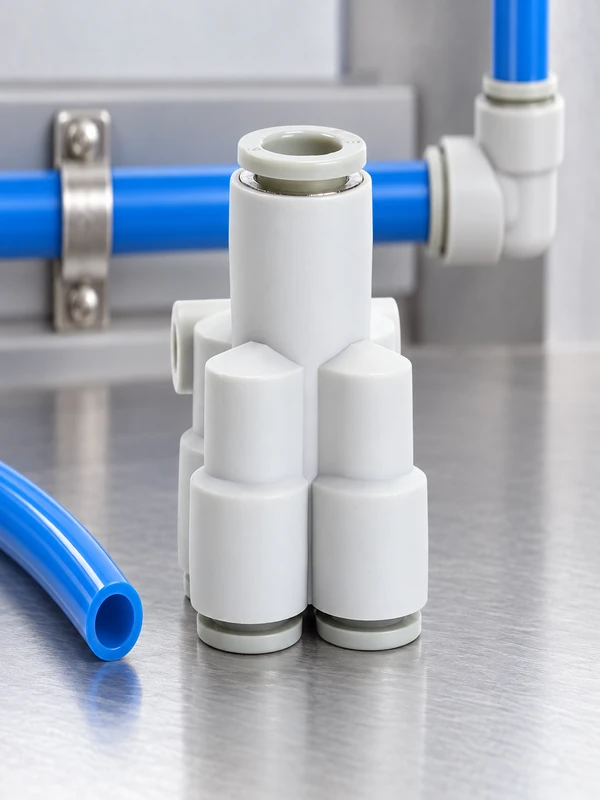
ویژگیها به اپلیکیشن بستگی دارند. فشار دادن برای وصل کردن طراحیها میتوانند سرعت مونتاژ لوله را افزایش دهند؛ اتصالات گویچهای، رابط تجهیزات را تعیین میکنند؛ گردشپذیرها میتوانند مسیریابی را آسانتر کنند. قطر داخلی، سیستم نگهداری، سازگاری پیمانه و فاصله حریم را بررسی کنید. ISO 6358-1 ویژگیهای نرخ جریان را با سیالات قابل فشرده شدن تعیین میکند، بنابراین خریداران میتوانند دادههای قابل مقایسه درخواست کنند به جای اینکه تنها به برچسب غیراستاندارد “جریان بالا” اعتماد کنند.
شکل مناسب را برای مسیر لوله انتخاب کنید
پیکربندی بدنه را از مسیر واقعی انتخاب کنید، نه از تصویر کاتالوگ. یک اتصال صاف میتواند یک خط مستقیم را ساده نگه دارد، در حالی که یک زاویه میتواند لوله را از خم شدن شدید محافظت کند. از یک تی برای یک شاخه ثبتشده استفاده کنید. در تجهیزات متحرک، فضای لازم برای ورود را در نظر بگیرید و خط را در برابر بارهای خمشی حمایت کنید.
| نوع اتصال | کاربرد معمولی | چک انتخاب اولیه | خطر قابل جلوگیری رایج |
|---|---|---|---|
| اتصال یا اتصال مستقیم | تمدید لوله یا اتصال پورت همراستا | قطر خارجی لوله، مسیر موثر و رابط پورت | انتخاب بر اساس اندازه خراش بدون بررسی سازگاری لوله |
| آرنج | تغییر جهت در نزدیکی یک شیر یا سوئیچ کنترلی | مساحت رانش و شعاع خم مجاز لوله | ایجاد یک خم شدید یا حلقه رها کردن غیرقابل دسترس |
| اتصالدهنده T یا Y | شعبهی تأمین یا سیگنال برنامهریزی شده | دادههای تقاضا و جریان شاخه برای سری دقیق | کماندازهگیری مسیر بالادستی به اشتراکگذاری شده |
| کاهشدهنده | انتقال بین اندازههای لوله مشخص شده | هم قطر خارجی لولهها و هم نیاز به جریان حاصل شده | استفاده از یک رِدوسر به عنوان یک گلوگاه غیربررسیشده |
| ادپتر گویشدار | انتقال از لوله به پورت | نامگذاری رشته و روش مهرکردن | همپیچ کردن سرخهای مشابه ظاهر اما نامطابق |
مواد جفت، لوله و پیمانکار را مطابقت دهید
ساختارهای رایج شامل پلیمرهای مهندسی، برنز با روکش نیکل و فولاد ضد زنگ میشود. بدنههای پلیمری ممکن است برای طراحیهای کوچک مناسب باشند؛ برنز میتواند یک اتصال خراشیده فلزی ایجاد کند؛ و فولاد ضد زنگ ممکن است در محیطهای تخریبگر مشخص شده مناسب باشد. انتخاب خود را بر اساس نوع سیال واقعی، مدت تماس، مواد شستشو، دما و نیازهای تجهیزات انجام دهید.

مواد لوله نیز به همان اندازه مهم است. لولههای پلیاورتان و پلیآمید در انعطافپذیری و رفتار کاربردی متفاوتند، بنابراین باید گزارش فنی لوله را با دامنه لوله اعلام شده توسط سازنده اتصالات هماهنگ کرد. تیمهای خرید که در حال مقایسه بین لوله هوای PU و PA هستند، قبل از تأیید یک اتصال فشاری باید مواردی همچون تنظیم قطر بیرونی، سختی، شرایط کاری و شعاع خم شدن حداقل را تأیید کنند.
| شرایط عملیاتی | اطلاعات برای مستندسازی | چرا مهم است | گام تأیید |
|---|---|---|---|
| هوای خشک کارخانهای عمومی | قطر خارجی لوله، دامنه فشار، دما، نوع گیره و نوع مهره | آسیبسازی اساسی سازگار را تثبیت میکند. | نگارهها و دستورالعملهای نصب توسط تامینکننده را بررسی کنید. |
| حرکت فراوان دستگاه | انعطافپذیری لوله، شعاع خم، نقاط پشتیبانی و جهت نصب اتصالات | بار جانبی و خستگی در مفصل را محدود میکند. | یک چرخه کار نماینده را مشاهده کنید |
| تری، روغنی یا در معرض مواد شیمیایی قرار داشتن | هوشیاری مایع و تمیزکننده، مدت تماس، مواد بدنه و پرچم | قابلیت سازگاری مواد نمیتواند از یک نام کلی استنباط شود. | راهنمایی سازگاری مستند شده را دریافت کنید |
| نقطه تولید با عواقب بالا | ویژگیهای جریان، الزامات کیفیت هوا، دسترسی و طرح بازرسی | پشتیبانی از پاسخگویی قابل تکرار و جداسازی سریعتر خطاها | یک آزمایش نشت پذیری و فشار انجام دهید |
قبل از نصب، نوع گیج و جریان را بررسی کنید.
Thread labels that appear close are not automatically interchangeable. BSPP, BSPT, NPT, metric, and other forms can differ in profile, taper, pitch, and sealing arrangement. Confirm the port drawing and the component manufacturer’s instructions, including whether the seal is made on the thread, an O-ring or bonded seal, or a sealing face. Thread tape or sealant should be used only where the assembly instructions call for it; excess material can enter the pneumatic circuit.
Pressure loss is a system question. Collect cylinder bore and stroke, cycle rate, supply pressure, tube ID and length, valve port size, and every branch component. Compare proposed parts using a defined method such as ISO 6358-1. A lower unit price can be outweighed by commissioning time, leak checks, stops, or replacing an inaccessible fitting; these are evaluation factors, not a promise of savings.
Check the rating and inspect the finished joint
- Map the route from air preparation to end device, recording each tube size, port, adapter, and branch.
- State the pressure and temperature range, tube material, air-quality requirement, thread form, and sealing method on the purchase request.
- Request drawings, material information, and flow data for the exact configuration; inspect a first assembled unit before a larger order.
- Cut tubing squarely and burr-free, insert it to the specified depth, avoid side loading, and leak-test the completed branch.
ISO 4414 provides general pneumatic-system safety rules; it is not a blanket fitting certification. In the United States, OSHA’s 29 CFR 1910.242(b) 30 psi limit addresses هوای فشرده used for cleaning, not normal automation-circuit design pressure. Assess requirements against the destination market, intended use, and product claims.
OULU can help buyers structure a fitting inquiry around the actual interfaces and application conditions. Start with the relevant pneumatic parts category, and provide the tube, port, media, and duty-cycle details needed to evaluate a configuration responsibly.
Start with the failure you need to avoid
“Pneumatic fitting” is a broad category, so the useful selection question is what could fail in this circuit. A push-in fitting may shorten assembly time but still needs a clean, correctly sized tube and bend support. A threaded adapter may suit a fixed port but can leak when the thread form or seal method is wrong. A barbed connection depends on hose ID and retention, while a bulkhead fitting adds panel thickness and access constraints.
مطالعات مرتبط: راهنمای استفاده از شلنگ هوای فشار بالا.
| Likely failure | بررسی انتخاب | Installation control |
|---|---|---|
| Tube pulls out | Tube OD, hardness and collet range | Square cut, full insertion and pull-back check |
| Thread leaks | BSP, NPT or metric form and seal method | Use the specified seal and avoid cross-threading |
| Hose slips from a barb | Hose ID, barb geometry and clamp method | Inspect retention after movement and pressure cycling |
| Line becomes hard to service | Access, release clearance and spare standard | Keep an approved part number at the machine |
For the most common push-in questions, see one-touch fitting operation; for a family comparison, use the air hose fitting guide.
How do fitting design, flow and maintenance interact?
A fitting choice should be tied to the failure the line must avoid. Push-in parts reduce assembly time but depend on tube OD, cut quality, seal and release access. Threaded adapters need the correct thread form and sealing face. Elbows can protect a tight bend or improve access, while a straight body can shorten an aligned path; neither shape guarantees a flow result. Record the complete pressure boundary before standardizing a spare.
Flow data also need a common basis. ISO 6358-1 is a reference for compressible-fluid flow characteristics, but a value from one test condition cannot be ranked directly against a value from another. Measure point-of-use pressure under the representative cycle and inspect recurring leaks at the tube, port, coupler and nearby accessories. This creates a practical bridge between catalogue comparison and maintenance evidence.
| Choice | مزیت اصلی | Control point |
|---|---|---|
| تکمیل شده | Fast tube installation | OD, cut, insertion, collet and seal |
| بافته شده | Port or manifold transition | Thread standard, face and seal method |
| آرنج | Route or bend management | Flow, support and access envelope |
| Barb or compression | Flexible or fixed hose connection | Hose ID, wall, clamp and service movement |
سوالات متداول
What are pneumatic fittings used for?
Pneumatic fittings connect tubing or hose to valves, regulators, manifolds, and cylinders. They also create branches, direction changes, and tube-size transitions. Select them as part of the complete circuit because the smallest passage or incompatible interface can affect the result.
What types of pneumatic fittings are available?
Common types include straight unions, elbows, tees, Y connectors, reducers, bulkhead fittings, threaded adapters, and push-to-connect fittings. Choose by route, equipment port, access, and required flow. Confirm series data rather than assuming identical shapes are equivalent.
How do I choose pneumatic fitting material?
Start with the media, pressure and temperature range, ambient exposure, cleaners, and required documentation. Then verify body, seal, and tube compatibility with supplier data. If corrosion or chemical resistance matters, obtain a documented assessment for the actual exposure.
آرماتورهای فشاری-به-اتصال قابل اعتماد هستند؟
They can provide a dependable connection when the tube is within the stated range, cut correctly, fully inserted, and protected from side load. Reliability also depends on air quality, vibration, temperature, and the tube-and-seal combination. Inspect the first assembly and test the completed branch under representative conditions.
What thread types are used for pneumatic fittings?
Pneumatic equipment can use BSPP, BSPT, NPT, metric, and other thread systems. Their sealing approaches and geometry differ, so similar nominal sizes are not interchangeable. Use the port drawing and fitting instructions to confirm the designation and intended sealing method.
How do I prevent air leaks in pneumatic fittings?
Use compatible tube and fitting sizes, cut the tube squarely, remove damage or burrs, insert to the specified depth, and avoid excess thread sealant. Support tubing against vibration and side load, then leak-test after installation. Investigate actuator pressure changes before replacing parts blindly.
مطالعات مرتبط: اطلاعات شرکت Oulu Connector.
مراجع
- ISO 4414:2010 – ایمنی سیستم فرافشاری.
- ISO 6358-1 – ویژگیهای سرعت جریان.
- ISO 8573-1 – آلایندههای هوای فشرده.
- UK HSE INDG261 – pressure-system precautions.
خلاصه
Pneumatic fitting selection becomes clearer when the interface and failure mode are stated together. Match tube or hose dimensions, thread, seal, medium, temperature and pressure before comparing materials or shapes. Use ISO 4414 for system-safety context and ISO 6358-1 for a flow-characteristics reference, but keep the exact model and test conditions attached to every number. Confirm pressure at the point of use under load, inspect recurring leakage and document an approved replacement assembly. Keep a labelled mating part and revision record with the spare so maintenance does not substitute a similar-looking interface. Oulu’s pneumatic parts range can support that review when the route, duty cycle and maintenance access are known.



