“How long will this air hose fitting last?” sounds like a request for one number, but a calendar interval or cycle count is unsafe without the application conditions. A fitting in a clean, static cabinet sees a different load from one on a robot dress pack, beside oil mist or exposed to repeated temperature changes. The useful answer is a condition-based service plan: establish a baseline, inspect the interface, monitor symptoms and replace when evidence shows that retention or sealing has deteriorated.
Quick answer: there is no universal service-life number for an air hose fitting. Replace it when leakage, cracking, seal damage, tube scoring, thread damage or loss of retention appears, or when the supplier’s documented duty is exceeded. Set inspection frequency from movement, pressure cycling, temperature, chemicals and machine risk, then record findings so the interval can be refined. A successful inspection establishes condition at that time; it cannot promise a remaining number of operating hours without evidence for the actual duty.
Why does the same fitting last different lengths of time?
Service life is driven by the loads applied to the connector, not by the part name alone. Tube movement creates bending at the collet; pressure cycling repeatedly loads the seal; heat can change elastomer behaviour; and oil, coolant or cleaning agents can attack a material that is suitable elsewhere. Contamination can scratch the tube or prevent a seal from returning to its intended shape. A protected static joint and a repeatedly moving joint need different inspection plans; neither should be assigned a lifespan without matching evidence. The supplier’s temperature, pressure and medium limits define the boundary for a meaningful plan.
Which conditions should be recorded at commissioning?
Record tube material and OD, connector type, port thread, medium, normal and peak pressure, ambient and process temperature, movement, vibration, cleaning chemicals and installation date. Note whether the line is static, flexing or repeatedly disconnected. Photographing the original routing can help identify later changes, but the record should also state the bend-radius and support arrangement. Without a baseline, a later leak is difficult to distinguish from an installation error or a new environmental load.
What are early signs of deterioration?
A faint hiss, pressure decay, actuator drift, a tube that creeps out, a sticky release collar, whitening or cracking of a plastic body, and a flattened or contaminated seal are all useful signals. Tube scoring near the sealing zone is especially important because reinserting the same end can reproduce the leak. Inspect after an abnormal impact, a hose replacement, a chemical spill or a machine move, even if the planned date has not arrived. Do not wait for a complete loss of pressure when the circuit controls a safety-relevant motion.
How can inspection intervals be set without guessing?
Begin with the equipment risk assessment and the supplier’s limits. A new or critical installation may deserve a short observation interval until the route and load are proven stable. Low-risk, static joints can be checked during planned maintenance, while moving or high-cycle joints may need checks aligned with the machine’s changeover schedule. Use the same checklist each time and record pass, repair, replacement and suspected cause. After several cycles, the history can support a longer or shorter interval; it should not be replaced by an invented “five-year” rule. Keep observations specific to the installed location and operating conditions; a stable cabinet connection does not establish the inspection interval for a moving branch.
How can maintenance history distinguish wear from installation errors?
Keep the circuit location fixed in the record and describe the failed interface. Leakage immediately after a tube change points toward tube preparation and seating, thread assembly or a damaged replacement part; it does not establish a population-wide defect. Failures after movement or cleaning suggest conditions worth investigating, but timing alone does not prove the mechanism. Record inspection findings, compare them with the part’s documented limits and note whether correcting the route changes the recurrence. This produces a condition history that is more useful than counting every leak as normal end-of-life wear. Keep unsuccessful repairs in the record too. Repeated replacements without a corrected route can make the part appear short-lived while leaving the mechanical cause untouched. Escalate that pattern for an engineering review before assigning a routine replacement interval.
What does a useful leak test show?
A leak test should isolate the section, use the approved pressure and observation period, and distinguish external leakage from flow restriction or a faulty valve. A bubble check can locate a joint, while an instrumented pressure-decay or functional test may be required by the site procedure. Test after any connector replacement and after routing changes. Keep the test condition with the maintenance record so results taken at different pressures or temperatures are not compared as if they were equivalent. Identify the leaking interface in the test record so a later repair can distinguish tube-side damage from a port seal or another component.
Can leak monitoring prove remaining useful life?
No. A leak check assesses the joint under the tested conditions; it does not measure every hidden damage mechanism or predict a fixed remaining life. A connector may pass a static test while an unsupported moving tube later loads its collet. Combine performance checks with inspection and a review of abnormal events. DOE’s Minimize Compressed Air Leaks tip sheet recommends identification, tagging, tracking, repair and verification as an ongoing programme. This is an established maintenance principle, not a new lifespan study. Its historical facility examples should not be used as a forecast for this fitting or a guarantee of savings.
Can a fitting be reused during maintenance?
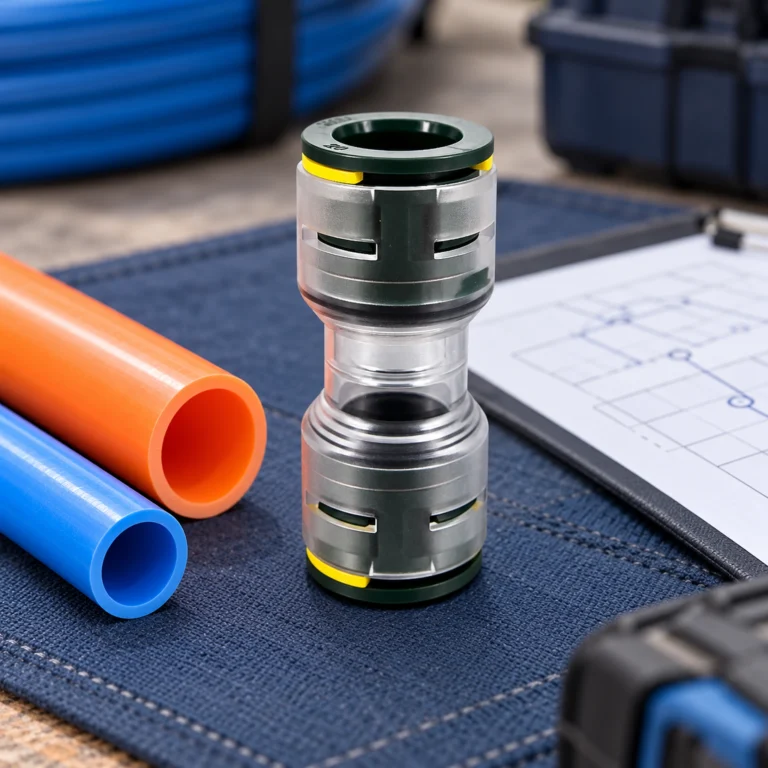
Reuse is a conditional decision. Follow the product instruction, inspect the body, collet, seal, thread and tube end, and use a fresh square cut when permitted. Do not reuse a part with a crack, flattened seal, damaged thread, uncertain history in a critical circuit or evidence of chemical attack. A fitting that looks clean can still have a worn retention feature, so perform the specified pull and leak checks after reconnection.
Should fitting replacement follow hose replacement automatically?
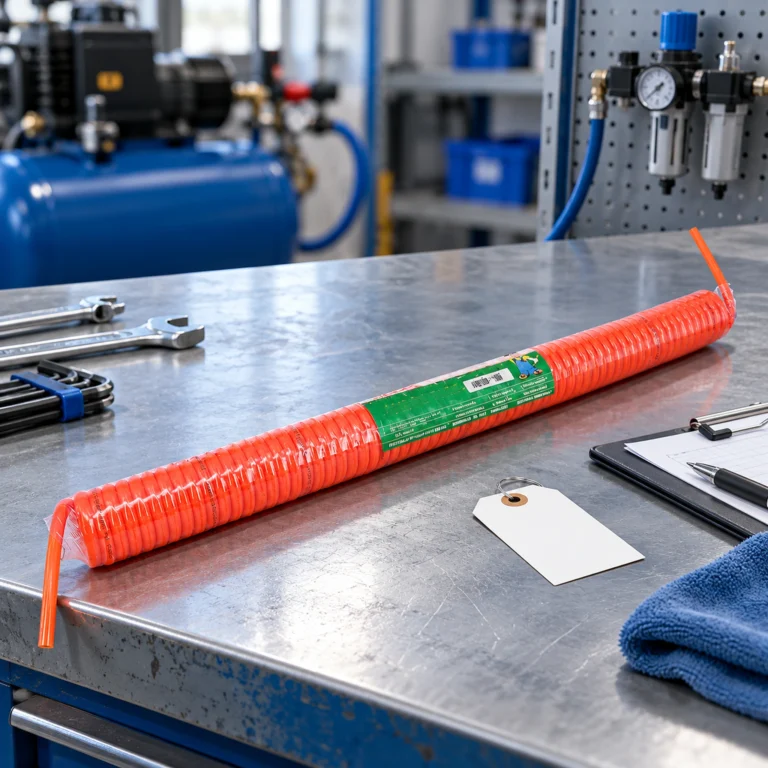
Inspect both parts, but do not assume they have identical service intervals. A worn tube end can leak in an otherwise undamaged connector; a damaged collet can compromise a new tube. The reason for the hose change matters. If the tube was abraded by a nearby bracket, the connector may be unaffected, while overheating or chemical exposure may involve the whole branch. Apply the manufacturer’s reuse instructions and the machine risk assessment. Where a fitting cannot be reliably inspected, has unknown identity or has undergone an abnormal event, replacement can be justified independently of its age.
How should replacement stock be managed?
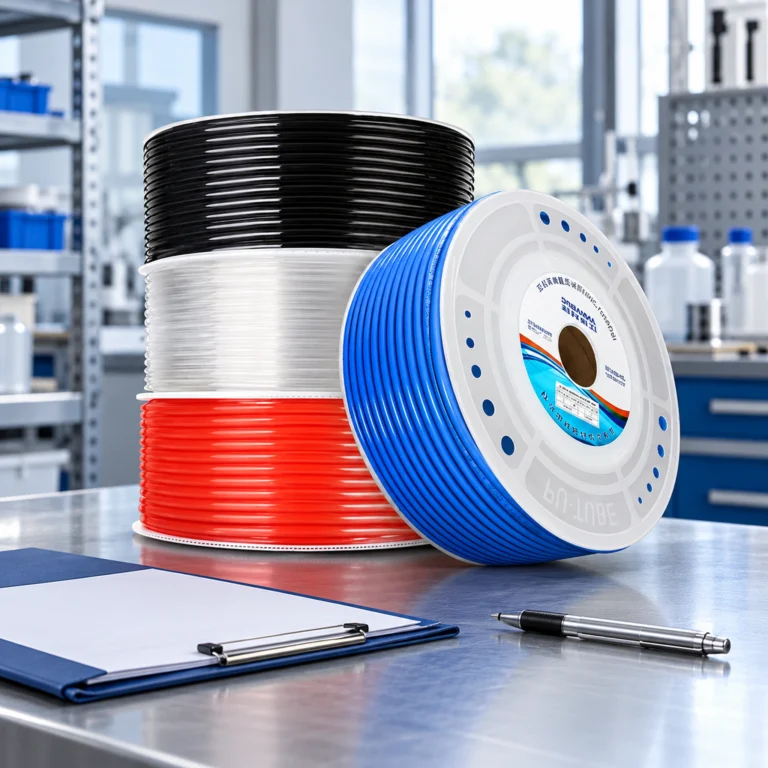
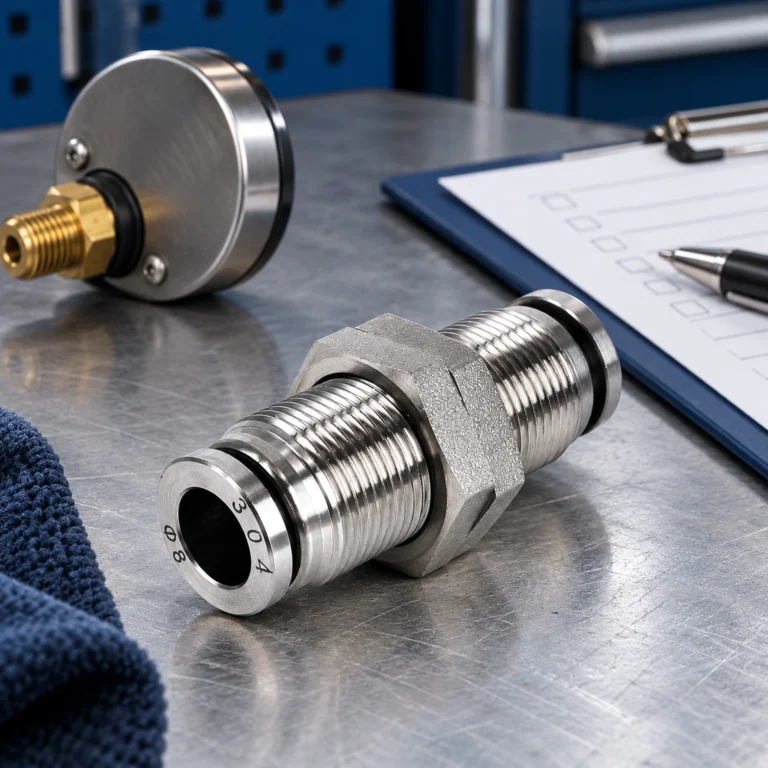
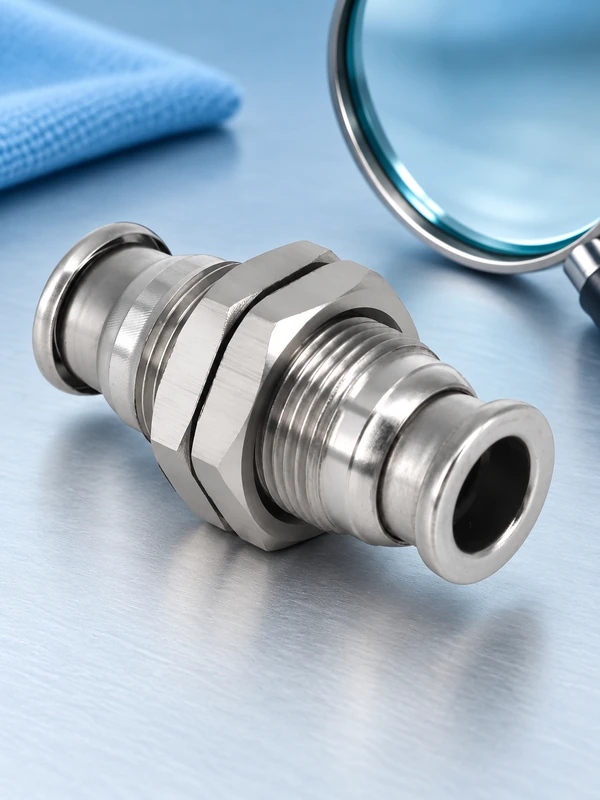
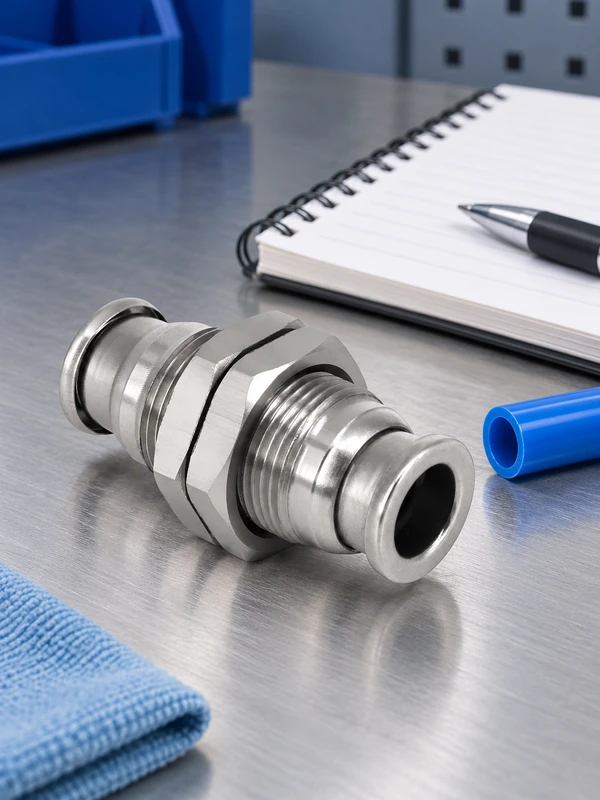
Keep spares identified by part number, thread, tube size and seal material rather than by a similar photograph. Store elastomer-containing parts in the supplier’s recommended conditions and protect open fittings from dust. When a failure occurs, record the removed part and suspected mechanism before disposal. Repeated failures at one position often indicate a routing, clamp or vibration issue; replacing the same fitting without correcting that load only transfers the cost to the next shutdown. For a straight male-thread push-in fitting held as a spare, retain the exact supplier reference and confirm the tube, port and sealing arrangement before substitution.
How should spare fittings and inspection limits be reviewed?
Link each spare to an approved part number, tube and port interface, and any seal or medium restrictions. If a supplier revises a family, confirm whether the new part is an approved replacement rather than assuming the familiar name proves equivalence. Follow documented storage limits where provided; do not invent an expiry date for all fittings. During planned downtime, review whether the inspection plan can actually reach the joint and whether the machine route has changed since commissioning. An inaccessible fitting may need a layout change to make condition-based maintenance practical. If no reliable remaining-life information exists, document that uncertainty and choose the replacement decision according to failure consequences.
Which operating conditions need closer inspection?
| Service factor | What to inspect | Action when abnormal |
|---|---|---|
| Movement and bend | Tube support, bend radius and side load | Correct routing before replacing repeatedly |
| បរិស្ថាន | Heat, oil, coolant, cleaning agent and dust | Confirm material compatibility and shield the joint |
| Interface | Collet, seal, tube score and thread | Replace damaged parts and re-cut the tube |
| ការអនុវត្ត | Hiss, pressure decay and actuator behaviour | Isolate, test one section and document the result |
What should an installer record?
- Create a commissioning baseline for each connector family.
- Inspect after shocks, hose changes, chemical exposure or route changes.
- Use condition evidence rather than a universal replacement age.
- Record the failure mechanism before installing a spare.
- Review the interval when maintenance history shows a repeated pattern.
សំណួរដែលសួរញឹកញាប់
Is there a standard number of years for every air hose fitting?
No. Conditions such as movement, pressure cycling, heat, chemicals and installation quality differ. Follow the selected product’s documented limits and the machine risk assessment. Avoid a universal age claim without matching life-test evidence.
Does a small hiss always require immediate replacement?
It requires diagnosis and the appropriate machine response. Isolate before disturbing the connection, identify the actual leak source and inspect the interface. Replace the damaged part or correct the assembly condition, then verify the repair.
Do pressure cycles shorten fitting life?
They can contribute to service loading, but there is no universal conversion from cycles to replacement age. Evaluate cycling together with pressure, temperature, movement and the supplier’s duty limits. Keep observed damage separate from assumptions about its cause.
How often should moving-line fittings be checked?
Set the interval from the machine duty, supplier instructions and failure consequences. Include checks after abnormal impacts or route changes. Refine the plan using recorded findings; a quiet fitting during one inspection is not a remaining-life guarantee.
Can a fitting be reused after removing the tube?
Only when the supplier permits reuse and retention and sealing features remain acceptable. Inspect the tube end and prepare a new permitted end when necessary. Reassess routing after shortening the tube and perform the approved acceptance check.
What information should be on a spare-parts label?
Use the approved part reference, tube OD and units, port thread and relevant seal or service restrictions. Tie the label to a controlled drawing or parts list. A similar photograph or a nominal size alone is insufficient identification.
ឯកសារយោង
- SMC, archived KQ2 One-touch Fittings catalogue: construction and configuration illustrations; historical reference, not a specification for ANMASPC/Oulu fittings.
- U.S. Department of Energy, Minimize Compressed Air Leaks, Compressed Air Tip Sheet 3, revised August 2004: leak identification, repair and verification; historical maintenance guidance.
- OSHA 29 CFR 1910.147, Control of hazardous energy: applicable U.S. servicing requirements, including stored energy. Other jurisdictions require their own regulatory review.
សេចក្តីសន្និដ្ឋាន
An air hose fitting does not have a defensible service life until its duty is understood. Establish the installation baseline, watch for leakage and interface damage, inspect after abnormal events, and set the interval from risk and maintenance evidence. Replace on condition or documented limits, not on a convenient age claim. The ANMASPC/Oulu pneumatic parts range can support a correctly identified replacement, but the machine record should preserve the actual environment, routing and test result that determine whether the joint is fit to return to service. Review the pneumatic parts range with the verified tube, port and service requirements when requesting a configuration.