
“これはどれくらい続くのでしょうか エアホース継手 「最後の?」という質問は、単一の数値を求めているように聞こえますが、適用条件を明示せずにカレンダー上の期間やサイクル回数を指定することは適切ではありません。清浄な固定式キャビネット内に設置された継手と、ロボットのドレッシング装置上、油ミストの近く、あるいは繰り返しの温度変化にさらされる継手では、受ける負荷が異なります。有用な回答とは、 状態に基づくサービス計画基準を設定し、インターフェースを点検し、症状をモニタリングし、保持性能またはシール性能の低下が認められた時点で交換する。.
簡潔な回答:エアホース用継手に普遍的な耐用年数の数値はありません。漏れ、ひび割れ、シールの損傷、チューブの擦り傷、ねじ部の損傷、保持力の低下が生じた場合、またはメーカーが定める使用条件を超過した場合には交換してください。点検頻度は、機器の稼働状況や移動状況に応じて設定してください。, 圧力サイクリング, 温度、化学物質、機械のリスクを評価した上で、その結果を記録し、点検間隔を適切に調整します。成功的な点検は、当時の状態を確認するものであり、実際の使用条件に関する証拠がなければ、残りの稼働時間数を保証することはできません。.
同じ継手でも、耐用期間が異なるのはなぜですか?
製品の耐用年数は、部品名だけではなく、コネクタに加わる荷重によって決まります。チューブの動きはコレット部で曲げを生じさせ、圧力サイクリングはシールに繰り返し負荷をかけます。熱はエラストマーの特性を変化させる可能性があり、油や冷却液、洗浄剤は、他の用途では適している材料を劣化させることがあります。汚染物質はチューブに傷をつけたり、シールが本来の形状に戻るのを妨げたりするおそれがあります。保護された静的接合部と、繰り返し動く接合部では、それぞれ異なる点検計画が必要です。いずれの場合も、根拠に基づかないまま耐用年数を設定してはなりません。サプライヤーが提示する温度・圧力・使用流体の許容範囲が、妥当な計画の前提条件となります。.
試運転時に記録すべき条件は何ですか?
管の材質と外径、接続部の種類、ポートのねじ山、使用流体、通常圧力およびピーク圧力、周囲温度およびプロセス温度、移動状態、振動、洗浄用薬品、設置日を記録してください。配管が固定されているか、屈曲するか、または繰り返し脱着されるかについても記載します。当初の配管経路を写真に撮っておくと、後からの変更箇所の特定に役立ちますが、記録には曲げ半径と支持方法も明記する必要があります。基準がないと、後の漏れが設置ミスによるものなのか、新たな環境荷重によるものなのかを判別することが困難になります。.
劣化の初期兆候にはどのようなものがありますか?
かすかなヒス音、圧力低下、アクチュエータのドリフト、徐々に押し出されるチューブ、固着したリリースカラー、プラスチック本体の白化や亀裂、そして変形または汚染されたシールは、いずれも重要な兆候です。特に、シール部付近のチューブに傷が入っている場合は重要であり、同じ端を再挿入すると漏れが再発する可能性があります。異常な衝撃を受けた後、ホースを交換した後、化学物質がこぼれた後、または機械を移動させた後は、予定日が到来していなくても必ず点検してください。安全に関わる動作を制御している回路では、圧力が完全に失われるのを待ってはいけません。.
検査間隔は、推測せずにどのように設定できますか?
機器のリスク評価およびサプライヤーが定める限界値から始めましょう。新規または重要な設置については、経路と荷重が安定していることが確認されるまで、短い観測間隔を設定する必要があります。低リスクで静的な接合部は、以下において点検できます。 計画的な保守, 一方、可動部や高頻度稼働の接合部については、機械の段取り替えスケジュールに合わせた点検が必要になる場合があります。毎回同じチェックリストを使用し、合格/修理/交換の結果および疑われる原因を記録してください。数サイクル経過した後は、その履歴をもとに点検間隔を延長または短縮できますが、それを根拠なく「5年ごと」といった独自のルールに置き換えてはなりません。観察内容は、設置場所および運転条件に即したものにしてください;安定した筐体の接続状態から、可動する配管の点検間隔を決めることはできません。.
保守履歴は、摩耗と設置ミスをどのように区別できますか?
回路の位置を記録内で固定したまま、故障したインターフェースを記述してください。チューブ交換直後のリークは、次のような原因を示唆しています。 チューブの準備と設置, ねじの組み立て不良や損傷した交換部品は、製品全体にわたる欠陥を示すものではありません。動作中または清掃後に発生する故障は調査すべき要因を示唆しますが、タイミングだけでは機構上の問題を証明するには至りません。検査結果を記録し、該当部品の規定限界と照らし合わせて確認するとともに、対策を講じた経路変更によって再発が変わるかどうかを記録してください。こうすることで、あらゆる漏れを単なる寿命終了による摩耗として片付けるよりも有用な状態履歴が得られます。不完全な修理も記録に残しておきましょう。対策が施されないまま繰り返し交換を行うと、部品が短命であるかのように見えますが、その背後にある機械的要因は放置されたままです。このようなパターンが見られる場合は、定期的な交換間隔を設定する前に、エンジニアリング部門によるレビューへとエスカレーションしてください。.
有用なリークテストは何を示しますか?
漏れ試験では、該当区間を遮断し、承認された圧力および観測時間を適用し、区別する必要があります。 外部漏れ 流量制限や不良バルブが原因である可能性があります。バブル検査で接続部の漏れ箇所を特定できますが、現場手順により、計測器を用いた圧力低下試験または機能試験が必要な場合もあります。コネクタの交換後および配管経路の変更後には必ず試験を実施してください。異なる圧力や温度条件下で得られた結果を同一と誤って比較しないよう、試験条件を保守記録に保管してください。試験記録には漏れが発生したインターフェースを明記し、後日の修理時にチューブ側の損傷とポートシールまたは他の部品の不具合を区別できるようにしてください。.
リーク監視は、残存耐用年数の評価に役立つでしょうか?
いいえ。リーク検査は、試験条件における接合部を評価するものであり、すべての隠れた損傷メカニズムを測定したり、一定の耐用期間を予測したりするものではありません。 remaining life. A connector may pass a static test while an unsupported moving tube later loads its collet. Combine performance checks with inspection and a review of abnormal events. DOE’s Minimize Compressed Air Leaks tip sheet recommends identification, tagging, tracking, repair and verification as an ongoing programme. This is an established maintenance principle, not a new lifespan study. Its historical facility examples should not be used as a forecast for this fitting or a guarantee of savings.
Can a fitting be reused during maintenance?
Reuse is a conditional decision. Follow the product instruction, inspect the body, collet, seal, thread and tube end, and use a fresh square cut when permitted. Do not reuse a part with a crack, flattened seal, damaged thread, uncertain history in a critical circuit or evidence of chemical attack. A fitting that looks clean can still have a worn retention feature, so perform the specified pull and leak checks after reconnection.
Should fitting replacement follow hose replacement automatically?
Inspect both parts, but do not assume they have identical service intervals. A worn tube end can leak in an otherwise undamaged connector; a damaged collet can compromise a new tube. The reason for the hose change matters. If the tube was abraded by a nearby bracket, the connector may be unaffected, while overheating or chemical exposure may involve the whole branch. Apply the manufacturer’s reuse instructions and the machine risk assessment. Where a fitting cannot be reliably inspected, has unknown identity or has undergone an abnormal event, replacement can be justified independently of its age.
How should replacement stock be managed?
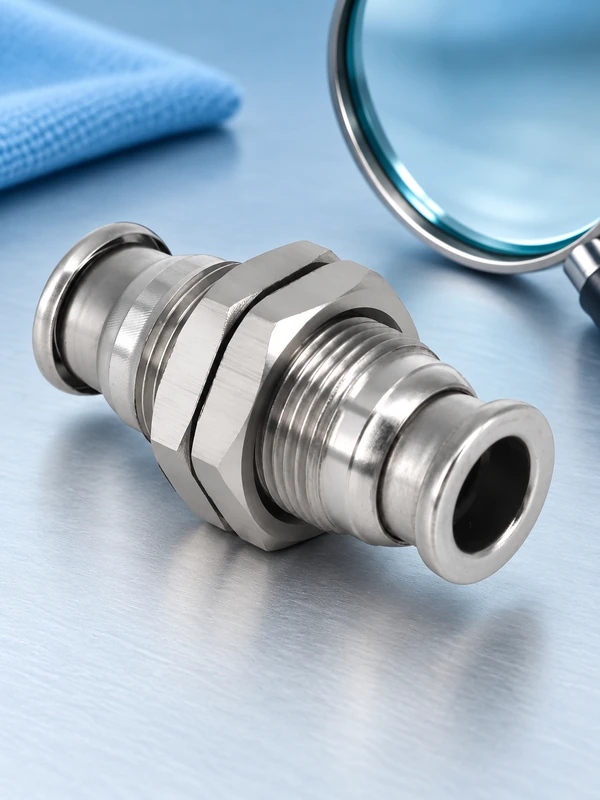
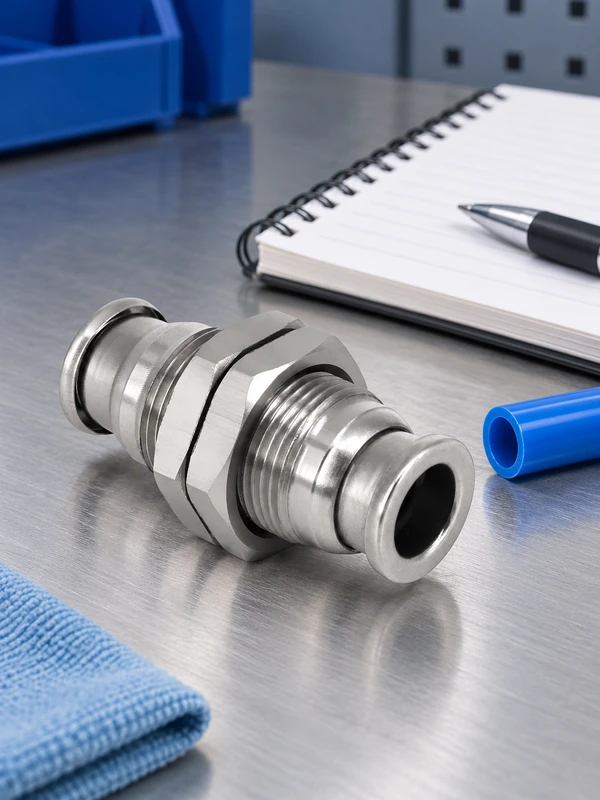
Keep spares identified by part number, thread, tube size and seal material rather than by a similar photograph. Store elastomer-containing parts in the supplier’s recommended conditions and protect open fittings from dust. When a failure occurs, record the removed part and suspected mechanism before disposal. Repeated failures at one position often indicate a routing, clamp or vibration issue; replacing the same fitting without correcting that load only transfers the cost to the next shutdown. For a ストレートオスネジプッシュイン継手 held as a spare, retain the exact supplier reference and confirm the tube, port and sealing arrangement before substitution.
How should spare fittings and inspection limits be reviewed?
Link each spare to an approved part number, tube and port interface, and any seal or medium restrictions. If a supplier revises a family, confirm whether the new part is an approved replacement rather than assuming the familiar name proves equivalence. Follow documented storage limits where provided; do not invent an expiry date for all fittings. During planned downtime, review whether the inspection plan can actually reach the joint and whether the machine route has changed since commissioning. An inaccessible fitting may need a layout change to make condition-based maintenance practical. If no reliable remaining-life information exists, document that uncertainty and choose the replacement decision according to failure consequences.
Which operating conditions need closer inspection?
| Service factor | What to inspect | Action when abnormal |
|---|---|---|
| Movement and bend | Tube support, bend radius and side load | Correct routing before replacing repeatedly |
| 環境 | Heat, oil, coolant, cleaning agent and dust | Confirm material compatibility and shield the joint |
| インターフェース | Collet, seal, tube score and thread | Replace damaged parts and re-cut the tube |
| パフォーマンス | Hiss, pressure decay and actuator behaviour | Isolate, test one section and document the result |
インストーラーは何を記録すべきですか?
- Create a commissioning baseline for each connector family.
- Inspect after shocks, hose changes, chemical exposure or route changes.
- Use condition evidence rather than a universal replacement age.
- Record the failure mechanism before installing a spare.
- Review the interval when maintenance history shows a repeated pattern.
よくある質問
Is there a standard number of years for every air hose fitting?
No. Conditions such as movement, pressure cycling, heat, chemicals and installation quality differ. Follow the selected product’s documented limits and the machine risk assessment. Avoid a universal age claim without matching life-test evidence.
Does a small hiss always require immediate replacement?
It requires diagnosis and the appropriate machine response. Isolate before disturbing the connection, identify the actual leak source and inspect the interface. Replace the damaged part or correct the assembly condition, then verify the repair.
Do pressure cycles shorten fitting life?
They can contribute to service loading, but there is no universal conversion from cycles to replacement age. Evaluate cycling together with pressure, temperature, movement and the supplier’s duty limits. Keep observed damage separate from assumptions about its cause.
How often should moving-line fittings be checked?
Set the interval from the machine duty, supplier instructions and failure consequences. Include checks after abnormal impacts or route changes. Refine the plan using recorded findings; a quiet fitting during one inspection is not a remaining-life guarantee.
Can a fitting be reused after removing the tube?
Only when the supplier permits reuse and retention and sealing features remain acceptable. Inspect the tube end and prepare a new permitted end when necessary. Reassess routing after shortening the tube and perform the approved acceptance check.
What information should be on a spare-parts label?
Use the approved part reference, tube OD and units, port thread and relevant seal or service restrictions. Tie the label to a controlled drawing or parts list. A similar photograph or a nominal size alone is insufficient identification.
参考文献
- SMC, archived KQ2 One-touch Fittings catalogue: construction and configuration illustrations; historical reference, not a specification for ANMASPC/Oulu fittings.
- U.S. Department of Energy, Minimize Compressed Air Leaks, Compressed Air Tip Sheet 3, revised August 2004: leak identification, repair and verification; historical maintenance guidance.
- OSHA 29 CFR 1910.147, Control of hazardous energy: applicable U.S. servicing requirements, including stored energy. Other jurisdictions require their own regulatory review.
結論
An air hose fitting does not have a defensible service life until its duty is understood. Establish the installation baseline, watch for leakage and interface damage, inspect after abnormal events, and set the interval from risk and maintenance evidence. Replace on condition or documented limits, not on a convenient age claim. The ANMASPC/Oulu pneumatic parts range can support a correctly identified replacement, but the machine record should preserve the actual environment, routing and test result that determine whether the joint is fit to return to service. Review the pneumatic parts range with the verified tube, port and service requirements when requesting a configuration.



