
“Koliko će ovo trajati spoj za crijevo za zrak ”posljednji?” zvuči kao zahtjev za jednom brojkom, ali je korištenje vremenskog intervala ili broja ciklusa nebezbedno bez navođenja uslova upotrebe. Spojnica u čistom, statičkom ormariću podliježe drugačijem opterećenju nego ona na robotskoj pakirnoj liniji, pored uljnog magla ili izložena ponovljenim promjenama temperature. Korisni odgovor je a plan servisa zasnovan na stanju: uspostavite osnovnu liniju, pregledajte spoj, pratite simptome i zamijenite kada dokazi pokažu da su se retencija ili brtvljenje pogoršali.
Brzi odgovor: ne postoji univerzalna brojka za vijek trajanja spojnice zračnog crijeva. Zamijenite je kada se pojave curenje, pukotine, oštećenja brtve, ogrebotine na crijevu, oštećenja navoja ili gubitak prijanjanja, ili kada se prekorači dokumentovani radni vijek dobavljača. Učestalost pregleda odredite u zavisnosti od kretanja, cikliranje pritiska, temperatura, hemikalije i rizik od mašina, a zatim zabilježite nalaze kako bi interval mogao biti precizniji. Uspješan pregled utvrđuje stanje u tom trenutku; ne može obećati preostali broj radnih sati bez dokaza o stvarnom opterećenju.
Zašto isti priključak traje različito dugo?
Radni vijek određuju opterećenja koja djeluju na spojnicu, a ne samo naziv dijela. Kretanje cijevi uzrokuje savijanje u steznoj matici; ciklički pritisak ponovno opterećuje brtvljenje; toplota može promijeniti ponašanje elastomera; a ulje, rashladna tekućina ili sredstva za čišćenje mogu nagrizati materijal koji je na drugim mjestima prikladan. Kontaminacija može ogrebati cijev ili spriječiti da brtva povrati svoj zamišljeni oblik. Zaštićeni statički spoj i spoj koji se neprestano kreće zahtijevaju različite planove pregleda; ni jednom od njih ne bi trebalo dodijeliti rok trajanja bez odgovarajućih dokaza. Temperaturne, pritiskovne i medijumske granice dobavljača određuju granice za smislen plan.
Koje se uvjeti trebaju zabilježiti prilikom puštanja u rad?
Zabilježite materijal i vanjski promjer cijevi, tip spojnice, navoj priključka, medij, normalni i maksimalni pritisak, okolnu i procesnu temperaturu, pokretljivost, vibracije, kemikalije za čišćenje i datum instalacije. Navedite da li je linija statična, savitljiva ili se više puta odspaja. Fotografiranje originalnog prolaza može pomoći u identifikaciji kasnijih promjena, ali zapis treba također sadržavati podatke o radijusu savijanja i rasporedu nosača. Bez osnovnih podataka, kasniji propust teško je razlikovati od greške u instalaciji ili novog ekološkog opterećenja.
Koji su rani znaci propadanja?
Slab šištav zvuk, pad pritiska, pomeranje aktuatora, cijev koja se polako izvlači, zalepljeni otpušni ovratnik, bjeljenje ili pucanje plastičnog tijela te spljošteno ili kontaminirano brtvljenje – sve su to korisni znaci. Ozljede na cijevi u blizini brtvne zone posebno su važne jer ponovno umetanje istog kraja može ponoviti propuštanje. Obavite pregled nakon neobičnog udarca, zamjene crijeva, prolijevanja kemikalija ili premještanja stroja, čak i ako planirani rok još nije došao. Ne čekajte potpuni gubitak pritiska kada krug upravlja pokretom od značaja za sigurnost.
Kako se mogu postaviti intervali pregleda bez nagađanja?
Započnite s procjenom rizika opreme i ograničenjima dobavljača. Nova ili kritična instalacija možda zaslužuje kraći interval opservacije dok se ne dokaže stabilnost puta i opterećenja. Spojevi niskog rizika koji su statični mogu se provjeriti tokom planirano održavanje, dok mješovite ili često korištene spojnice mogu zahtijevati provjere usklađene sa rasporedom promjena na mašini. Svaki put koristite isti kontrolni list i bilježite prolaz, popravku, zamjenu i sumnjivi uzrok. Nakon nekoliko ciklusa, istorija može potvrditi duži ili kraći interval; ne bi ga trebalo zamijeniti izmišljenim pravilom “svaka pet godina”. Održavajte zapažanja specifičnim za instalirano mjesto i radne uvjete; stabilna povezanost u ormariću ne određuje interval pregleda za pokretnu grane.
Kako povijest održavanja može razlikovati habanje od grešaka u instalaciji?
Zadržite fiksnu lokaciju kruga u evidenciji i opisite neuspješni interfejs. Curenje odmah nakon zamjene cijevi ukazuje na priprema i postavljanje cijevi, thread assembly or a damaged replacement part; it does not establish a population-wide defect. Failures after movement or cleaning suggest conditions worth investigating, but timing alone does not prove the mechanism. Record inspection findings, compare them with the part’s documented limits and note whether correcting the route changes the recurrence. This produces a condition history that is more useful than counting every leak as normal end-of-life wear. Keep unsuccessful repairs in the record too. Repeated replacements without a corrected route can make the part appear short-lived while leaving the mechanical cause untouched. Escalate that pattern for an engineering review before assigning a routine replacement interval.
What does a useful leak test show?
A leak test should isolate the section, use the approved pressure and observation period, and distinguish external leakage from flow restriction or a faulty valve. A bubble check can locate a joint, while an instrumented pressure-decay or functional test may be required by the site procedure. Test after any connector replacement and after routing changes. Keep the test condition with the maintenance record so results taken at different pressures or temperatures are not compared as if they were equivalent. Identify the leaking interface in the test record so a later repair can distinguish tube-side damage from a port seal or another component.
Can leak monitoring prove remaining useful life?
No. A leak check assesses the joint under the tested conditions; it does not measure every hidden damage mechanism or predict a fixed remaining life. A connector may pass a static test while an unsupported moving tube later loads its collet. Combine performance checks with inspection and a review of abnormal events. DOE’s Minimize Compressed Air Leaks tip sheet recommends identification, tagging, tracking, repair and verification as an ongoing programme. This is an established maintenance principle, not a new lifespan study. Its historical facility examples should not be used as a forecast for this fitting or a guarantee of savings.
Can a fitting be reused during maintenance?
Reuse is a conditional decision. Follow the product instruction, inspect the body, collet, seal, thread and tube end, and use a fresh square cut when permitted. Do not reuse a part with a crack, flattened seal, damaged thread, uncertain history in a critical circuit or evidence of chemical attack. A fitting that looks clean can still have a worn retention feature, so perform the specified pull and leak checks after reconnection.
Should fitting replacement follow hose replacement automatically?
Inspect both parts, but do not assume they have identical service intervals. A worn tube end can leak in an otherwise undamaged connector; a damaged collet can compromise a new tube. The reason for the hose change matters. If the tube was abraded by a nearby bracket, the connector may be unaffected, while overheating or chemical exposure may involve the whole branch. Apply the manufacturer’s reuse instructions and the machine risk assessment. Where a fitting cannot be reliably inspected, has unknown identity or has undergone an abnormal event, replacement can be justified independently of its age.
How should replacement stock be managed?
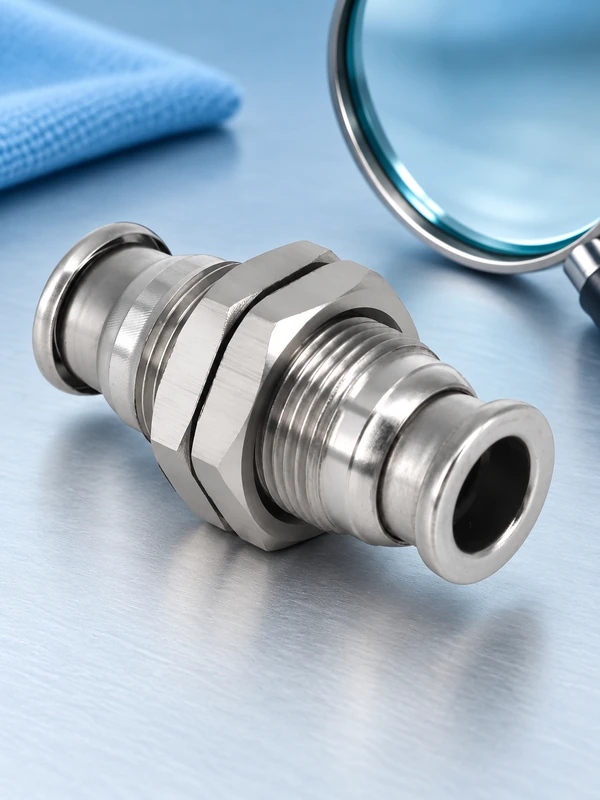
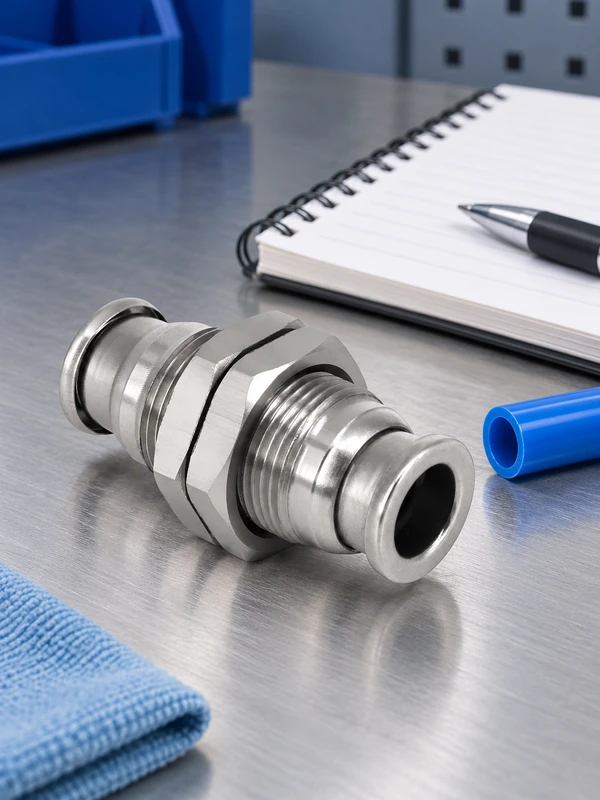
Keep spares identified by part number, thread, tube size and seal material rather than by a similar photograph. Store elastomer-containing parts in the supplier’s recommended conditions and protect open fittings from dust. When a failure occurs, record the removed part and suspected mechanism before disposal. Repeated failures at one position often indicate a routing, clamp or vibration issue; replacing the same fitting without correcting that load only transfers the cost to the next shutdown. For a priključak za guranje sa unutarnjim navojem za ravne cijevi held as a spare, retain the exact supplier reference and confirm the tube, port and sealing arrangement before substitution.
How should spare fittings and inspection limits be reviewed?
Link each spare to an approved part number, tube and port interface, and any seal or medium restrictions. If a supplier revises a family, confirm whether the new part is an approved replacement rather than assuming the familiar name proves equivalence. Follow documented storage limits where provided; do not invent an expiry date for all fittings. During planned downtime, review whether the inspection plan can actually reach the joint and whether the machine route has changed since commissioning. An inaccessible fitting may need a layout change to make condition-based maintenance practical. If no reliable remaining-life information exists, document that uncertainty and choose the replacement decision according to failure consequences.
Which operating conditions need closer inspection?
| Service factor | Šta pregledati | Action when abnormal |
|---|---|---|
| Movement and bend | Tube support, bend radius and side load | Correct routing before replacing repeatedly |
| Životna sredina | Heat, oil, coolant, cleaning agent and dust | Confirm material compatibility and shield the joint |
| Sučelje | Collet, seal, tube score and thread | Replace damaged parts and re-cut the tube |
| Performanse | Hiss, pressure decay and actuator behaviour | Isolate, test one section and document the result |
Šta instalater treba da zabilježi?
- Create a commissioning baseline for each connector family.
- Inspect after shocks, hose changes, chemical exposure or route changes.
- Use condition evidence rather than a universal replacement age.
- Record the failure mechanism before installing a spare.
- Review the interval when maintenance history shows a repeated pattern.
Često postavljana pitanja
Is there a standard number of years for every air hose fitting?
No. Conditions such as movement, pressure cycling, heat, chemicals and installation quality differ. Follow the selected product’s documented limits and the machine risk assessment. Avoid a universal age claim without matching life-test evidence.
Does a small hiss always require immediate replacement?
It requires diagnosis and the appropriate machine response. Isolate before disturbing the connection, identify the actual leak source and inspect the interface. Replace the damaged part or correct the assembly condition, then verify the repair.
Do pressure cycles shorten fitting life?
They can contribute to service loading, but there is no universal conversion from cycles to replacement age. Evaluate cycling together with pressure, temperature, movement and the supplier’s duty limits. Keep observed damage separate from assumptions about its cause.
How often should moving-line fittings be checked?
Set the interval from the machine duty, supplier instructions and failure consequences. Include checks after abnormal impacts or route changes. Refine the plan using recorded findings; a quiet fitting during one inspection is not a remaining-life guarantee.
Can a fitting be reused after removing the tube?
Only when the supplier permits reuse and retention and sealing features remain acceptable. Inspect the tube end and prepare a new permitted end when necessary. Reassess routing after shortening the tube and perform the approved acceptance check.
What information should be on a spare-parts label?
Use the approved part reference, tube OD and units, port thread and relevant seal or service restrictions. Tie the label to a controlled drawing or parts list. A similar photograph or a nominal size alone is insufficient identification.
Reference
- SMC, arhivirani katalog KQ2 spojnica s jednim dodirivanjem: ilustracije konstrukcije i konfiguracije; historijska referenca, a ne specifikacija za ANMASPC/Oulu armature.
- Ministarstvo energetike Sjedinjenih Američkih Država, Smanjite curenje komprimiranog zraka, Priručnik za komprimirani zrak 3, revidiran u avgustu 2004: identifikacija, popravka i verifikacija curenja; historijske smjernice o održavanju.
- OSHA 29 CFR 1910.147, Kontrola opasnih energija: primjenjivi zahtjevi SAD-a u vezi s održavanjem, uključujući pohranjenu energiju. Druge jurisdikcije zahtijevaju vlastitu regulatornu reviziju.
Zaključak
An air hose fitting does not have a defensible service life until its duty is understood. Establish the installation baseline, watch for leakage and interface damage, inspect after abnormal events, and set the interval from risk and maintenance evidence. Replace on condition or documented limits, not on a convenient age claim. The ANMASPC/Oulu pneumatic parts range can support a correctly identified replacement, but the machine record should preserve the actual environment, routing and test result that determine whether the joint is fit to return to service. Review the pneumatic parts range with the verified tube, port and service requirements when requesting a configuration.



