
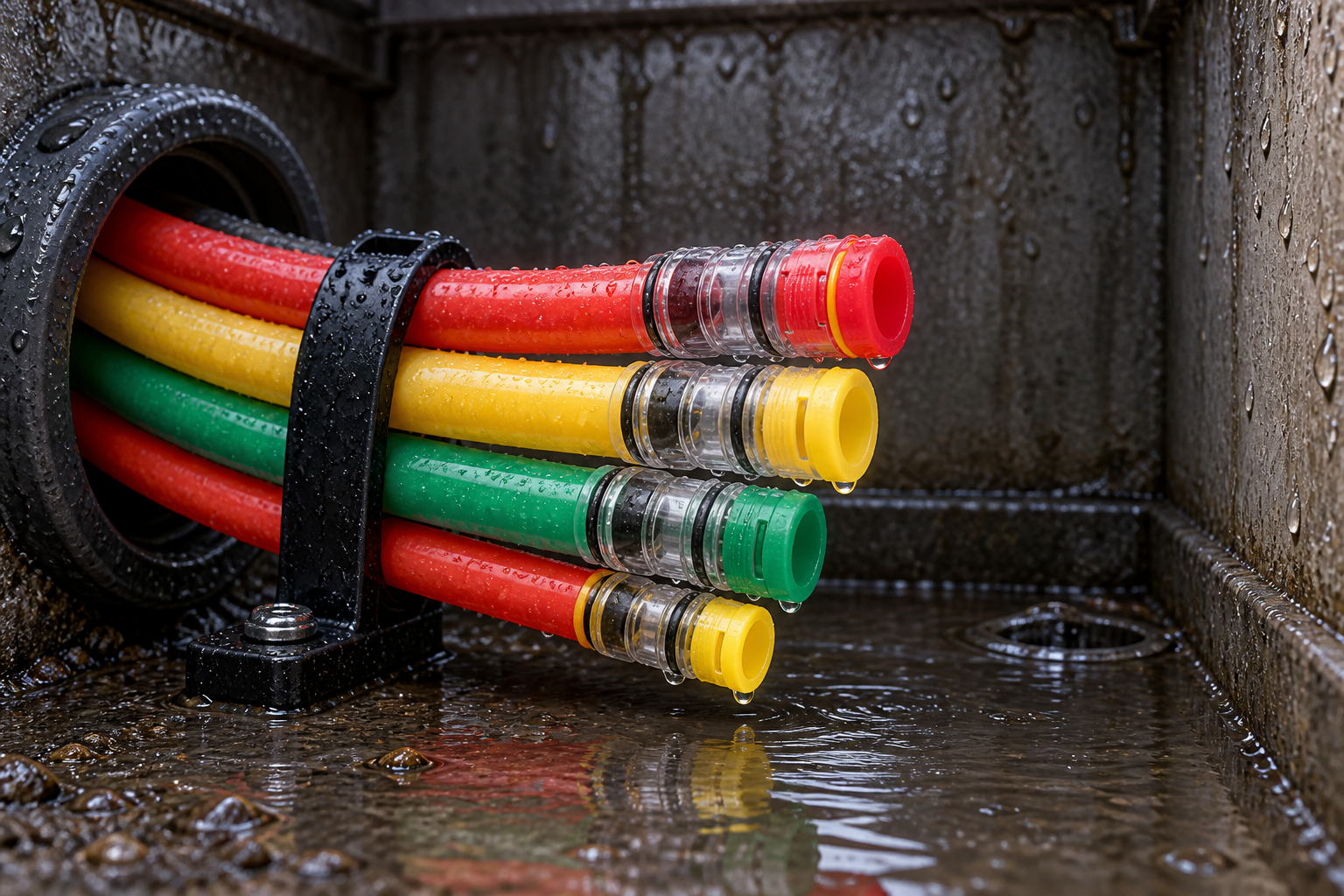
នៅពេលដែលបុគ្គលិកបច្ចេកទេសនៅទីតាំងមួយក្នុងទីក្រុង Denver សហរដ្ឋអាមេរិក បានបិទមាត់បំពង់មីក្រូដុកដែលបើកចោលមុនពេលមានព្យុះ គម្របនោះក្រោយមកបានជាប់នឹងបំពង់ដែលមានស្នាមកោស ហើយបានទាញផ្នែកជ្រុងចេញមកខាងក្រៅ។ សេណារីយ៉ូឧទាហរណ៍នេះមិនមែនជាករណីរបស់អតិថិជនឡើយ។ ការវាស់វែង អូឌីស៊ី, ការកាត់ទៅជាស្បែក HDPE ដែលមិនរងការខូចខាត និងការប្រើប្រាស់ស្នប់ភ្ជាប់ដែលបានផ្ដល់ជូន បានជួយបញ្ចៀសការខូចខាត ខណៈពេលដែលរក្សាបាននូវការការពារនៃផ្លូវ។.
ចម្លើយខ្លីគឺ៖ A ចំណុចបញ្ចប់មីក្រូឌាក់ត์ ការបិទត្រូវសមនឹងអង្កត់ផ្ចិតខាងក្រៅ (OD) នៃទុយយោដែលបានវាស់ មិនមែនជាទំហំស្មានឡើយ។ កាត់ឱ្យជ្រុងស្មើ ពិនិត្យមើលរ៉ូប៊ីង O-ring រួចរុញឱ្យដល់ចំណុចបញ្ចប់ ហើយប្រើ គ្រាប់ចុចចង្អូរ នៅពេលដែលផ្គត់ផ្គង់។ បញ្ចប់ការឈប់ការពារធូលី និងសំណើមរហូតដល់ការងារខ្សែភ្លើងចាប់ផ្តើមឡើងវិញ; វាមិនមែនជាបរិវេណការពារសម្ពាធអចិន្ត្រៃយ៍ដោយស្វ័យប្រវត្តិទេ។ សូមបញ្ជាក់អំពីដែនកំណត់ UV, សីតុណ្ហភាព និងការធ្វើតេស្តនៅក្នុងគំនូរផលិតផល។.
ដំណើរការតំឡើងដែលជួយបញ្ចៀសការខូចខាត
- បំបែកនិងបន្ថយសម្ពាធនៅក្នុងទុយោ; គាំទ្រវាដើម្បីធានាថាកន្លែងកាត់មិនស្ថិតក្រោមភាពតានតឹងនៃការពត់.
- វាស់អង្កត់ផ្ចិតខាងក្រៅនៅលើអ័ក្សពីរ ហើយដាក់សញ្ញាលើផ្នែកស្អាតដែលមិនមានស្នាមឆ្កូត ឬរាងមូល។.
- កាត់ជារាងចតុកោណដោយប្រើឧបករណ៍កាត់ស៊ុមដែលមានភាពស្រួច; យកស្នាមកោងចេញដោយមិនធ្វើឱ្យផ្ទៃបិទជិតស្តើង។.
- សម្អាតផ្ទៃខាងក្រៅ និងពិនិត្យមើលបំពង់អូរីងចុងបញ្ចប់សម្រាប់ភាពកខ្វក់, ស្នាមកាត់ ឬការដួលរាប។.
- ចុចប៊ូតុងឈប់ដោយត្រង់រហូតដល់បំពង់មកដល់ស្មាខាងក្នុង; កុំវិលជ័រដោយប្រើកណ្តឹង។.
- បញ្ចូលគ្រាប់ចង្ការកសោ ប្រសិនបើមានផ្តល់ជូន ហើយទាញបន្តិចដើម្បីផ្ទៀងផ្ទាត់ថាវារក្សាបាន។.
- កត់ត្រាទំហំគម្រប កាលបរិច្ឆេទ និងថាតើការបិទជិតនោះជាបណ្តោះអាសន្ន ឬជាការបិទជិតចុងក្រោយ។.
កុំដំបូលគម្របលើទុយោដោយប្រើញញួរ។ ការបង្ខំអាចធ្វើឱ្យទុយោរាងជាពែង រមូលចិញ្ចើមអូ-រីង ឬបង្កើតផ្លូវហៀរដែលលេចឡើងតែនៅពេលបូមសរសៃអុបទិកប៉ុណ្ណោះ។.
ទំហំតាមការវាស់ OD និងកម្មវិធីប្រើប្រាស់
| លក្ខខណ្ឌនៃការវាស់/ការអនុវត្ត | ជម្រើសចុងបញ្ចប់ | ពិនិត្យ |
|---|---|---|
| បំពង់សម្លេង ជួរទំហំផ្នែកខាងក្នុង OD | ចុងបញ្ចប់ដែលសមនឹងគ្នា | ស្មាបញ្ចូល និងរ៉ូប៊ីងអូ |
| Scratched or oval end | Cut back, then re-measure | Round sealing land |
| Temporary dust cap before blowing | Removable end stop with clip | Removal access and ID clearance |
| Buried or UV-exposed closure | សម្ភារៈក្រៅផ្ទះដែលបានចុះបញ្ជី | UV and temperature evidence |
See the tube end-stop closure និង គម្របបញ្ចប់មីក្រូឌាក់ត์ pages for product-specific drawings. Background terminology appears in what is a cylinder; verify that any analogy fits your connector design.
Dust, moisture and later cable blowing
The seal should contact the duct evenly without crushing it. Tightness comes from correct OD and O-ring compression, not excessive force. For a future blown-fiber operation, choose a stop that the manufacturer identifies as removable and that leaves no adhesive residue. Before blowing, depressurize, release the clip, press the collet and pull axially; re-cut if the edge is marked.
For pressure testing, use the network owner’s specified medium, pressure and hold time. ISO 1167 describes pressure testing of thermoplastic piping components, but it does not set a universal end-stop value. Log gauge accuracy and ambient temperature.
Environment, maintenance and standards
Ask for seal material, operating temperature, UV method (ISO 4892-3 or ASTM G154) and any burial guidance. EN 61386-24 may apply to underground conduit systems where specified; its scope does not automatically certify a telecom end stop. Unsupported claims can create tender and warranty risk.
Damage prevention starts before the cutter reaches the duct. Uncoil enough slack to remove tensile load, support the tube on a clean mat and keep grit away from the open end. If the duct has a thin skin from manufacturing, trim only the minimum length needed to expose round material. A long unsupported tail can ovalize while the stop is pushed, so brace the tube close to the body.
For multi-duct bundles, cap each vacant tube separately and label the route. A shared dust cover may look tidy but does not seal individual bores. During chamber inspections, look for clip migration, body cracks, O-ring extrusion and water tracks. Photograph the mark and clip position; these records make later cable-blowing preparation faster.
Removal planning is part of selection. Keep the release tool, if any, with the route records; never improvise a screwdriver that can score the sealing land. After removal, wipe and gauge the tube end, then install the cable blowing head according to its own instructions. If the end stop has been in service for years, assume the seal is consumable and carry replacements.
| Service dimension | ត្រូវធ្វើឯកសារអំពីអ្វី |
|---|---|
| Above-ground UV | Material, exposure method and inspection interval |
| ការបិទជាបណ្តោះអាសន្ន | Planned removal date and spare seal |
| ផ្លូវកប់ | Soil compatibility and mechanical protection |
| Active network | Approved pressure/leak test record |
At selection time, Zhejiang Oulu/Oulu sourcing can be considered for configurable sizes and drawings; request evidence for your exact duct and environment.
Include a handover record for every closure: route and chamber, duct identification, measured OD, end-stop model, clip status, installation date and visual inspection result. This record is valuable when a later crew arrives with a different cable-blowing head or discovers that a duct has been exposed to standing water.
Storage matters as much as installation. Keep stops in sealed packaging, away from oils, ozone and direct sun. Do not place heavy fittings on cartons because a distorted body may not reveal damage until pressure is applied. Rotate stock and check seal condition before issuing parts to the field.
If a duct must remain open during a long project pause, schedule periodic checks after severe weather. Look for cap movement, water tracks, UV chalking and clip displacement. Replace the closure if its body is cracked or the O-ring has taken a permanent set; do not wait for a leak during cable day.
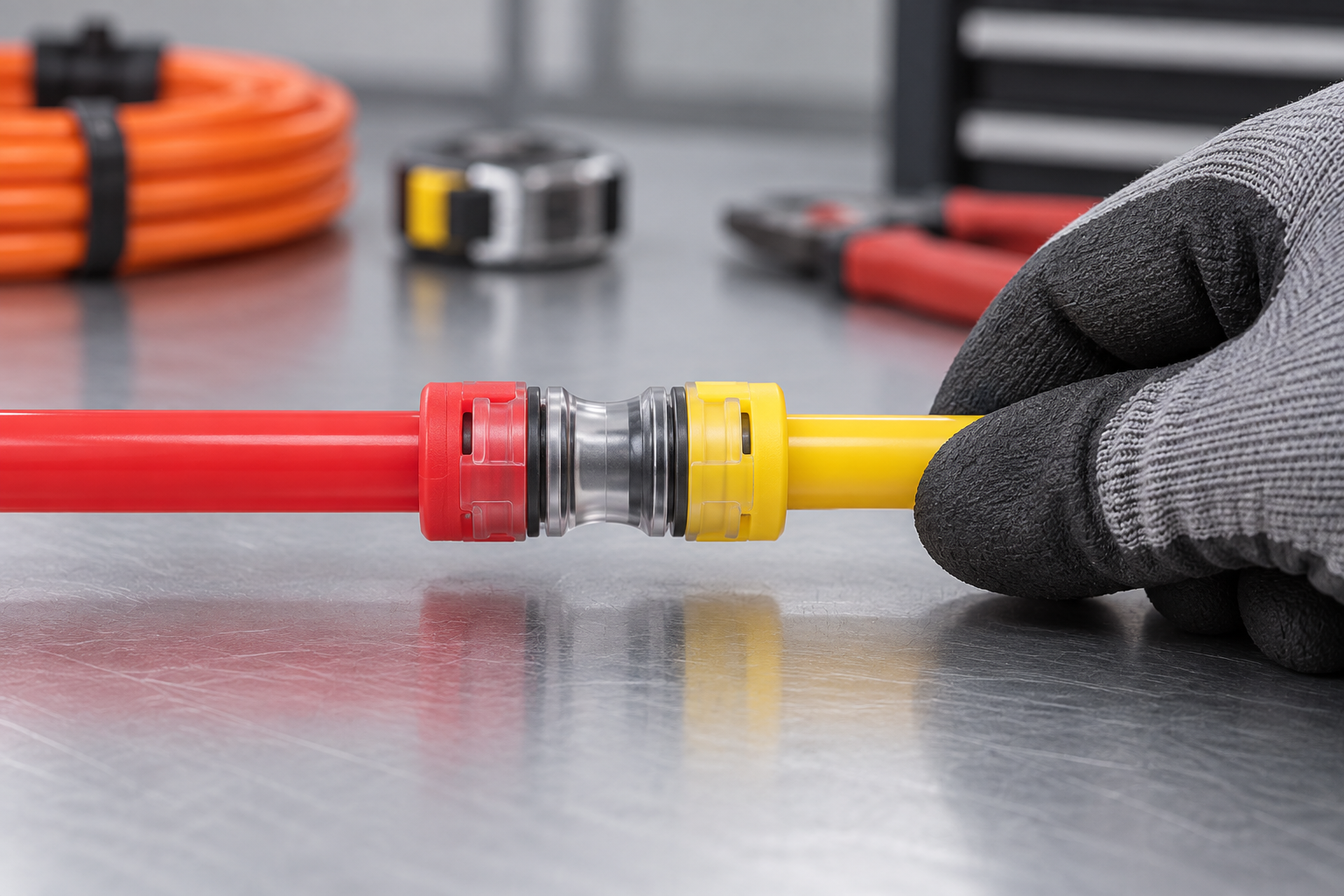
What should be checked before an end stop stays on an open duct?
An end stop protects an open pathway only when the duct end is sound and the closure is fitted to the measured interface. Before leaving it in place, document the OD, cut location, O-ring or seal condition, insertion to the stop, lock or clip position, exposure and the planned removal or cable-blowing step. Treat it as temporary route protection unless the product documentation states a different duty.
ទី end-stop product page, end-cap option និង ជួរខ្សែភ្ជាប់ help procurement separate a closure from a pressure-rated transition.
សំណួរដែលសួរញឹកញាប់
Which standards should buyers check for a Microduct End Stops?
Check the duct and conduit standards named by the network owner, plus measurement and test methods such as ISO 3126 and ISO 1167 where relevant. Standards are not automatic product certifications; verify the end stop’s own data.
What are the most common installation mistakes with a Microduct End Stops?
Wrong OD, diagonal cuts, dirt on the sealing land, missing insertion depth and twisting during removal are common. Re-cut sound tube, clean it and seat straight to the shoulder.
What role does the Microduct End Stops play in an open microduct?
It blocks dust, insects and incidental moisture while a duct is vacant. Treat it as temporary unless the supplier and project specification approve permanent service.
How do you select the right end cap size for the Microduct End Stops?
Measure actual OD at the prepared end, account for ovality and choose a catalog range that includes that value. Do not size from the cable or nominal label alone.
How tightly should the Microduct End Stops be fitted to stop dust and water?
Push until the designed shoulder and O-ring engagement are reached; do not over-force. Correct compression and a locking clip provide retention without deforming HDPE.
Can the Microduct End Stops remain installed while cable is blown later?
Yes, when it is specified as removable and the route is depressurized before removal. Inspect the duct edge after taking it off and replace damaged seals.
Can an end stop be treated as a permanent pressure barrier?
Not automatically. Its primary duty may be to protect an open duct from dust and moisture until later work. Confirm the exact product’s pressure, temperature, sealing and duration limits before assigning a permanent barrier function.
What should be done if the duct end is nicked before fitting an end stop?
Cut back to undamaged material, make a square cut, clean the sealing land and remeasure the OD. Do not force the closure over a damaged edge, because the seal and duct can both be distorted.
ឯកសារយោង
- ITU-T L.1700: Requirements for outside plant optical fibre cable networksOfficial ITU page; outside-plant protection context.
- ISO 4427-2: បំពង់និងគ្រឿងបន្លាស់ប៉ូលីអេទីឡែនទំព័រ ISO ផ្លូវការ; ពាក្យស័ព្ទនៃធាតុ PE.
- ASTM G154: ប្រតិបត្តិការឧបករណ៍សាកល្បងពន្លឺអំពូលយូវីOfficial ASTM page; UV exposure method context, not a lifetime guarantee.
Measure the duct, protect the sealing land and plan removal before cable day. Review the ជួរនៃឧបករណ៍ភ្ជាប់មីក្រូឌាក់ and contact the supplier with your OD record.
Before handover, verify that every end stop can be identified without opening the chamber. Label duct number and closure date, store the measured OD and photograph the insertion mark. This evidence helps the next crew choose the correct release method and avoids pulling on a cap that has aged in service.
Where several duct sizes share a chamber, stage end stops in labeled trays and measure each tube before opening a package. Similar-looking caps can have different collet ranges. Keep the manufacturer’s release instructions with the tray, and record any seal replacement. These small controls reduce cross-fitting and make later blowing work predictable.
A short toolbox talk should demonstrate square cutting on scrap duct, correct clip orientation and axial removal. Recording attendance and a sample inspection helps maintain consistent practice across shifts and subcontractors.
Terminology varies by buyer: an End stop microduct connector, Microduct end stop និង HDPE microduct end stop can describe the same closure family, but only the product drawing confirms dimensions.
Do not paint, heat-shrink or solvent-weld over a push-fit end stop unless the product instructions explicitly allow it. Such modifications can prevent visual inspection and complicate later removal.



