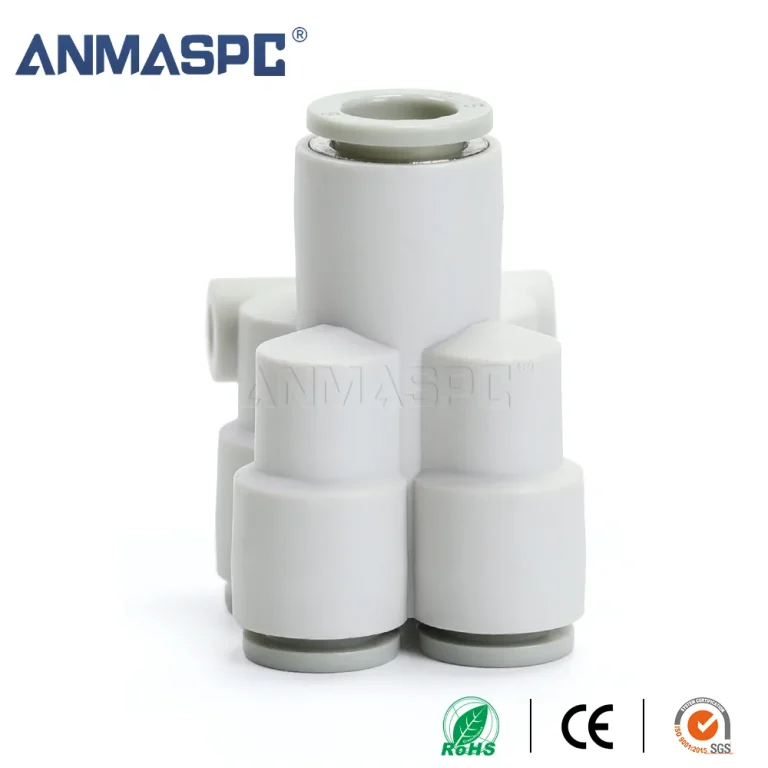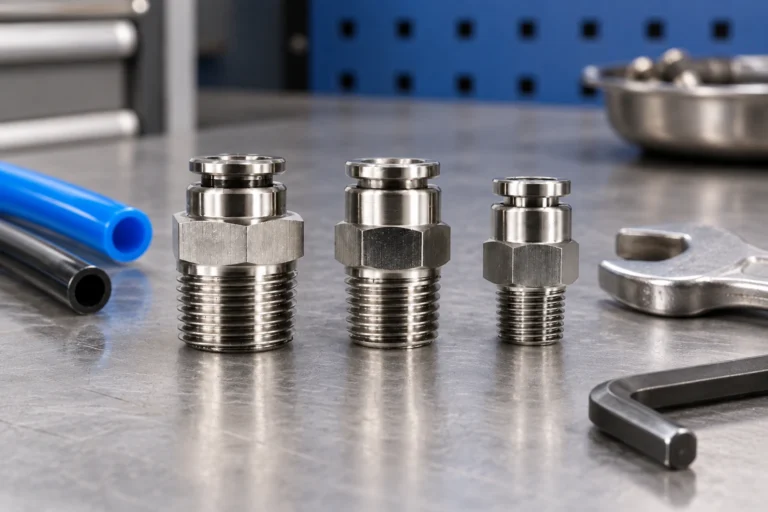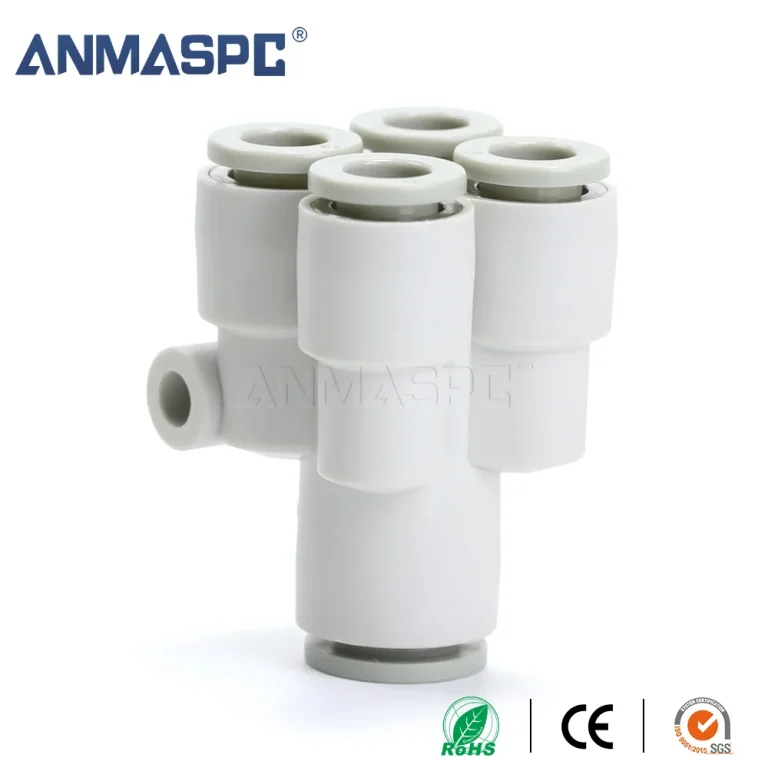
When a field technician in Denver, USA, capped an open microduct before a storm, the cap later stuck to a nicked tube and pulled the edge outward. This illustrative scenario is not a customer case. Measuring the duct OD, cutting back to undamaged HDPE and using the supplied clip avoided damage while keeping the route protected.
The short answer is: A Microduct End Stops closure should fit the measured duct OD, not a guessed nominal size. Cut square, inspect the O-ring, push to the stop and use the locking clip when supplied. The end stop protects against dust and moisture until cable work resumes; it is not automatically a permanent pressure barrier. Confirm UV, temperature and test limits in the product drawing.
Damage-avoidance installation workflow
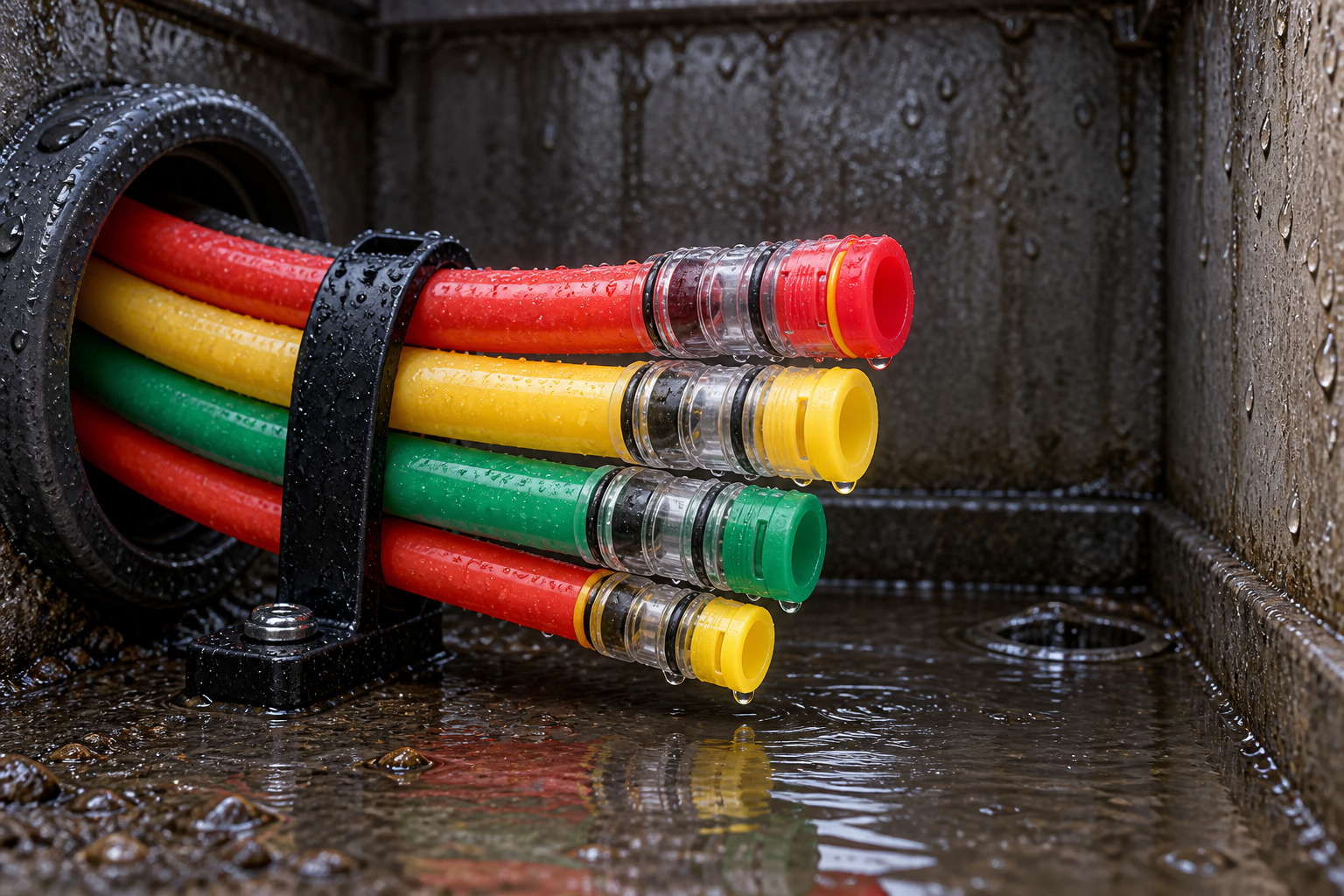
- Isolate and depressurize the duct; support it so the cut is not under bending stress.
- Measure OD at two axes and mark a clean section beyond scratches or ovality.
- Cut square with a sharp tube cutter; remove burrs without thinning the sealing land.
- Clean the outside surface and inspect the end-stop O-ring for grit, cuts or flattening.
- Push the stop straight until the tube reaches the internal shoulder; do not twist with pliers.
- Fit the locking clip, if provided, and tug lightly to verify retention.
- Record the cap size, date and whether the closure is temporary or final.
Never hammer a cap onto a duct. A forcing action can bell the tube, roll the O-ring or create a leak path that appears only during fiber blowing.
Size by measured OD and application
| Measured/application condition | End-stop choice | Проверить |
|---|---|---|
| Sound tube, OD inside catalog range | Matching end stop | Insertion shoulder and O-ring |
| Scratched or oval end | Cut back, then re-measure | Round sealing land |
| Temporary dust cap before blowing | Removable end stop with clip | Removal access and ID clearance |
| Buried or UV-exposed closure | Documented outdoor material | UV and temperature evidence |
See the tube end-stop closure и microduct end cap pages for product-specific drawings. Background terminology appears in what is a cylinder; verify that any analogy fits your connector design.
Dust, moisture and later cable blowing
The seal should contact the duct evenly without crushing it. Tightness comes from correct OD and O-ring compression, not excessive force. For a future blown-fiber operation, choose a stop that the manufacturer identifies as removable and that leaves no adhesive residue. Before blowing, depressurize, release the clip, press the collet and pull axially; re-cut if the edge is marked.
For pressure testing, use the network owner’s specified medium, pressure and hold time. ISO 1167 describes pressure testing of thermoplastic piping components, but it does not set a universal end-stop value. Log gauge accuracy and ambient temperature.
Environment, maintenance and standards
Ask for seal material, operating temperature, UV method (ISO 4892-3 or ASTM G154) and any burial guidance. EN 61386-24 may apply to underground conduit systems where specified; its scope does not automatically certify a telecom end stop. Unsupported claims can create tender and warranty risk.
Damage prevention starts before the cutter reaches the duct. Uncoil enough slack to remove tensile load, support the tube on a clean mat and keep grit away from the open end. If the duct has a thin skin from manufacturing, trim only the minimum length needed to expose round material. A long unsupported tail can ovalize while the stop is pushed, so brace the tube close to the body.
For multi-duct bundles, cap each vacant tube separately and label the route. A shared dust cover may look tidy but does not seal individual bores. During chamber inspections, look for clip migration, body cracks, O-ring extrusion and water tracks. Photograph the mark and clip position; these records make later cable-blowing preparation faster.
Removal planning is part of selection. Keep the release tool, if any, with the route records; never improvise a screwdriver that can score the sealing land. After removal, wipe and gauge the tube end, then install the cable blowing head according to its own instructions. If the end stop has been in service for years, assume the seal is consumable and carry replacements.
| Service dimension | Что документировать |
|---|---|
| Above-ground UV | Material, exposure method and inspection interval |
| Temporary closure | Planned removal date and spare seal |
| Buried route | Soil compatibility and mechanical protection |
| Active network | Approved pressure/leak test record |
At selection time, Zhejiang Oulu/Oulu sourcing can be considered for configurable sizes and drawings; request evidence for your exact duct and environment.
Include a handover record for every closure: route and chamber, duct identification, measured OD, end-stop model, clip status, installation date and visual inspection result. This record is valuable when a later crew arrives with a different cable-blowing head or discovers that a duct has been exposed to standing water.
Storage matters as much as installation. Keep stops in sealed packaging, away from oils, ozone and direct sun. Do not place heavy fittings on cartons because a distorted body may not reveal damage until pressure is applied. Rotate stock and check seal condition before issuing parts to the field.
If a duct must remain open during a long project pause, schedule periodic checks after severe weather. Look for cap movement, water tracks, UV chalking and clip displacement. Replace the closure if its body is cracked or the O-ring has taken a permanent set; do not wait for a leak during cable day.
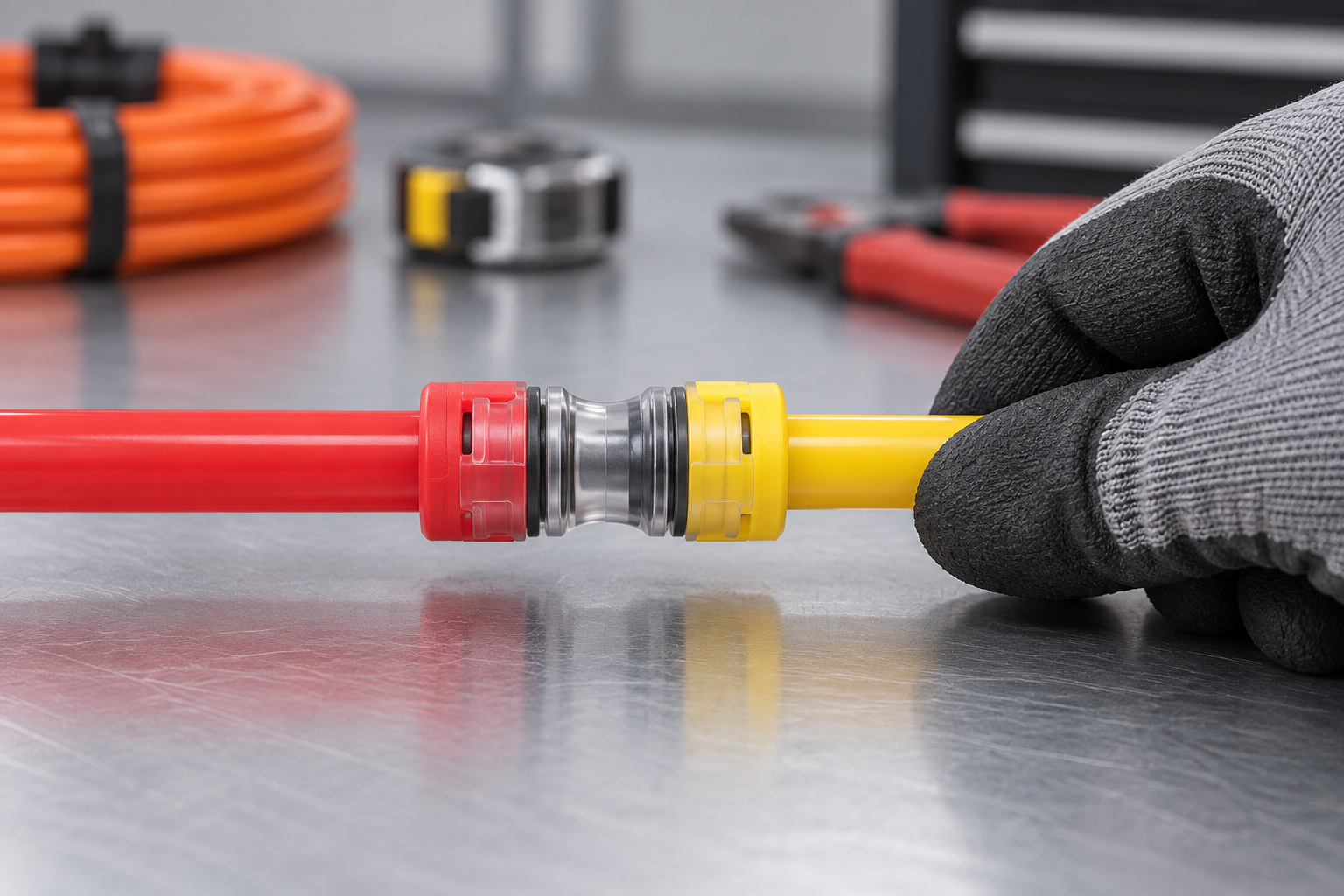
What should be checked before an end stop stays on an open duct?
An end stop protects an open pathway only when the duct end is sound and the closure is fitted to the measured interface. Before leaving it in place, document the OD, cut location, O-ring or seal condition, insertion to the stop, lock or clip position, exposure and the planned removal or cable-blowing step. Treat it as temporary route protection unless the product documentation states a different duty.
The end-stop product page, end-cap option и connector range help procurement separate a closure from a pressure-rated transition.
Часто задаваемые вопросы
Which standards should buyers check for a Microduct End Stops?
Check the duct and conduit standards named by the network owner, plus measurement and test methods such as ISO 3126 and ISO 1167 where relevant. Standards are not automatic product certifications; verify the end stop’s own data.
What are the most common installation mistakes with a Microduct End Stops?
Wrong OD, diagonal cuts, dirt on the sealing land, missing insertion depth and twisting during removal are common. Re-cut sound tube, clean it and seat straight to the shoulder.
What role does the Microduct End Stops play in an open microduct?
It blocks dust, insects and incidental moisture while a duct is vacant. Treat it as temporary unless the supplier and project specification approve permanent service.
How do you select the right end cap size for the Microduct End Stops?
Measure actual OD at the prepared end, account for ovality and choose a catalog range that includes that value. Do not size from the cable or nominal label alone.
How tightly should the Microduct End Stops be fitted to stop dust and water?
Push until the designed shoulder and O-ring engagement are reached; do not over-force. Correct compression and a locking clip provide retention without deforming HDPE.
Can the Microduct End Stops remain installed while cable is blown later?
Yes, when it is specified as removable and the route is depressurized before removal. Inspect the duct edge after taking it off and replace damaged seals.
Can an end stop be treated as a permanent pressure barrier?
Not automatically. Its primary duty may be to protect an open duct from dust and moisture until later work. Confirm the exact product’s pressure, temperature, sealing and duration limits before assigning a permanent barrier function.
What should be done if the duct end is nicked before fitting an end stop?
Cut back to undamaged material, make a square cut, clean the sealing land and remeasure the OD. Do not force the closure over a damaged edge, because the seal and duct can both be distorted.
Ссылки
- ITU-T L.1700: Requirements for outside plant optical fibre cable networksOfficial ITU page; outside-plant protection context.
- ISO 4427-2: Polyethylene pipes and fittingsOfficial ISO page; PE component terminology.
- ASTM G154: Operating fluorescent ultraviolet exposure apparatusOfficial ASTM page; UV exposure method context, not a lifetime guarantee.
Measure the duct, protect the sealing land and plan removal before cable day. Review the microduct connector range and contact the supplier with your OD record.
Before handover, verify that every end stop can be identified without opening the chamber. Label duct number and closure date, store the measured OD and photograph the insertion mark. This evidence helps the next crew choose the correct release method and avoids pulling on a cap that has aged in service.
Where several duct sizes share a chamber, stage end stops in labeled trays and measure each tube before opening a package. Similar-looking caps can have different collet ranges. Keep the manufacturer’s release instructions with the tray, and record any seal replacement. These small controls reduce cross-fitting and make later blowing work predictable.
A short toolbox talk should demonstrate square cutting on scrap duct, correct clip orientation and axial removal. Recording attendance and a sample inspection helps maintain consistent practice across shifts and subcontractors.
Terminology varies by buyer: an End stop microduct connector, Microduct end stop и HDPE microduct end stop can describe the same closure family, but only the product drawing confirms dimensions.
Do not paint, heat-shrink or solvent-weld over a push-fit end stop unless the product instructions explicitly allow it. Such modifications can prevent visual inspection and complicate later removal.