
Una macchina pneumatica può sembrare in buone condizioni al minimo e perdere potenza quando diversi attuatori si muovono contemporaneamente. Un tubo piegato, una connessione che perde o una linea di ricambio eccessivamente lunga possono diventare evidenti solo durante quel picco di richiesta. Un utile Lista di controllo per la manutenzione dei tubi in PU pertanto copre tubazioni, raccordi, percorso e ciclo di funzionamento, anziché considerare ogni problema di pressione come un guasto del compressore.
Inizia identificando il tubo e le sue condizioni di servizio. Quindi ispeziona l’intero percorso, isolando la macchina prima di interrompere una connessione, sostituisci i componenti danneggiati e ripristina le condizioni operative originali. Non esistono intervalli di sostituzione o valori di pressione standard per i tubi in poliuretano. I limiti sono determinati dalla serie esatta del tubo, dalla temperatura, dal fluido e dalla combinazione di raccordi utilizzati.
Quali dimensioni del tubo in PU devono corrispondere a quelle del ricambio?
Annotare il produttore, la serie del tubo, il diametro esterno, il diametro interno e qualsiasi marcatura di lotto visibile. Misurare una porzione non danneggiata anziché l’estremità stirata. Una sostituzione con lo stesso diametro esterno può avere un foro diverso, il che modifica l’area di flusso disponibile. Un colore o una forma della bobina simili non garantiscono la compatibilità dimensionale né quella chimica.
Distingui il tubo flessibile dal tubo assemblato con estremità fisse. Un raccordo a innesto normalmente si aggancia alla superficie esterna del tubo, mentre un adattatore filettato collegato si connette a una porta separata della macchina. Queste interfacce richiedono informazioni diverse. Il tubo deve riportare il diametro, il materiale e lo stato specificati; il lato filettato deve indicare la designazione esatta della filettatura e il metodo di tenuta approvato.
| Elemento da registrare | Perché è importante | Dove verificarlo |
|---|---|---|
| Diametro esterno del tubo | Determina l'interfaccia adatta | Specifiche per la marcatura, la misurazione e il montaggio dei tubi |
| Diametro interno del tubo | Influisce sulla limitazione del flusso | Scheda tecnica esatta del tubo |
| Pressione di esercizio a temperatura | Definisce l’ambito operativo consentito | Curva di rating o derating specifica per la serie |
| Esposizione ai fluidi e all’ambiente esterno | Influenza l'idoneità dei tubi e delle guarnizioni | Informazioni di compatibilità scritte |
| Spostamento della lunghezza e del margine di piega | Previene la tensione e il livellamento locale | Istruzioni di movimento e routing della macchina |
Conserva la descrizione dell’acquisto precedente insieme alla registrazione della manutenzione, ma non dare per scontato che fosse corretta. Se un guasto ricorrente è seguito a diversi interventi di sostituzione identici, confronta il requisito progettuale originale con il pezzo fornito. Ripetere un errore d’acquisto può nascondere la vera causa dei continui malfunzionamenti della linea.
Dove si usurano i tubi dell’aria in PU sugli impianti mobili?
Con la macchina ferma in sicurezza, verificare la presenza di abrasioni, tagli, pieghe schiacciate, rigonfiamenti, indurimenti e decolorazioni. Ispezionare la parte inferiore, dove il tubo entra in contatto con una staffa, il tratto vicino a un componente caldo e la zona di transizione verso ciascun raccordo. L’aspetto superficiale da solo non consente di determinare la resistenza residua, ma eventuali danni visibili sono motivo per ritirare il componente dal servizio e analizzare le condizioni di esposizione.
Verificare il percorso lungo tutta l’escursione della macchina seguendo la procedura di ispezione di sicurezza del costruttore. Un tubo flessibile che risulta allentato in una posizione potrebbe tendersi eccessivamente in un’altra. Un tubo flessibile retrattile non deve fungere da arresto di corsa né sostenere il peso di un utensile. Per un’indagine basata sui sintomi, utilizzare la guida separata a PU pneumatic hose leaks and kinks.
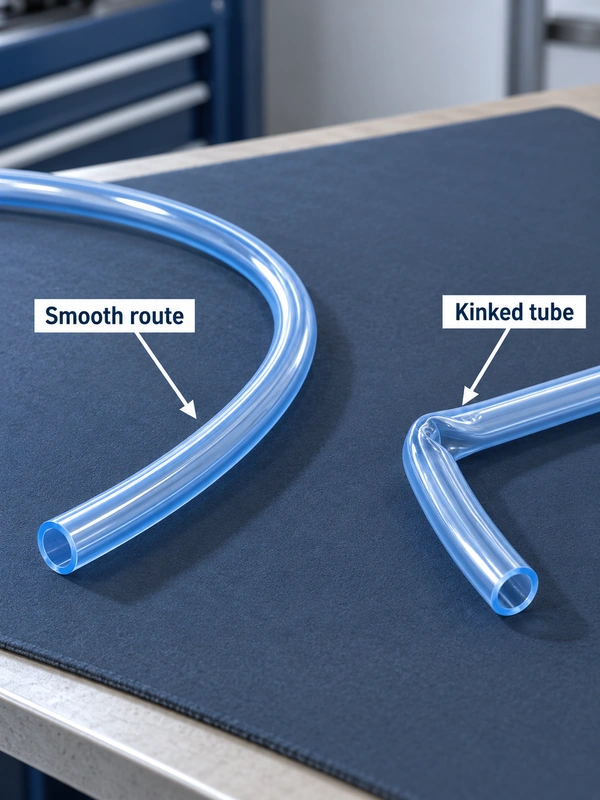
Inspect clamps and guides as well as the tube. An overtightened clamp can flatten the bore; a loose support can allow repeated rubbing. Route the hose away from sharp sheet-metal edges and pinch points, while preserving the minimum bend radius specified for the actual tube. A protective sleeve can reduce contact damage, but it does not make an underspecified hose suitable for heat or chemical exposure.
How does temperature affect a PU hose’s pressure limit?
A room-temperature pressure value is not permission to operate at that pressure next to a hot machine enclosure. SMC’s TU/TIUB catalogue, for example, gives a maximum operating pressure at 20°C and provides temperature-dependent information. Those figures belong to that series; they must not be transferred to an unverified hose from another supplier.
Use the lowest applicable limit among the tubing, fittings, valves and other components. Include pressure transients and the actual ambient and fluid temperature when obtaining approval. Burst pressure describes a different test condition and must not become the normal operating setting. When the hose identification is missing, replacing it with a documented part is more reliable than guessing its rating from appearance.
If the actuator pressure falls under load, measure at relevant points using an approved setup. Restriction, insufficient supply, a regulator setting and leakage can produce similar symptoms. Increasing supply pressure before finding the cause may hide the restriction while exposing other components to greater stress.
Is the PU hose compatible with water, oil and cleaners?
Polyurethane tubing compatibility depends on the formulation and operating conditions. SMC lists air and water for specified TU/TIUB tubing, while its TUH guidance excludes water because hydrolysis can shorten service life. This is a practical example of why the material name alone cannot establish approval.
Ask about both the conveyed fluid and substances that touch the outside: compressor oil carryover, cleaning spray, coolant, adhesive and disinfectant can be different exposures. Obtain compatibility for the concentration, temperature and duration involved. The tube and fitting seals must both be suitable. The detailed discussion of PU tube oil, water and chemical compatibility explains why a generic resistance claim is insufficient.
Food-contact or clean-air requirements need separate documentation. A hose used near a food process is not automatically approved to touch food, and a clean-looking tube does not demonstrate a particular air-purity class. Define the actual contact zone and process requirement before purchasing replacement parts.
How to cut PU tubing and reconnect it without damaging the seal
Isolate the air supply, release stored pressure and follow the machine’s energy-control procedure before disconnecting tubing. Use the cutting tool specified for the material to produce a square, clean end without flattening it. Remove a damaged section only when the remaining hose length still permits correct routing throughout the machine’s travel.
Inspect the sealing surface and fitting entrance for scratches or contamination. Insert to the manufacturer’s specified depth and perform its retention check. Do not use tape on the tube outside surface to compensate for a loose push-in connection. If the fitting contains a threaded adapter, confirm BSPP, BSPT or NPT from the actual component identification rather than judging by diameter alone.
Follow the fitting’s reuse instructions. SMC’s KQG2 precautions illustrate that removal and reinsertion rules can be specific to the fitting family and tube condition. A general statement that all push-in fittings can be reused indefinitely would be misleading. Replace a damaged gripping or sealing component according to the maker’s service policy.
| Condizione osservata | First investigation | Repair decision |
|---|---|---|
| Leak at a tube entry | Diameter, end condition, seating and fitting damage | Replace affected parts; verify the connection |
| Pressure loss only during motion | Kink, tension or rubbing at the travel limit | Correct routing and replace damaged tubing |
| Tube becomes soft or swollen | Fluid, cleaner and temperature exposure | Confirm compatibility before selecting a replacement |
| Repeated failure at one bracket | Support geometry and movement | Remove the contact cause, not just the failed section |
How to check a replacement air hose under machine load
Restore service through the machine’s approved commissioning procedure. Check for leakage and repeat the cycle that originally exposed the fault. Compare pressure at the same location, with the same demand and comparable operating conditions. A quiet connection at idle is useful evidence, but it does not establish adequate flow during simultaneous actuator movement.
The US Department of Energy recommends a continuing compressed-air leak programme covering identification, tagging, tracking, repair and verification. Apply that principle to the maintenance record: note the fault location, removed component, replacement specification, routing change and post-repair result. Avoid claiming an energy saving without measured system data.
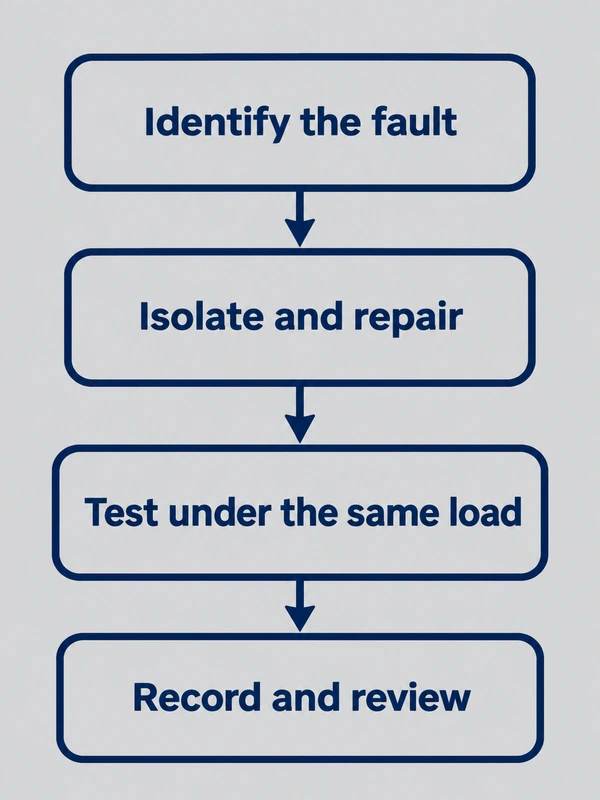
Set inspection frequency from duty, movement, exposure and failure history. A frequently flexing line near abrasive debris deserves closer attention than protected stationary tubing. Shorten the interval after a routing change or repeated failure, then review the findings. This makes preventive hose inspection responsive to the equipment rather than an arbitrary calendar exercise.
Domande frequenti
What pressure and temperature limits apply to a PU hose?
Use the exact tubing datasheet and its temperature conditions. Check the complete assembly against its lowest-rated component. Do not substitute a burst pressure for a working limit or apply another manufacturer’s polyurethane rating to an unidentified hose.
How do you match PU hose fittings to a threaded machine port?
The hose itself is normally matched by tube dimensions and fitting type. Threads belong to an adapter or machine port. Identify that thread separately and use its specified seal; BSPP, BSPT and NPT are not interchangeable simply because they look similar.
How should PU tubing be cut and inserted into a push-in fitting?
Depressurize first, make a square undamaged cut with the correct tool, inspect the outside sealing surface and insert to the fitting’s required depth. Follow the manufacturer’s retention and reuse instructions rather than relying on an improvised pull test.
Can PU hose carry oil, water or chemicals?
Only when the particular tubing and fitting materials are approved for the fluid and conditions. Different polyurethane formulations have different restrictions. Include external cleaners and temperature in the compatibility request, even when the internal fluid is only compressed air.
How often should PU air hoses on an automated line be inspected?
Follow the equipment maintenance plan and adjust it for motion, abrasion, heat, contamination and previous failures. Inspect after interventions and unexplained pressure changes. There is no evidence-based universal interval covering every automated line and every PU formulation.
How does polyurethane compare with nylon tubing?
Compare specified bend radius, stiffness, pressure-temperature limits, fluid compatibility and fitting approval for the actual grades. Flexible handling alone does not make PU the best choice, and a nylon label alone does not guarantee higher performance in your application.
Riferimenti
- SMC, TU/TIUB and TUH polyurethane tubing catalogue: series-specific dimensions, operating conditions and water restrictions.
- SMC, KQG2 fittings catalogue and precautions: fitting-specific handling and tubing installation considerations.
- Dipartimento dell’Energia degli Stati Uniti, Ridurre al minimo le perdite di aria compressa: recurring leak identification, repair and verification.
Riepilogo
A sound hose repair starts with the correct tubing specification and ends with a working machine checked under its real demand. Inspect the complete route, correct the reason for damage, use compatible fittings and document the result. Replacing the hose without addressing heat, movement or restriction leaves the original fault in place.
For replacement sourcing, compare the PU spring recoil pneumatic air hose with your recorded dimensions, required working length and service conditions. Ask for written confirmation of pressure, temperature and fluid suitability before approving it for the machine.



