
空気圧式機械は、アイドリング時には正常に見えるものの、複数のアクチュエータが同時に動作すると出力が低下することがあります。屈曲したホース、漏れのある接続部、あるいは不必要に長い交換用配管などは、そのような負荷ピーク時に初めて問題として明らかになることがあります。便利な PUホースの保守点検リスト したがって、あらゆる圧力問題をコンプレッサーの故障とみなすのではなく、配管、継手、経路および動作サイクル全体を対象としています。.
まず、ホースとその使用条件を特定してください。次に、配管経路全体を点検し、接続部を外す前に機器の電源を遮断してください。損傷した部品を交換し、元の運転条件を再現します。ポリウレタンチューブには、万能の交換時期や耐圧仕様はありません。許容限界は、使用するチューブのシリーズ、温度、流体、および継手の組み合わせによって決まります。.
交換用のPUホースは、どの寸法と一致していなければなりませんか?
製造元、チューブシリーズ、外径、内径、および目視できるバッチマークを記録してください。伸縮した端部ではなく、損傷のない部分を測定してください。同じ外径の代替品でも内径が異なる場合があり、その結果、利用可能な流路断面積が変化します。色やコイル形状が似ているだけでは、寸法的または化学的な互換性は保証されません。.
フレキシブルチューブと、両端が固定された組み立て済みホースを区別してください。プッシュイン継手は通常、チューブの外径を保持し、一方、ねじ込み式アダプターは別途用意された機器のポートに接続します。これらのインターフェースには異なる情報が必要です。チューブには指定された直径、材質、状態を記載し、ねじ込み側には実際のねじ規格および承認済みのシール方法を明記してください。.
| 記録する項目 | なぜそれが重要なのか | どこで確認できますか |
|---|---|---|
| チューブ外径 | 適合するインターフェースを決定します | チューブの表示、寸法および取り付け仕様 |
| チューブ内径 | 流量制限に影響します | 正確なチュービングデータシート |
| 温度における作動圧力 | 許容動作範囲を定義します | シリーズ固有の定格またはデレーティング曲線 |
| 流体および外部被ばく | チューブおよびシールの適合性に影響します | 記述された互換性情報 |
| 長さと曲げ余裕の移動 | 張力の発生と局所的な圧扁を防止します | 機械の移動および経路指示 |
以前の購入記録を保守記録とともに保管してください。ただし、それが正しいと仮定しないでください。同一の部品を何度交換しても故障が繰り返される場合は、元の設計仕様と納品された部品を比較してください。購買ミスを繰り返すと、ラインが継続的に故障する本当の原因が隠れてしまう可能性があります。.
移動式機器では、PUエアホースのどの部分が摩耗しやすいですか?
機械を安全に停止させた状態で、摩耗、切り傷、潰れた屈曲部、膨張、硬化、変色がないか確認してください。チューブがブラケットに接触する下面、熱い部品のそばの部分、および各継手への接続部も点検します。表面の状態だけでは残存強度を判断することはできませんが、目に見える損傷がある場合は、当該部品を運用から外し、その原因を調査する必要があります。.
機械メーカーの安全点検手順に従い、機械の全行程にわたって経路を確認してください。ある位置でたるみがあるホースが、別の位置では張り詰めることがあります。リコイルホースは、移動時のストッパーとして使用したり、工具の重量を支えたりしてはなりません。症状に基づく調査については、別途提供されるガイドをご参照ください。 PU製空気ホースの漏れと屈曲.
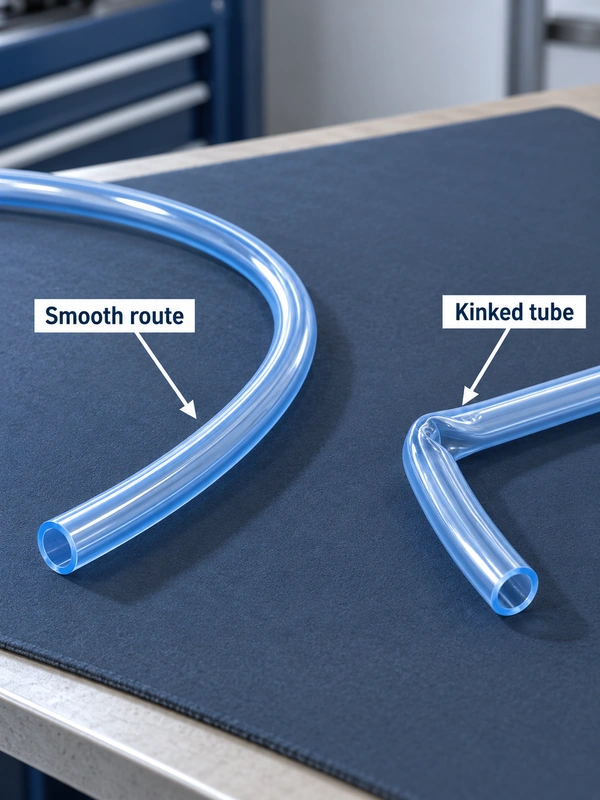
クランプやガイド、およびチューブを点検してください。クランプが締めすぎると内径が潰れる可能性があり、サポートが緩んでいると繰り返し擦れてしまうことがあります。ホースは鋭い金属板のエッジや挟まれる箇所から離して配線し、実際のチューブに指定された最小曲げ半径を確保してください。保護スリーブは接触による損傷を軽減できますが、定格が不足しているホースを熱や化学薬品への曝露に対応できるようにするものではありません。.
温度はPUホースの耐圧限界にどのように影響しますか?
室温での圧力値は、高温の機器筐体のそばでその圧力で運転してもよいという許可ではありません。例えば、SMCのTU/TIUBカタログには、20°Cにおける最大使用圧力が示されており、温度依存の情報も提供されています。これらの数値は当該シリーズに属するものであり、他社製の未検証のホースにそのまま適用してはなりません。.
配管、継手、バルブなどの各部品について、適用可能な最低限の許容値を使用してください。承認を得る際には、圧力変動および実際の周囲温度と流体温度を考慮に入れてください。破裂圧力は別の試験条件を示すものであり、通常の運転設定にしてはなりません。ホースの識別情報が不明な場合は、外観から定格を推測するよりも、文書化された同等品に交換する方が信頼性が高いです。.
If the actuator pressure falls under load, measure at relevant points using an approved setup. Restriction, insufficient supply, a regulator setting and leakage can produce similar symptoms. Increasing supply pressure before finding the cause may hide the restriction while exposing other components to greater stress.
Is the PU hose compatible with water, oil and cleaners?
Polyurethane tubing compatibility depends on the formulation and operating conditions. SMC lists air and water for specified TU/TIUB tubing, while its TUH guidance excludes water because hydrolysis can shorten service life. This is a practical example of why the material name alone cannot establish approval.
Ask about both the conveyed fluid and substances that touch the outside: compressor oil carryover, cleaning spray, coolant, adhesive and disinfectant can be different exposures. Obtain compatibility for the concentration, temperature and duration involved. The tube and fitting seals must both be suitable. The detailed discussion of PU tube oil, water and chemical compatibility explains why a generic resistance claim is insufficient.
Food-contact or clean-air requirements need separate documentation. A hose used near a food process is not automatically approved to touch food, and a clean-looking tube does not demonstrate a particular air-purity class. Define the actual contact zone and process requirement before purchasing replacement parts.
How to cut PU tubing and reconnect it without damaging the seal
Isolate the air supply, release stored pressure and follow the machine’s energy-control procedure before disconnecting tubing. Use the cutting tool specified for the material to produce a square, clean end without flattening it. Remove a damaged section only when the remaining hose length still permits correct routing throughout the machine’s travel.
Inspect the sealing surface and fitting entrance for scratches or contamination. Insert to the manufacturer’s specified depth and perform its retention check. Do not use tape on the tube outside surface to compensate for a loose push-in connection. If the fitting contains a threaded adapter, confirm BSPP, BSPT or NPT from the actual component identification rather than judging by diameter alone.
Follow the fitting’s reuse instructions. SMC’s KQG2 precautions illustrate that removal and reinsertion rules can be specific to the fitting family and tube condition. A general statement that all push-in fittings can be reused indefinitely would be misleading. Replace a damaged gripping or sealing component according to the maker’s service policy.
| 観測された状態 | 最初の調査 | Repair decision |
|---|---|---|
| Leak at a tube entry | Diameter, end condition, seating and fitting damage | Replace affected parts; verify the connection |
| Pressure loss only during motion | Kink, tension or rubbing at the travel limit | Correct routing and replace damaged tubing |
| Tube becomes soft or swollen | Fluid, cleaner and temperature exposure | Confirm compatibility before selecting a replacement |
| Repeated failure at one bracket | Support geometry and movement | Remove the contact cause, not just the failed section |
How to check a replacement air hose under machine load
Restore service through the machine’s approved commissioning procedure. Check for leakage and repeat the cycle that originally exposed the fault. Compare pressure at the same location, with the same demand and comparable operating conditions. A quiet connection at idle is useful evidence, but it does not establish adequate flow during simultaneous actuator movement.
The US Department of Energy recommends a continuing compressed-air leak programme covering identification, tagging, tracking, repair and verification. Apply that principle to the maintenance record: note the fault location, removed component, replacement specification, routing change and post-repair result. Avoid claiming an energy saving without measured system data.
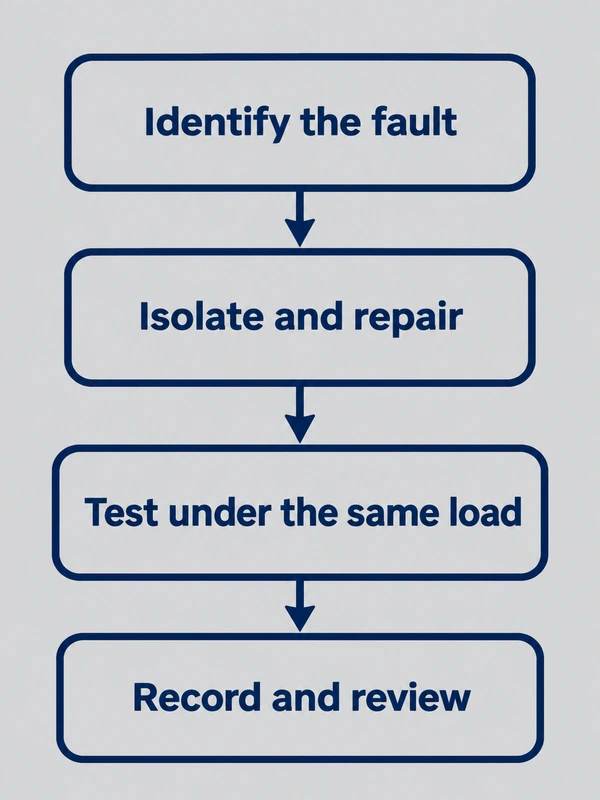
Set inspection frequency from duty, movement, exposure and failure history. A frequently flexing line near abrasive debris deserves closer attention than protected stationary tubing. Shorten the interval after a routing change or repeated failure, then review the findings. This makes preventive hose inspection responsive to the equipment rather than an arbitrary calendar exercise.
よくある質問
What pressure and temperature limits apply to a PU hose?
Use the exact tubing datasheet and its temperature conditions. Check the complete assembly against its lowest-rated component. Do not substitute a burst pressure for a working limit or apply another manufacturer’s polyurethane rating to an unidentified hose.
How do you match PU hose fittings to a threaded machine port?
The hose itself is normally matched by tube dimensions and fitting type. Threads belong to an adapter or machine port. Identify that thread separately and use its specified seal; BSPP, BSPT and NPT are not interchangeable simply because they look similar.
How should PU tubing be cut and inserted into a push-in fitting?
Depressurize first, make a square undamaged cut with the correct tool, inspect the outside sealing surface and insert to the fitting’s required depth. Follow the manufacturer’s retention and reuse instructions rather than relying on an improvised pull test.
Can PU hose carry oil, water or chemicals?
Only when the particular tubing and fitting materials are approved for the fluid and conditions. Different polyurethane formulations have different restrictions. Include external cleaners and temperature in the compatibility request, even when the internal fluid is only compressed air.
How often should PU air hoses on an automated line be inspected?
Follow the equipment maintenance plan and adjust it for motion, abrasion, heat, contamination and previous failures. Inspect after interventions and unexplained pressure changes. There is no evidence-based universal interval covering every automated line and every PU formulation.
How does polyurethane compare with nylon tubing?
Compare specified bend radius, stiffness, pressure-temperature limits, fluid compatibility and fitting approval for the actual grades. Flexible handling alone does not make PU the best choice, and a nylon label alone does not guarantee higher performance in your application.
参考文献
- SMC, TU/TIUB and TUH polyurethane tubing catalogue: series-specific dimensions, operating conditions and water restrictions.
- SMC, KQG2 fittings catalogue and precautions: fitting-specific handling and tubing installation considerations.
- US Department of Energy, Minimize Compressed Air Leaks: recurring leak identification, repair and verification.
要約
A sound hose repair starts with the correct tubing specification and ends with a working machine checked under its real demand. Inspect the complete route, correct the reason for damage, use compatible fittings and document the result. Replacing the hose without addressing heat, movement or restriction leaves the original fault in place.
For replacement sourcing, compare the PU spring recoil pneumatic air hose with your recorded dimensions, required working length and service conditions. Ask for written confirmation of pressure, temperature and fluid suitability before approving it for the machine.



