A pneumatic machine can appear healthy at idle and lose force when several actuators move together. A kinked hose, a leaking connection or an unnecessarily long replacement line may only become obvious during that demand peak. A useful PU hose maintenance checklist therefore covers the tubing, fittings, route and operating cycle, rather than treating every pressure problem as a compressor fault.
Start by identifying the hose and its service conditions. Then inspect the complete route, isolate the machine before disturbing a connection, replace damaged components and repeat the original operating condition. There is no universal replacement interval or pressure rating for polyurethane tubing. The exact tubing series, temperature, fluid and fitting combination determine the limits.
Which PU hose dimensions must match the replacement?
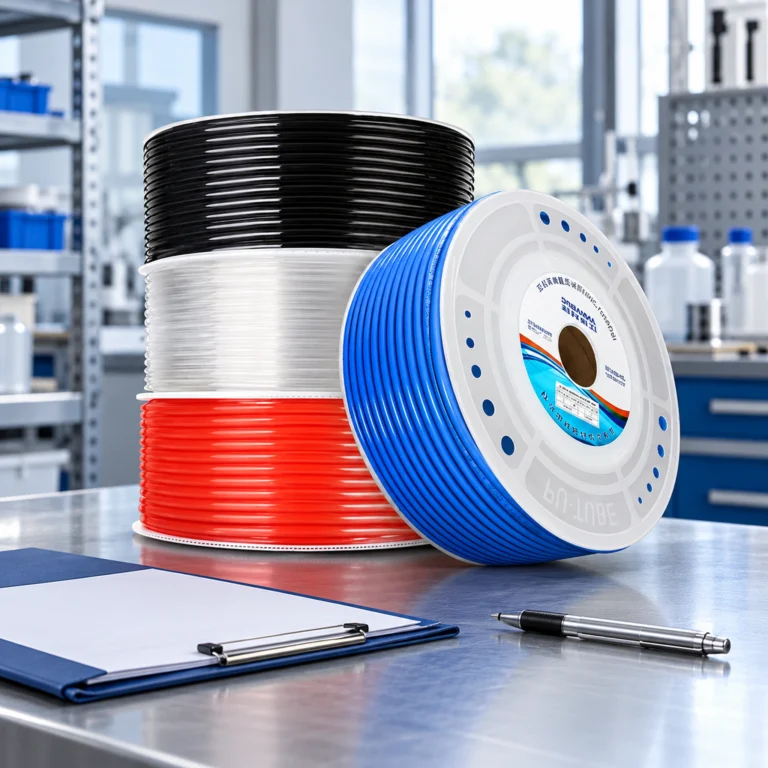
Record the manufacturer, tubing series, outside diameter, inside diameter and any visible batch marking. Measure an undamaged portion rather than a stretched end. A replacement with the same outside diameter can have a different bore, which changes the available flow area. A similar colour or coil shape does not establish dimensional or chemical compatibility.
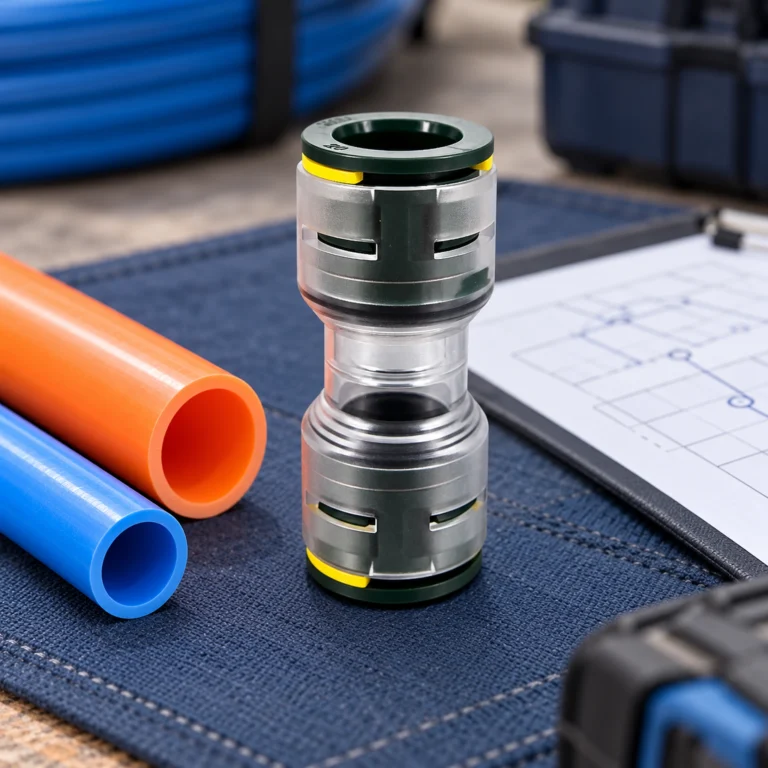
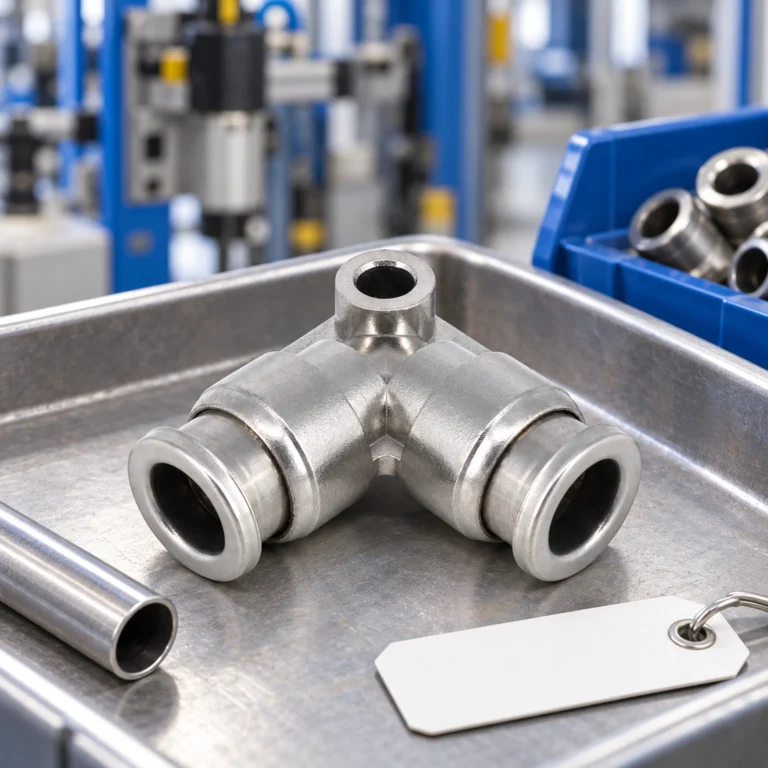
Distinguish flexible tubing from an assembled hose with permanent ends. A push-in fitting normally grips the tube outside surface, while an attached threaded adapter connects to a separate machine port. Those interfaces require different information. The tube needs the specified diameter, material and condition; the threaded side needs its actual thread designation and approved sealing method.
| Item to record | Why it matters | Where to verify it |
|---|---|---|
| Tube outside diameter | Determines the fitting interface | Tube marking, measurement and fitting specification |
| Tube inside diameter | Affects flow restriction | Exact tubing datasheet |
| Working pressure at temperature | Defines the permitted operating envelope | Series-specific rating or derating curve |
| Fluid and external exposure | Affects tubing and seal suitability | Written compatibility information |
| Moving length and bend allowance | Prevents tension and local flattening | Machine travel and routing instructions |
Keep the previous purchase description with the maintenance record, but do not assume it was correct. If a recurring failure has followed several identical replacements, compare the original design requirement with the supplied part. Repeating a purchasing error can conceal the real reason the line keeps failing.
Where do PU air hoses wear out on moving equipment?
With the machine safely stopped, look for abrasion, cuts, flattened bends, swelling, hardening and discoloration. Inspect the underside where the tube touches a bracket, the section beside a hot component and the transition into each fitting. Surface appearance alone cannot establish remaining strength, but visible damage is a reason to remove the component from service and investigate the exposure.
Check the routing through the full machine travel using the machine manufacturer’s safe inspection procedure. A hose that has slack in one position may pull tight in another. A recoil hose should not act as a travel stop or support the weight of a tool. For a symptom-based investigation, use the separate guide to PU pneumatic hose leaks and kinks.
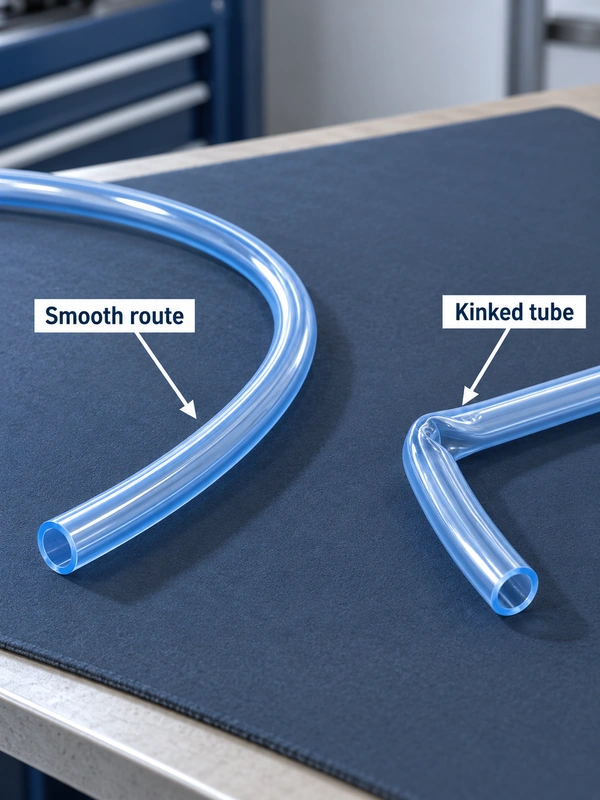
Inspect clamps and guides as well as the tube. An overtightened clamp can flatten the bore; a loose support can allow repeated rubbing. Route the hose away from sharp sheet-metal edges and pinch points, while preserving the minimum bend radius specified for the actual tube. A protective sleeve can reduce contact damage, but it does not make an underspecified hose suitable for heat or chemical exposure.
How does temperature affect a PU hose’s pressure limit?
A room-temperature pressure value is not permission to operate at that pressure next to a hot machine enclosure. SMC’s TU/TIUB catalogue, for example, gives a maximum operating pressure at 20°C and provides temperature-dependent information. Those figures belong to that series; they must not be transferred to an unverified hose from another supplier.
Use the lowest applicable limit among the tubing, fittings, valves and other components. Include pressure transients and the actual ambient and fluid temperature when obtaining approval. Burst pressure describes a different test condition and must not become the normal operating setting. When the hose identification is missing, replacing it with a documented part is more reliable than guessing its rating from appearance.
If the actuator pressure falls under load, measure at relevant points using an approved setup. Restriction, insufficient supply, a regulator setting and leakage can produce similar symptoms. Increasing supply pressure before finding the cause may hide the restriction while exposing other components to greater stress.
Is the PU hose compatible with water, oil and cleaners?
Polyurethane tubing compatibility depends on the formulation and operating conditions. SMC lists air and water for specified TU/TIUB tubing, while its TUH guidance excludes water because hydrolysis can shorten service life. This is a practical example of why the material name alone cannot establish approval.
Ask about both the conveyed fluid and substances that touch the outside: compressor oil carryover, cleaning spray, coolant, adhesive and disinfectant can be different exposures. Obtain compatibility for the concentration, temperature and duration involved. The tube and fitting seals must both be suitable. The detailed discussion of PU tube oil, water and chemical compatibility explains why a generic resistance claim is insufficient.
Food-contact or clean-air requirements need separate documentation. A hose used near a food process is not automatically approved to touch food, and a clean-looking tube does not demonstrate a particular air-purity class. Define the actual contact zone and process requirement before purchasing replacement parts.
How to cut PU tubing and reconnect it without damaging the seal
Isolate the air supply, release stored pressure and follow the machine’s energy-control procedure before disconnecting tubing. Use the cutting tool specified for the material to produce a square, clean end without flattening it. Remove a damaged section only when the remaining hose length still permits correct routing throughout the machine’s travel.
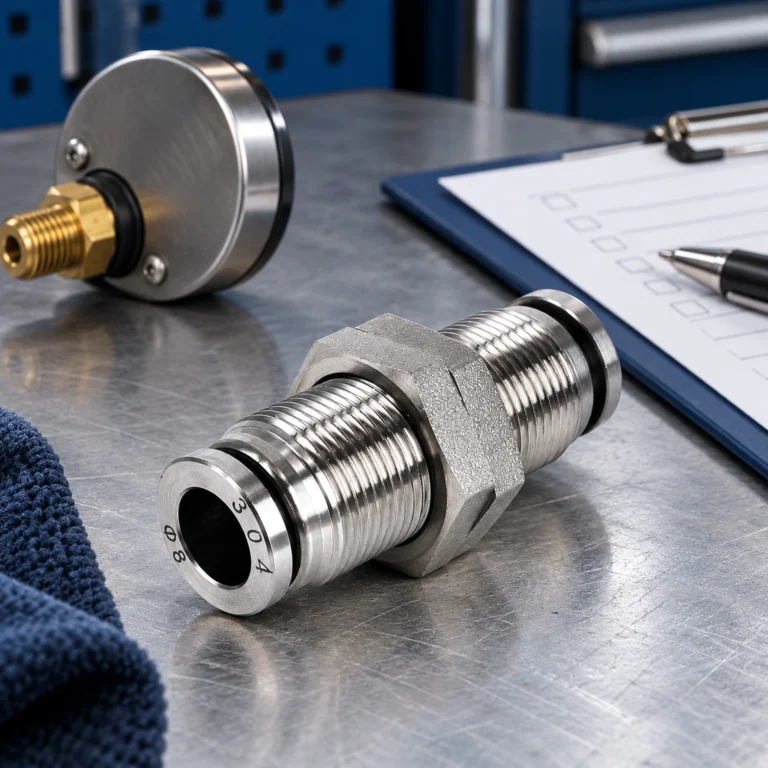
Inspect the sealing surface and fitting entrance for scratches or contamination. Insert to the manufacturer’s specified depth and perform its retention check. Do not use tape on the tube outside surface to compensate for a loose push-in connection. If the fitting contains a threaded adapter, confirm BSPP, BSPT or NPT from the actual component identification rather than judging by diameter alone.
Follow the fitting’s reuse instructions. SMC’s KQG2 precautions illustrate that removal and reinsertion rules can be specific to the fitting family and tube condition. A general statement that all push-in fittings can be reused indefinitely would be misleading. Replace a damaged gripping or sealing component according to the maker’s service policy.
| Observed condition | First investigation | Repair decision |
|---|---|---|
| Leak at a tube entry | Diameter, end condition, seating and fitting damage | Replace affected parts; verify the connection |
| Pressure loss only during motion | Kink, tension or rubbing at the travel limit | Correct routing and replace damaged tubing |
| Tube becomes soft or swollen | Fluid, cleaner and temperature exposure | Confirm compatibility before selecting a replacement |
| Repeated failure at one bracket | Support geometry and movement | Remove the contact cause, not just the failed section |
How to check a replacement air hose under machine load
Restore service through the machine’s approved commissioning procedure. Check for leakage and repeat the cycle that originally exposed the fault. Compare pressure at the same location, with the same demand and comparable operating conditions. A quiet connection at idle is useful evidence, but it does not establish adequate flow during simultaneous actuator movement.
The US Department of Energy recommends a continuing compressed-air leak programme covering identification, tagging, tracking, repair and verification. Apply that principle to the maintenance record: note the fault location, removed component, replacement specification, routing change and post-repair result. Avoid claiming an energy saving without measured system data.
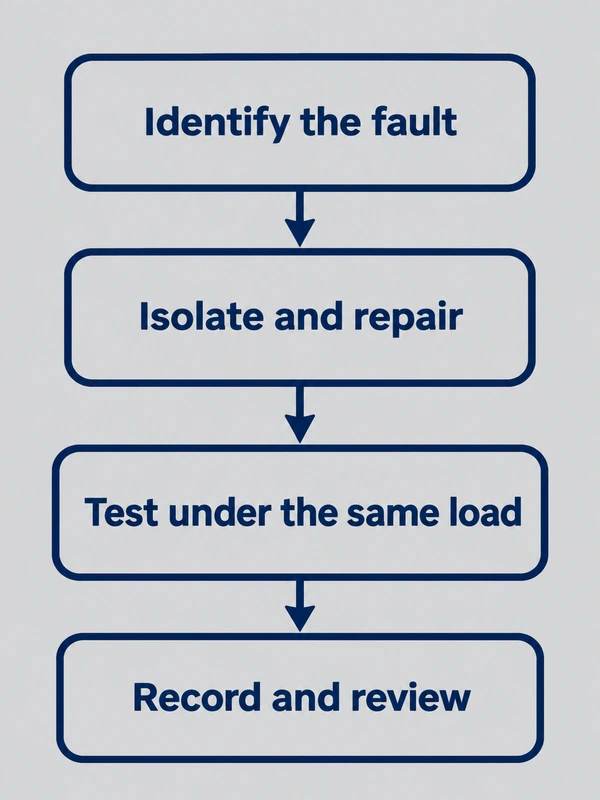
Set inspection frequency from duty, movement, exposure and failure history. A frequently flexing line near abrasive debris deserves closer attention than protected stationary tubing. Shorten the interval after a routing change or repeated failure, then review the findings. This makes preventive hose inspection responsive to the equipment rather than an arbitrary calendar exercise.
Көп берилүүчү суроолор
What pressure and temperature limits apply to a PU hose?
Use the exact tubing datasheet and its temperature conditions. Check the complete assembly against its lowest-rated component. Do not substitute a burst pressure for a working limit or apply another manufacturer’s polyurethane rating to an unidentified hose.
How do you match PU hose fittings to a threaded machine port?
The hose itself is normally matched by tube dimensions and fitting type. Threads belong to an adapter or machine port. Identify that thread separately and use its specified seal; BSPP, BSPT and NPT are not interchangeable simply because they look similar.
How should PU tubing be cut and inserted into a push-in fitting?
Depressurize first, make a square undamaged cut with the correct tool, inspect the outside sealing surface and insert to the fitting’s required depth. Follow the manufacturer’s retention and reuse instructions rather than relying on an improvised pull test.
Can PU hose carry oil, water or chemicals?
Only when the particular tubing and fitting materials are approved for the fluid and conditions. Different polyurethane formulations have different restrictions. Include external cleaners and temperature in the compatibility request, even when the internal fluid is only compressed air.
How often should PU air hoses on an automated line be inspected?
Follow the equipment maintenance plan and adjust it for motion, abrasion, heat, contamination and previous failures. Inspect after interventions and unexplained pressure changes. There is no evidence-based universal interval covering every automated line and every PU formulation.
How does polyurethane compare with nylon tubing?
Compare specified bend radius, stiffness, pressure-temperature limits, fluid compatibility and fitting approval for the actual grades. Flexible handling alone does not make PU the best choice, and a nylon label alone does not guarantee higher performance in your application.
Деректер
- SMC, TU/TIUB and TUH polyurethane tubing catalogue: series-specific dimensions, operating conditions and water restrictions.
- SMC, KQG2 fittings catalogue and precautions: fitting-specific handling and tubing installation considerations.
- US Department of Energy, Minimize Compressed Air Leaks: recurring leak identification, repair and verification.
Summary
A sound hose repair starts with the correct tubing specification and ends with a working machine checked under its real demand. Inspect the complete route, correct the reason for damage, use compatible fittings and document the result. Replacing the hose without addressing heat, movement or restriction leaves the original fault in place.
For replacement sourcing, compare the PU spring recoil pneumatic air hose with your recorded dimensions, required working length and service conditions. Ask for written confirmation of pressure, temperature and fluid suitability before approving it for the machine.