When a maintenance engineer in Ningbo encountered repeated tube pull-outs while restarting a packaging line, he replaced the visibly scuffed polyurethane tube and tightened the fitting; minutes later, the line stopped again as air leaked from a freshly cut end. The reversal came when the team measured the tube outside diameter and reviewed its cut quality: the issue was specification, sizing, and assembly practice—not simply a “bad fitting.”
Sintesi: For China sourcing, specify hose or tube material, outside and inside diameter, working-pressure range, temperature, media, end connection, and test evidence before comparing quotations. One bar equals 100 kPa, but a pressure number alone does not establish a safe assembly; ISO 4414 is a system-safety standard, not a supplier certification. The practical action is to issue a controlled requirement sheet, obtain matched hose-and-fitting samples, and verify fit, leakage, and documentation under the intended duty cycle.
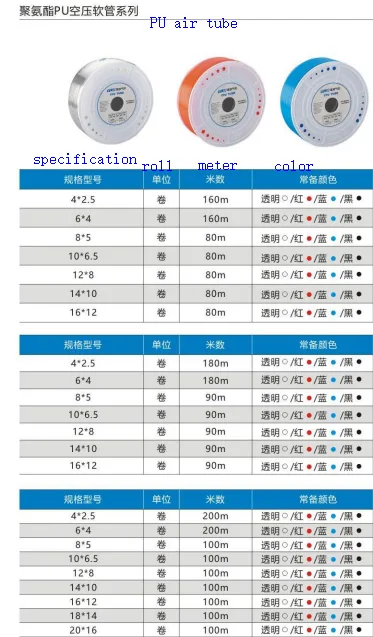
Pneumatic hose and fittings move air between preparation units, valves, actuators, and tools. A nominally correct tube can still leak, kink, abrade, or release when its cut, tolerance, fitting, seal, or environment is uncontrolled.
Specify the hose and fitting system before requesting quotes
Start with material and operating environment.
Polyurethane (PU), polyamide (PA/nylon), rubber, and PVC trade flexibility, abrasion resistance, temperature behavior, chemical compatibility, and routing. Identify air quality, oil or cleaning-agent exposure, UV, bend radius, vibration, and nearby heat. Confirm material against the supplier’s data sheet and actual media; “air hose” is not a compatibility study.
Separate working pressure from burst pressure.
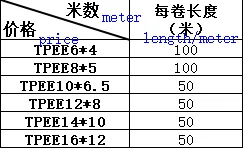
Request a working-pressure range at installation temperature, plus the test method and sample condition. Pressure changes with temperature and construction; a burst result is not a permitted operating pressure. ISO 4414:2010 covers foreseeable misuse, stored energy, isolation, and maintenance. OSHA 29 CFR 1910.242(b) limits aria compressa for cleaning to 30 psi unless effective chip guarding and personal protective equipment are used.
Control dimensions, threads, and assembly method.
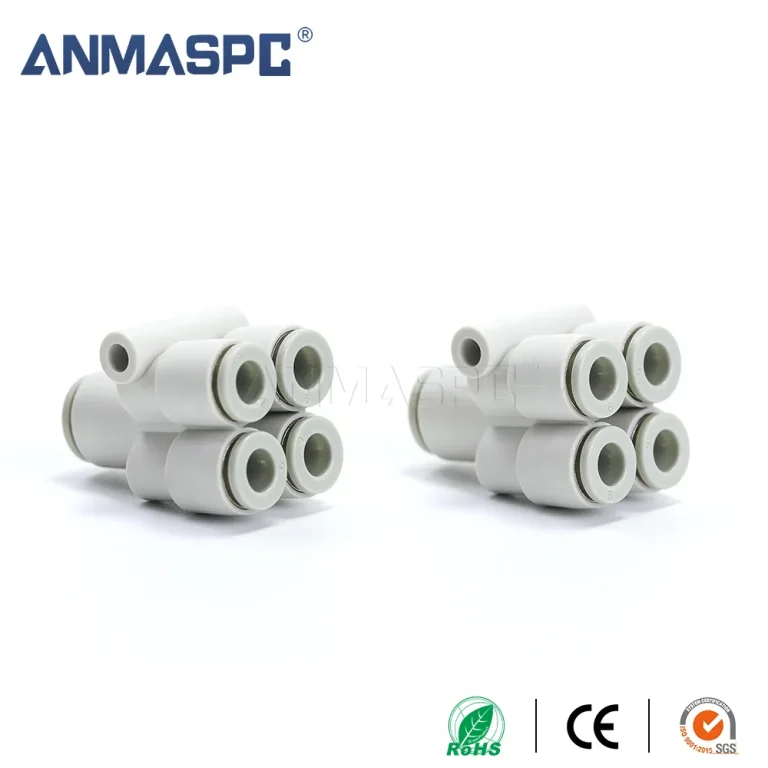
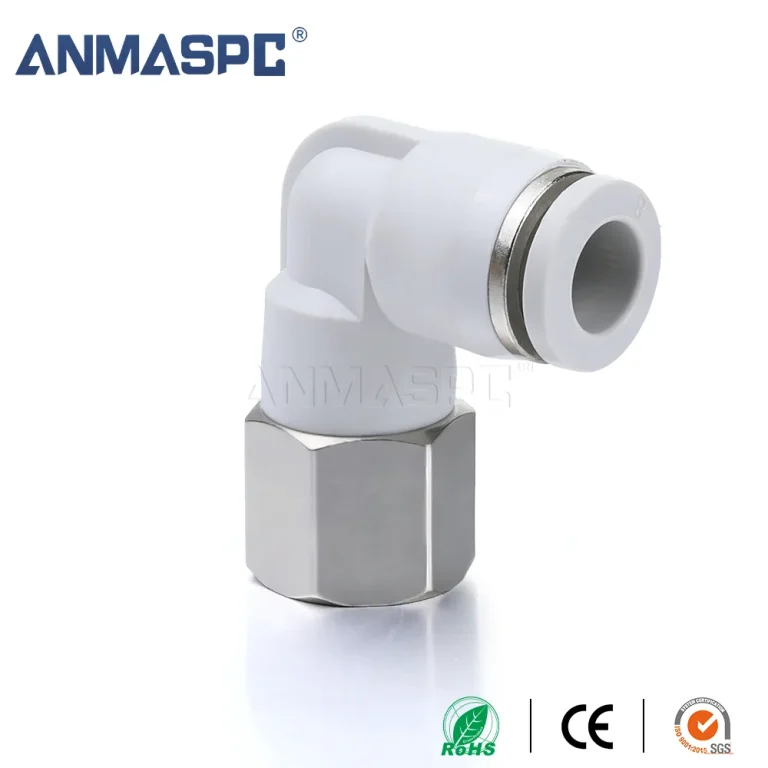
For push-to-connect systems, tube outside diameter is usually the critical interface; inside diameter influences flow and pressure drop. Confirm metric versus inch sizes, tolerance, ovality limits where relevant, minimum insertion depth, and whether field cuts must be square and burr-free. For threaded fittings, specify thread family and sealing method—such as BSPP, BSPT, NPT, or metric—rather than assuming that a similar nominal size will mate safely. This is also a useful point to distinguish pneumatic tubing from microduct connectors, which serve different network and sealing applications.
Compare offers on delivered risk, not unit price
| Procurement dimension | Lowest-price quote | Specification-led quote | What to verify |
|---|---|---|---|
| Compatibility | May list only nominal size | States tube OD/ID, thread, seal, and mating part | Assembly drawing and physical fit |
| Performance evidence | General claim | Links range, temperature, and test method | Leak and pressure test record for sample |
| Durability risk | Material may be unspecified | Material and environment limits identified | Data sheet; bend and abrasion needs |
| Maintenance and returns | Higher inspection burden | Traceable lots and replacement terms defined | Lot marking and nonconformance process |
| Total cost tendency | Lower initial cost | Lower uncertainty; not automatically lower cost | Illustrative rework, downtime, and freight exposure |
An illustrative total-cost review includes part cost, incoming checks, rejected assemblies, replacement freight, installation labor, and downtime exposure. Do not count a test claim as a saving until the configuration is verified.
Turn engineering needs into a purchase-ready checklist
Send one controlled checklist to every bidder, then compare exceptions line by line. For related valve, regulator, and accessory context, see the site’s pneumatic parts; the bill of materials should still identify the exact mating components.
| Requirement | Specification to record | Prova di accettazione |
|---|---|---|
| Application and media | Machine, air quality, oil/chemical contact, indoor/outdoor use | Supplier compatibility statement and data sheet |
| Hose/tube geometry | Material, OD, ID, wall, length, bend-radius need, colour | Dimensional inspection plan; sample measurement |
| Campo di funzionamento | Normal and maximum pressure; temperature; duty cycle | Published range with named test basis |
| Fitting interface | Push-in, barb, or thread type; thread standard; seal | Mating drawing and assembly trial |
| Quality and logistics | Lot ID, packaging, inspection level, delivery terms | Sample report, packing specification, agreed records |
Apply standards and compliance rules to the actual market
Standards frame questions; they do not transfer automatically from a data sheet to a finished assembly. ISO 4414:2010 covers general safety requirements for pneumatic fluid-power systems, not manufacturer certification. ISO 12100 provides a machinery risk-assessment framework, while ISO 8573-1 classifies compressed-air contaminants. In the EU, applicability of Directive 2014/68/EU depends on the assembly’s design, fluid, pressure, volume, market, and exclusions—seek qualified review rather than assuming a mark is required.
Ask what each document covers: material declaration, inspection report, test method, product declaration, or third-party certificate. Unsupported claims can create tender, safety, warranty, and liability exposure. Near telecom duct routes, HDPE microducts remain a separate system, not a pneumatic-hose substitute.
Qualify a China manufacturer with samples and records
- Issue the same technical checklist, drawing, quantity, and destination-market requirements to each supplier.
- Request a sample assembly representing the exact tube, fitting, thread, seal, and packaging configuration to be ordered.
- Inspect dimensions and workmanship, then conduct an agreed leak or pressure test using a documented method suitable for the application.
- Review lot identification, change-control practice, lead-time assumptions, and the process for nonconforming goods before approving a production order.
When evaluating ANMASPC alongside other China manufacturers, use the same evidence-led scorecard; ask for configuration-specific documentation and sample support rather than inferring capabilities from a brand name. That approach makes sourcing discussions more comparable and protects engineering change control.
Domande frequenti
What should I look for in a pneumatic air hose manufacturer in China?
Look for clear configuration data, responsive technical clarification, representative samples, traceability practices, and documentation that distinguishes tested facts from marketing language. Compare suppliers against one written requirement sheet, then record any exceptions before purchase approval.
Which hose material is best for compressed air?
There is no universal best material. Select PU, PA, rubber, PVC, or another construction based on pressure, temperature, flexibility, abrasion, media, and installation conditions; confirm the proposed material against the supplier’s data for the intended service.
How do I verify hose and fitting compatibility?
Match the tube’s actual outside diameter and tolerance to the fitting specification, and confirm the fitting’s thread and sealing arrangement with its mating part. Use a representative assembly trial with square, burr-free cuts, then retain the approved configuration as the purchasing reference.
What documents should a pneumatic hose supplier provide?
Request a data sheet, dimensional specification, material information where relevant, configuration drawing, packaging and lot-identification details, and any agreed inspection or test record. For destination-specific compliance, ask what the document covers and who issued it; do not assume every report is a certification.
Can a pneumatic hose be used near welding or hot work?
Only after a documented risk assessment confirms the hose material, temperature rating, routing, and protection are suitable. Welding sparks, radiant heat, and damage from traffic can change the risk quickly, so isolate air where needed and follow site hot-work controls.
How should I qualify a China manufacturer before placing a bulk order?
Begin with a controlled specification and sample, verify fit and agreed test evidence, and review traceability, change notification, packaging, and corrective-action handling. A first order can include defined inspection points and acceptance criteria so that commercial scale follows demonstrated conformity.
References and next step
- ISO 4414:2010 — Trasmissioni pneumatiche: regole generali e requisiti di sicurezza
- ISO 12100:2010 — Safety of machinery: risk assessment and risk reduction
- ISO 8573-1:2010 — Compressed air contaminant classes
- OSHA 29 CFR 1910.242 — Utensili e attrezzature portatili a mano e a motore
- Directive 2014/68/EU — Pressure equipment
The dependable purchase is the one whose hose, fitting, evidence, and operating context agree before it reaches the line. For an ANMASPC configuration or a comparable pneumatic requirement, review the application with the Microduct Connector contact team before placing a bulk order.