
Comprando manguera neumática y los accesorios de un fabricante chino requieren un conjunto definido, no solo una medida de tubo y una fotografía de catálogo. Para ANMASPC o cualquier proveedor alternativo, las preguntas útiles se refieren a las dimensiones reales, las condiciones de funcionamiento permitidas, las interfaces de acoplamiento y la documentación que respalde la configuración suministrada. Esta guía transforma esas preguntas en un proceso de aprobación de muestras y de pedidos repetidos.
Para el abastecimiento en China, especifique el material de la manguera o del tubo, el diámetro exterior y el diámetro interior, el rango de presión de trabajo, la temperatura, el fluido, la conexión final y las pruebas de ensayo antes de comparar las cotizaciones. Una barra equivale a 100 kPa, pero un valor de presión por sí solo no garantiza un conjunto seguro; ISO 4414 es una norma de seguridad del sistema, no una certificación del proveedor. La medida práctica consiste en emitir una hoja de requisitos controlada, obtener muestras de manguera y accesorios compatibles y verificar el ajuste, las fugas y la documentación bajo el ciclo de servicio previsto.
Las mangueras y los accesorios neumáticos transportan aire entre las unidades de preparación, las válvulas, los actuadores y las herramientas. Una tubería que aparentemente cumple con las especificaciones puede aún presentar fugas, dobleces, abrasiones o desprendimientos si su corte, sus tolerancias, sus conexiones, sus sellos o el entorno en el que se encuentra no están adecuadamente controlados.
Especifique la manguera y el accesorio juntos.
Comience con el material y el entorno de operación.
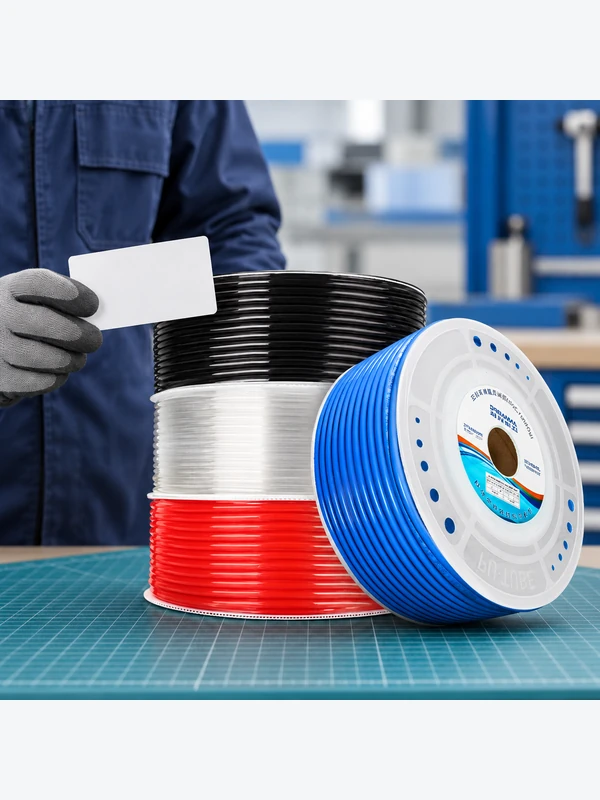
El poliuretano (PU), la poliamida (PA/nailon), el caucho y el PVC conllevan compromisos en cuanto a flexibilidad, resistencia a la abrasión, comportamiento térmico, compatibilidad química y trazado. Identifique la calidad del aire, la exposición a aceites o agentes de limpieza, la radiación UV, el radio de curvatura, las vibraciones y la presencia de fuentes de calor cercanas. Confirme el material consultando la hoja de datos del proveedor y comparándolo con el fluido real; “manguera para aire” no constituye un estudio de compatibilidad.
Separar presión de trabajo de la presión de ruptura.
Solicite el rango de presión de trabajo a la temperatura de instalación, junto con el método de ensayo y las condiciones de la muestra. La presión varía con la temperatura y la construcción; un resultado de ruptura no constituye una presión de operación permitida. ISO 4414:2010 abarca el uso indebido previsible, la energía almacenada, el aislamiento y el mantenimiento. Para la limpieza en lugares de trabajo en EE. UU., OSHA 29 CFR 1910.242(b) exige que el aire comprimido se reduzca a menos de 30 psi y se utilice únicamente con protección eficaz contra proyecciones de partículas y equipo de protección personal. Esta norma de limpieza no es un límite de presión de trabajo para tuberías de máquinas.
Controle las dimensiones, las roscas y el método de ensamblaje.
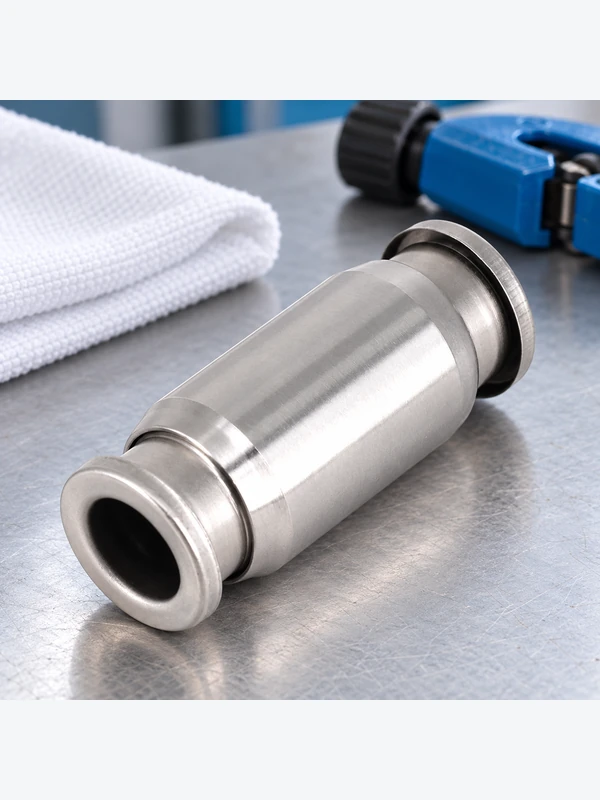
Para los sistemas de conexión por empuje, el diámetro exterior del tubo suele ser la interfaz crítica; el diámetro interior influye en el caudal y en la pérdida de presión. Confirme las dimensiones en milímetros o en pulgadas, las tolerancias, los límites de ovalidad cuando corresponda, la profundidad mínima de inserción y si los cortes en obra deben ser rectos y sin rebabas. En el caso de accesorios roscados, especifique la serie de rosca y el método de estanqueidad —por ejemplo, BSPP, BSPT, NPT o métrico— en lugar de asumir que un tamaño nominal similar se acoplará de forma segura. Este es también un punto importante para diferenciar las tuberías neumáticas de los conectores para microconductos, que están diseñados para aplicaciones de red y de estanqueidad distintas.
Identifique la rosca y el sello en ambos lados del accesorio.
Identificación de hilos debería ser parte de Aprobación de la muestra. Una descripción del proveedor como “macho de un cuarto de pulgada” no establece una conexión BSPP, BSPT, NPT ni métrica. El Comparación de roscas de Hosemaster explica que los roscados BSP y NPT tienen ángulos de flanco diferentes. Por lo tanto, la dimensión nominal y el acoplamiento parcial a mano no garantizan una conexión a presión compatible.
Solicite un plano que indique la rosca tanto en el puerto del componente como en el accesorio, junto con la disposición de sellado especificada. Los accesorios de rosca paralela pueden utilizar un sello de contacto definido o una arandela; las conexiones cónicas deben cumplir con su geometría de acoplamiento y sus procedimientos de montaje documentados. No asuma que añadir sellante hace aceptable una rosca incompatible. Si se requiere una transición, especifique un adaptador cuyos dos extremos y los límites de servicio sean conocidos.
Utilice el guía neumática de coincidencia de roscas al preparar la consulta. Durante la prueba de muestra, también verifique el acceso a la herramienta, la inserción de los tubos y el espacio necesario para liberar o reemplazar el accesorio. Una interfaz que se puede ensamblar en un banco de trabajo aún puede resultar incómoda de mantener dentro de una protección de máquina. Registre la pieza de acoplamiento real, no solo el nombre del proveedor.
Compare el conjunto completo entregado
| Dimensión de adquisiciones | Presupuesto de menor precio | Specification-led quote | Qué verificar |
|---|---|---|---|
| Compatibilidad | May list only nominal size | States tube OD/ID, thread, seal, and mating part | Assembly drawing and physical fit |
| Evidencia de desempeño | General claim | Links range, temperature, and test method | Leak and pressure test record for sample |
| Durability risk | Material may be unspecified | Material and environment limits identified | Data sheet; bend and abrasion needs |
| Maintenance and returns | Higher inspection burden | Traceable lots and replacement terms defined | Lot marking and nonconformance process |
| Total cost tendency | Lower initial cost | Lower uncertainty; not automatically lower cost | Illustrative rework, downtime, and freight exposure |
An illustrative total-cost review includes part cost, incoming checks, rejected assemblies, replacement freight, installation labor, and downtime exposure. Do not count a test claim as a saving until the configuration is verified.
Put the operating details in the purchase request
Send one controlled checklist to every bidder, then compare exceptions line by line. For related valve, regulator, and accessory context, see the site’s pneumatic parts; the bill of materials should still identify the exact mating components.
| Requisito | Specification to record | Evidencia de aceptación |
|---|---|---|
| Application and media | Machine, air quality, oil/chemical contact, indoor/outdoor use | Supplier compatibility statement and data sheet |
| Hose/tube geometry | Material, OD, ID, wall, length, bend-radius need, colour | Dimensional inspection plan; sample measurement |
| Rango de operación | Normal and maximum pressure; temperature; duty cycle | Published range with named test basis |
| Fitting interface | Push-in, barb, or thread type; thread standard; seal | Mating drawing and assembly trial |
| Quality and logistics | Lot ID, packaging, inspection level, delivery terms | Sample report, packing specification, agreed records |
Check the rules for the destination market
Standards frame questions; they do not transfer automatically from a data sheet to a finished assembly. ISO 4414:2010 covers general safety requirements for pneumatic fluid-power systems, not manufacturer certification. ISO 12100 provides a machinery risk-assessment framework, while ISO 8573-1 classifies compressed-air contaminants. In the EU, applicability of Directive 2014/68/EU depends on the assembly’s design, fluid, pressure, volume, market, and exclusions—seek qualified review rather than assuming a mark is required.
Ask what each document covers: material declaration, inspection report, test method, product declaration, or third-party certificate. Unsupported claims can create tender, safety, warranty, and liability exposure. Near telecom duct routes, HDPE microducts remain a separate system, not a pneumatic-hose substitute.
Approve the manufacturer with samples and records
- Issue the same technical checklist, drawing, quantity, and destination-market requirements to each supplier.
- Request a sample assembly representing the exact tube, fitting, thread, seal, and packaging configuration to be ordered.
- Inspect dimensions and workmanship, then conduct an agreed leak or pressure test using a documented method suitable for the application.
- Review lot identification, change-control practice, lead-time assumptions, and the process for nonconforming goods before approving a production order.
When evaluating ANMASPC alongside other China manufacturers, use the same evidence-led scorecard; ask for configuration-specific documentation and sample support rather than inferring capabilities from a brand name. That approach makes sourcing discussions more comparable and protects engineering change control.
Keep repeat shipments tied to the approved configuration
After a sample passes the agreed checks, turn its identity into a purchasing record. Record the tube material, size and tolerance basis, fitting code, seal, thread, drawing revision, colour where relevant, packaging and lot identification. Attach the test method and results that supported approval. A sample is a reference configuration; it is not proof that every later batch will be identical without inspection and change control.
Ask which production changes trigger notification. Resin formulation, wall construction, fitting seal or component source changes may require engineering review even when the outward appearance remains similar. State who can approve an alternative and which measurements or tests are required before release. Keep this proportionate to the application instead of requesting unrelated automotive or medical certifications for an ordinary pneumatic assembly.
La comparación de PU and PA air hose is useful when material is still undecided, but the selected supplier’s exact data remains necessary. Establish pressure at the intended temperature, route bend requirements, media exposure and compatible fittings for the chosen construction. A material name alone cannot answer those questions.
At receipt, compare package labels and lot references with the order, inspect the agreed dimensions and workmanship, and retain the required records. If a leak or pull-out occurs, capture the tube cut, measured diameter, fitting identity, insertion condition and operating circumstances before replacing parts. This creates a useful investigation trail without assuming either installation error or a manufacturing defect in advance.
Ask for a complete hose assembly sample
A hose manufacturer may quote tubing, couplings, clamps and packaging separately. The field failure usually occurs at the interface between them, so ask for a sample assembled with the intended hose ID, coupling profile, seal and retention method. Test the sample under the project’s pressure, temperature and movement conditions before approving a repeat order.
| Sample check | Qué registrar | Por qué importa |
|---|---|---|
| Hose construction | Layers, material, ID, OD and bend requirement | Confirms the quoted hose matches the duty |
| Coupling fit | Profile, thread, seal and retention method | Prevents leaks and unsafe substitutions |
| Pressure evidence | Working versus burst rating, test medium and temperature | Stops a burst number being used as a working limit |
| Batch control | Part number, production lot and inspection record | Supports receiving and later investigation |
For welding-area use, compare the hose safety guide; for fitting families, see the air hose fitting comparison.
Preguntas frecuentes
What should I look for in a pneumatic air hose manufacturer in China?
Look for clear configuration data, responsive technical clarification, representative samples, traceability practices, and documentation that distinguishes tested facts from marketing language. Compare suppliers against one written requirement sheet, then record any exceptions before purchase approval.
Which hose material is best for compressed air?
There is no universal best material. Select PU, PA, rubber, PVC, or another construction based on pressure, temperature, flexibility, abrasion, media, and installation conditions; confirm the proposed material against the supplier’s data for the intended service.
How do I verify hose and fitting compatibility?
Match the tube’s actual outside diameter and tolerance to the fitting specification, and confirm the fitting’s thread and sealing arrangement with its mating part. Use a representative assembly trial with square, burr-free cuts, then retain the approved configuration as the purchasing reference.
What documents should a pneumatic hose supplier provide?
Request a data sheet, dimensional specification, material information where relevant, configuration drawing, packaging and lot-identification details, and any agreed inspection or test record. For destination-specific compliance, ask what the document covers and who issued it; do not assume every report is a certification.
Can a pneumatic hose be used near welding or hot work?
Only after a documented risk assessment confirms the hose material, temperature rating, routing, and protection are suitable. Welding sparks, radiant heat, and damage from traffic can change the risk quickly, so isolate air where needed and follow site hot-work controls.
How should I qualify a China manufacturer before placing a bulk order?
Begin with a controlled specification and sample, verify fit and agreed test evidence, and review traceability, change notification, packaging, and corrective-action handling. A first order can include defined inspection points and acceptance criteria so that commercial scale follows demonstrated conformity.
Can BSP and NPT pneumatic fittings be substituted if they screw together?
No. Partial engagement does not prove matching thread geometry or a proper sealing interface. Identify both ends and use the documented mating components or a correctly specified adapter. Do not compensate for a mismatch with extra torque or sealant.
What should change between sample approval and a bulk purchase order?
The accepted sample should become a controlled configuration with a part number, drawing revision, materials, mating interfaces, acceptance checks and lot records. Define the approval route for changes and apply the agreed receiving checks to repeat shipments.
Referencias
- ISO 4414:2010 — Transmisión neumática: reglas generales y requisitos de seguridad
- ISO 12100:2010 — Safety of machinery: risk assessment and risk reduction
- ISO 8573-1:2010 — Compressed air contaminant classes
- OSHA 29 CFR 1910.242 — Herramientas y equipos portátiles accionados por fuerza motriz y manuales
- Directive 2014/68/EU — Pressure equipment
- El experto en mangueras: BSP frente a NPT—¿Cuál es la diferencia y son compatibles?
Resumen
Qualify a pneumatic hose manufacturer against the complete assembly you intend to install. Confirm tube dimensions and operating limits, identify both thread and sealing interfaces, and approve a representative sample using agreed checks. Carry that configuration into the purchase order with traceable lot records and change notification. This provides a practical basis for comparing ANMASPC and other suppliers without turning catalogue descriptions or an isolated test result into unsupported performance claims.



