
Spojnica koja steže mikrocev u komori nije nužno prikladna za direktno postavljanje u zemlji. Za izvođače radova i kupce teška je odluka da li su naručeni spojnic i cijev oko njega oba namijenjeni za predviđenu podzemnu trasu. Poznata nominalna veličina, tvrdnja o stupnju zaštite od prodora vode ili uspješan test pritiska prazne cijevi ne mogu dati odgovor na svaki dio tog pitanja. Kada se iskop zatrpaju, ispravljanje neprikladnog spoja također podrazumijeva ponovni pristup. Stoga je korisna polazna tačka točan kod spojnice, konstrukcija cijevi i instalirana konfiguracija, a ne opći opis poput „vodootporan“. Ovaj vodič razdvaja odabir za podzemnu primjenu, prelaze kroz bušotine, dokaze o izloženosti i provjere otpuštanja koje su potrebne prije nego što spoj postane nedostupan.
Kratki odgovor je da odaberete a konektor za mikrocev u direktnom zemljišnom ukopu samo kada njegov točan kod sadrži dokumentiranu prikladnost za predviđene uvjete u cijevi i pokopavanja. Potvrdite vanjski promjer cijevi, unutarnji promjer i konstrukciju stijenke odvojeno, a zatim uspostavite postupke pripreme i prihvata. EN 50411-2-8:2009 obuhvata početne zahtjeve za instalirane konektore za mikrocijevi s puhanom vlaknom, ali njen opseg isključuje konektore namijenjene direktnoj sunčevoj svjetlosti; pozivanje na nju ne certificira određeni spojnik. Samo komorno spajalo, poklopac ili izjava o IP zaštiti nisu dovoljan dokaz prikladnosti za direktno pokopavanje. Prije odobrenja kupovine nabavite odgovarajući crtež, upute i testni dokaz.
Šta čini spojnicu i cijev prikladnim za direktno zakopavanje?
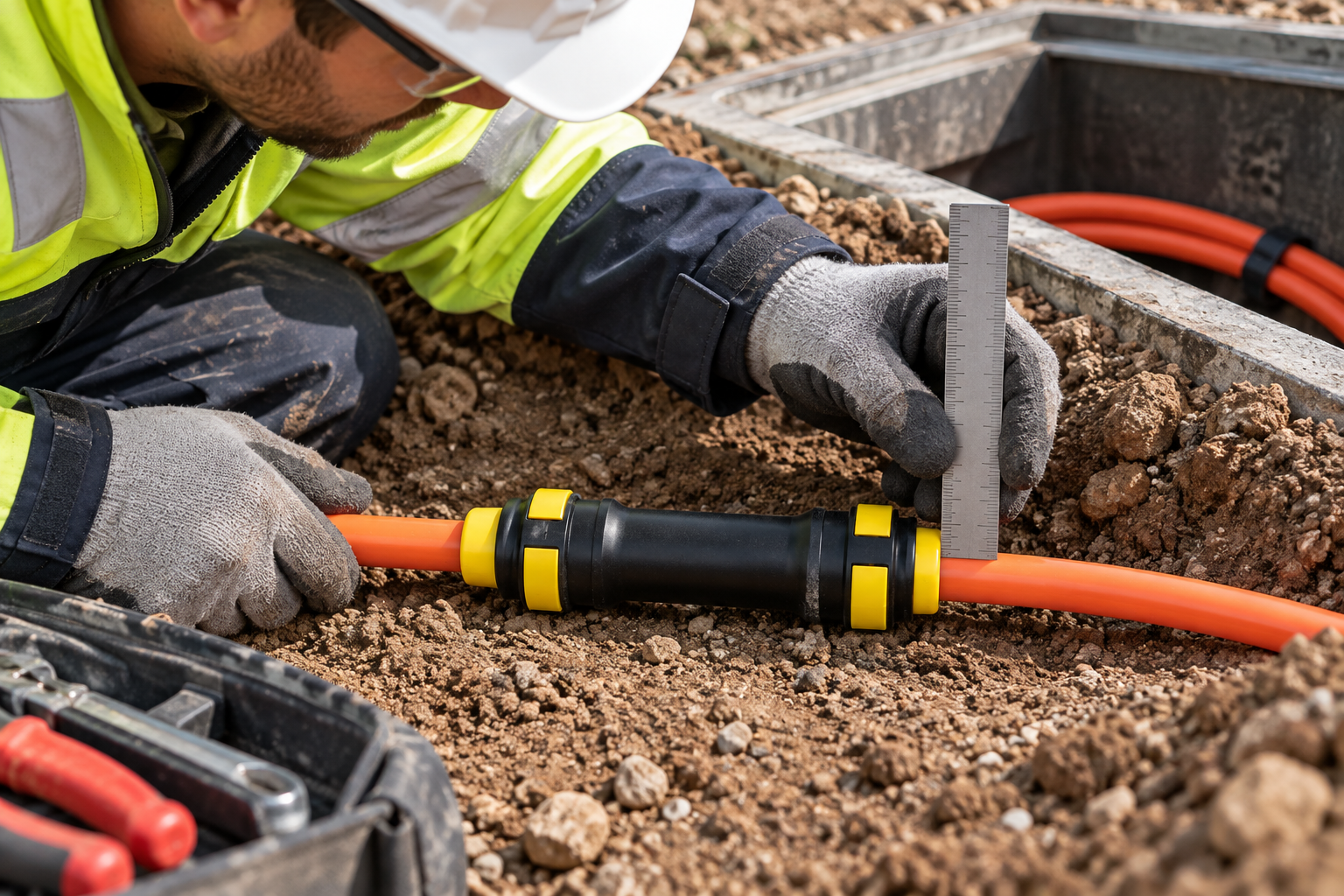
Direktno zakopavanje je sistemsko rješenje: konektor ne može nadoknaditi neodgovarajuću konstrukciju kanala. Kao primjer proizvođača s atributima, Smjernice za primjenu spojnica Sanbor identifikuje određene porodice korištenja DB, uključujući CV4580-V4580 i CV4750-V4750. Također upozorava na zabacivanje tankih mikrocevi, koje mogu otkazati čak i kada konektor radi ispravno. Ovo su izjave specifične za Sanbor, a ne odobrenje za dijelove Oulu.
Za predloženu montažu, pitajte koji je točan kod dijela namijenjen za direktno ukopavanje, koja je konstrukcija kanala bila procijenjena i da li su potrebni neki zaštitni elementi. Dokazi trebaju identificirati ispitivanu geometriju i stanje montaže. Oznaka porodice ne dokazuje da svaka veličina, revizija, zid cijevi ili način ugradnje imaju istu prikladnost.
Zaključna kopča sprečava nenamjerno otpuštanje; ne ispravlja pogrešan promjer cijevi, oštećenu cijev ni neispravan zaptivni spoj. Vanjski poklopac ima drugu ulogu i ne smije se tretirati kao zaptivka za pritisak ili gas. Povezano vodnik za rješavanje problema s kućištem/zaštitom pomaže u razlikovanju zaštite od zaptivanja.
Kako dimenzije kanala i prelazi na manji deo utiču na odabir?
Uskladite svaki kraj spojnice sa izmjerjenim vanjskim promjerom cijevi, zatim provjerite unutarnji promjer i konstrukciju stijenke. Jednaki vanjski promjeri ne garantiraju jednake unutarnje otvore. Zatražite dimenzionirani crtež umjesto da zaključujete o uklapanju na osnovu nominalne oznake. The Uporedna tabela veličina i primjene spojnica za guranje prouzvodi povezani kontekst odabira.
Za a spojnica za mikrocev za direktno ugradnju u zemlju, reduktor mora biti odobren prijelaz, a ne improvizirano zaptivanje oko manjeg kanala. Zvanični EN 50411-2-8:2009 opseg kataloga napominje da prelazi sa smanjenjem ili povećanjem promjera mogu zahtijevati ručno napajanje zbog gradijenta pritiska na mjestu promjene dimenzije. Spojnica koja prihvaća obje cijevi stoga ne garantuje neprekidno puhanje kroz taj prelaz.
| Predložena veza | Šta provjeriti | Šta se ne može pretpostaviti |
|---|---|---|
| Zajednički spoj iste veličine zakopan u zemlji | Exact DB code, duct OD and construction, bore alignment | All couplers of that nominal size are burial-rated |
| Reducer joint | Both end dimensions, internal transition, planned feeding method | Different bores blow like a continuous same-size duct |
| Covered chamber coupler | Approved location and purpose of the cover | The cover upgrades the coupler to direct-burial service |
| Occupied duct seal | Compatible cable seal and separate operating state | A straight coupler seals the annulus around a cable |
Which pressure and exposure claims need separate evidence?
Keep working, proof, burst, cable-sealing and route-acceptance pressures separate. A test value without its medium, procedure, assembly state and acceptance criterion is not a usable installation limit. This article assigns no generic pressure, material, OD range or IP rating to the direct-bury family; obtain those details for the supplied code.
EN 50411-2-8 concerns initial dimensional, optical, mechanical and environmental requirements, with protected installations described in its scope. Because direct sunlight is excluded, a standards reference cannot also prove UV suitability. For exposed storage, installation or service, request separate evidence matching those conditions. ISO 4892-1:2024 provides general guidance on laboratory light-exposure methods and interpreting accelerated-weathering data. It does not certify a product or supply a fixed hours-to-field-years conversion.
The official IEC TR 63431:2025 synopsis describes guidance on microduct design types, colour codes, repairs, environmental expectations and installation. It supplements the microduct sections of IEC 60794-5. Use that Technical Report as system-planning context, not a universal component rating or replacement for connector-specific evidence.
What should installers check before releasing a joint for backfill?
Prepare the tube according to the exact maker’s instructions. As an external example, FCST’s installation instructions, published 22 August 2025, call for clean, round, undamaged duct, a square cut and burr removal. They warn that a tube can be gripped without being fully seated, causing leakage. Their transparent-body checks and clip instructions are product-specific examples, not universal dimensions or Oulu test results.
Use the specified insertion reference, clip and preparation method. Depressurize before release or investigation. Do not improvise with tape, sealant or lubricant unless the maker approves the material and procedure. If an interface fails inspection, correct it before the agreed retest rather than relying on burial to restrain it.
| Record item | Product evidence | Before-backfill release evidence |
|---|---|---|
| Identity and fit | Code, drawing, approved duct geometry | Installed code or lot, measured geometry, route location |
| Assembly | Preparation, insertion and accessory instructions | Seating, condition and specified accessory checks |
| Testing | Declared ratings and relevant test conditions | Medium, procedure, instrument, result and corrections |
| Release | Permitted application and limitations | Acceptance decision, date and responsible approver |
This direct-burial connector acceptance record is practical traceability advice, not a claimed universal statutory form. A datasheet describes the product; a release record shows what was installed and accepted. Identify local interface checks separately from route tests, and do not treat an empty-duct result as proof of an occupied cable-annulus seal. Where that distinction matters, compare end stops and gas-block connectors.
What else should installers ask before approving a buried joint?
Why does a direct buried microduct connector leak during or after fibre blowing?
Investigate duct dimensions, cut quality, contamination, insertion and damage before blaming the fitting. Depressurize and isolate interfaces; water found at a connector does not by itself identify where it entered the pathway.
Are tools or lubricant needed to fit the connector correctly?
Push-fit retention does not eliminate cutting, measurement or test equipment. Follow the supplied instructions, and use lubricant only if the maker approves it for that exact assembly.
Can the connector join ducts with different wall thicknesses?
Possibly, if the exact connector accepts both ODs and the duct constructions are approved. Check the resulting ID transition separately, including whether the cable and feeding method can accommodate it.
What temperature range should the connector withstand?
Confirm installation and service conditions against the exact product’s documented limits. Do not transfer another size’s temperature range or assume that buried service removes every exposure concern.
How can installers visually check full insertion?
Use the maker’s insertion mark or reference. A transparent body may help on applicable designs, but visible grip alone is not proof of seating or successful acceptance testing.
When should the seals or connector body be replaced?
Follow the maker’s inspection and replacement criteria for damage, contamination, loss of grip or failed sealing. Reuse requires exact-model approval, inspection and retesting; there is no universal permitted reuse count.
Can an ordinary chamber connector be buried inside a cover?
Not without documented approval of that assembly for direct burial. External protection and connector qualification are different questions, so confirm both rather than inferring approval from appearance.
Does a passed pressure test remove the need for a release record?
No. Without the code, geometry, assembly state, procedure and result, the test cannot be reliably tied to the buried joint. Record corrections and acceptance before access is lost.
Which sources support the selection checks?
- NEN: EN 50411-2-8:2009 official scope, sunlight exclusion and reducer limitation.
- Sanbor: connector applications and the thin-microduct burial warning.
- ISO: ISO 4892-1:2024 laboratory light-exposure guidance.
- IEC: IEC TR 63431:2025 microduct technology guidance synopsis.
- FCST: Installation Instruction For Microduct Connector, 22 August 2025.
How should buyers make the final burial decision?
Approve the assembly, not the phrase direct bury. Start with the duct construction and route conditions, identify the exact connector code, and reconcile its drawing and instructions with the proposed OD, ID and transition. Then separate product ratings from field acceptance and establish what evidence must be recorded before backfill. Neither a gripping tube nor a generic IP claim is a reason to skip that sequence. If sunlight or a reducer is involved, resolve its specific limitation before scheduling blowing or closing the trench. Oulu’s direct-bury connector product page is a starting point for a code-specific enquiry: provide the duct geometry, construction and installation conditions, and request the applicable documents before releasing the order.



