
A spojka gas bloka Mora se obratiti pažnja na putanju oko kabla, kao i na spoj između kanala. Ravna spojnica može čvrsto držati krajeve kanala, istovremeno ostavljajući otvoren prostor oko kabla. Tamo gdje dizajn mreže zahtijeva kontrolu migracije gasa ili vode kroz taj prostor, odaberite namjenski dizajnirani brtveni element s odgovarajućim priključcima za kanale i kabele.
Instalacija počinje od zahtjeva za trasejom, a ne od zatezanja prstena. Utvrdite gdje treba biti smeštena brtva, koji je proizvod odobren, kada treba aktivirati i kako će se provjeriti završena instalacija. Tlak pri puhanju i tlak gasne brtve su različite karakteristike; vrijednost objavljena za jednu ne smije se koristiti kao propisana vrijednost za drugu.
Gdje treba instalirati gasni blok kako bi se zaustavilo kretanje kroz kanal?
Nacrtajte putanje kanala kroz komoru, ormar ili ulaz u zgradu. Utvrdite da li se radi o kretanju duž praznog kanala, oko instaliranog kabla, kroz oštećenu stijenku kanala ili po vanjskoj strani kanala na mjestu prohoda kroz zgradu. Ovo su različiti putevi i mogu zahtijevati različite mjere zatvaranja.
Emtelle opisuje svoj konektor za gasnu blokadu kao uređaj koji obezbjeđuje ugrađeno brtvljenje između konektora, cijevi i optičkog kabla. To objašnjava ulogu komponente, ali ne utvrđuje otpornost na vatru niti odobrenje za upotrebu u sredinama sa opasnim plinovima. Brtva za ulaz kabla nije automatski protivpožarni zatvarač, niti popravlja curenje u komori ili proboju kroz zid.
Potvrdite potrebnu lokaciju sa vlasnikom mreže ili projektantom zgrade prije nego što postavite komponentu na mjesto s kojeg neće biti moguće pristupiti. Pečat koji je smješten na pogodnom mjestu može ostaviti predviđenu granicu nezaštićenom. S druge strane, ugrobljen spoj koji kasnije treba aktivirati može izazvati nepotrebne iskopne radove.
Kako uskladiti priključak gasnog bloka s promjerom cijevi i kabla
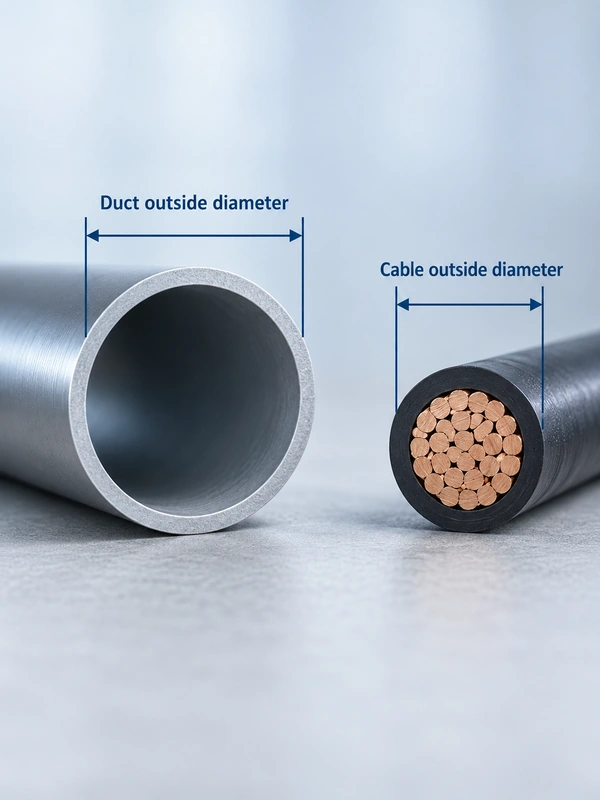
Sa strane kanala potrebni su odobreni vanjski promjer, materijal i stanje. Sa strane kabla potrebni su stvarni promjer omotača i dopušteni raspon zaptivke. Broj vlakana ne predstavlja pouzdan identifikator. prečnik kabla: dva kabla sa istim brojem vlakana mogu imati različite konstrukcije i vanjske dimenzije.
Zabilježite promjer kabla iz dokumentacije za kabel i usporedite ga s dostupnom varijantom proizvoda. The 14 mm vodič za spajanje gas bloka korisno je za razumijevanje porodice, ali sam oznaka veličine kanala ne identifikuje odgovarajuću kablovsku brtvu. Zadržite oznaku kanala i opseg kabela zajedno u narudžbenici i evidenciji instalacije.
| Sučelje | Obavezne informacije | Uobičajena greška pri odabiru |
|---|---|---|
| Ulaz u kanal | Vanjski prečnik, materijal i odobrena tolerancija | Odabir prema cijevi sličnog izgleda |
| Zaptivka za kabl | Stvarni promjer ovojnice i dozvoljeni raspon brtvljenja | Odabir samo prema broju vlakana |
| Granica rute | Zahtjev za lokaciju i migraciju brtve | Instaliranje gdje god je pristup najlakši |
| Radni uvjet | Odvojene granice za puhanje i zatvoreno stanje | Korištenje pritiska za puhanje kao ocjena gas-seala |
Za hipotetsko nadogradnju, pretpostavimo da je zamjenski kabel manji od originalnog, ali koristi isti kanal. Spoj u kanalu može ostati dimenzijski ispravan, dok postojeće brtvljenje kabla više nije prikladno. Ponovo procijenite oba spoja umjesto da pretpostavljate da neizmijenjena vodilica omogućava ponovnu upotrebu cijelog sklopa.
Kada treba zategnuti brtvenu maticu gas bloka oko kabla?
Neki dizajni gas-bloka omogućavaju ugradnju kabla kroz otvorenu montažu i zahtijevaju da se zaptivka za kabl aktivira naknadno. Opis proizvoda FZA14/12 7–10 na sajtu navodi ovakav redoslijed: provucite kabl kroz otvoreni konektor, a zatim aktivirajte zaptivni prsten. To je uputstvo specifično za taj proizvod, a ne univerzalno pravilo za svaki gas-blok.
Keep the current installation instructions available at the work position. Confirm the required open state before cable installation and the final sealed state afterwards. Do not improvise torque, ring travel or tightening force. If the instructions are incomplete, obtain the missing detail from the supplier before operating the seal.
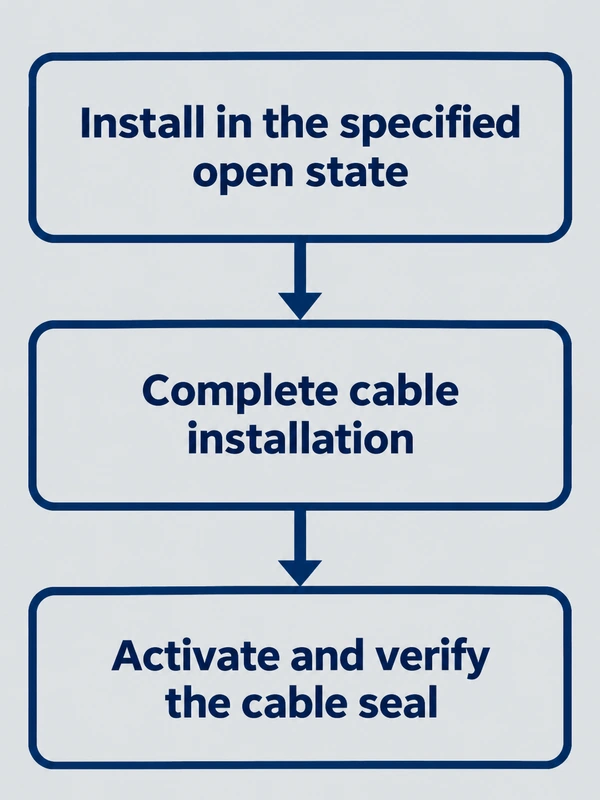
Premature activation can obstruct the cable path or load the sheath. Forgetting activation leaves the intended sealing task unfinished. Assign responsibility for the final step and include it on the acceptance record, especially when different crews install the duct and cable.
How to prepare the duct end and cable sheath for a gas block
Cut duct using the specified tool, preserving roundness and a square end. Keep grit away from the sealing surface and connector entrance. Follow the product’s insertion-depth and retention checks. Do not assume that a clear housing proves the seal is correctly compressed; transparency is an inspection aid, not a performance test.
Inspect the cable sheath at the intended sealing position. Dirt, severe scuffing or deformation can undermine the interface. Use only approved cleaning methods and lubricants. A seal designed for a smooth round cable should not be forced around an unsupported shape or a bundle of separate cables without documented approval.
Route supports must prevent the cable or duct from continuously pulling sideways on the connector. Leave the specified bend radius and maintenance access. The seal should not carry suspended cable weight or compensate for a duct route that is too short to align correctly.
Why blowing pressure and gas-sealing pressure are different
Gas-sealing pressure concerns the closed interface around the cable or fibre unit. Blowing pressure concerns cable installation conditions. Emtelle’s Issue 5 gas-block datasheet explicitly lists gas sealing separately from pressure information for fibre blowing. This distinction is more useful than copying a single headline pressure into a purchase specification.
The FZA14/12 7–10 listing mentions a blowing-pressure capability, but that statement does not establish an equal sealed-state gas rating. Request the exact sealed-state test conditions and the applicable cable and duct combination. If a project requires water resistance, ask for the water-test conditions separately rather than treating the word gas-tight as a complete water specification.
The discussion of water-block microduct connectors helps frame that requirement. Neither gas nor water sealing should be inferred from body colour, transparency or the apparent thickness of a tightening ring.
| Documented property | Question it answers | Šta ne utvrđuje |
|---|---|---|
| Open-state blowing limit | Conditions permitted during cable installation | Closed cable-seal pressure |
| Gas-seal test | Performance at the stated cable and test conditions | Fire resistance or every gas application |
| Water-seal test | Performance under the stated water exposure | Unlimited immersion or a dry building penetration |
| Environmental limits | Approved temperature and exposure | Suitability for every outdoor location |
Can the gas block be used outdoors and reopened for maintenance?
Describe the actual environment: indoor entry, sheltered cabinet, flooded chamber, exposed wall or direct burial. Ask for model-specific temperature, UV and mechanical evidence where relevant. An indoor sealing component should not be moved into an exposed route simply because its dimensions fit.
Hexatronic’s connector documentation provides an example of application-specific protection: its described direct-buried configuration uses an external cover. That requirement belongs to that family, but the procurement lesson applies broadly. State the complete approved configuration, including any cover, support or housing, rather than purchasing the bare connector by name alone.
Where an existing cable cannot conveniently be withdrawn, a divisible gas-water block may be worth assessing. Confirm the exact variant’s installation method and service limits. A split design solves an access problem only when its cable range, location and sealing requirements also match.
What to check before handing over a gas-block installation
Record product identification, duct size, cable sheath diameter, installation location and the person completing seal activation. Include the manufacturer’s required inspection or test result. If a test involves pressure, use the approved procedure and isolate the assembly before any adjustment.
Set inspection triggers around network work, cable replacement, flooding, visible movement or suspected damage. Avoid inventing a universal annual interval without reference to the operator’s maintenance policy. A seal disturbed by an upgrade needs reassessment even if its scheduled inspection is months away.
Često postavljana pitanja
How does a gas block prevent moisture migration?
An appropriate design seals the relevant interfaces around the duct and cable, interrupting that path. Performance depends on the exact assembly and test conditions. It does not automatically seal a cracked duct wall, chamber lid or the outside of a building penetration.
Does a transparent gas-block body help confirm correct installation?
It can help inspect visible seating or contamination where the design permits. It cannot prove the required compression, hidden seal condition or leakage performance. Use the specified installation checks and acceptance procedure in addition to visual observation.
How do you check a gas block’s outdoor temperature and UV limits?
The conditions at the actual location, including exposure during storage and installation. Request documented limits for the exact variant and protective configuration. Do not transfer outdoor claims from another connector family or infer UV resistance from colour.
How often should a gas-water block be inspected?
Follow the operator’s plan and manufacturer guidance, with additional checks after cable work, flooding, movement or damage. Accessibility and consequence of failure affect the interval. Record what was checked so a later inspection can identify changes.
Which contaminants can a gas block exclude?
Only claim the documented sealing function under its specified conditions. A gas or water seal is not automatically a chemical barrier, filter or hazardous-area protection device. Confirm compatibility with expected substances rather than relying on the product name.
Should a gas block be sealed before or after fiber installation?
Follow the actual design. Some open-through products, including the described FZA model, are sealed after cable installation. Other products use different procedures. Confirm the sequence before work and record that the final activation step was completed.
Reference
- Emtelle, Gas Block Connector: the tube-to-cable sealing function.
- Emtelle, Gas Block Connectors, Issue 5: separate tube dimensions, fibre-unit ranges and sealing performance.
- Hexatronic, MPB30601+ connectors: application-specific external protection for duct joints.
Sažetak
A completed gas-block installation needs the correct boundary location, compatible duct and cable interfaces, the product’s activation sequence and a documented acceptance result. Keep blowing limits separate from sealing limits, and preserve access for future work. The final record should make it clear which path is sealed and under what conditions.
For this installation type, review the FZA14/12 7–10 straight microduct gas-block connector with the supplier and request the exact duct/cable pairing, activation instructions and sealed-state evidence. Those details make the quotation usable for installation and acceptance.



