
A ガスブロックコネクター ケーブルの周囲の経路およびダクト間の接合部にも対処する必要があります。ストレートカプラーは、ダクト端部をしっかりと保持しつつ、ケーブルを取り巻く空間を開放したままにできます。ネットワーク設計上、その空間を通じたガスや水の移動を制御する必要がある場合は、適切なダクトおよびケーブルとのインターフェースを備えた専用のシール部品を選定してください。.
設置作業は、リングを締め付けることから始めるのではなく、配管ルートの要件の確認から始まります。シールが取り付けられるべき位置、適合認証を受けた製品、作動させるべきタイミング、および完了後の設置状態の検査方法を明確にしてください。ブロー圧力とガス遮断圧力は異なる特性であり、いずれか一方について公表された値を他方の定格として用いてはなりません。.
ダクト内でのガスの移動を防ぐには、ガスブロックはどこに設置すればよいですか?
チャンバー、キャビネット、または建物の入口を通るダクト経路を描きます。懸念が、空のダクト内での移動、既設ケーブルの周囲、損傷したダクト壁を通過する場合、または建物貫通部のダクト外側を巡る場合なのかを特定してください。これらは異なる経路であり、それぞれ異なる気密化対策が必要になることがあります。.
Emtelle社は、自社のガスブロックコネクタについて、「コネクタ、チューブ、光ファイバーケーブル間にインラインシールを提供する」と説明しています。これは当該部品の機能を示すものですが、耐火性能や危険ガス環境での使用認可を示すものではありません。ケーブル引き込み用シールは、自動的に防火貫通処理となるわけではなく、漏洩している区画や壁貫通部を補修するものでもありません。.
コンポーネントをアクセス不能な場所に設置する前に、ネットワーク管理者または建築設計者に必要な設置位置を確認してください。適切な位置に配置されたシールであっても、意図した境界が保護されない場合があります。逆に、後でアクティベーションが必要な埋設接続は、回避可能な掘削作業を引き起こす可能性があります。.
ガスブロックコネクタをダクトおよびケーブルの直径に合わせる方法
ダクト側には、承認済みの外径、材質および状態が必要です。ケーブル側には、実際のシース外径と、シールの許容範囲が必要です。ファイバー本数だけでは確実に特定できません。 ケーブル径: 同じファイバー本数のケーブルであっても、構造や外寸が異なることがあります。.
ケーブルの直径は、ケーブルの仕様書から記録し、提供された製品バリアントと照合してください。 14 mm ガスブロックコネクターガイド これはファミリーを理解する上で役立ちますが、ダクトサイズのラベルだけでは適切なケーブルシールを特定することはできません。注文書および設置記録には、ダクトの指定とケーブルの範囲を必ず併記してください。.
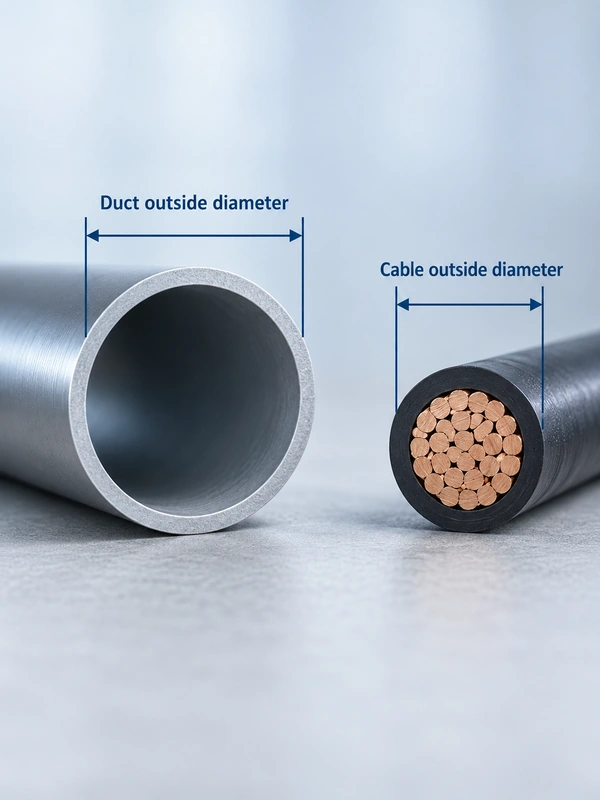
| インターフェース | 必須情報 | 一般的な選択ミス |
|---|---|---|
| ダクト入口 | 外径、材質および許容差 | 外観が類似したチューブで選択する |
| ケーブルシール | 実際のシース外径と許容シール範囲 | 繊維本数だけで選択する |
| ルート境界 | シールの位置および移動要件 | アクセスが最も容易な場所に設置する |
| 動作条件 | 吹送時と密閉状態時の限界を分ける | ガスシールの評価として吹き出し圧力を用いる |
仮想的なアップグレードを例に挙げると、交換用ケーブルが元のケーブルよりも小型でありながら同じダクトを使用する場合、ダクトとの接続寸法は依然として適合しているものの、既存のケーブルシールが適さなくなることがあります。変更のないダクトであっても、アセンブリ全体を再利用可能と安易に判断せず、両方のインターフェースを再評価してください。.
ガスブロックのシールは、ケーブルの周囲でいつ締めるべきですか?
一部のガスブロック設計では、組み立てられた状態でケーブルを設置でき、その後にケーブルシールを作動させる必要があります。当サイトのFZA14/12 7–10製品説明には、この種の手順が明記されています:まず開いたコネクタにケーブルを通し、次にシールリングを作動させます。これは製品固有の指示であり、すべてのガスブロックに共通するルールではありません。.
作業場所に現在の取り付け手順書を常備してください。ケーブルの取り付け前には必要な開放状態を確認し、取り付け後には最終的な密閉状態を確認してください。トルク、リングのストローク、締め付け力を即興で決めないでください。手順書が不完全な場合は、シールを使用する前に、不足している詳細を供給元から入手してください。.
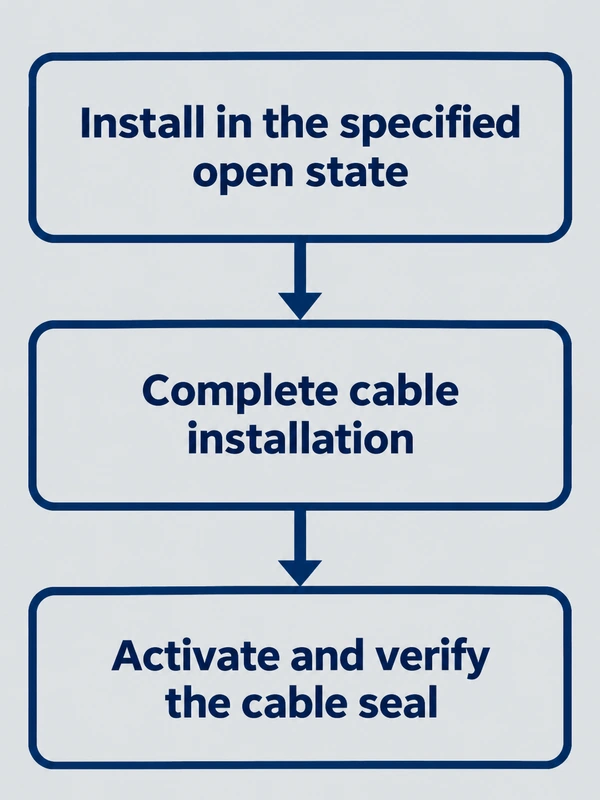
過早な作動はケーブル経路を妨げたり、シースに負荷をかける可能性があります。作動を忘れた場合、本来のシール機能が未完了となります。最終工程の責任者を明確にし、特にダクトとケーブルを異なる作業チームが施工する場合は、その内容を検収記録に記載してください。.
ガスブロック用にダクト端部とケーブルシースを準備する方法
指定された工具を用いてダクトを切断し、円形の形状と直角の端面を保持してください。シール面およびコネクタの挿入口には研磨剤が付着しないよう注意してください。製品に記載された挿入深さおよび保持確認手順に従ってください。透明なハウジングが存在するからといって、シールが正しく圧縮されていると判断しないでください。透明性は検査の補助手段であり、性能試験ではありません。.
シーリング予定位置のケーブル被覆を点検してください。汚れ、深刻な擦り傷、または変形があると、接続部の信頼性が損なわれる可能性があります。使用する洗浄方法および潤滑剤は、認証済みのものをご使用ください。滑らかな円形ケーブル用に設計されたシールを、裏付けとなる文書なしに、支持されていない形状や複数本の別々のケーブル束に無理に装着してはなりません。.
Route supports must prevent the cable or duct from continuously pulling sideways on the connector. Leave the specified bend radius and maintenance access. The seal should not carry suspended cable weight or compensate for a duct route that is too short to align correctly.
Why blowing pressure and gas-sealing pressure are different
Gas-sealing pressure concerns the closed interface around the cable or fibre unit. Blowing pressure concerns cable installation conditions. Emtelle’s Issue 5 gas-block datasheet explicitly lists gas sealing separately from pressure information for fibre blowing. This distinction is more useful than copying a single headline pressure into a purchase specification.
The FZA14/12 7–10 listing mentions a blowing-pressure capability, but that statement does not establish an equal sealed-state gas rating. Request the exact sealed-state test conditions and the applicable cable and duct combination. If a project requires water resistance, ask for the water-test conditions separately rather than treating the word gas-tight as a complete water specification.
The discussion of water-block microduct connectors helps frame that requirement. Neither gas nor water sealing should be inferred from body colour, transparency or the apparent thickness of a tightening ring.
| Documented property | Question it answers | それが確立しないもの |
|---|---|---|
| Open-state blowing limit | Conditions permitted during cable installation | Closed cable-seal pressure |
| Gas-seal test | Performance at the stated cable and test conditions | Fire resistance or every gas application |
| Water-seal test | Performance under the stated water exposure | Unlimited immersion or a dry building penetration |
| Environmental limits | Approved temperature and exposure | Suitability for every outdoor location |
Can the gas block be used outdoors and reopened for maintenance?
Describe the actual environment: indoor entry, sheltered cabinet, flooded chamber, exposed wall or direct burial. Ask for model-specific temperature, UV and mechanical evidence where relevant. An indoor sealing component should not be moved into an exposed route simply because its dimensions fit.
Hexatronic’s connector documentation provides an example of application-specific protection: its described direct-buried configuration uses an external cover. That requirement belongs to that family, but the procurement lesson applies broadly. State the complete approved configuration, including any cover, support or housing, rather than purchasing the bare connector by name alone.
Where an existing cable cannot conveniently be withdrawn, a divisible gas-water block may be worth assessing. Confirm the exact variant’s installation method and service limits. A split design solves an access problem only when its cable range, location and sealing requirements also match.
What to check before handing over a gas-block installation
Record product identification, duct size, cable sheath diameter, installation location and the person completing seal activation. Include the manufacturer’s required inspection or test result. If a test involves pressure, use the approved procedure and isolate the assembly before any adjustment.
Set inspection triggers around network work, cable replacement, flooding, visible movement or suspected damage. Avoid inventing a universal annual interval without reference to the operator’s maintenance policy. A seal disturbed by an upgrade needs reassessment even if its scheduled inspection is months away.
よくある質問
How does a gas block prevent moisture migration?
An appropriate design seals the relevant interfaces around the duct and cable, interrupting that path. Performance depends on the exact assembly and test conditions. It does not automatically seal a cracked duct wall, chamber lid or the outside of a building penetration.
Does a transparent gas-block body help confirm correct installation?
It can help inspect visible seating or contamination where the design permits. It cannot prove the required compression, hidden seal condition or leakage performance. Use the specified installation checks and acceptance procedure in addition to visual observation.
How do you check a gas block’s outdoor temperature and UV limits?
The conditions at the actual location, including exposure during storage and installation. Request documented limits for the exact variant and protective configuration. Do not transfer outdoor claims from another connector family or infer UV resistance from colour.
How often should a gas-water block be inspected?
Follow the operator’s plan and manufacturer guidance, with additional checks after cable work, flooding, movement or damage. Accessibility and consequence of failure affect the interval. Record what was checked so a later inspection can identify changes.
Which contaminants can a gas block exclude?
Only claim the documented sealing function under its specified conditions. A gas or water seal is not automatically a chemical barrier, filter or hazardous-area protection device. Confirm compatibility with expected substances rather than relying on the product name.
Should a gas block be sealed before or after fiber installation?
Follow the actual design. Some open-through products, including the described FZA model, are sealed after cable installation. Other products use different procedures. Confirm the sequence before work and record that the final activation step was completed.
参考文献
- Emtelle, Gas Block Connector: the tube-to-cable sealing function.
- Emtelle, Gas Block Connectors, Issue 5: separate tube dimensions, fibre-unit ranges and sealing performance.
- Hexatronic, MPB30601+ connectors: application-specific external protection for duct joints.
要約
A completed gas-block installation needs the correct boundary location, compatible duct and cable interfaces, the product’s activation sequence and a documented acceptance result. Keep blowing limits separate from sealing limits, and preserve access for future work. The final record should make it clear which path is sealed and under what conditions.
For this installation type, review the FZA14/12 7–10 straight microduct gas-block connector with the supplier and request the exact duct/cable pairing, activation instructions and sealed-state evidence. Those details make the quotation usable for installation and acceptance.



