
Yedek bir mikrokanal ile kablo taşıyan bir kanalın aynı odada korunmasına ihtiyaç duyulabilir, ancak ikisi de aynı sızdırmazlık arayüzüne sahip değildir. Her ikisinin de “kapatıcı” olarak tanımlanması nedeniyle yalnızca bir uç durdurucu ve bir gaz bloğu sipariş etmek, bu farkı göz ardı eder. Uç durdurucusu boş bir deliği kapatır; dolu bir kanal ise kablo etrafında, uyumlu bir kablo contasına ihtiyaç duyan bir boşluk bırakır. Karar, inşaat süreci sırasında da değişir: bir hat kablo beklerken uygun olan bir kapatıcı, sonraki üfleme işlemini engelleyemez. Bu karşılaştırma, boş ve dolu durumları ayırır, hangi basınç değerlerinin hangi duruma ait olduğunu açıklar ve geçici bir kapatıcının kablo sızdırmazlığı sağlanmış bir arayüze dönüştürülmeden önce yapılması gereken kontrolleri belirler.
Kısa cevap, seçmektir. uç durdurmalı mikrokanal konektörleri Boş kanalları kapatmak ve kurulmuş kabloyu çevreleyen gerekli sınırlama için uyumlu bir gaz bloğu için. Üflemeden önce uç durdurucuyu çıkarın. Bir gaz bloğunun üfleme basıncının aynı zamanda kablo sızdırmazlık basıncı olduğunu varsaymayın: aşağıda belirtilen doğrulanmış ürün örneğinde, farklı işlevler için 10 bar ve 0.3 bar aralığı listelenmiştir. Her iki kapatıcıyı da belirtmeden önce kanal boyutlarını, kablo çapını, montaj durumunu ve üreticinin kesin limitlerini onaylayın. Ne isim ne de nominal kanal boyutu, her ortam için uygunluğu kanıtlamaz.
Boş bir kanala veya kurulu bir kabloya hangi kapatma uygundur?
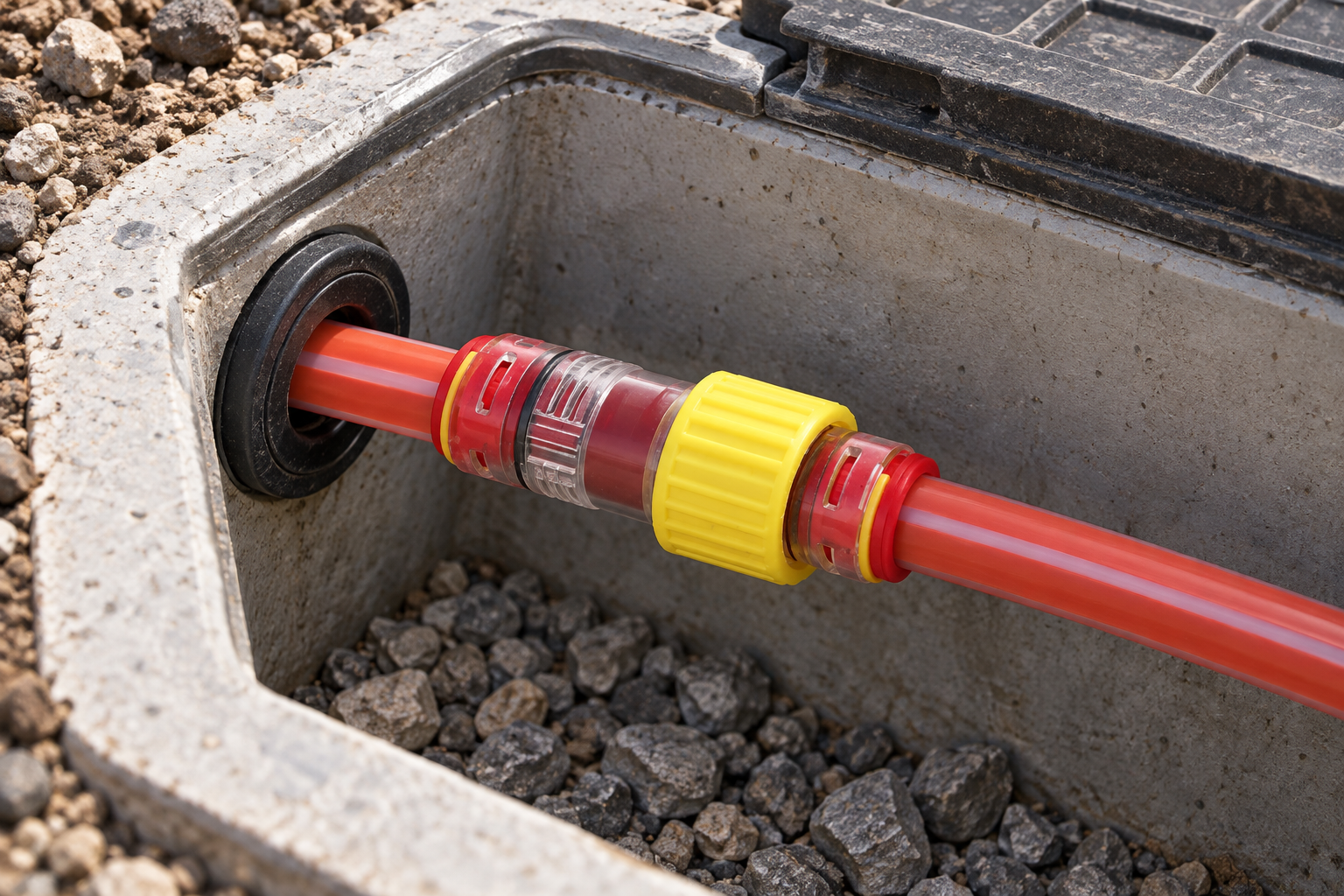
| Arayüz veya görev | Son durdurma | Gaz bloğu | Seçim kontrolü |
|---|---|---|---|
| Kablo bekleyen boş kanal | Açık deliği kapatır | Sadece bir kapama olarak adlandırıldığı için belirtmeyin. | Kanalları ve hedeflenen maruziyeti eşleştirin. |
| Kablolarla dolu kanal | Kablo geçiş sızdırmazlığı değildir | Uyumlu tasarım, kablo anulusunu sızdırmaz hale getirir. | Kablo dış çapını kanal dış çapından ayrı olarak kontrol edin. |
| Kablo üfleme | İşlemden önce çıkarın | Yalnızca üreticinin belirttiği açık/üfleme durumunda kullanın. | İzin verilen durumu ve basıncı onaylayın |
| Kurulum sonrası sızdırmazlık | Hâlâ yalnızca boş bir delik için uygundur. | Kablo contasını talimatlarına uygun olarak ayarlayın. | Sadece daha önce boş olan kanalı değil, işgal edilen arayüzü doğrulayın. |
Şunlar gibi isimler: uç durdurucu kapatma ve mikrokanal uç kapağı Boş kanal ürünlerini tanımlayın; kesin çizim seçimin referansıdır. İçin gaz bloğu bağlantıları, kablo sızdırmazlık aralığı ek bir uyumluluk sınırıdır; kanalın nominal çapı tarafından belirlenen bir değer değildir.
Bu fonksiyonel karşılaştırma, 10 Ekim 2026 tarihinde kontrol edilen resmi kapsam ve üretici verilerini kullanır. Derecelendirmeler ve montaj yöntemleri ürün özelidir; Oulu, sitenin markasıdır, bağımsız olarak sıralanmış bir seçenek değildir.
Hangi boyutlar ve montaj kontrolleri hatalı sızdırmazlığı önler?
Hortumun dış çapını, iç çapını veya duvar kalınlığı özelliklerini ve kablonun dış çapını ayrı değerler olarak kontrol edin. Bir uç durdurucu, mevcut hortuma uygun olmalıdır; ayrıca, dolu bir arayüz, belgelenmiş sızdırmazlık aralığı içindeki gerçek kabloyu da kabul etmelidir. Boyutlar, hasar veya ovalleşme üreticinin talimatları dışında kaldığında, uyumu zorlamak yerine montajdan önce bir karar alın.
FCST’nin 22 Ağustos 2025 tarihinde yayımlanan montaj talimatı, temiz, yuvarlak, hasarsız boru uçları, düz kesimler ve pürüz giderme işlemlerini açıklar. Borunun tam olarak yerine oturtulmadan önce tutulmasının sızıntı yoluna neden olabileceğini; şeffaf gövdenin takma kontrolüne yardımcı olabileceğini belirtir [2]. Bunlar faydalı tanısal hususlardır, ancak FCST’nin prosedürü, farklı bir üreticinin bağlantı elemanı ile birlikte sunulan talimatların yerini tutmaz.
Kilitleme klipsi, tasarımın gerektirdiği durumlarda istemeden açılmanın önüne geçer. Yanlış kanal boyutunu, hasar görmüş contayı veya çatlamış gövdeyi düzeltemez. Gevşeyen bir durdurucu için, uç kapak sorun giderme kılavuzu provides a focused next step rather than treating a stronger clip as the complete repair.
Which pressure limit applies before and after cable installation?
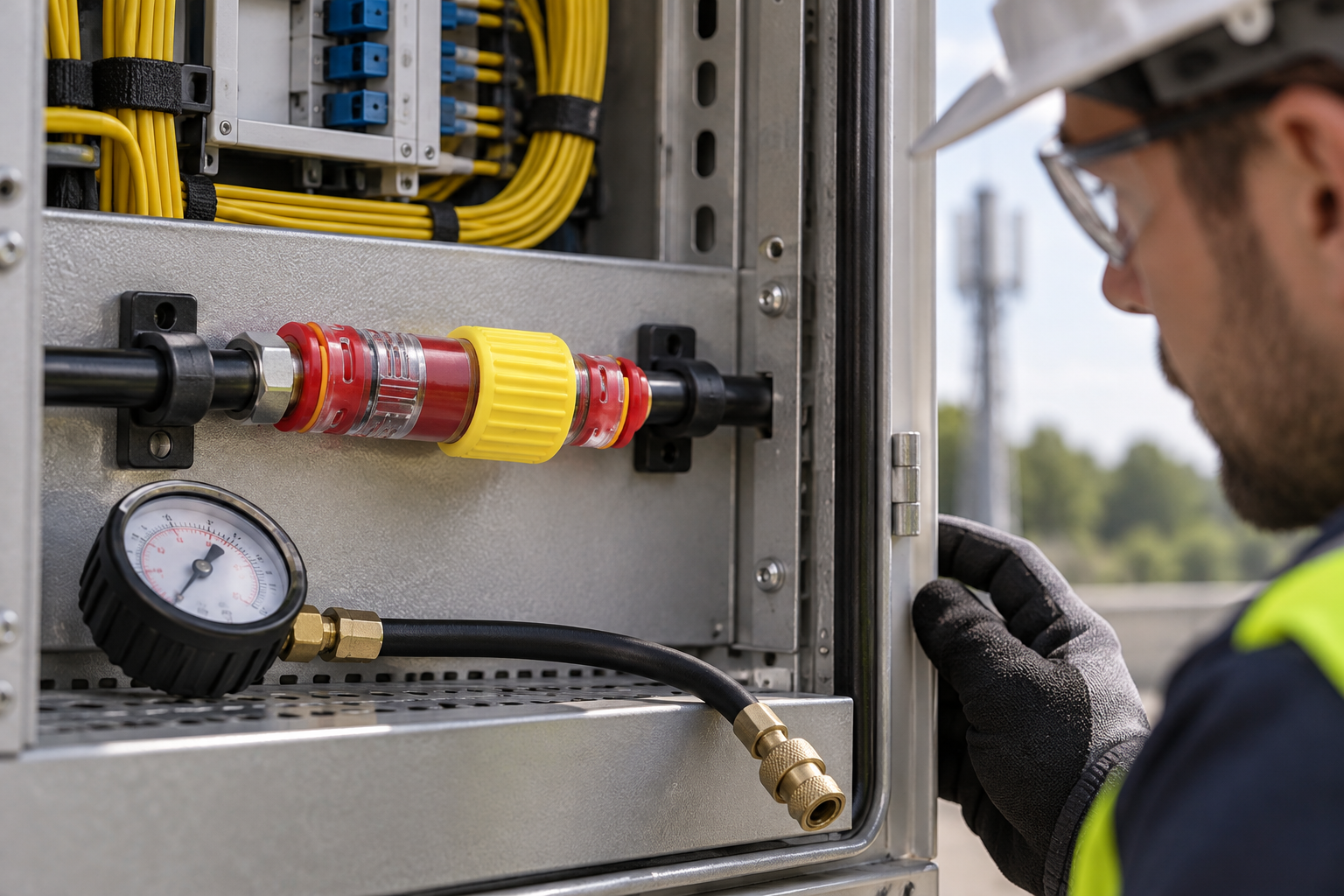
Oulu’nun Su Geçirmez Hava Gaz Blok ürün verileri lists microduct OD 4-16, a transparent PC body, blowing pressure of 10 bar and cable sealing up to 0.3 bar. The page describes opening for blowing and then rotating the ring to seal. It also identifies two separately ordered locking clips to prevent self-release. Exact cable ranges and model combinations still need drawing confirmation.
The two pressure figures describe different functions and assembly states. They do not authorize testing the occupied cable seal at 10 bar, and they must not be transferred to every gas block or 14 mm model. Working, proof, burst and route-acceptance pressures likewise answer different questions. Request the relevant limit and procedure for the actual assembly instead of choosing the largest number on a datasheet.
An empty-duct test does not establish the later cable-annulus seal. Record the assembly state, test medium, procedure, instrument and result so the evidence can be interpreted at handover. If water appears, isolate the pathway and interfaces: a wet connector alone does not identify where the water entered.
What should be checked when a vacant duct becomes occupied?
The following hold points are practical procurement and handover advice, not universal statutory requirements. They make the change of interface explicit and help avoid ordering hardware that fits the duct but not the cable.
| Conversion point | Check before proceeding | Reason to hold the work |
|---|---|---|
| Before opening the closure | Identify the product and depressurize before release | Release method or assembly state is unknown |
| Üflemeden önce | Remove the end stop; inspect the duct and confirm the blowing arrangement | Damage, contamination or incompatible fittings remain unresolved |
| Before sealing around cable | Confirm cable OD, seal range and the maker’s sealing sequence | The exact cable/closure combination lacks confirmation |
| Before accepting the conversion | Verify the occupied interface using the applicable procedure | Only vacant-duct evidence is available |
Record the closure model, lot or code, geometry, final state and corrections. Reuse the removed stop only with exact-product approval, inspection and applicable retesting. “Removable” establishes no universal reuse-cycle count. Include access visits, reassembly and verification in cost comparisons.
What do standards establish about the installation environment?
EN 50411-2-8:2009 covers initial requirements for installed blown-fibre microduct connectors, including joining ducts, blowing access, liquid sealing around fibre and closing open ducts. Its catalogue describes protected installations and excludes connectors intended for direct sunlight [1]. Citing that scope does not certify a particular closure or establish unrestricted UV exposure, burial suitability or service life.
IEC 60794-5:2014 is a broader sectional specification covering microduct cabling for installation by blowing, including cables, fibre units, microducts and protected microducts [3]. It does not replace connector-specific evidence. Likewise, an IP rating alone is not complete direct-burial qualification, and an external cover shell is not automatically a pressure or gas seal. The building/ODF application shown for the Oulu gas block is not proof of certified firestopping or a universal hazardous-gas barrier.
What questions arise when selecting and removing these closures?
What role does an end stop microduct connector play in an open microduct?
It closes a vacant bore against contamination. An installed cable creates a different interface that requires a compatible cable seal when sealing is needed.
How do you select the right end cap size for an end stop microduct connector?
Match the actual duct dimensions and condition to the maker’s drawing. Nominal OD alone does not confirm wall compatibility, ovality acceptance or insertion requirements.
How tightly should an end stop microduct connector be fitted to stop dust and water?
Follow its specified insertion and retention method; additional force is not evidence of sealing. Confirm full seating and the required clip, while checking that the duct and seal are undamaged.
Can an end stop remain installed while cable is blown later?
It may remain in place while the vacant duct waits for future work, but it must be removed before blowing. Depressurize before release and follow the exact product’s removal instructions.
What pressure test confirms that an end stop is sealing correctly?
Use the procedure applicable to that product and the network’s acceptance plan. There is no universal pressure or hold time for all end stops, and an empty-duct result does not validate a later cable seal.
Is a locking clip needed with every end stop microduct connector?
Fit it when specified by the maker. A clip prevents inadvertent release but cannot compensate for incorrect sizing, incomplete insertion or seal damage.
Can a gas block’s blowing pressure be used to test its cable seal?
Not unless the exact maker’s procedure explicitly permits it. The Oulu example distinguishes 10 bar blowing pressure from cable sealing up to 0.3 bar.
Can the same closure be reused after a cable installation change?
Only with approval for the exact product and suitable inspection and retesting. Confirm the new duct/cable geometry and final operating state; previous use does not establish compatibility.
Which primary references support this comparison?
- [1] NEN catalogue: EN 50411-2-8:2009, blown-fibre microduct connector requirements and scope.
- [2] FCST: Mikrokanal Konnektörü Kurulum Talimatı, 22 Ağustos 2025.
- [3] IEC catalogue: IEC 60794-5:2014, microduct cabling for installation by blowing.
How should the final closure decision be made?
Choose the closure by the interface it must seal, not by how similar the fittings look. A vacant duct needs a suitable end stop; a cable-occupied duct needs confirmation of the cable seal and its operating limits. Establish that condition first, check the actual duct and cable dimensions next, and then verify the intended environment and assembly state. The critical handover is vacant-to-occupied conversion: remove the end stop before blowing and obtain evidence for the final cable-sealed interface rather than relying on an earlier empty-duct test. Keep the product identity and verification result with the route record. Oulu / ANMASPC can provide the exact drawing and applicable instructions for the selected closure before ordering.



