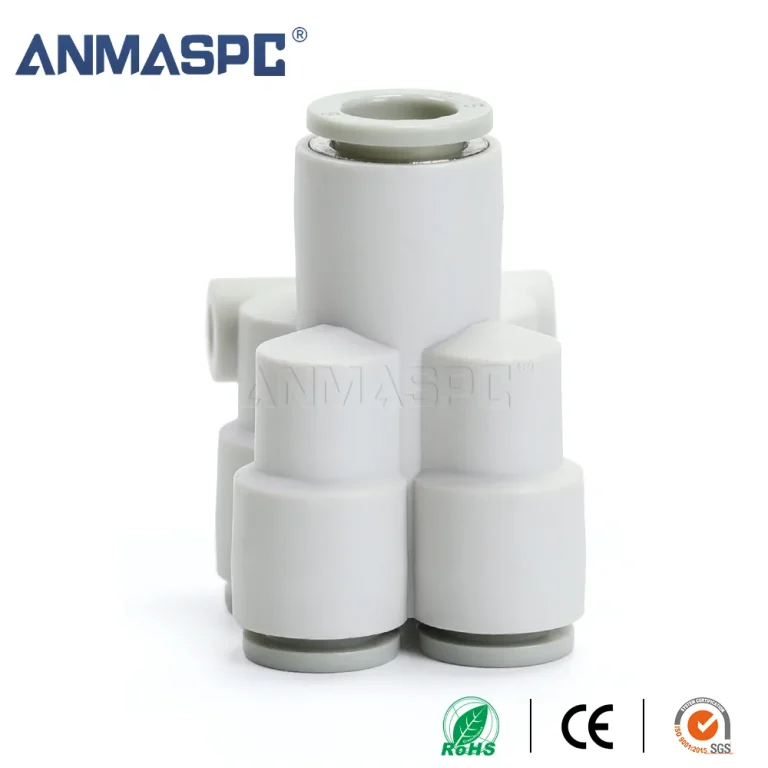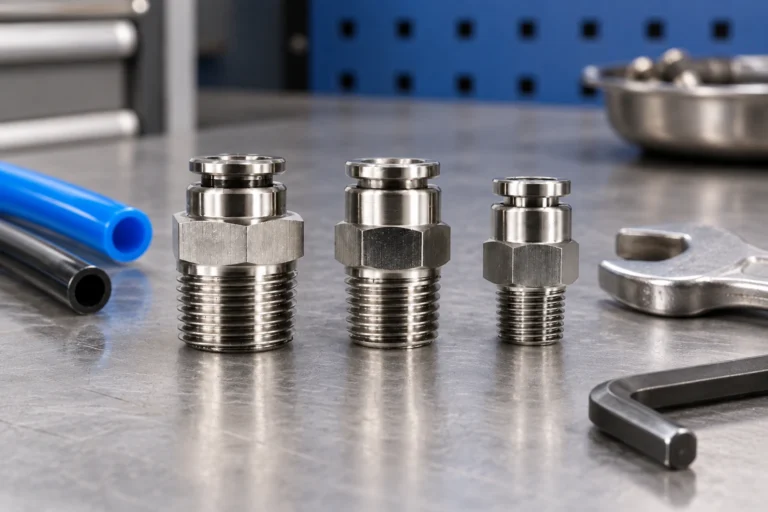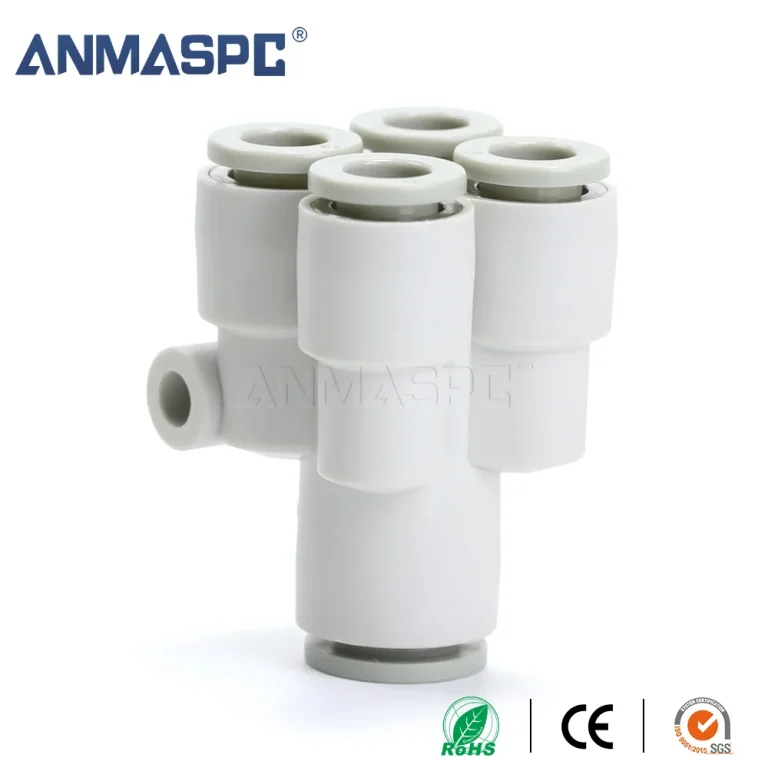
A spare microduct and a duct carrying cable can need protection at the same chamber, but they do not present the same sealing interface. Ordering an end stop and a gas block simply because both are described as closures overlooks that difference. The end stop closes a vacant bore; an occupied duct leaves a space around the cable that needs a compatible cable seal. The decision also changes during construction: a closure suitable while a route waits for cable cannot obstruct the subsequent blowing operation. This comparison separates vacant and occupied conditions, explains which pressure figures belong to which state, and identifies the checks needed before converting a temporary closure into a cable-sealed interface.
The short answer is to choose end stop microduct connectors for closing vacant ducts and a compatible gas block when the required boundary surrounds installed cable. Remove the end stop before blowing. Do not assume a gas block’s blowing pressure is also its cable-sealing pressure: the verified product example below lists 10 bar and up to 0.3 bar for different functions. Confirm duct dimensions, cable diameter, installation state and the exact maker’s limits before specifying either closure. Neither the name nor a nominal duct size proves suitability for every environment.
Which closure suits a vacant duct or an installed cable?
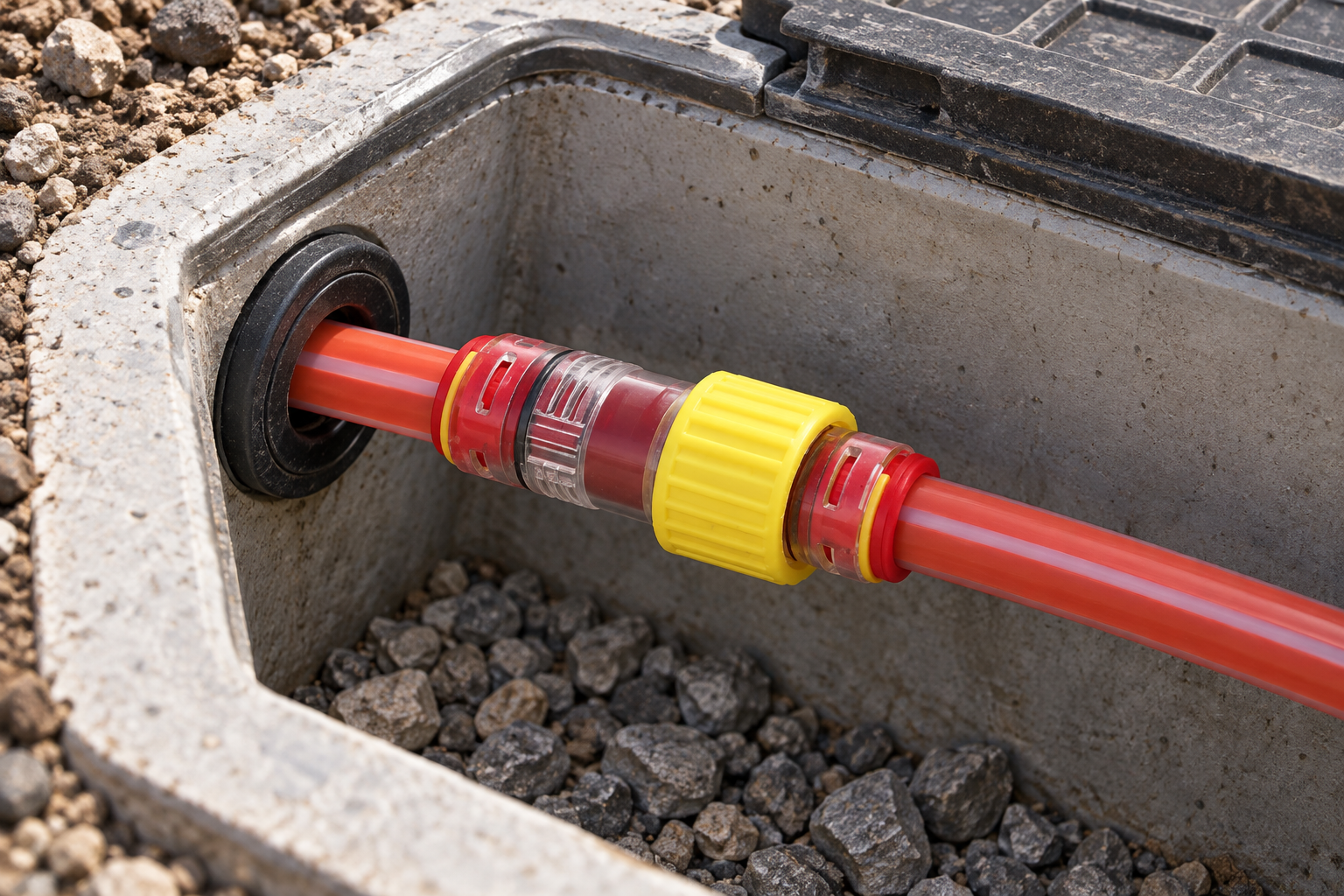
| Interface or task | End stop | Gas block | Selection check |
|---|---|---|---|
| Vacant duct awaiting cable | Closes the open bore | Do not specify merely because it is called a closure | Match the duct and intended exposure |
| Duct occupied by cable | Not a cable pass-through seal | Compatible design seals the cable annulus | Check cable OD separately from duct OD |
| Cable blowing | Remove before the operation | Use only in the maker’s specified open/blowing state | Confirm the permitted state and pressure |
| Post-installation sealing | Still suitable only for a vacant bore | Set the cable seal following its instructions | Verify the occupied interface, not just the earlier empty duct |
Names such as end-stop closure et microduct end cap describe vacant-duct products; the exact drawing remains the selection reference. For raccords de bloc d'emprunt de gaz, the cable-sealing range is an additional compatibility boundary, not something established by the duct’s nominal diameter.
This functional comparison uses official scopes and maker data checked on 10 October 2026. Ratings and installation methods remain product-specific; Oulu is the site’s brand, not an independently ranked option.
Which dimensions and installation checks prevent a false seal?
Check duct outside diameter, inside diameter or wall specification, and cable outside diameter as separate values. An end stop must fit the actual duct; an occupied interface must also accept the actual cable within the documented seal range. Where dimensions, damage or ovality fall outside the maker’s instructions, obtain a decision before assembly rather than forcing the fit.
FCST’s installation instruction, published 22 August 2025, describes clean, round, undamaged tube ends, square cuts and burr removal. It warns that a tube can be gripped before it is fully seated, leaving a leakage path; a transparent body can assist insertion inspection [2]. These are useful diagnostic considerations, but FCST’s procedure is not a substitute for the instructions supplied with a different maker’s closure.
A locking clip prevents inadvertent release where the design calls for it. It cannot correct the wrong duct size, a damaged seal or a cracked body. For a stop that loosens, the end-cap troubleshooting guide provides a focused next step rather than treating a stronger clip as the complete repair.
Which pressure limit applies before and after cable installation?
Oulu’s Waterproof Air Gas Block product data lists microduct OD 4-16, a transparent PC body, blowing pressure of 10 bar and cable sealing up to 0.3 bar. The page describes opening for blowing and then rotating the ring to seal. It also identifies two separately ordered locking clips to prevent self-release. Exact cable ranges and model combinations still need drawing confirmation.
The two pressure figures describe different functions and assembly states. They do not authorize testing the occupied cable seal at 10 bar, and they must not be transferred to every gas block or 14 mm model. Working, proof, burst and route-acceptance pressures likewise answer different questions. Request the relevant limit and procedure for the actual assembly instead of choosing the largest number on a datasheet.
An empty-duct test does not establish the later cable-annulus seal. Record the assembly state, test medium, procedure, instrument and result so the evidence can be interpreted at handover. If water appears, isolate the pathway and interfaces: a wet connector alone does not identify where the water entered.
What should be checked when a vacant duct becomes occupied?
The following hold points are practical procurement and handover advice, not universal statutory requirements. They make the change of interface explicit and help avoid ordering hardware that fits the duct but not the cable.
| Conversion point | Check before proceeding | Reason to hold the work |
|---|---|---|
| Before opening the closure | Identify the product and depressurize before release | Release method or assembly state is unknown |
| Before blowing | Remove the end stop; inspect the duct and confirm the blowing arrangement | Damage, contamination or incompatible fittings remain unresolved |
| Before sealing around cable | Confirm cable OD, seal range and the maker’s sealing sequence | The exact cable/closure combination lacks confirmation |
| Before accepting the conversion | Verify the occupied interface using the applicable procedure | Only vacant-duct evidence is available |
Record the closure model, lot or code, geometry, final state and corrections. Reuse the removed stop only with exact-product approval, inspection and applicable retesting. “Removable” establishes no universal reuse-cycle count. Include access visits, reassembly and verification in cost comparisons.
What do standards establish about the installation environment?
EN 50411-2-8:2009 covers initial requirements for installed blown-fibre microduct connectors, including joining ducts, blowing access, liquid sealing around fibre and closing open ducts. Its catalogue describes protected installations and excludes connectors intended for direct sunlight [1]. Citing that scope does not certify a particular closure or establish unrestricted UV exposure, burial suitability or service life.
IEC 60794-5:2014 is a broader sectional specification covering microduct cabling for installation by blowing, including cables, fibre units, microducts and protected microducts [3]. It does not replace connector-specific evidence. Likewise, an IP rating alone is not complete direct-burial qualification, and an external cover shell is not automatically a pressure or gas seal. The building/ODF application shown for the Oulu gas block is not proof of certified firestopping or a universal hazardous-gas barrier.
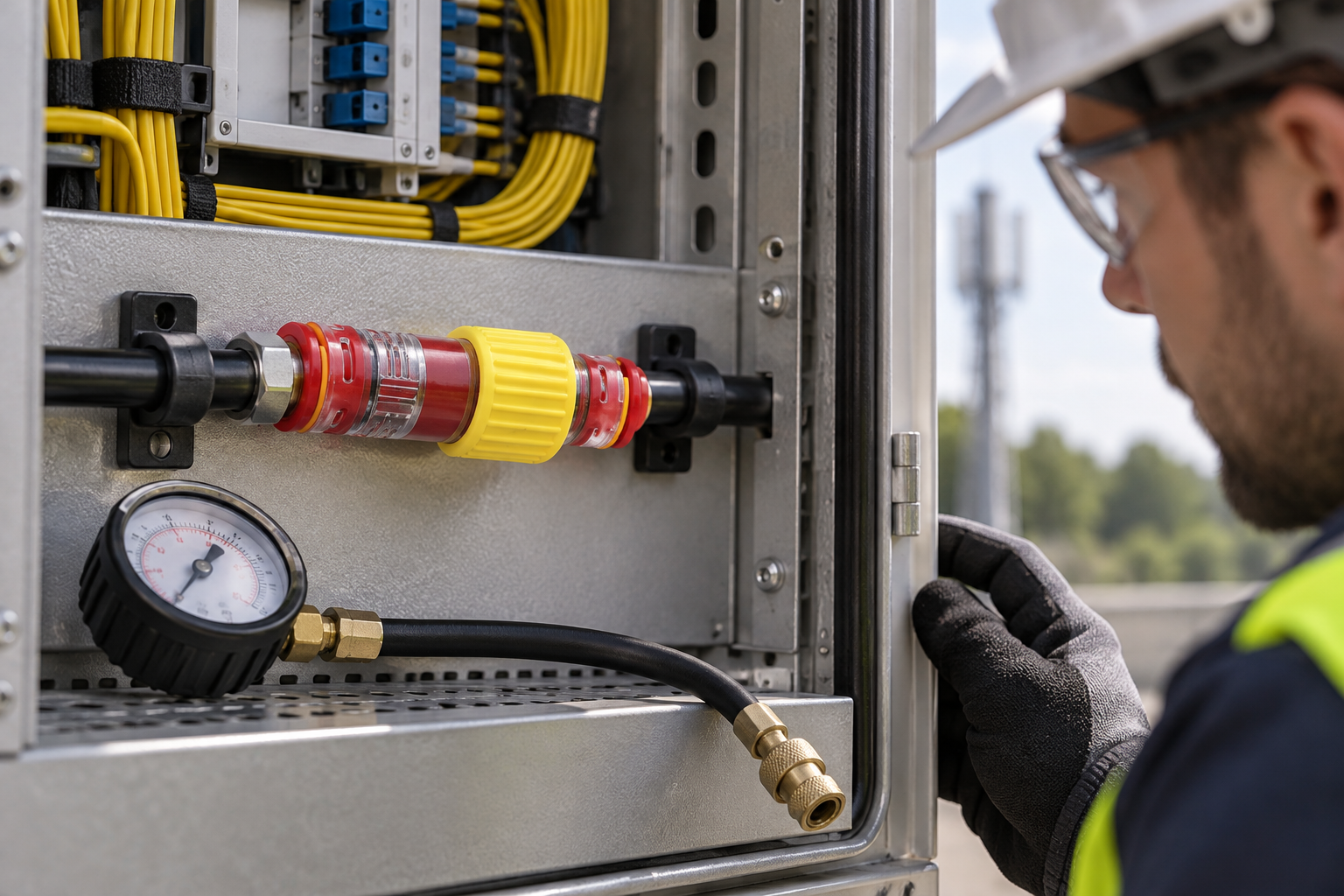
What questions arise when selecting and removing these closures?
What role does an end stop microduct connector play in an open microduct?
It closes a vacant bore against contamination. An installed cable creates a different interface that requires a compatible cable seal when sealing is needed.
How do you select the right end cap size for an end stop microduct connector?
Match the actual duct dimensions and condition to the maker’s drawing. Nominal OD alone does not confirm wall compatibility, ovality acceptance or insertion requirements.
How tightly should an end stop microduct connector be fitted to stop dust and water?
Follow its specified insertion and retention method; additional force is not evidence of sealing. Confirm full seating and the required clip, while checking that the duct and seal are undamaged.
Can an end stop remain installed while cable is blown later?
It may remain in place while the vacant duct waits for future work, but it must be removed before blowing. Depressurize before release and follow the exact product’s removal instructions.
What pressure test confirms that an end stop is sealing correctly?
Use the procedure applicable to that product and the network’s acceptance plan. There is no universal pressure or hold time for all end stops, and an empty-duct result does not validate a later cable seal.
Is a locking clip needed with every end stop microduct connector?
Fit it when specified by the maker. A clip prevents inadvertent release but cannot compensate for incorrect sizing, incomplete insertion or seal damage.
Can a gas block’s blowing pressure be used to test its cable seal?
Not unless the exact maker’s procedure explicitly permits it. The Oulu example distinguishes 10 bar blowing pressure from cable sealing up to 0.3 bar.
Can the same closure be reused after a cable installation change?
Only with approval for the exact product and suitable inspection and retesting. Confirm the new duct/cable geometry and final operating state; previous use does not establish compatibility.
Which primary references support this comparison?
- [1] NEN catalogue: EN 50411-2-8:2009, blown-fibre microduct connector requirements and scope.
- [2] FCST: Installation Instruction For Microduct Connector, 22 August 2025.
- [3] IEC catalogue: IEC 60794-5:2014, microduct cabling for installation by blowing.
How should the final closure decision be made?
Choose the closure by the interface it must seal, not by how similar the fittings look. A vacant duct needs a suitable end stop; a cable-occupied duct needs confirmation of the cable seal and its operating limits. Establish that condition first, check the actual duct and cable dimensions next, and then verify the intended environment and assembly state. The critical handover is vacant-to-occupied conversion: remove the end stop before blowing and obtain evidence for the final cable-sealed interface rather than relying on an earlier empty-duct test. Keep the product identity and verification result with the route record. Oulu / ANMASPC can provide the exact drawing and applicable instructions for the selected closure before ordering.