When a maintenance supervisor in Oulu changed a damaged hose end during a late shift, the replacement coupling snapped into place quickly—but the line began hissing as soon as the compressor loaded. The visible failure looked like a defective fitting; the reversal came after the team checked the mating profile, thread form, hose outside diameter, and working pressure. The problem was selection and specification, not simply product quality.
Özet: Industrial air fittings should be chosen as a matched connection system: fitting profile, hose or tube size, thread standard, seal material, and pressure rating must all agree. ISO 4414 treats pneumatic systems as safety-related assemblies, while OSHA’s general industry rules require compressed-air cleaning to be reduced to 30 psi or less with effective chip guarding and personal protective equipment. Build a written specification before purchasing; it reduces leaks, incompatible field substitutions, and avoidable downtime.
Air hose fittings connect a pneumatic source, hose, tool, valve, or machine. Their cost is small beside lost production, yet their influence is not. A restriction can starve an air tool; a poor seal wastes sıkıştırılmış hava; a mismatched connector can separate under pressure. The best fitting is therefore the one that supports the duty cycle, media, environment, and service practice—not the one with the lowest unit price.
The top five fitting families for industrial air lines
- Quick-connect couplers and plugs. For frequent tool changes. Match the exact interchange profile and confirmed working-pressure range; thread size alone does not establish compatibility.
- Barbed hose fittings. For hose assemblies where the barb, hose inner diameter, clamp or crimp method, and pressure duty are specified as one assembly.
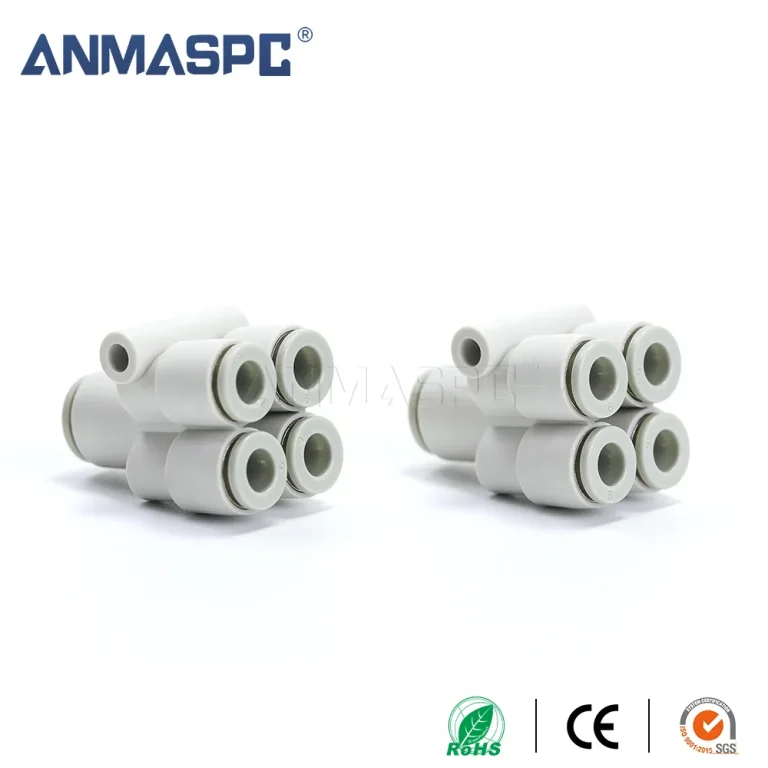
- Push-in pneumatic fittings. For correctly cut plastic tube in control circuits. Tube outside diameter, hardness, ovality, and cut quality affect retention and sealing.
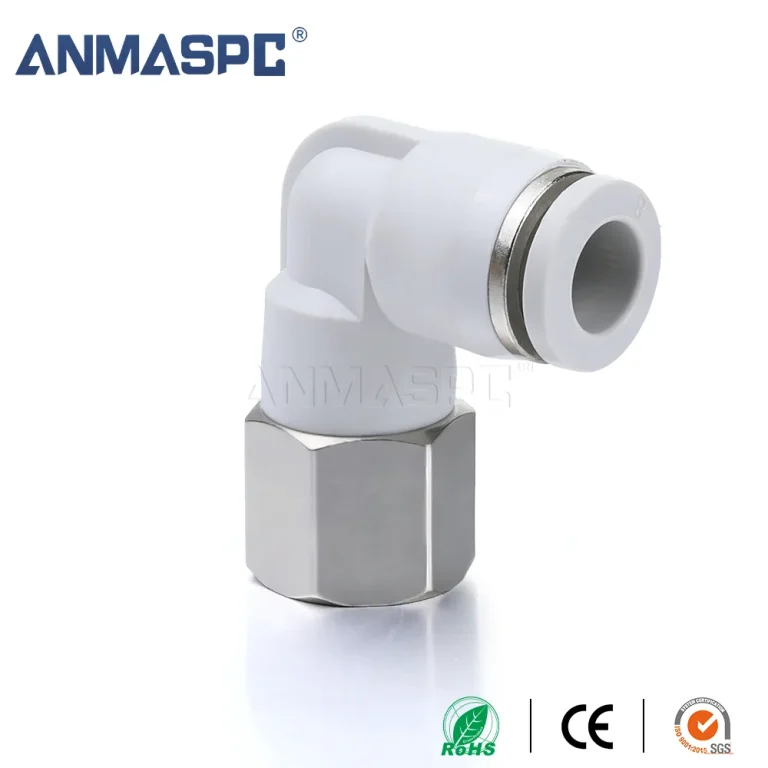
- Threaded adapters, elbows, and tees. For port transitions. Identify the exact BSPP, BSPT, NPT, or metric thread and its sealing geometry; visual similarity is unreliable.
- Compression fittings. For fixed tubing runs. Confirm tube material and dimensions, and follow the manufacturer’s assembly instructions to avoid damage from overtightening.
Standardizing one approved quick-connect series per pressure zone simplifies spares and prevents unverified pairings. Set the assembly limit at the lowest-rated component—hose, fitting, clamp, tool inlet, or accessory. ISO 4414 is a relevant design reference for stored energy and unexpected movement.
Compare performance, compatibility, and maintenance load
| Fitting type | Best-fit use | Compatibility checkpoint | Maintenance consideration |
|---|---|---|---|
| Quick-connect | Sık takım değişimi | Match the exact plug/coupler profile and rated pressure | Inspect sleeve action, seals, and contamination |
| Barbed | Esnek hortum tertibatları | Match barb to hose ID and use an appropriate retention method | Check clamp condition and hose creep |
| Push-in | Plastic-tube control circuits | Match tube OD, material, and clean square cut | Inspect collet, O-ring, and tube end |
| Threaded adapter | Ports and system transitions | Verify thread form and sealing method | Check for cross-threading and vibration loosening |
| Compression | Fixed tubing connections | Confirm tube material, OD, wall, and assembly instructions | Reinspect after commissioning; do not reuse damaged parts |
Total cost includes installation time, air loss, troubleshooting, and spares complexity—not just the unit price. An illustrative comparison should include the labour needed to identify an unfamiliar coupling during a repair. A documented interchange standard can reduce this hidden cost.
Size, pressure, material, and thread: the four checks before ordering
Measure the actual interface: hose fittings commonly use hose inner diameter, while push-in connections use tube outside diameter. Record port thread standard and sealing geometry. When a legacy part is uncertain, use a thread gauge and caliper instead of visual comparison.
| Procurement check | What to record | Why it matters |
|---|---|---|
| Air demand | Tool flow requirement, hose length, and allowable pressure drop | Undersized passages can reduce available tool performance |
| Pressure | Normal working pressure, compressor maximum, and transients | All components must be rated for the intended service |
| Material | Brass, plated steel, stainless steel, polymer, and seal elastomer | Corrosion, temperature, oil, cleaning agents, and environment affect suitability |
| Connection | Hose ID or tube OD; thread form, pitch, gender, and seal type | Prevents leaks and mechanically unsafe combinations |
| Service plan | Inspection point, approved spare, and isolation procedure | Makes replacement repeatable and safer |
Brass is common where corrosion resistance and machinability help; steel can suit mechanical robustness, and stainless steel may suit more corrosive environments. Check moisture, oil, chemicals, temperature, and galvanic-corrosion risk. Ordinary compressed-air suitability does not establish suitability for oxygen, hazardous gases, food contact, or breathing air.
Safety, standards, and a defensible specification
Standards frame the buyer’s questions; they are not automatic product certifications. ISO 4414:2010 covers safety requirements for pneumatic systems and components. ISO 8573-1 classifies compressed-air contaminants for process-air specifications; it does not certify a fitting. OSHA 29 CFR 1910.242(b) limits compressed-air cleaning to 30 psi when effective chip guarding and PPE are used. Destination market, intended use, and customer requirements determine what else applies.
Request current manufacturer data for connection type, material, temperature, working pressure, media compatibility, and assembly instructions. Unsupported “high pressure,” “food safe,” or “certified” claims create avoidable exposure. Isolate and depressurize a line before disconnection.
Make the selection repeatable
- Map every connection from compressor outlet to point of use, including adapters and accessories.
- Write one part-number standard for each approved interchange profile, thread family, and hose/tube size.
- Set an inspection routine for leakage, damaged threads, cracked hose ends, seal wear, and poor coupling engagement.
- Trial a representative assembly under the actual operating conditions before standardizing it across a site.
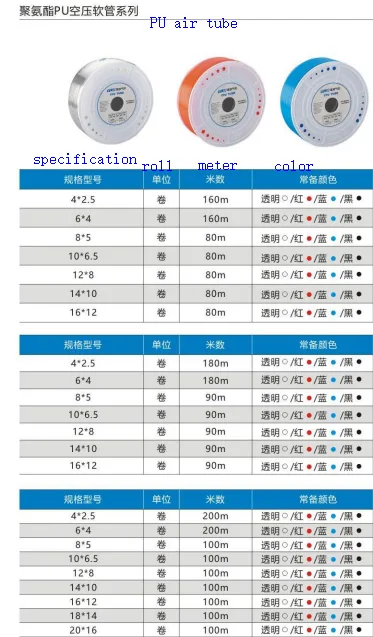
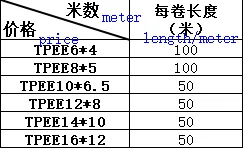
Oulu can support a specification-led discussion around configurable stainless-steel fittings, PU hose options, and pneumatic connection requirements. The objective is a documented match—not a catalogue guess.
Sıkça sorulan sorular
What are the most common types of air hose fittings?
Quick-connect, barbed, push-in, threaded, and compression fittings are the main families. Choose by duty, interface dimensions, and approved pressure range—not name alone.
How do I choose the right air hose fitting size?
Measure hose inner diameter for barbed fittings and tube outside diameter for push-in fittings, then verify the port thread with a gauge. Check airflow and hose length too; a connection can fit yet restrict the circuit.
Are quick-connect fittings safe for high-pressure air?
Yes, only within the manufacturer’s stated limits and as a compatible plug-and-coupler pair. For higher-risk work, assess hose restraint, stored energy, disconnection behaviour, and the safety procedure; do not infer a rating from appearance.
Why does an air hose fitting leak?
Common causes are incompatible threads, damaged seals, poor tube cuts, contamination, insufficient retention, or worn coupling parts. Depressurize, inspect the sealing interface, and replace damaged parts rather than adding excessive sealant or torque.
Can I mix brass and steel air fittings?
Often, yes—but the environment and sealing design decide suitability. Evaluate corrosion exposure, moisture, chemicals, thread compatibility, and manufacturer guidance; do not create unverified combinations in safety-critical circuits.
How often should air hose fittings be replaced?
Replace fittings for damage, leakage, loss of retention, or manufacturer service guidance—not a calendar alone. Set inspection intervals for use frequency, vibration, contamination, pressure, and failure consequences.
Kaynakça
- ISO 4414:2010 — Pnömatik akışkan gücü: genel kurallar ve güvenlik gereksinimleri
- ISO 8573-1:2010 — Basınçlı hava: kirleticiler ve saflık sınıfları
- OSHA 29 CFR 1910.242 — El aletleri, portatif havalı ve elektrikli aletler ile ekipmanlar
- BK HSE INDG261 — Pnömatik aletlerin güvenli kullanımı
Reliable industrial air connections begin with a complete specification, because a fitting is only as dependable as the interfaces around it. For a requirement review or product selection support, explore Oulu’s pneumatic parts and contact the team with the hose, port, pressure, media, and operating-environment details.